English
 Türkçe

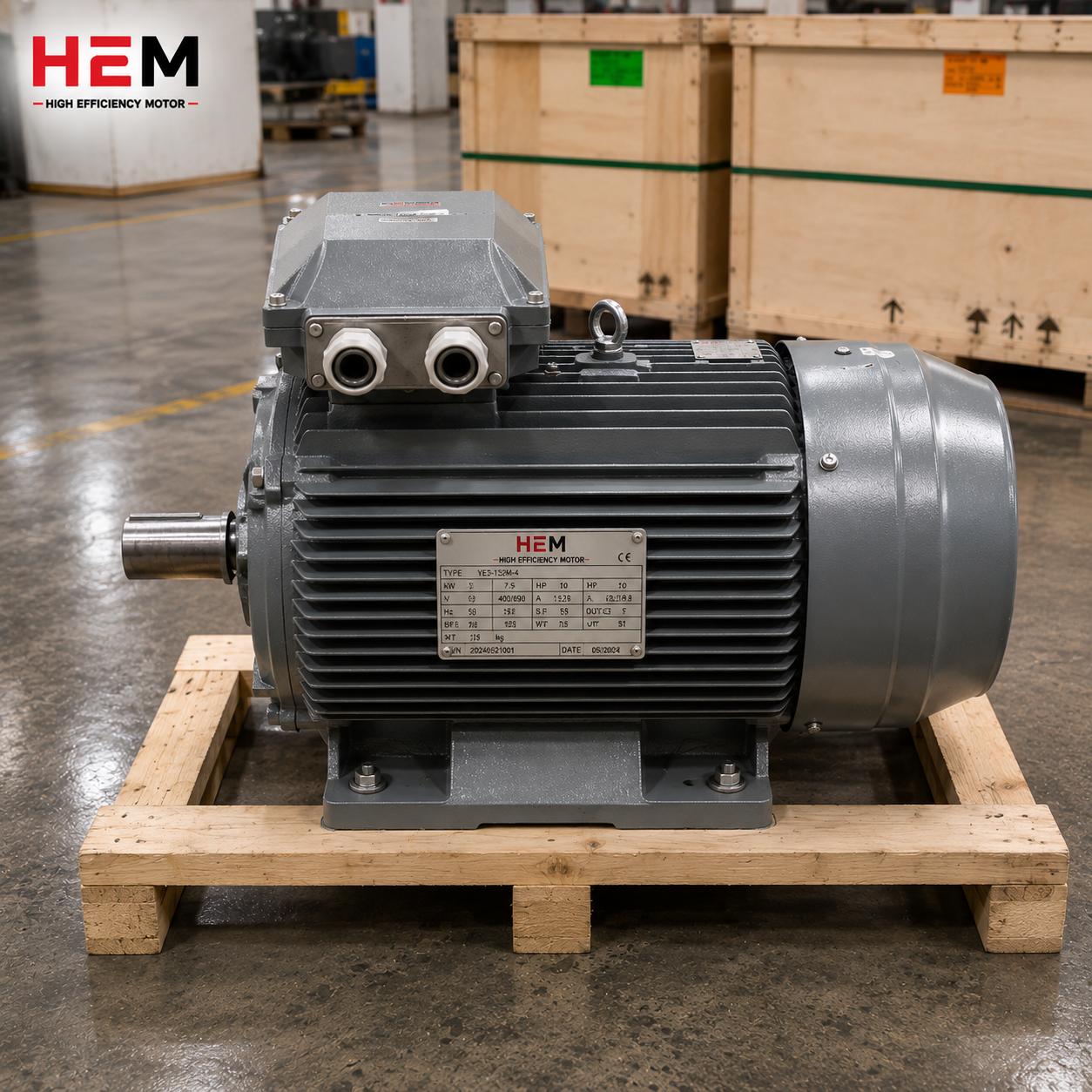

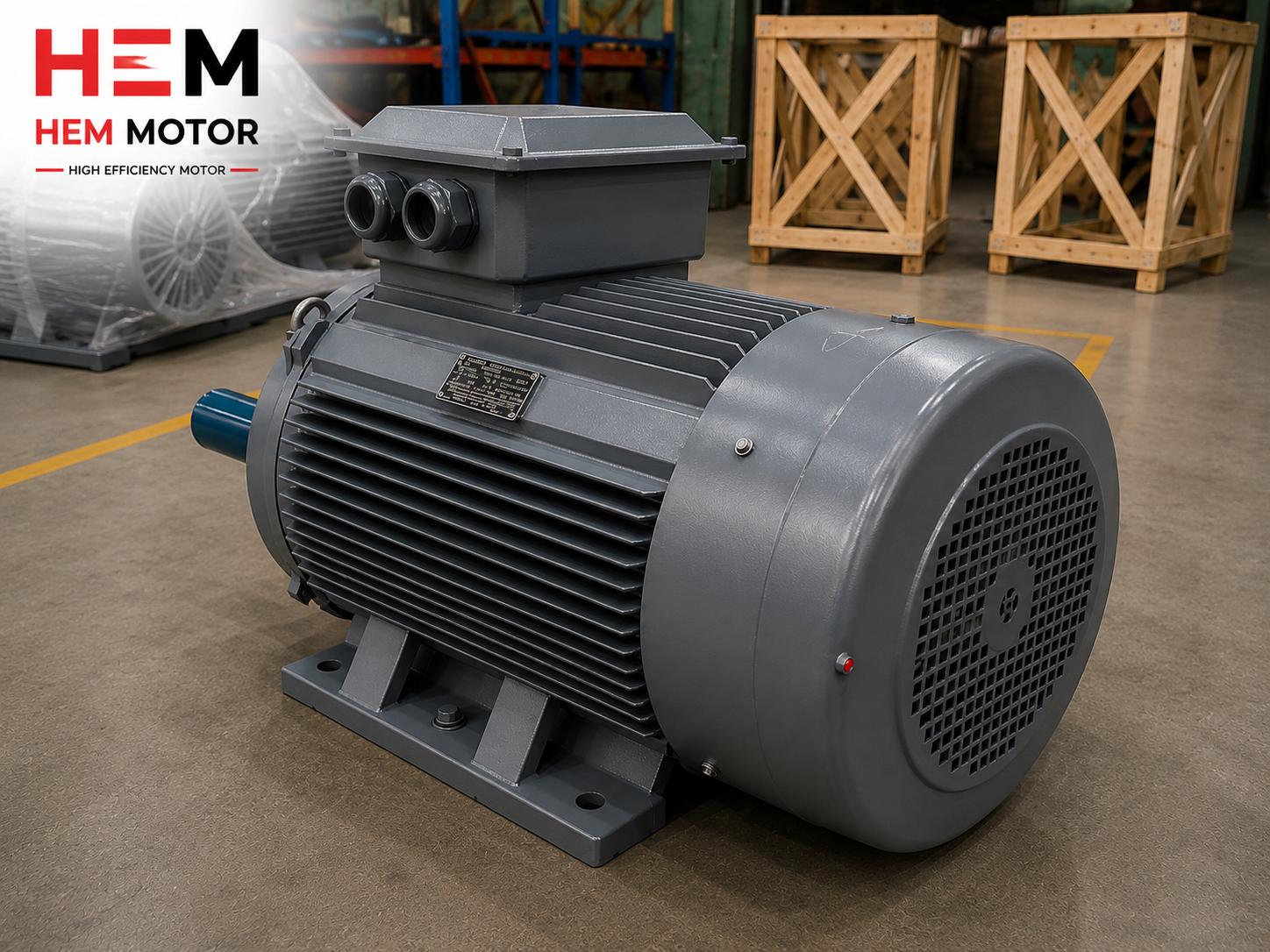
A 500 kW electric motor is no longer merely a machine component; it is an engineering and logistics project in itself. Motor selection in this power class is an integrated process where many decisions are interconnected: from pole count and speed choice to frame size, from starting method to cooling system, from weight to transport and crane planning. A wrong choice can turn into starting problems on site, grid overload, insufficient cooling, or an unsolvable lifting issue during installation. That is why supplying an ultra-high-power motor like 500 kW must begin with the right questions at the very first quotation stage.
At HEM Motor, in supplying high-power industrial motors, we plan the process end to end so our customers receive not only the right power but the right system. In this article we examine pole/speed selection in a 500 kW class motor, the choice between 355 and 400 frames, starting strategies (softstarter, variable frequency drive, reactor), cooling methods (IC411, IC81W) and transport-crane-lead-time planning from an engineering perspective.
Pole Count and Speed: 2-Pole or 4-Pole?
The first critical decision in a 500 kW motor is pole count and therefore speed. A 2-pole motor rotates at roughly 3000 rpm synchronous speed at 50 Hz and typically has a load speed around 2980 rpm; it suits compressors, large pumps and some fan applications requiring high speed. A 4-pole motor runs at about 1500 rpm synchronous speed (load speed ~1485 rpm) and, producing higher torque, is preferred in conveyors, crushers, mills and general drive applications.
Pole choice determines not only speed but also motor size, weight and starting behavior. At the same power, 2-pole motors are more compact but higher speed, so they are more sensitive in terms of balancing and vibration; 4-pole motors usually come in a larger frame with higher starting torque. The speed and torque profile the application requires is the first criterion determining the pole decision.
355 and 400 Frames: The Reality of Size and Weight
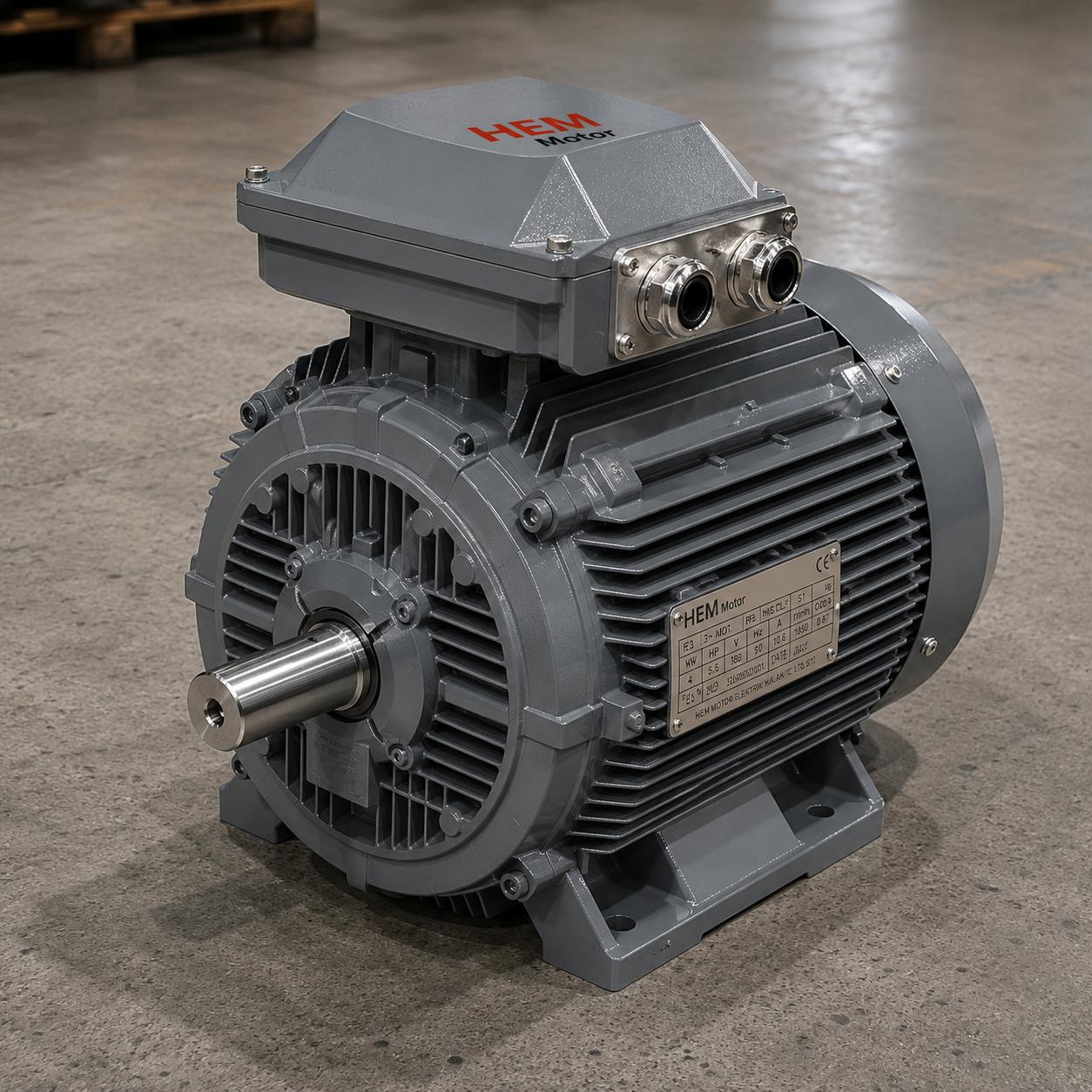
500 kW power usually corresponds to the 355 or 400 frame class in the IEC frame system. As the frame size grows, the motor's weight, mounting dimensions and lifting requirements rise rapidly. A motor in this power class can reach several tons depending on the cooling system. Therefore frame selection is a function not only of electrical performance but also of physical realities on site: foundation design, base bolts, alignment tolerances and crane capacity must be planned from the outset.
| Power | Pole / Speed (rpm) | Typical Frame | Approx. Weight | Recommended Starting |
|---|---|---|---|---|
| 500 kW | 2-pole / ~2980 | 355 | ~2,500-3,200 kg | Softstarter / VFD |
| 500 kW | 4-pole / ~1485 | 355-400 | ~3,200-4,200 kg | VFD / Reactor / Softstarter |
| 500 kW | 6-pole / ~990 | 400 | ~4,000-5,000 kg | VFD / special for high inertia |
Values are representative; exact weight and frame vary with cooling type, mounting form and manufacturer design.
Starting: How Do You Connect 500 kW to the Grid?
In ultra-high-power motors, starting is the project's most critical technical decision. Connecting a motor of this power directly (DOL) to the grid is impossible on most networks because of a starting current reaching 6-8 times the rated current; it causes voltage dips, grid protection trips and mechanical shocks. For this reason, a soft-starting method is almost always used in the 500 kW class.
- Softstarter: Limits starting current and mechanical shock by raising voltage gradually. An economical and common solution for pumps, fans and applications without variable inertia.
- Variable frequency drive (VFD): Provides both soft start and full speed control by ramping frequency up from zero. Ideal in processes requiring variable speed and applications targeting energy savings.
- Reactor / autotransformer: Limits starting current by reducing voltage in heavy applications with high inertia and long starting time.
The starting method choice is as important as the motor itself and is determined by jointly evaluating the load's inertia moment, starting torque demand and grid capacity. We covered strategies for reducing starting current in our starting current and starting guide. For matching a softstarter with the motor, our softstarter compatibility article also helps.
Cooling: IC411 or IC81W?
A 500 kW motor generates significant heat, and removing this heat effectively is critical for motor life. There are two common cooling methods. IC411 means air cooling over the frame via a shaft-end fan; it is simple, easy to maintain and sufficient for most applications. IC81W means air-to-water heat-exchanger cooling; hot air leaving the motor is cooled in a water-cooled exchanger and recirculated. IC81W is preferred in enclosed areas with limited ventilation, at high ambient temperatures, or in dirty/dusty environments.
The cooling method choice depends on ambient temperature, the ventilation of the space housing the motor and the continuous load profile. Although water-cooled solutions are more compact and quieter, they require water piping and maintenance. We examined the differences between cooling methods in more detail in our cooling methods article.
Weight, Transport and Crane Planning
The physical delivery of a 500 kW motor is very different from transporting a small motor. Moving a several-ton load from factory to site, unloading it on site, placing it at the mounting point and seating it on the foundation must be planned in advance in terms of crane capacity, access road width and lifting eyebolts. The load capacity of the motor's lifting eyebolts and the correct lifting angle are critical for safety.
We covered this subject in our motor lifting eyebolt and handling safety article. If compatibility with imported machinery is needed in high-power motors, our NEMA-IEC matching guide also comes into play. For the advantages of a cast-iron frame in heavy-duty applications, see our cast-iron heavy-duty motor article.
Lead Time and Supply Plan
500 kW class motors are usually produced on a project basis or supplied from limited stock; therefore lead-time planning is one of the most important parts of the project. The motor's order code must be correctly decoded, the options (PTC, PT100, heater, encoder, forced-cooling fan) clarified from the start, and the transport time worked into the project schedule. At HEM Motor, for high-power motors, we build a realistic lead-time plan together with our customers and use our manufacturer stock and fast-delivery advantage in line with the project schedule.
Commissioning and Acceptance Inspection
The job is not finished once a high-power motor arrives on site; the commissioning process is at least as important as the selection. On receipt, the motor's packaging, shaft direction, insulation resistance (megger measurement) and general condition must be checked. In a motor that has sat in stock for a long time, insulation resistance may drop due to moisture; in that case drying may be required before commissioning. At first start, the direction of rotation, phase sequence, vibration and temperature values are measured and recorded. This systematic acceptance and commissioning discipline is the basis of the motor's reliable operation throughout its life and prevents unplanned failures.
Energy Efficiency and Total Cost
At a power like 500 kW, when the motor runs continuously the annual energy consumption is very high, and even small differences in efficiency turn into large sums. Therefore, in high-power motors a high efficiency class (IE3 and above) is not merely a regulatory requirement but a serious economic decision. A motor one point more efficient, though slightly more expensive in the initial investment, pays back that difference many times over in the energy bill across its operating life. This calculation clearly shows why making a purchasing decision based only on the label price is misleading.
Total cost of ownership is the sum of the purchase price, energy consumption, maintenance costs and potential downtime losses. The stoppage of a high-power motor due to an unplanned failure often causes a production loss far larger than the motor's own price. For this reason, the correct efficiency class, correct cooling, correct protection equipment and a reliable spare-part supply relationship determine total cost far more than the motor's price. At HEM Motor we offer our customers this holistic view, targeting not the lowest label price but the lowest lifetime cost.
Checklist for the Right Purchase
The questions to answer in order to buy a 500 kW motor correctly are clear: What should the speed/pole be? Which frame and mounting form? If DOL is not possible, which soft-starting method? Cooling IC411 or IC81W? What is the ambient temperature and duty type? Which protection and monitoring options (PTC, PT100, heater) are needed? Are the transport and crane plans ready? Does the lead time fit the project schedule? If all these questions are clarified at the quotation stage, there are no surprises on site.
Mounting Form, Terminal Box and Connection Details
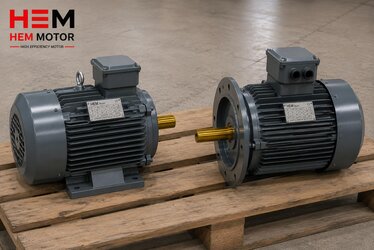
In high-power motors, the mounting form (IM code) and terminal box orientation are details that directly affect installation ease on site but are often skipped at the quotation stage. Foot-mounted (B3), flange-mounted (B5) or combined (B35) options determine how the motor connects to the driven machine. In the 500 kW class, a heavy motor must seat correctly on its base, the anchor bolts must be torqued correctly, and the foundation must be rigid enough to dampen vibration. Choosing the wrong mounting form is among the most common problems causing time and cost loss on site.
The terminal box also carries special importance at this power. High current requires thick power cables and suitable cable lugs; the terminal box size, entry direction and sealing class must be planned from the outset. Details such as the grounding connection, EMC compliance and, especially in motors fed by a variable frequency drive, shaft grounding are critical for the motor's safe and long-life operation. At HEM Motor, in high-power motor supply, we also clarify these connection details with our customers from the start, ensuring no surprises on site.
Insulation Class, Duty Type and Monitoring Equipment
In a high-power motor, insulation class and temperature rise directly determine life. This class usually uses Class F insulation, but the motor is dimensioned with Class B temperature rise (i.e. a lower operating temperature) to leave a safety margin. This approach extends winding life and ensures safe operation even in hot environments. Correctly defining the duty type (S1 continuous, S3/S4 intermittent, etc.) prevents the motor from being selected unnecessarily large or insufficient. While S1 duty is taken as the basis in an application running continuously at full load, the heating behavior must be evaluated separately in a process with frequent stop-start.
500 kW class motors are rarely supplied without monitoring equipment. PTC thermistors embedded in the winding provide protection against overheating, while PT100 resistance temperature sensors allow continuous monitoring of winding and bearing temperature. At this power, bearings are the motor's most critical mechanical component; therefore bearing temperature monitoring, vibration tracking and a correct greasing regime form the basis of predictive maintenance. In addition, an anti-condensation heater (space heater) is almost a standard option for motors that will sit in stock for a long time or operate in humid environments.
Bearings, Vibration and Alignment
In high-power and especially 2-pole high-speed motors, vibration and alignment are among the most frequent sources of problems on site. Misalignment between the motor and the driven machine shortens bearing life, increases vibration and causes energy loss. Therefore laser alignment, correct coupling selection and a solid foundation are mandatory during installation. Vibration acceptance values are defined by international standards and must be measured and recorded during commissioning. This discipline is the key to the motor operating trouble-free for decades.
Frequently Asked Questions
Can a 500 kW motor be started directly (DOL)?
In practice, no on most grids. At this power the starting current reaches 6-8 times the rated current and causes serious voltage dips, protection trips and mechanical shock. So in the 500 kW class a soft-starting method such as a softstarter, VFD or reactor is almost always used. The correct method is determined by the load's inertia and grid capacity.
Should I choose IC411 or IC81W?
IC411 (air cooling with a shaft-end fan) is sufficient, simple and easy to maintain for most applications. IC81W (air-to-water exchanger cooling) is preferred in enclosed areas with limited ventilation, at high ambient temperatures or in dusty environments. The decision is made based on ambient temperature, the space's ventilation and the load profile. Water-cooled solutions are compact and quiet but require water piping.
What is the lead time for a 500 kW motor?
Because this power class is usually supplied on a project basis or from limited stock, the lead time varies with configuration and options. The correct order code, clarifying options from the start and working the transport time into the schedule determine the lead-time plan. At HEM Motor we provide delivery suited to the project with a realistic lead-time plan and manufacturer stock advantage.
Let us plan your 500 kW project correctly from the start. At HEM Motor, in ultra-high-power motor supply, we manage the entire process together from pole/speed selection to starting strategy, from cooling to transport and lead-time planning. Share your application's speed, torque and ambient conditions; get a quote for the right system and fast delivery.