English
 Türkçe

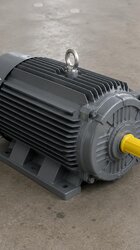
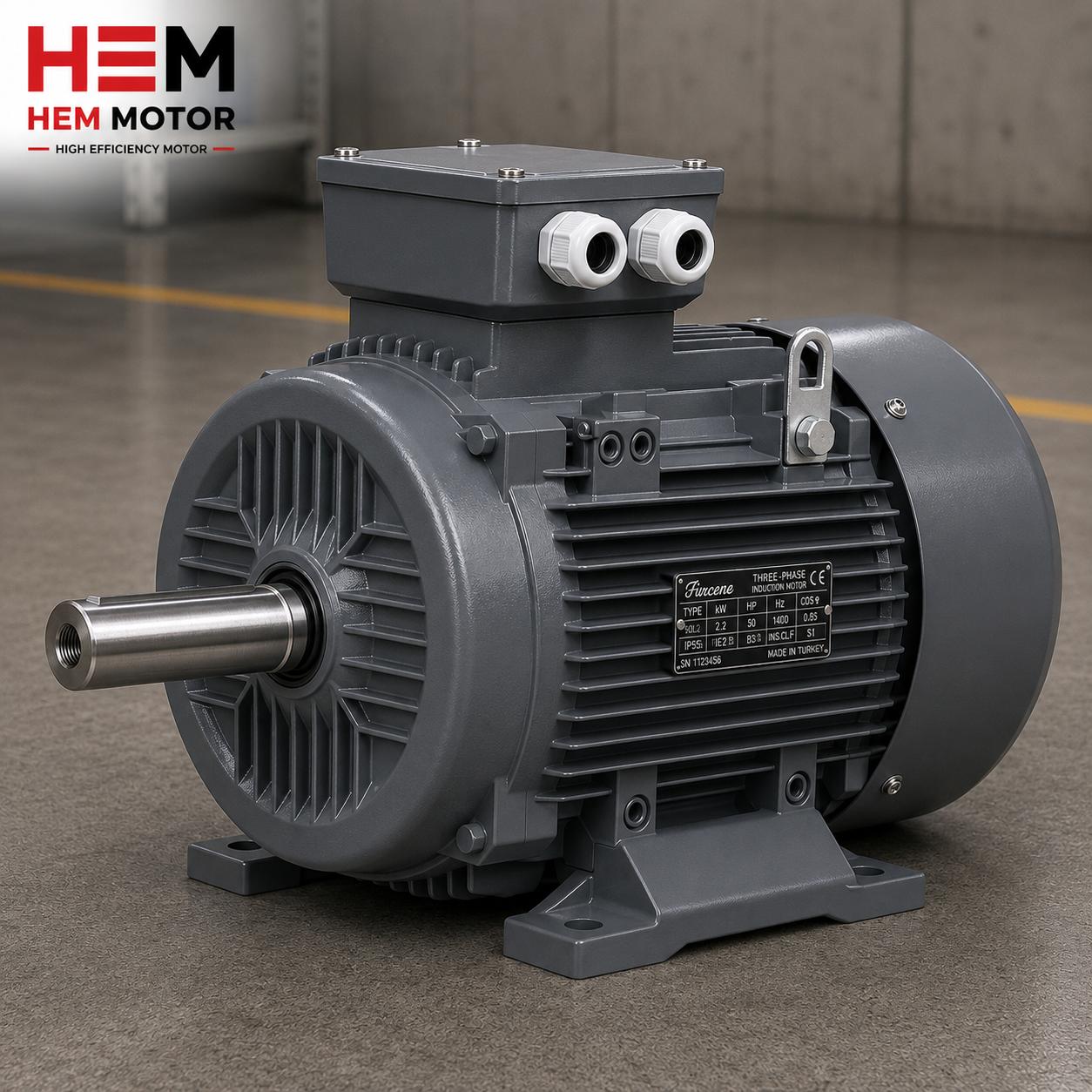

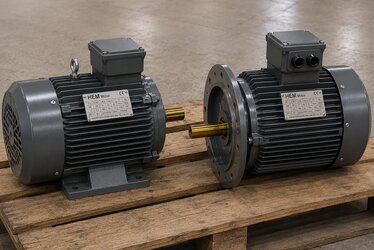
The speed of an electric motor is directly determined by the number of poles, and this simple relationship plays a key role in solving many of the drive problems encountered in industry. 8-pole 750 rpm motors are a category that stands out in applications requiring low-speed and high-torque operation, yet is often not sufficiently recognized. Unlike 2-pole 3000 rpm or 4-pole 1500 rpm motors, the 8-pole motor rotates slowly but powerfully; thanks to this feature, it offers direct drive in many applications by eliminating the need for a gearbox. In this article, we examine in detail the operating logic of the 8-pole 750 rpm motor, its high-torque advantage, the relationship between frame growth and efficiency, in which applications it is preferred, and how it compares with 2/4/6-pole alternatives.
The Relationship Between Pole Count and Speed
The synchronous speed of an asynchronous motor is a simple function of the grid frequency and the number of poles. On a 50 Hz grid, the synchronous speed is found by dividing the product of 120 and the frequency by the number of poles. Accordingly, a 2-pole motor rotates at 3000 rpm, a 4-pole at 1500 rpm, a 6-pole at 1000 rpm, and an 8-pole at 750 rpm synchronous speed. Under real load, the motor operates slightly below this synchronous speed due to slip; for example, an 8-pole motor typically has a load speed of around 720-735 rpm. To better understand the basis of the speed-torque relationship, our article on the speed-torque curve and breakdown torque in asynchronous motors provides a solid technical foundation.
The critical point here is this: when the shaft power (kW) of a motor is kept constant, the torque taken from the shaft increases as the speed decreases. Because power equals torque multiplied by angular velocity. Therefore, at the same power, an 8-pole motor produces approximately twice the torque of a 4-pole motor and approximately four times that of a 2-pole motor. This is the most obvious advantage of the 8-pole motor: high torque at low speed. To calculate the torque required for the load, you can benefit from our guide on rated torque calculation in IE3 motors.
The High-Torque and Low-Speed Advantage
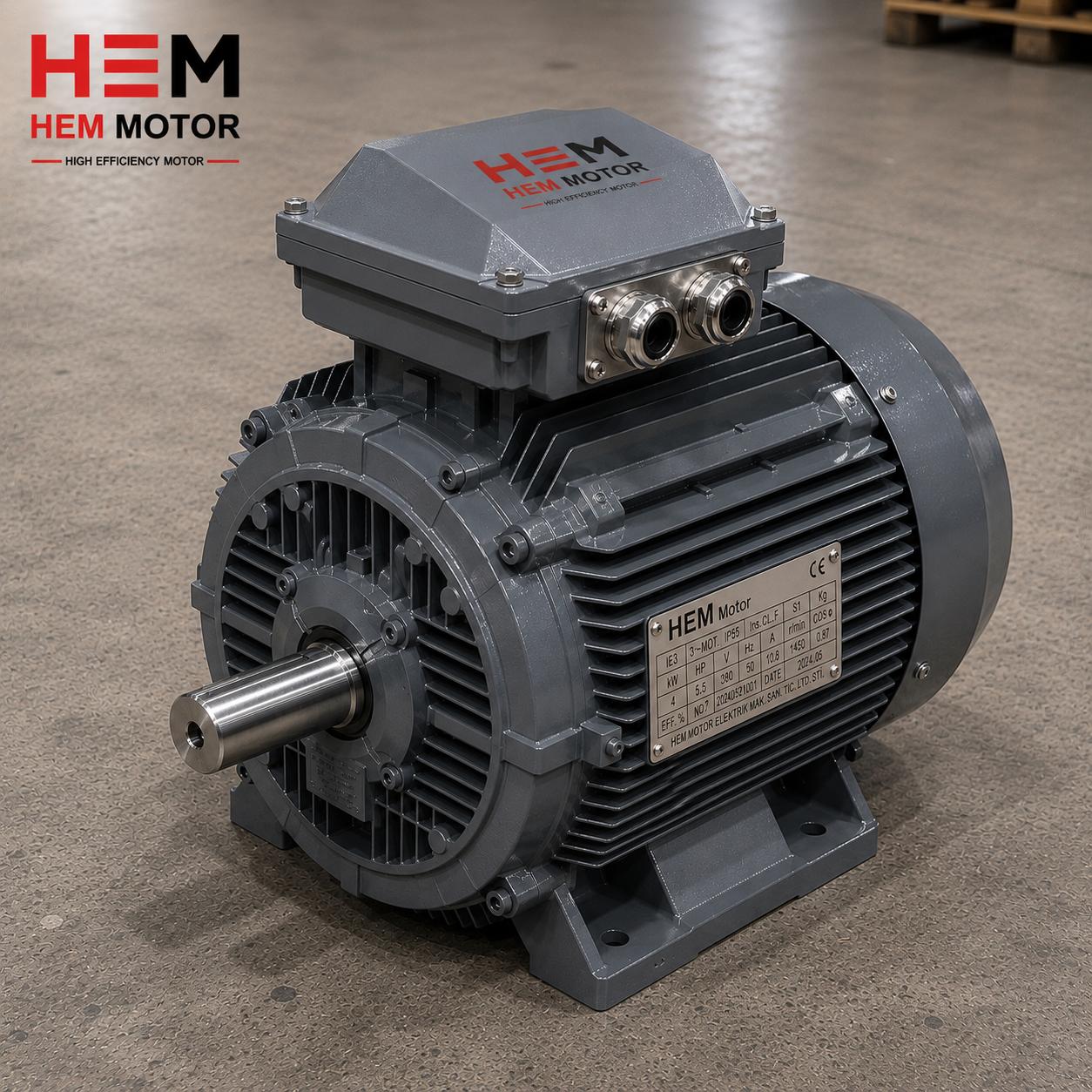
In many industrial applications, the machine needs a drive that rotates slowly but powerfully. Mixers, mills, large-diameter fans, and cooling tower fans are typical examples of this. In these applications, using a high-speed motor requires placing a gearbox in between; because the output speed required by the machine is 750 rpm or lower. This is exactly where the 8-pole motor comes in: it simplifies the mechanical system by driving the machine directly, without a gearbox. We covered the direct drive advantage of low-speed high-pole motors comprehensively in our article on low-speed high-pole motors and gearless direct drive.
The elimination of the gearbox not only provides a cost advantage; it also reduces the maintenance burden, lowers mechanical losses, and increases the reliability of the system. The gearbox is a component that requires periodic oil changes, is subject to gear wear, and causes efficiency loss. With direct drive, all of these problems are eliminated. However, this advantage comes at a price: at the same power, an 8-pole motor has a significantly larger and heavier frame than its lower-pole counterparts.
Frame Growth and the Efficiency Relationship
The most important disadvantage of an 8-pole motor is that it needs a larger frame at the same power. The physical reason for this is that the motor needs more magnetic material and a larger rotor volume to produce the same power at low speed. Since the torque-producing element is directly related to the rotor volume, a large rotor, and therefore a large frame, is needed for high torque. For example, while a 4-pole motor with a power of 4 kW is produced in a 112 frame, the 8-pole motor at the same power is produced in a 132 or larger frame.
In addition to frame growth, 8-pole motors typically have a lower power factor (cosφ) and generally slightly lower efficiency than their lower-pole counterparts. The reason for this is that the multi-pole winding structure increases the magnetizing current and raises losses. Nevertheless, modern IE3 and IE4 efficiency class 8-pole motors are produced with designs that significantly compensate for this disadvantage. The table below comparatively shows the power-speed-torque-frame relationship according to the number of poles.
| Power | Poles | Sync. Speed | Approx. Rated Torque | Typical Frame |
|---|---|---|---|---|
| 4 kW | 2P | 3000 rpm | ~13 Nm | 112M |
| 4 kW | 4P | 1500 rpm | ~26 Nm | 112M |
| 4 kW | 6P | 1000 rpm | ~40 Nm | 132M |
| 4 kW | 8P | 750 rpm | ~53 Nm | 132M / 160 |
| 11 kW | 8P | 750 rpm | ~146 Nm | 180L |
| 22 kW | 8P | 750 rpm | ~292 Nm | 225 |
In Which Applications Is the 8-Pole Motor Preferred
8-pole 750 rpm motors are preferred in applications that, by their nature, require slow and powerful rotation. The most common areas of use include: large-diameter cooling tower fans, industrial mixers and agitators, ball and rod mills, some conveyor drives, calenders, and slow-rotating process equipment. The common point of these applications is that the natural operating speed of the machine is low and requires high torque.
Cooling tower fans are the most classic application of the 8-pole motor. A large-diameter fan must rotate slowly and with low noise; if driven by a high-speed motor, both a noise problem occurs and a gearbox is required. The 8-pole motor drives the fan directly and quietly. In mixer and agitator applications, high torque is needed to mix viscous materials and the mixing speed is usually low; this makes the 8-pole motor an ideal choice. For correct motor selection in fan applications, our article on cold storage fan and compressor motors also contains relevant information.
Comparison with 2, 4 and 6 Poles
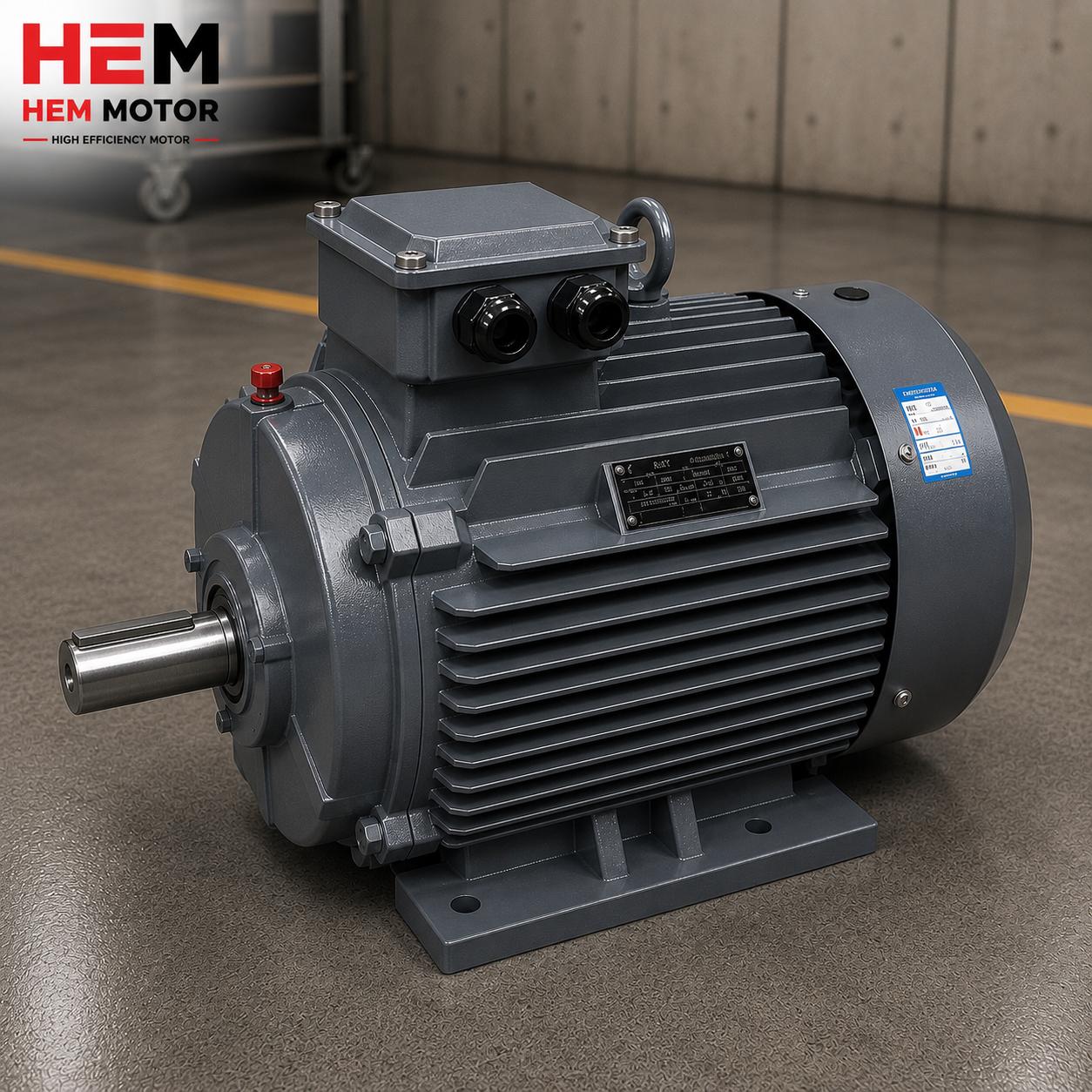
Correct motor selection begins with correctly determining the output speed and torque required by the application. 2-pole motors (3000 rpm) are ideal for applications requiring high speed, such as pumps and compressors. 4-pole motors (1500 rpm) are the most widely used speed in industry and are standard in general-purpose drives. 6-pole motors (1000 rpm) are used in applications requiring medium-low speed. 8-pole motors (750 rpm), on the other hand, are reserved for special applications requiring the lowest speed and the highest torque.
When selecting the pole count in an application, not only the speed but also the frame size, cost, efficiency, and delivery time must be considered. In most cases, if the machine can operate at 1500 rpm, a 4-pole motor is a more compact and economical choice. However, if the machine genuinely requires low speed and high torque, the gearless direct drive advantage of the 8-pole motor stands out in terms of total cost and reliability. When making this decision, speed adjustment with pulley-belt can also be an alternative; on this subject, our article on motor speed and pulley-belt speed adjustment can be evaluated.
Considerations in 8-Pole Motor Selection
- Actual output speed: If the speed required by the machine is 750 rpm or below, 8 poles make sense.
- Torque demand: 8 poles are advantageous in applications requiring high starting and continuous torque.
- Frame and weight: A larger frame and heavier motor at the same power; installation space must be planned.
- Efficiency class: Low cosφ is partly compensated by selecting IE3 or IE4 efficiency class.
- Gearbox comparison: The total cost of the direct drive versus the geared solution must be compared.
- Cooling: Since fan cooling decreases at low speed, the thermal behavior must be checked.
Efficiency, Cost and Total Cost of Ownership
In 8-pole motor selection, it is necessary to look not only at the purchase price of the motor but at the total cost of ownership. At first glance, the 8-pole motor appears more expensive than its 4-pole counterpart of the same power because it is a product with a larger frame and more material. However, when direct gearless drive is involved, the 8-pole direct drive solution often turns out to be more economical when the purchase cost of the gearbox, installation cost, periodic maintenance expense, and efficiency loss are included in the equation.
Furthermore, the elimination of the gearbox reduces the number of failure points in the system and lowers the risk of downtime. In critical processes, a gearbox failure can stop the entire production; direct drive eliminates this risk. For this reason, 8-pole motor selection should be evaluated from the perspective of long-term operational reliability and total cost rather than short-term purchase cost. Correct sizing is also critical for the motor to operate efficiently according to its load ratio; our article on motor load ratio and correct sizing provides guidance on this subject.
Cooling and Thermal Behavior in the 8-Pole Motor
The fact that the 8-pole motor operates at low speed requires special attention in terms of cooling. A standard asynchronous motor cools itself with a fan at the shaft end, and the cooling capacity of this fan depends directly on the rotational speed of the motor. In a high-speed motor, the fan rotates rapidly and creates a strong airflow, cooling the motor effectively. However, in an 8-pole motor, since the shaft rotates at only 750 rpm, the airflow produced by its own fan is significantly weaker than that of its high-speed counterpart. This makes it harder to remove the heat generated by the motor and requires additional measures in thermal design. Manufacturers solve this problem by using a larger frame surface, wider cooling ribs, and, when necessary, an external forced-cooling fan in 8-pole motors. Especially if the motor is to be operated at very low speeds with a variable speed drive, its own fan may be completely inadequate and an independent cooling fan becomes essential.
Frequently Asked Questions
Why does an 8-pole motor have a larger frame than a 4-pole motor of the same power?
Because to produce the same power at low speed, the motor must produce higher torque, and torque is directly related to rotor volume. A large rotor and therefore a large frame are needed for high torque. Due to this physical necessity, the 8-pole motor is significantly larger and heavier than its 4-pole counterpart of the same kW power.
Which makes more sense: an 8-pole motor or a 4-pole motor plus a gearbox?
This depends on the application. If the output speed required by the machine is around 750 rpm, 8-pole direct drive is usually simpler, more reliable, and more economical in the long run because gearbox maintenance, efficiency loss, and failure risk are eliminated. However, if a much lower speed (for example 100 rpm) is required, a geared solution becomes inevitable. The decision should be made by comparing total cost and reliability.
Why are efficiency and power factor slightly lower in an 8-pole motor?
The multi-pole winding structure draws more magnetizing current to create the magnetic field, and this lowers the power factor (cosφ). Additional losses also reduce efficiency somewhat. However, modern IE3 and IE4 efficiency class 8-pole motors significantly compensate for this disadvantage through advanced design and the use of quality materials; therefore, selecting a high efficiency class is recommended.
8-pole 750 rpm motor selection is a strategic decision that stands out with the gearless direct drive advantage in applications requiring low speed and high torque. As HEM Motor, we supply 8-pole motors with IE3 and IE4 efficiency class in various power ranges with fast shipment from stock. To determine the correct combination of frame, torque, and efficiency for your cooling tower fan, mixer, mill, or other low-speed applications and to request a quote, you can contact us; we are by your side with manufacturer assurance and fast delivery.