English
 Türkçe

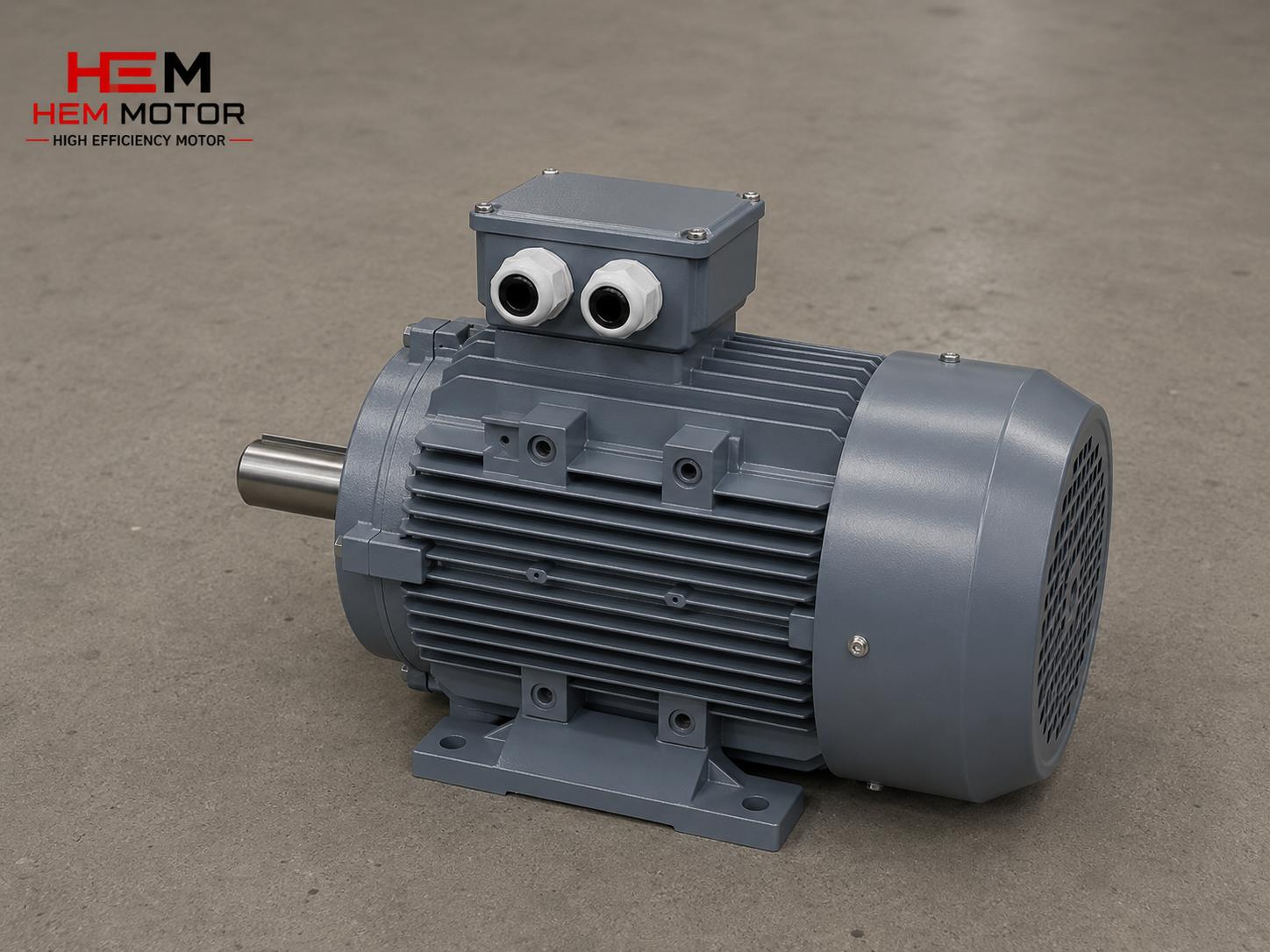

22 kW and 30 kW electric motors are among the most sought-after medium-to-large power ratings in industry. In many applications such as pumps, fans, compressors, conveyors, crushing-screening, plastics extrusion and general machine drives, these two power classes are the standard choice. For a correct purchase it is not enough to look only at the kW value; the pole count (that is, the speed), the frame size, the mounting type, the efficiency class and, most importantly, stock availability must be evaluated together. Choosing the wrong pole or the wrong frame means a motor that does not fit the machine, delayed delivery and unnecessary cost. In this article we cover the 2, 4 and 6 pole speed equivalents for 22 and 30 kW motors, typical frame sizes (around 180M, 200L, 225), mounting codes, the IE efficiency class and the details of a correct purchase from stock. At HEM Motor we hold broad stock in these powers and supply the right motor with fast delivery.
Pole Count and Speed: 2, 4 and 6 Pole
An induction motor's synchronous speed is determined by the line frequency and the pole count. On a 50 Hz grid a 2-pole motor turns at about 3000 rpm synchronous speed; the real (loaded) speed is slightly lower because of slip. As the pole count rises, speed falls and the torque produced at the same power increases. Therefore, correctly determining the speed your application needs is the first step of motor selection.
| Poles | Synchronous speed (50 Hz) | Typical loaded speed | Character | Common application |
|---|---|---|---|---|
| 2 pole | 3000 rpm | ~2900 rpm | High speed, low torque | Pump, high-pressure fan, compressor |
| 4 pole | 1500 rpm | ~1460 rpm | Balanced speed-torque | General drive, conveyor, fan |
| 6 pole | 1000 rpm | ~970 rpm | Low speed, high torque | Mixer, heavy drive, geared system |
At the same kW power, as speed falls the torque the motor produces rises; the physical consequence is that a 6-pole motor is in a larger frame and heavier than a 2-pole motor of the same power. So speed selection is not only a speed preference but also has a direct effect on frame, weight and price.
Frame Size: 180M, 200L, 225
IEC standard frame sizes define the motor's mechanical dimensions (shaft height, shaft diameter, foot hole spacing, flange dimensions). 22 and 30 kW motors are typically available in 180, 200 and 225 frame sizes; the frame changes with the pole count. If you are replacing an existing motor, it is critical that the new motor's frame size and shaft diameter are compatible with the old one so the mounting holes line up and the coupling fits.
| Power | Poles | Typical frame | Shaft dia. (approx.) | Shaft height |
|---|---|---|---|---|
| 22 kW | 2 pole | 180M | 48 mm | 180 mm |
| 22 kW | 4 pole | 180L | 48 mm | 180 mm |
| 22 kW | 6 pole | 200L | 55 mm | 200 mm |
| 30 kW | 2 pole | 200L | 55 mm | 200 mm |
| 30 kW | 4 pole | 200L | 60 mm | 200 mm |
| 30 kW | 6 pole | 225M | 60 mm | 225 mm |
The table shows typical values; small differences may occur depending on the manufacturer and series. For this reason, sharing the type code and frame information from the motor nameplate is the safest approach in a replacement order. To examine the frame-power match in more detail, see our shaft diameter and frame table and frame size and power matching articles.
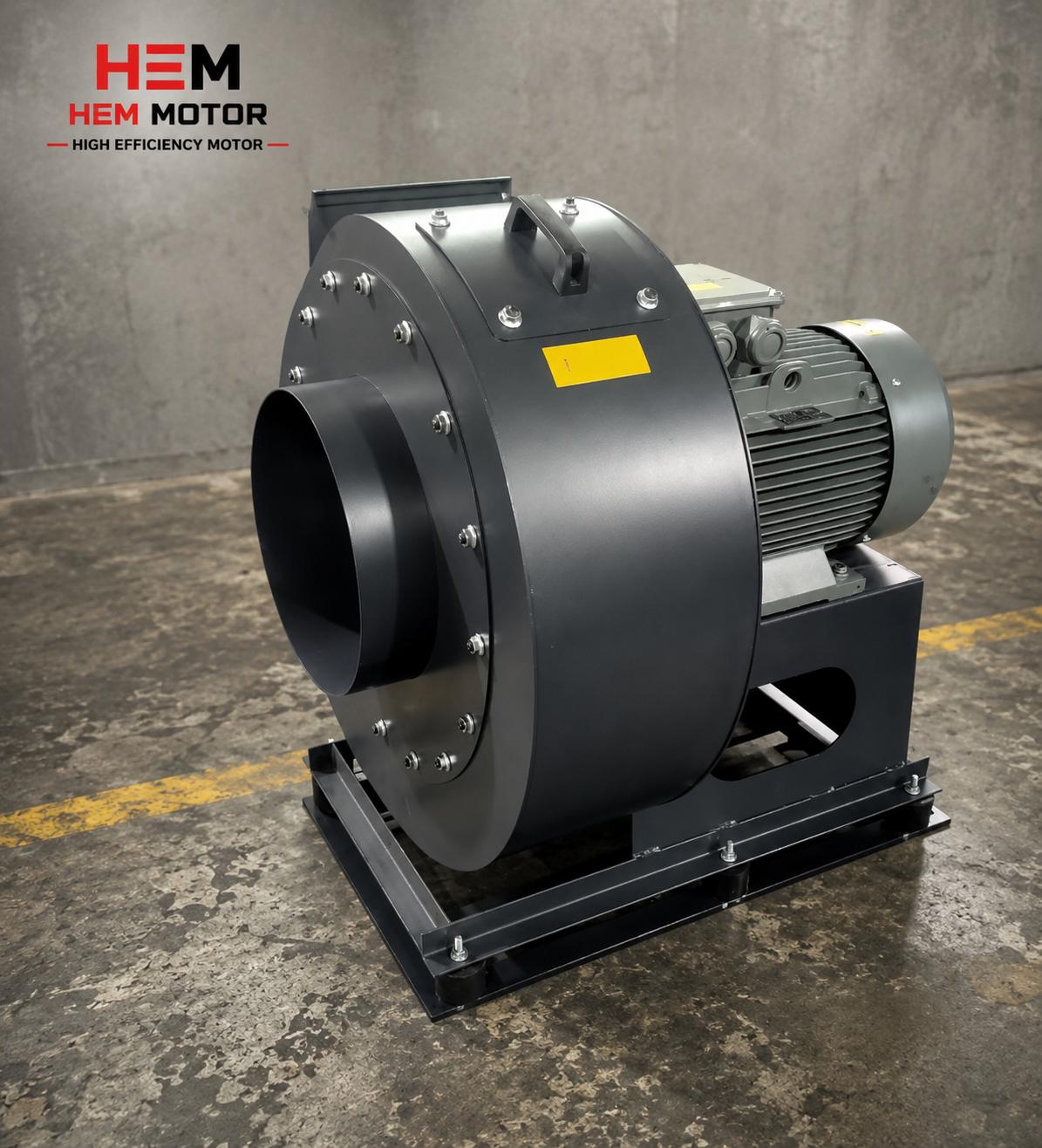
Mounting Type: Foot (B3), Flange (B5) and Combined (B35)
How the motor connects to the machine determines the mounting type. The three most common options are B3 (foot), B5 (flange) and B35 (combined foot and flange) mounting. 22 and 30 kW motors are available in all three; choosing the right code for your application is important to avoid problems during installation.
- B3 (foot): The motor is fixed by its feet to the floor or a base; drive by coupling or belt-pulley is common.
- B5 (flange): The motor connects directly to the machine or gearbox via the large front flange; there are no feet.
- B35 (combined): Has both feet and flange; the most flexible mounting option, covering two needs with a single stock code.
Reading the mounting code correctly is critical for an error-free order. Our IM mounting code reading guide explains the B3, B5 and V1 codes in detail.
Efficiency Class (IE3 / IE4) and Regulation
Three-phase induction motors at 22 and 30 kW fall within the current efficiency regulation and are generally supplied in at least the IE3 efficiency class. Because this power range is used in continuously running industrial applications, the efficiency class directly affects the electricity bill. Choosing IE4 instead of IE3 raises the initial investment somewhat but can pay for itself quickly in facilities with high annual operating hours.
- IE3 (Premium efficiency): The standard, regulation-compliant choice for most general-purpose applications.
- IE4 (Super Premium efficiency): The lowest life-cycle cost in long-running, high-consumption applications.
- The efficiency class is clearly marked on the motor nameplate; always check it in replacement and new purchases.
You can learn about the efficiency class requirement and which class is required at which power from our efficiency class mandate and IE3 and IE4 regulation articles.
Rated Current, Cable and Protection
For 22 and 30 kW motors, building the right electrical infrastructure is as important as selecting the right motor. The rated current at these powers is high; the cable cross-section, fuse and contactor should be selected to this current. Also, because the starting current can be several times the rated current, star-delta or a soft starter may be preferred instead of direct-on-line (DOL). A wrongly sized protection either trips needlessly or fails to protect the motor adequately.
| Power | Approx. rated current (400V) | Typical starting |
|---|---|---|
| 22 kW | ~42-43 A | Star-delta / soft starter |
| 30 kW | ~56-58 A | Star-delta / soft starter |
Current values vary with efficiency, power factor and brand; the motor nameplate should be the basis for the exact value. For cable, fuse and contactor selection our rated current and cable selection article offers a detailed calculation. When choosing the starting method our star-delta versus soft starter comparison guides you.
Correct Purchase Based on Stock Availability
Because 22 and 30 kW motors are among the most sought-after powers, stock availability is generally high; however, not every pole and mounting combination is in stock at all times. For example, a 4-pole B3 foot motor is the most common configuration and is supplied quickly, while a 6-pole B5 flange special combination may take a little longer. Therefore, clearly stating the power, pole, mounting and efficiency class in the order guarantees both the right product and fast delivery.
- Most common stock: 4 pole (1500 rpm), B3 foot, IE3 efficiency.
- 2 pole (3000 rpm) is also commonly stocked for pumps and compressors.
- 6 pole is preferred for geared and low-speed systems.
- For flange (B5) and combined (B35) needs, it is sensible to confirm stock status in advance.
We compiled the most sought-after power and speed combinations in our IE3 stock guide; for smaller power ratings see our 18.5 and 22 kW and 11 and 15 kW stock articles.
Correct Power Selection: Over or Under Sizing
Selecting motor power to the load's real need is essential. Choosing a motor larger than necessary (oversizing) lowers the power factor and efficiency at partial load, raises unnecessary initial investment and sometimes causes installation difficulty due to a larger frame. Undersizing, on the other hand, runs the motor continuously overloaded, causing overheating, premature failure and shortened life. The choice between 22 and 30 kW is often made right in the middle of this balance; if an application draws around 24-26 kW, 30 kW leaves a reasonable margin, but if 22 kW is sufficient there is no need to oversize. For the correct choice, the load's shaft power, duty type and ambient temperature must be evaluated together.
Duty Type (S1-S9) and the Effect of Environmental Conditions
In selecting a 22 or 30 kW motor, not only power and speed but also the kind of duty the motor will run under is decisive. A motor running continuously at fixed load (S1 duty) cannot be sized the same way as one that starts and stops frequently or runs with variable or braked load (such as S3, S4, S7). Frequent starting increases heating; in that case either a higher power is chosen or cooling and thermal protection are reinforced. Likewise, if the ambient temperature is above the standard 40 degrees Celsius, the power the motor can deliver drops (derating); at high altitude, cooling also weakens because air density falls and power derating may be needed. So a motor rated 22 kW may, in harsh conditions, behave in practice like a lower power.
In dusty, humid or corrosion-prone environments the frame material and protection class (IP) become important. A cast iron frame is more durable than aluminum in open-field and heavy-industry conditions; standard IP55 protection is sufficient for most industrial environments, while higher protection may be required where there is heavy dust or water spray. These choices directly affect motor life, so they should be taken as seriously as power and speed.
- Continuous duty (S1): Standard sizing is sufficient.
- Frequent start-stop (S3/S4): Watch the starts per hour, step up power if needed.
- High temperature/altitude: Account for the derating factor.
- Dusty/humid environment: Choose a cast iron frame and suitable IP protection class.
Belt-Pulley, Coupling or Gearbox?
The drive method of 22 and 30 kW motors also affects frame and mounting selection. In a direct coupling connection the motor shaft and machine shaft must be on the same axis and alignment must be done carefully; otherwise the bearings and coupling wear early. In belt-pulley drive a radial load acts on the shaft end; since this load affects the motor bearing life, a reinforced bearing or a larger frame may be considered in applications requiring high belt tension. In geared systems the motor is usually selected as flange (B5) or combined (B35) and the low output speed is taken from the gearbox; here the motor itself runs at high speed (for example 4 pole) while low speed and high torque are transmitted to the machine through the gearbox.
Nameplate Reading and Pre-Order Checklist
The most reliable way to order the right 22 or 30 kW motor is to read the motor nameplate correctly. The nameplate shows power (kW), the speed corresponding to the pole count (rpm), rated current (A), voltage and connection type (for example 400V delta), power factor (cosφ), efficiency class (IE3/IE4), duty type (S1 etc.), protection class (IP55), insulation class (F/H) and the frame-mounting code. All of this information is the key to selecting the motor that fits the machine and to reordering the same motor in the future. Especially in replacement orders, sharing the type code on the nameplate reduces the risk of the wrong product to almost zero.
- Are the power (kW) and pole/speed correct?
- Do the mounting code (B3/B5/B35) and frame size fit the machine?
- Is the efficiency class (IE3/IE4) suitable for the regulation and operating hours?
- Were the cable, fuse and contactor selected to the rated current?
- Are the IP protection and frame material right for the environmental conditions?
Frequently Asked Questions
How do I decide between 22 kW and 30 kW?
Base it on the load's real shaft power. If the application is close to 22 kW but occasionally draws a peak load, moving up to 30 kW provides a safe margin depending on the duty type. If 22 kW is sufficient at continuous fixed load, do not oversize; oversizing lowers efficiency at partial load. Share your load profile and duty type with us for the decision.
What is the difference between 2, 4 and 6 pole motors at the same power?
The pole count sets the speed: 2 pole ~3000, 4 pole ~1500, 6 pole ~1000 rpm. At the same kW, as speed falls torque rises and the motor is in a larger frame. Poles are chosen by the speed your application needs; 2 pole is usually right for pumps and compressors, 4 pole for general drives, 6 pole for low-speed high-torque.
How do I guarantee the same frame and shaft as my existing motor?
The safest way is to share the type code, frame size, shaft diameter and mounting code (B3/B5/B35) from the old motor's nameplate. With this information we confirm the new motor fits mechanically one-to-one. If the nameplate is unreadable, provide the dimensions (shaft diameter, foot hole spacing, flange diameter) and we ensure the correct replacement.
Fast Supply from HEM Motor Stock
For your 22 and 30 kW motor needs, let us determine the power, pole, frame, mounting and efficiency class together. With HEM Motor's broad manufacturer stock and fast delivery, we supply the right motor in these most sought-after power ratings quickly. Share your application and current motor nameplate; contact us to request a quote for the most suitable motor.