English
 Türkçe


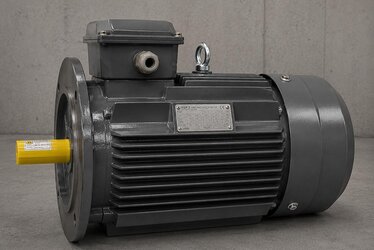
5.5 kW and 7.5 kW are the two most sought-after electric motor power classes in industry. In pumps, fans, compressors, conveyors, gearmotor drives and countless general-purpose applications these two ratings sit right in the middle: powerful enough for small machines, economical for large ones. That is exactly why 5.5 and 7.5 kW motors are usually supplied from stock with short lead times. But saying "I want a 5.5 kW motor" is not enough on its own; for correct purchasing the pole count (speed), frame size, mounting type (B3/B5/B14), efficiency class and terminal connection must all be defined together. In this guide we cover 5.5 and 7.5 kW motors through their 2- and 4-pole speed options, frame matching, mounting types and stock logic so you can order without error.
Why Are 5.5 and 7.5 kW the Most Sought-After Ratings?
These two power classes cover the great majority of mid-size machines. 5.5 kW is the standard drive power for medium centrifugal pumps, blowers and fans, small-to-medium compressors and belt conveyors. 7.5 kW is one step up: common in higher-pressure pumps, large fans, hydraulic units and mill/mixer drives. Because makers know this demand, they keep the widest stock range in exactly this band. As a result, once the right specs are defined, 5.5 and 7.5 kW motors usually ship fast off the shelf, a big advantage for failure spares and new-line setups.
To fully benefit from stock, it helps to choose the "most common configuration": a 4-pole (1500 rpm), B3 foot, IE3 efficiency, 400V three-phase 5.5 or 7.5 kW motor is almost always in stock. More special configurations (special flange, special voltage, high IP, options like brake/encoder) can extend lead time. So clarifying what the application truly needs before purchase optimizes both cost and delivery.
2-Pole or 4-Pole? Choosing the Speed
At the same kW rating, a motor runs at a different speed and torque depending on pole count. On a 50 Hz grid:
- 2-pole ~ 2900-2950 rpm: High speed, low torque. Ideal for centrifugal pumps (especially high-pressure/booster), high-speed fans and some compressors.
- 4-pole ~ 1450-1470 rpm: Medium speed, higher torque. The most common choice; standard for general-purpose drives, geared applications, conveyors and many fans and pumps.
- 6-pole ~ 950-970 rpm: Low speed, high torque; needs a heavier, more expensive frame. Less demanded at 5.5-7.5 kW but used in low-speed mixers and special drives.
An important point: at the same kW, as pole count rises (speed falls) torque rises but the frame grows and the motor gets heavier. So a 7.5 kW 6-pole motor is in a noticeably larger frame than a 7.5 kW 2-pole motor. The speed the application needs must be evaluated together with the machine's torque demand; for quadratic-torque loads like pumps and fans, speed choice directly sets performance.
5.5 and 7.5 kW Frame Matching
In the IEC standard, frame size sets the motor's shaft height and mounting holes. For 5.5 and 7.5 kW the typical frame range is 112M to 132M; as pole count rises the same power moves to a larger frame. The table below summarizes common matches (small differences by maker are possible):
| Power | Pole / Speed | Typical Frame | Common Application |
|---|---|---|---|
| 5.5 kW | 2-pole / ~2900 rpm | 132S | High-pressure pump, compressor |
| 5.5 kW | 4-pole / ~1450 rpm | 132S | General drive, fan, conveyor |
| 5.5 kW | 6-pole / ~950 rpm | 132M | Low-speed mixer |
| 7.5 kW | 2-pole / ~2920 rpm | 132S | Booster pump, screw compressor |
| 7.5 kW | 4-pole / ~1455 rpm | 132M | Fan, hydraulic unit, gearbox drive |
| 7.5 kW | 6-pole / ~960 rpm | 132M / 160M | Heavy mixer, low-speed drive |
Knowing the frame size is critical especially for replacement (like-for-like) purchases. If the existing motor's shaft height, foot hole spacing and shaft diameter do not match the new motor, mounting onto the machine causes trouble. So before ordering, always read the frame code (e.g. 132M) and mounting type from the old motor nameplate and select the new motor to those dimensions.
Mounting Type: B3, B5 and B14
How the motor connects to the machine is defined by the mounting type, and the wrong mounting choice is the most common ordering error:
- B3 (foot): The most common mounting. The motor bolts to the floor or base by its feet, with drive via belt-pulley or coupling. The most abundant type in stock.
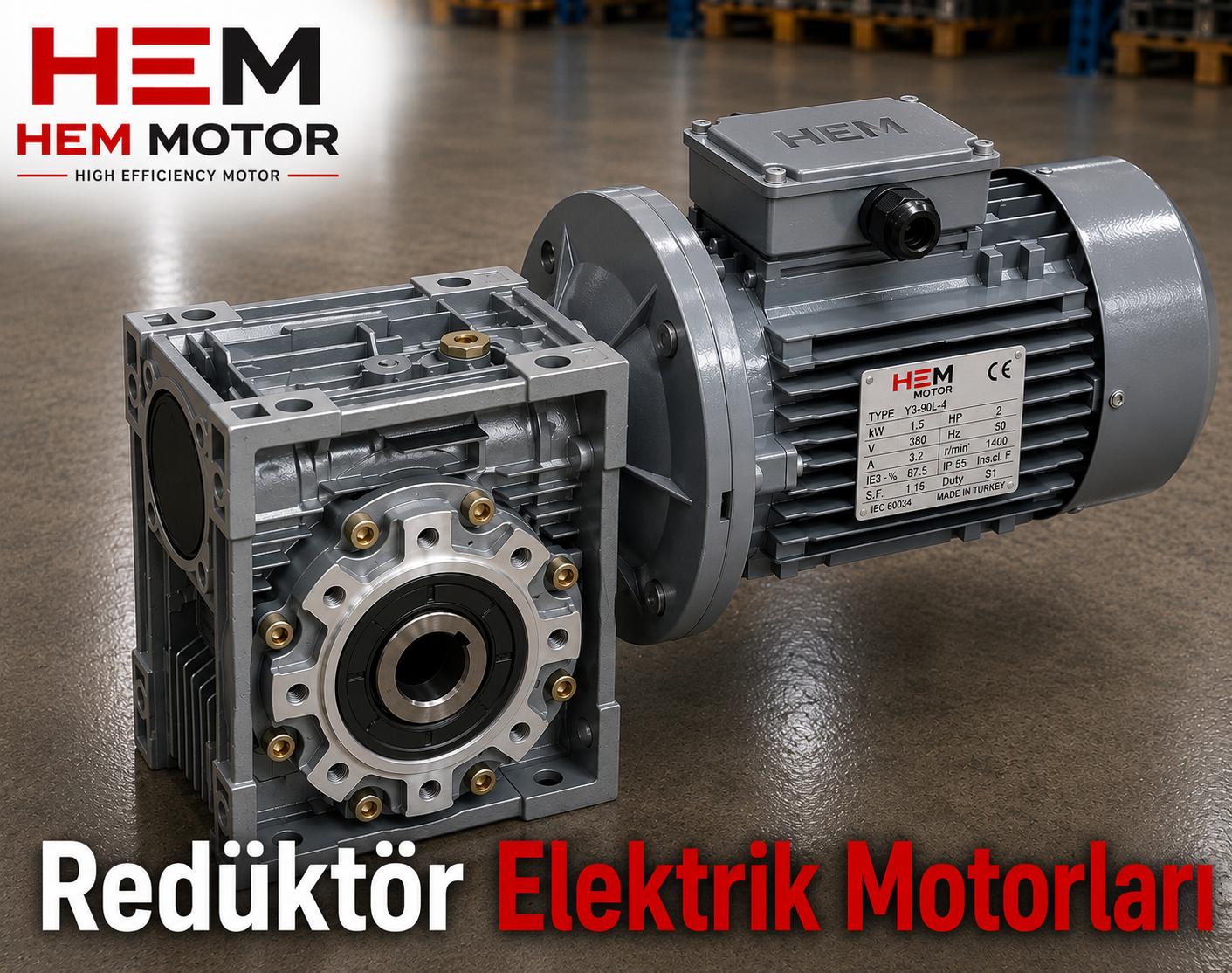
- B5 (large flange): The motor bolts directly to the machine or gearbox through a large-diameter flange. No feet. Common in pump and gearbox mounting.
- B14 (small threaded flange): A small-diameter flange with threaded holes. Used in compact machines and space-restricted installations.
- B35 (foot + flange): Both foot and flange; for applications needing extra rigid mounting.
All these mounting types are available in 5.5 and 7.5 kW frames; but the fastest delivery is usually in B3 and B5. Stating the mounting type by its code (IM B3, IM B5, IM B14, IM B35) prevents confusion in the order.
How Frame Size Affects Weight and Cooling
Frame size determines not only mounting dimensions but also the motor's weight, heat-rejection capacity and therefore durability. In the 5.5 and 7.5 kW range, taking the same power in a larger frame (for example one frame up) lets the motor run cooler and extends winding life; but weight and cost rise. Makers optimize the frame at these two ratings to strike a balance that is both economical and adequately cooled. For a motor running continuously at full load (S1) it is important that the frame rejects heat comfortably, while for short intermittent duty (S3) tolerance to fast heat-up and cool-down matters. So when selecting a motor, not just kW but the duty type should be considered.
In practice the 5.5 and 7.5 kW frames (the 112M-132M-160M range) are the most field-common and the easiest to source spares for. If a facility has several machines in this power class, standardizing them all to the same frame and mounting type lets a single spare motor cover multiple machines. This standardization simplifies the maintenance team's stock management and shortens downtime during a failure.
Efficiency Class, Voltage and Terminal Connection
Today, newly purchased 5.5 and 7.5 kW three-phase motors must by regulation be at least IE3 efficiency class. IE3 means lower losses and lower running cost at the same power; the difference is clear in long-running applications. On the voltage side 400V three-phase is standard; via star/delta bridging in the terminal box, 230/400V or 400/690V operation can be selected. If it will run with a VFD, the delta connection and suitable winding insulation should be checked.
Correct terminal connection ensures the motor runs at the right supply voltage; wrong bridging can burn the motor instantly. So the voltage/connection on the nameplate (e.g. 400V delta / 690V star) must be matched with the actual grid voltage on site. The 50/60 Hz difference should also be kept in mind; on a 60 Hz grid the same motor runs at higher speed and the power-torque balance changes.
5.5 and 7.5 kW Selection Examples by Application
To make the right choice concrete, consider common applications. Centrifugal water pump: to deliver the required flow and pressure at high speed, a 2-pole (2900 rpm) 5.5 or 7.5 kW motor is usually preferred; power is set from the pump curve, based on the draw at the far-right operating point. Axial/radial fan: 4-pole (1450 rpm) is often chosen per fan speed; as it is a quadratic-torque load, the motor should run comfortably at the nominal point. Belt conveyor: typically a 4-pole motor with a gearbox is used, considering starting torque and continuous load. Hydraulic unit: a 4-pole 7.5 kW motor is selected per pump pressure and sized for continuous duty.
The common thread in these examples is that, instead of "looking at the catalog and taking the nearest kW," you determine the machine's real speed and torque needs and select the matching pole count and frame. Especially for pumps and fans, where speed choice directly affects performance, getting the pole count right is as important as the kW choice. A wrong pole choice runs the machine either weak or overstressed even at the correct kW.
Checklist for Correct Purchasing
- Power: 5.5 kW or 7.5 kW? (Verify by machine nameplate or calculation.)
- Speed/pole: 2, 4 or 6 pole? Per the application's speed.
- Frame: Same as the old motor in a replacement? (e.g. 132M)
- Mounting: B3, B5, B14 or B35?
- Efficiency: IE3 (mandatory for new purchases).
- Voltage/connection: 400V, star/delta, VFD compatibility.
- IP protection and environment: above IP55 in dusty/wet areas.
Stock Logic and Fast Delivery
The biggest advantage of 5.5 and 7.5 kW motors is that, in the most common configurations, they can be shipped quickly from shelf stock. When a motor fails on a production line, every hour of downtime is a serious cost; so being able to source a standard 4-pole IE3 B3 motor from stock the same day or in a very short time carries great value. For facilities the most robust strategy is to keep a spare motor in stock for critical machines in this power class from the outset, or to work with a source that can supply quickly. The spare being the same power, pole, frame and mounting type as the running motor minimizes lost time during a failure.
Another point to watch when sourcing from stock is to measure insulation resistance (megger) before commissioning if the motor has been stored for a long time. A motor stored in a humid environment can lose winding insulation; a short drying or check prevents trouble on first run. At receipt, confirming that the nameplate data (power, pole, frame, mounting, IE class) exactly matches the order and that the shaft and terminal box are undamaged is the final step of correct purchasing.
Frequently Asked Questions
5.5 kW is not enough, should I move up to 7.5 kW?
If the motor continuously draws above rated current, overheats or trips the overload often, the load really is above 5.5 kW and moving to 7.5 kW is right. But measure the load first; sometimes the problem is not undersizing but blockage, bearing friction or wrong speed choice. An unnecessarily large motor also lowers efficiency at part load.
Which is more available in stock, 2-pole or 4-pole?
4-pole (1500 rpm) is the most common general-purpose choice and has the widest stock range. 2-pole (3000 rpm) is plentiful especially for pump-compressor applications. 6-pole sees less demand and may sometimes need a lead time.
What should I watch when replacing an old motor?
Read the power, pole/speed, frame code, mounting type and shaft diameter from the old motor nameplate. If you select the new motor to those dimensions, mechanical mounting is trouble-free. Because the efficiency class rises to IE3, running cost also drops.
Source 5.5 and 7.5 kW Motors Fast from Stock
For the most sought-after ratings, 5.5 and 7.5 kW, choosing the right pole, frame and mounting type makes both mounting trouble-free and delivery fast. As HEM Motor we hold a wide stock of 2- and 4-pole, B3/B5 mounted IE3 motors in this power class. Share your application's speed, mounting and voltage details; request a quote for the right motor and let us plan fast delivery with manufacturer stock.
Related guides: 5.5 and 7.5 kW IE3 stock guide, IE3 stock guide power and speed, 2-4-6 pole motor selection, reading the IM mounting code and shaft diameter and frame table.