English
 Türkçe

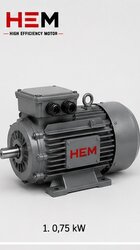
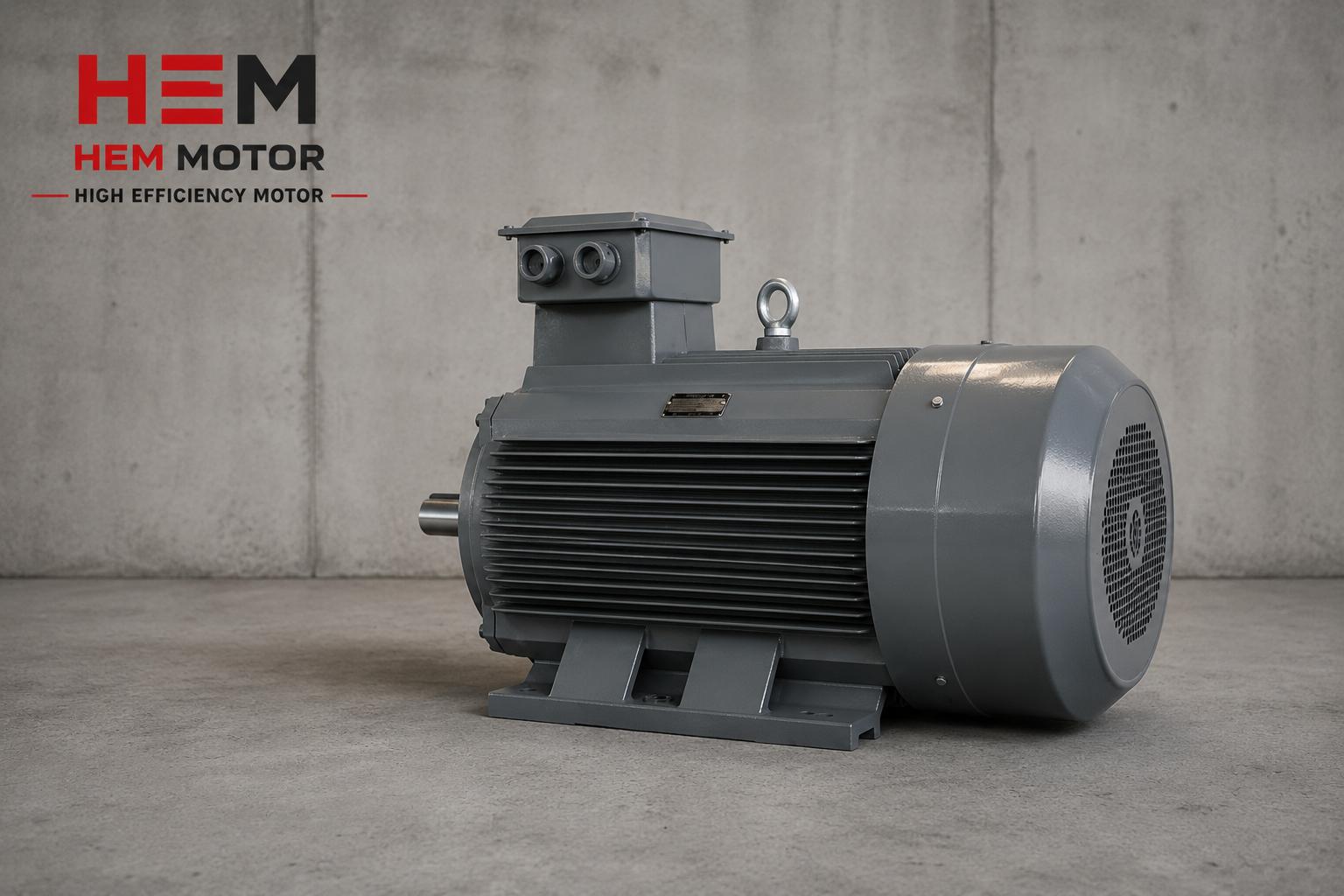

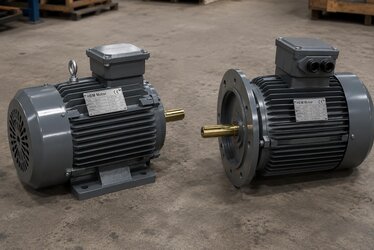
When ordering a cast iron motor, not only power and speed but also the weight, handling and mounting requirements imposed by the frame size are part of the planning. In the range from IEC 56 frame to 355 frame, the weight of a motor goes from a few kilograms to hundreds of kilograms; this directly affects your transport, lifting equipment, base and labor planning. This guide, from a buyer perspective, matches cast iron frame sizes with power ranges and sets out approximate weights, handling/lifting methods and mounting floor requirements. As HEM Motor, with our identity as manufacturer and seller, we match the right frame-size IE3 and IE4 three-phase motor from stock and ease your transport and commissioning plan.
What Is the IEC Frame Size and What Does It Determine?
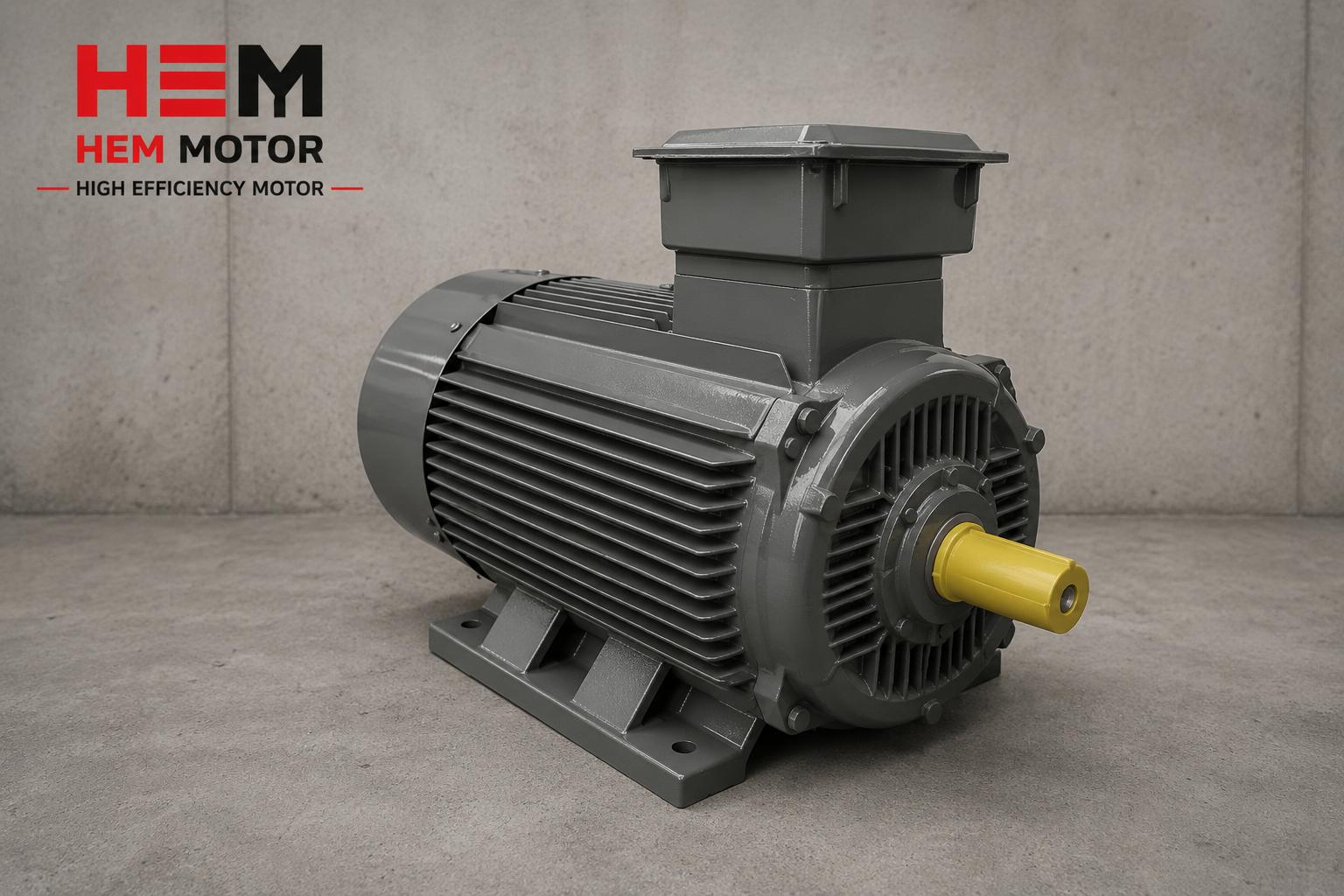
The IEC frame size is a standard code expressing in millimeters the height from the foot center to the shaft center of the motor. For example, frame 132 indicates the shaft center is 132 mm above the floor. This code standardizes the physical dimensions, foot hole spacing, shaft diameter and indirectly the weight of the motor. Our cast iron body motors are offered in a wide frame range from 63 to 355L (including 315HT). To examine frame size and power matching in depth, our article on frame size and power matching in cast iron motors explains the right choice from stock.
Why Can the Same Power Be in a Different Frame?
The same kW power can be produced in different frame sizes depending on the speed (number of poles) and efficiency class. A low-speed motor (for example 1000 rpm) requires a larger frame than a high-speed motor (3000 rpm) of the same power. Similarly, IE4 motors can sometimes be in a slightly larger frame than an IE3 motor of the same power. So when ordering, you must clarify not only the kW but also the speed and frame code.
Frame Size, Power Range and Approximate Weight
The typical power and weight characteristics of common IEC frame ranges are summarized below. Exact weight varies by speed, efficiency class, mounting type and frame material, so the values are approximate ranges for planning purposes.
Small Frames (IEC 56-90): Easily Handled
Frames from 56 to 90 generally cover small powers in the 0.06 kW to 1.5 kW range. These motors range from a few kilograms up to about 20 kg in weight and can be carried by hand by one person. These frames are frequently used in reducer applications; IEC 56-90 motors matched with worm gear reducers are a typical example.
Medium Frames (IEC 100-160): Two People or a Hoist
Frames from 100 to 160 typically cover the 2.2 kW to 18.5 kW range. The weight goes from about 25 kg to 150 kg. Handling these motors by hand becomes difficult; especially in 132 and 160 frames, using a hoist, forklift or lifting eye is necessary for safety. Cast iron body motors in this range are the most commonly used sizes in industry.
Large Frames (IEC 180-280): Crane and Forklift Required
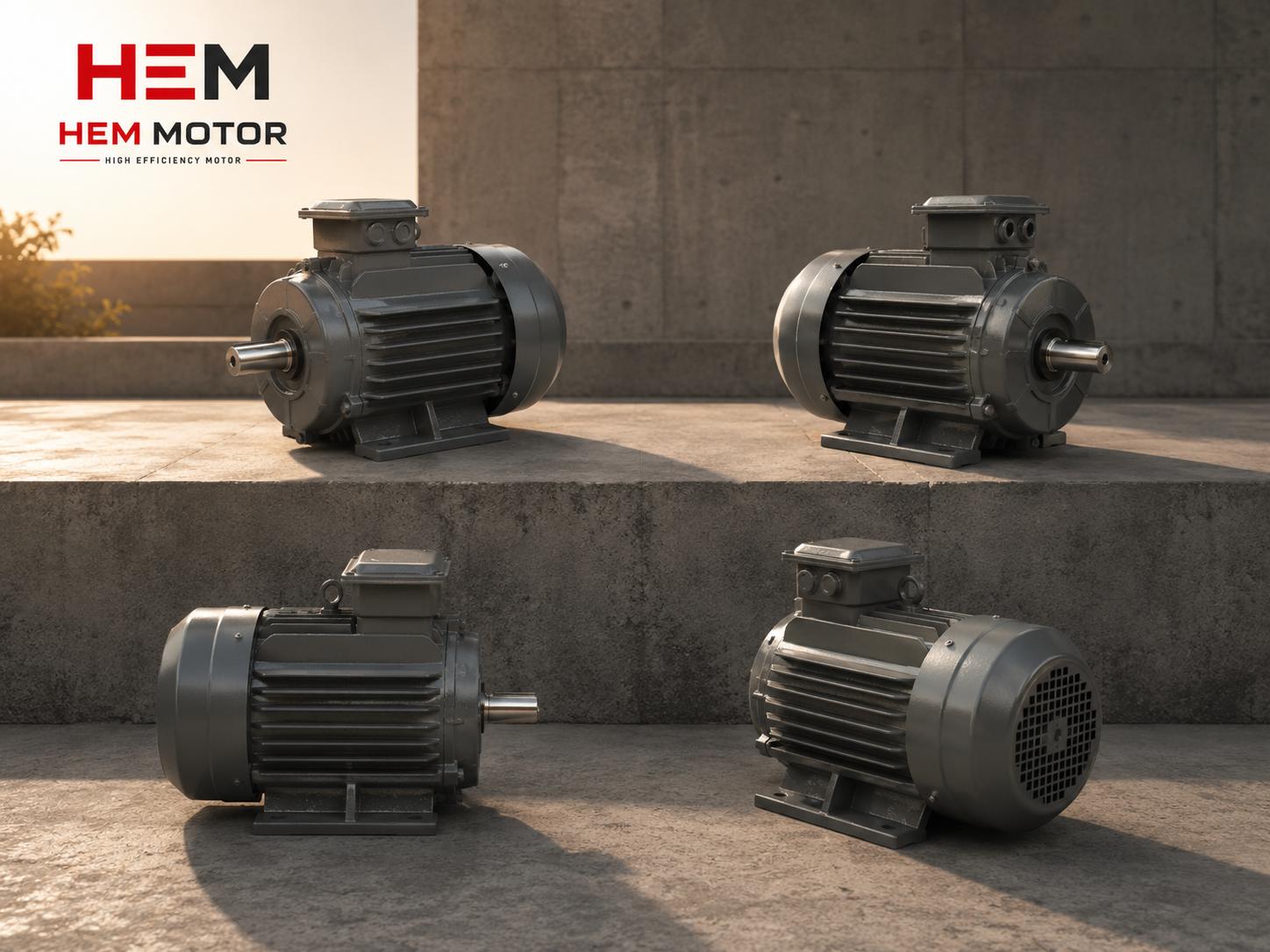
Frames from 180 to 280 cover approximately the 22 kW to 90 kW range and their weights can rise from 150 kg to over half a ton. These motors can only be moved with a crane, forklift or overhead crane; the lifting eyes on the frame are designed for this purpose. Lifting from a point other than the eye is both dangerous and damaging to the motor.
Very Large Frames (IEC 315-355): Project Logistics Required
Frames 315 and 355 generally cover large powers from 110 kW to 355 kW, and their weights can rise from a few hundred kilograms to several tons. In the Turkish market, frame 355 and a Ø100 mm shaft diameter are common at large powers. The transport, unloading and assembly of these motors must be planned like project logistics. For large-power motors above 90 kW, our article on high-power motor supply above 90 kW details the lead time, transport and commissioning plan.
Handling and Lifting: Eye Bolt, Forklift and Safety
The lifting eyes on the body of cast iron motors are positioned according to the center of gravity of the motor and are only for lifting the motor itself; hanging a motor group with a reducer, pump or coupling attached on the eye is wrong. In large frames, the sling/chain angle and lifting capacity must be selected according to the motor weight. Incorrect lifting leads to shaft bending, bearing damage and transport damage. For damage inspection on receipt, our article on the electric motor shipping damage checklist lists the steps.
Mounting Floor and Base
As the motor gets larger, the load-bearing capacity of the mounting floor and the importance of vibration damping increase. Large cast iron motors require a solid, level and balanced base; an uneven or weak floor increases vibration and shortens bearing life. Depending on your foot (B3), flange (B5) or combined (B35) mounting choice, the base and connection differ. To choose the right mounting type, you can review our electric motor mounting types page, and for shaft/key/coupling matching, see our article on shaft diameter, key and coupling in cast iron motors.
What to Clarify Before Ordering
To get the right frame the first time, clarify the following before ordering: power (kW), speed (rpm), mounting type (B3/B5/B35), frame code, shaft diameter and IP protection class. This information determines both the physical size and the weight of the motor, so you can plan your transport and lifting in advance. If you are replacing an existing motor, verifying the frame code from the nameplate is the safest way to ensure an exact match. Share your motor details with us so we can plan the right frame and weight together.
Frequently Asked Questions
How many kg is a frame 132 motor, can it be carried by hand?
A frame 132 cast iron motor can be approximately in the 60-90 kg range depending on speed and efficiency class. This weight is above the safe limit for manual handling; carrying it with a hoist, forklift or sling from the lifting eye on the body is recommended. We can clarify the exact weight according to the model you order.
Why are there different frame sizes at the same power?
The same kW power is produced in different frames depending on speed and efficiency class. Low-speed motors require a larger frame; IE4 motors can sometimes be slightly larger than an IE3 of the same power. So the frame code must be determined not only by kW but together with speed and efficiency class.
Where should I hold a large motor when lifting it?
It must be held only by the lifting eyes on the body; these are designed according to the center of gravity. Lifting from the shaft, terminal box or fan cover damages the motor. The sling angle and lifting capacity must be selected according to the motor weight, and only the motor itself should be hung on the eye.
Get a Quote
Send us the power, speed and mounting type of the motor you need; let us work out the right IEC frame size, approximate weight and transport/lifting plan for you. As HEM Motor, we match cast iron body three-phase motors from 63 to 355L from stock and provide a fast quote. You can call us at +90 (532) 345 49 86 or reach us via our contact page.