English
 Türkçe

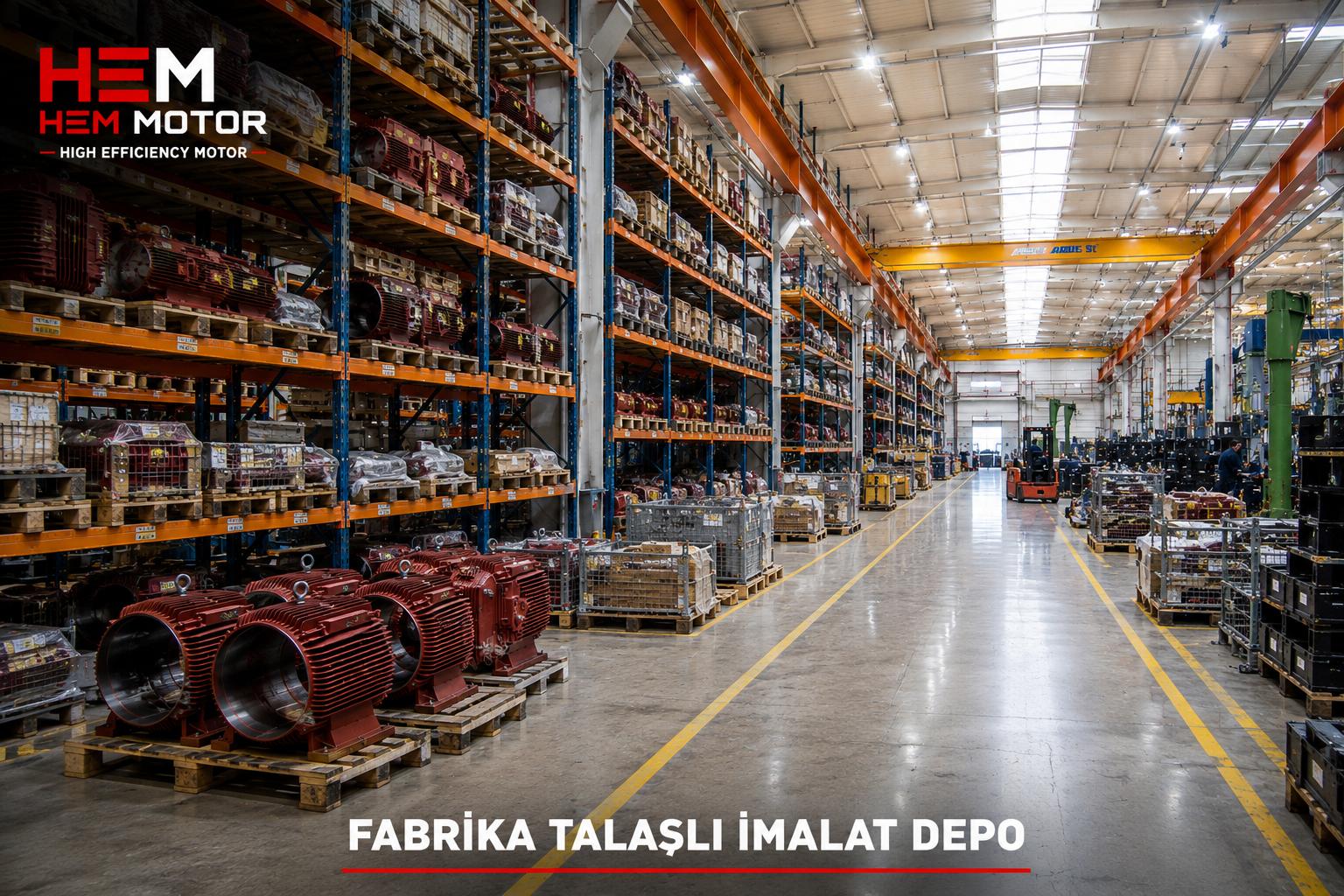

For public institutions, municipalities, organised industrial zone administrations and large corporate buyers, electric motor supply requires far more than a standard sales process. In procurement under tenders, exact compliance with the technical specification, complete submission of required documents and certificates, strict adherence to the delivery commitment and consistency in batch supply are essential. In this process, a single missing document or an out-of-spec feature can cause a bid to be excluded from evaluation. As HEM Motor, with our manufacturer and supplier identity, we examine the public and tender electric motor supply process in this article in terms of technical compliance, documentation, lead time and manufacturer assurance. Throughout the article there is no price or amount information; the focus is the correct management of the process.
In public procurement, evaluation usually requires the most suitable bid to be flawless not only commercially but also technically and administratively. Therefore, a motor supplier must manage the document and lead-time side of the process with confidence as much as matching the product's technical features to the specification. A well-prepared bid reduces the risk of both the buyer and the supplier and ensures the project proceeds smoothly.
Compliance with the Technical Specification
At the heart of the tender process is the technical specification. It defines the motor's efficiency class, protection degree, frame material, mounting type, insulation class and operating conditions. The motor to be supplied must meet each of these criteria. The most common compliance items are:
- Efficiency class (IE3/IE4): The efficiency class required by regulation and specification must be fully met.
- Protection degree (IP): IP55, IP65 or higher protection may be required depending on the environment.
- Frame material: Cast iron or aluminium is specified according to the application and specification requirement.
- Insulation and temperature class: Usually class F insulation and class B temperature rise are requested.
- Mounting type (B3/B5/B35): Foot or flange mounting suitable for the machine is required.
- Operating voltage and frequency: Rated values compatible with the grid values must be provided.
On which efficiency class is required at which power under the efficiency mandate, the IE3 and IE4 efficiency mandate and power-efficiency table articles guide the specification assessment.
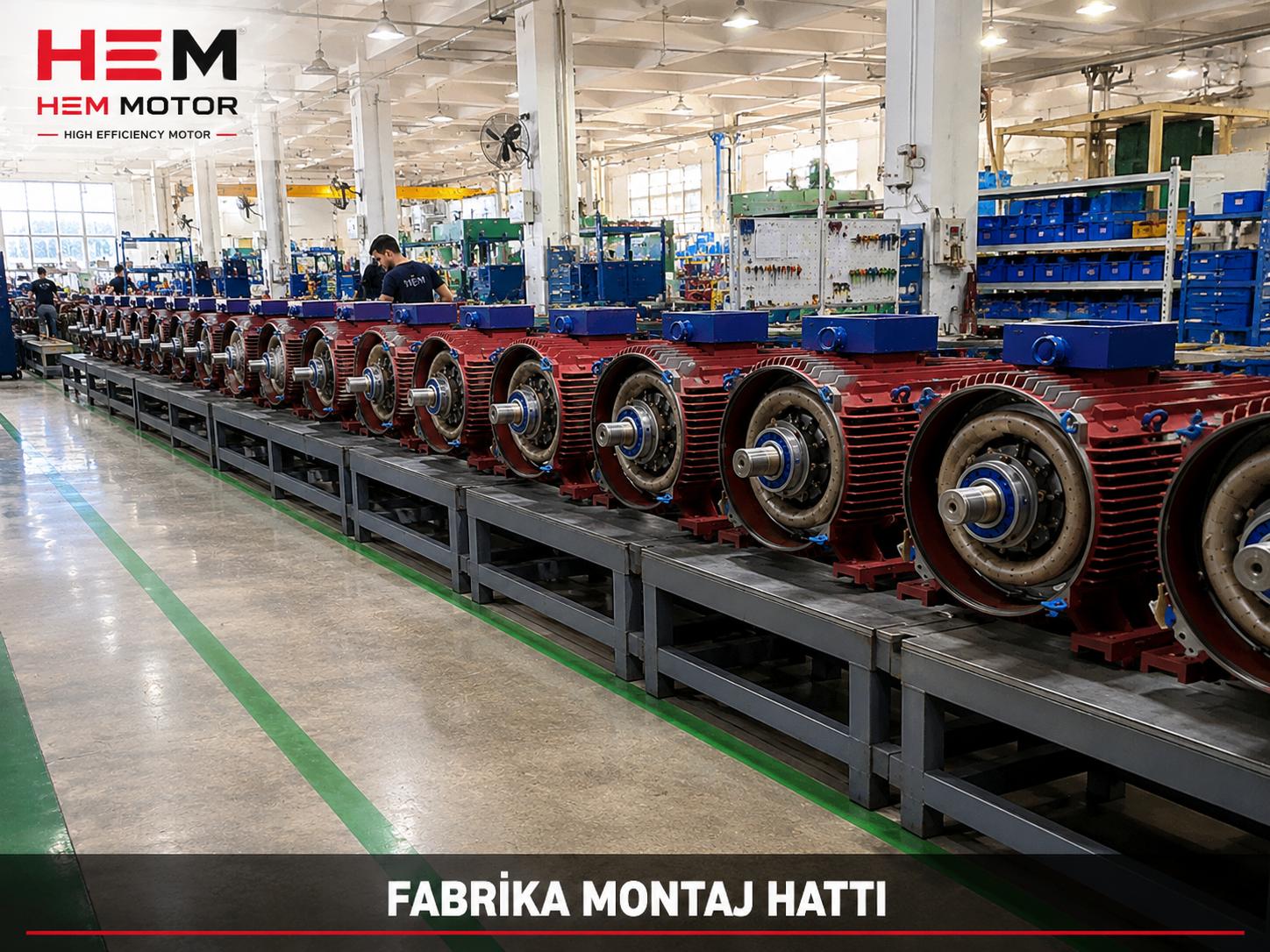
Declaration of Conformity and Required Documents
Motors delivered under a tender must be supported by documents proving their technical features. A missing document can cause even a technically suitable product to be excluded from evaluation. Typically requested documents are:
- CE declaration of conformity: Shows the product's conformity to the relevant directives.
- Efficiency test report: Verification of the efficiency class stated on the nameplate by the test method.
- Certificate of origin: A document showing the origin where the product was produced.
- Warranty certificate: The manufacturer's warranty scope and period.
- Technical data sheet (datasheet): The official document containing all the motor's rated values.
- Test and inspection reports: Check records such as insulation, rotation direction and vibration.
On how the efficiency value is measured and documented, the efficiency measurement test and documentation article explains how to interpret the test report.
Specification Compliance and Document Checklist
| Check Item | Specification Criterion | Relevant Document / Verification |
|---|---|---|
| Efficiency class | IE3 / IE4 (by power) | Efficiency test report, nameplate |
| Protection degree | IP55 / IP65 / above | Technical data sheet, nameplate |
| Frame material | Cast iron / aluminium | Datasheet, product declaration |
| Insulation / temperature | Class F insulation, B rise | Datasheet |
| Mounting type | B3 / B5 / B35 | Technical drawing, datasheet |
| Declaration of conformity | Conformity to relevant directives | CE declaration of conformity |
| Origin | Production origin | Certificate of origin |
| Warranty | Stated scope and period | Warranty certificate |
Delivery Commitment and Lead-Time Management
In public and corporate projects, the delivery lead time is often as critical as technical compliance. A project's commissioning schedule depends on the timely delivery of motors; a delay puts both the project schedule and contractual obligations at risk. Therefore the supplier must give a realistic delivery commitment and strictly adhere to it. Standard power and speed combinations that can be supplied from stock provide a major advantage in safely meeting the lead time. For the most sought power and speed combinations, the IE3 stock guide shows which values can be delivered quickly.
Batch Supply and Consistency
Procurement under tenders usually requires the supply of a large number of motors in batches. The most important matter here is maintaining product consistency throughout the entire batch. All motors delivered to the same specification must have the same technical features, the same quality and the same documentation. A difference within the batch creates problems at both technical acceptance and commissioning. Manufacturer assurance is the most important element ensuring this consistency in batch supply. For label and packaging checks of products at the delivery and acceptance inspection stage, the delivery and acceptance inspection article offers a practical check framework.
- The entire batch must meet the same specification values.
- Labels, packaging and documents must be consistent throughout the batch.
- Insulation and rotation direction must be checked at acceptance.
- Damaged or mislabelled products must be screened out at acceptance.
Manufacturer Assurance and After-Sales Support
For public and corporate buyers, a supplier's manufacturer identity directly affects the reliability of the process. Manufacturer assurance means the guarantee of technical compliance, the accuracy of documentation, the realism of the lead time and the continuity of after-sales support. Throughout a motor's life, spare parts, technical support and warranty scope are important for the long-term success of the project. HEM Motor offers this assurance to public and corporate projects with its manufacturer and supplier identity. When an additional certificate is required in special conditions such as explosive atmospheres, the exproof (ATEX) motor supply article explains which document is needed when.
Project and Corporate Buyer Process
For a corporate buyer, motor supply is usually part of a project process. This process consists of needs analysis, technical specification preparation, bid evaluation, contract, production/supply, delivery and acceptance stages. The supplier working in harmony with the buyer at each stage of this process ensures the project proceeds smoothly. Determining the right power, speed and protection values during specification preparation eases all subsequent stages. For insulation, rotation direction and vibration checks in the acceptance inspection of received motors, the delivery and acceptance inspection article clarifies the acceptance criteria.
Common Problems in the Tender Process
In public and tender motor procurement, certain problems arise again and again. Foremost is the offered product not matching the specification at small but critical points; for example, offering a motor at the right power but in the wrong efficiency class or wrong protection degree. Another common problem is one of the required documents being missing or out of date. Giving an unrealistic delivery lead time is also an important risk that delays the project. Product inconsistency within the batch causes serious problems at the acceptance stage. The common solution to these problems is correct planning from the start, transparent compliance matching and working with manufacturer assurance.
An experienced supplier manages the process safely by anticipating these problems in advance. Carefully matching specification values with product features, preparing documents completely and giving a realistic lead time make the vast majority of the process trouble-free. This ensures a predictable and safe process for both the buyer and the supplier.
Acceptance Inspection and Commissioning Process
The acceptance inspection of delivered motors is one of the most technically critical stages of the tender process. In acceptance inspection, the products' compliance with the specification is verified physically and electrically. Insulation resistance (megger) measurement, rotation direction check, label verification and, where needed, vibration measurement prove that the motor has been delivered sound and compliant. For motors delivered in batches, acceptance can be done by sampling or full inspection. Any nonconformity found in the acceptance inspection results in the rejection or replacement of the product. Therefore, the supplier must know the acceptance criteria from the start and deliver products in accordance with them.
At the commissioning stage, correctly connecting the motors in the field, checking the rotation direction and monitoring during the first start are important. Motors delivered with manufacturer assurance cause fewer problems during commissioning and contribute to the smooth completion of the project. Good planning of the acceptance and commissioning stage protects the project's lead-time and quality targets together.
Evaluation Criteria in Supplier Selection
For public and corporate buyers, choosing the right supplier means securing not just the product but the entire process. When evaluating a motor supplier, the following criteria stand out: manufacturer identity and assurance, capacity for compliance with the technical specification, documentation adequacy, stock and fast delivery capability, consistency in batch supply and continuity of after-sales support. A supplier meeting these criteria ensures the project proceeds safely in terms of both technical and time aspects. Focusing on only a single criterion can create risk in the other stages of the process.
- Manufacturer assurance: The guarantee of technical compliance and documentation.
- Stock and lead time: Fast and reliable delivery capacity.
- Documentation: Complete submission of all required certificates and reports.
- Consistency: The same quality and features throughout the batch.
- After-sales support: Continuity of warranty, spare parts and technical support.
Points to Watch in Technical Specification Preparation
The success of the tender process largely depends on the correct preparation of the technical specification. A missing or contradictory specification puts both the buyer and the supplier in difficulty in the later stages of the process. A well-prepared specification clearly defines the application in which the motor will work, the environmental conditions and performance expectations. Determining power, speed, pole count, protection degree and frame material according to the application during specification preparation eases the subsequent bid evaluation stage. While a too narrow or unnecessarily restrictive specification reduces competition, a too general specification can lead to unsuitable products being offered. A balanced specification secures both competition and technical compliance.
As a supplier, the right approach is to understand the buyer's technical need and transparently match the product features to the specification values. This matching table allows the evaluation committee to review the bid quickly and correctly. A transparent compliance table increases the reliability of the process.
Regulation and Efficiency Mandate
In electric motors, efficiency is a decisive criterion in terms of both regulation and specification. A minimum efficiency class is mandatory in certain power ranges, and this requirement is updated towards higher classes over time. In public procurement, the at-least IE3, and in some cases IE4, efficiency class required by current regulation is usually requested. The supplier must prove with documents that the offered motor is in an efficiency class compliant with current regulation and specification. A bid in the wrong efficiency class is both contrary to regulation and excluded from evaluation. Therefore, efficiency class is one of the most sensitive items of specification compliance.
- Minimum efficiency class: IE3 or IE4 is required depending on power and regulation.
- Documentation: The efficiency class must be verified by a test report.
- Currency: Regulation updates must be followed and the most current class offered.
- Label verification: The IE code on the motor nameplate must be consistent with the documents.
Delivery, Packaging and Logistics
In batch motor delivery, packaging and logistics are critical for the product to arrive undamaged. Proper packaging, palletising and securing are needed so that large and heavy motors are not damaged during transport, loading and unloading. Checking the labels, packaging and quantity of products at the delivery point is the first step of the acceptance inspection. In corporate projects, planned and phased delivery aligns with the buyer's storage and commissioning schedule. Correct logistics planning contributes to safely meeting the lead time and preventing unnecessary waiting in the field.
Frequently Asked Questions
Why is it not enough for a motor bid to be only technically compliant?
Because in public and tender processes, evaluation covers the product's document, lead-time and administrative compliance as much as its technical compliance. A technically suitable motor can be excluded from evaluation if the required certificate or declaration of conformity is missing or the delivery lead time cannot be met. Therefore the bid must be complete in terms of technical, document and lead-time aspects.
What is the most critical matter in batch supply?
Consistency. All motors delivered to the same specification must have the same technical features, the same quality and the same documentation. Differences within the batch create problems at technical acceptance and commissioning. Manufacturer assurance is the most reliable way to ensure this consistency.
Why is manufacturer assurance important?
Manufacturer assurance is the guarantee of technical compliance, the accuracy of documentation, the realism of the lead time and the continuity of after-sales support. Since the need for spare parts and technical support will arise throughout a motor's life, working with a supplier that has a manufacturer identity ensures the long-term security of the project.
Electric motor supply under public and tender processes is one where technical compliance, documentation, lead time and consistency are managed together. HEM Motor, with its manufacturer and supplier identity, offers IE3 and IE4 class motors to public and corporate projects with technical features compliant with the specification, complete documentation and a reliable delivery commitment. Share your project's technical specification and lead-time need with us; reach out for a suitable product range and reliable supply.