English
 Türkçe

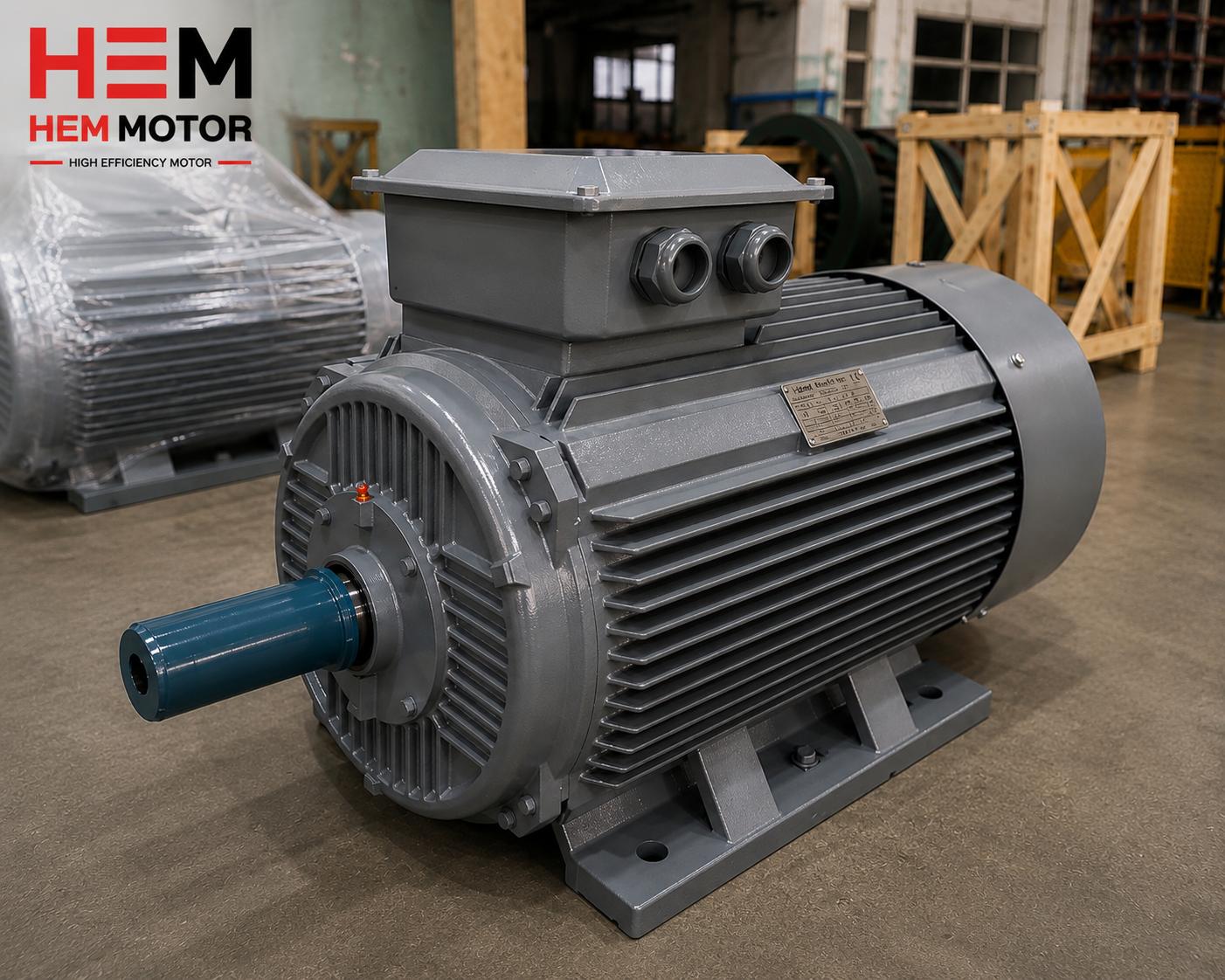

Buying an electric motor is not the end of the relationship but the beginning. After the motor is installed in the plant, the after-sales relationship with the manufacturer and supplier continues through warranty coverage, technical support, spare-parts supply and, when needed, the return or replacement (RMA) process for a faulty product. Especially in industrial plants and projects, a motor failure means not just the cost of that motor but the loss of a stopped production line. So whom you buy the motor from matters as much as how clear and fast that supplier's after-sales assurance is — it is a critical decision.
As HEM Motor, we stand behind the electric motors we manufacture and supply with a manufacturer's assurance. In this article we transparently explain warranty coverage and conditions, how to report a fault, how the return/replacement (RMA) flow for a faulty motor works, spare-parts and technical-support processes, and corporate-customer and project support. Our goal is for you to know clearly, before buying, what awaits you after the sale.
Warranty Coverage and Conditions
An electric motor warranty covers defects arising from manufacturing and materials. That is, if a fault originating from production appears in the motor's winding, bearing, frame or connection elements, it is repaired or the motor is replaced within the warranty period. The warranty period is determined by the product and application and usually starts from the delivery/invoice date. For standard industrial motors, the common warranty period is clearly stated in your purchase document and warranty conditions.
For the warranty to be valid, the motor must have been used under the conditions stated on its nameplate and in its technical documentation. The main situations that fall outside warranty coverage are:
- Winding burnout caused by wrong connection, wrong voltage/frequency or phase loss.
- Overloading above the nameplate values, or running without derating at an unsuitable ambient temperature/altitude.
- Unauthorized intervention, opening, winding replacement (rewinding) or use of non-original parts.
- Physical damage and water/moisture ingress during transport, installation or storage.
- External factors such as natural disaster, impact and flooding.
For this reason, selecting the motor correctly, connecting it correctly and operating it under suitable conditions is also important for preserving the warranty. Using the right protection (thermal relay, fuse, temperature protection) safeguards both the motor and the warranty.
Fault Reporting: The First Step
When a problem occurs with a motor, the first step is to report the fault correctly. Having the following information ready shortens the process: the type code and serial number on the motor nameplate, purchase/invoice details, a short description of the fault (not running, overheating, noisy, vibrating, etc.) and, if possible, the operating conditions at the time of the fault (voltage, load, environment). This information lets our technical team make a remote preliminary assessment and, in many cases, propose a solution without a site visit.
Many "faults" actually stem from installation or commissioning: wrong direction of rotation, loose terminal connection, wrong tap selection or insufficient cooling. For this reason, making first contact through technical support avoids unnecessary disassembly and shipping costs. In cases where the problem genuinely originates from the product, the RMA (return/replacement) process is started.
The RMA Process: Return and Replacement Flow for a Faulty Motor
RMA (Return Merchandise Authorization) is a structured process that governs sending a faulty product back to the manufacturer for inspection, repair or replacement. The aim is for both the customer and the manufacturer to be able to track and record each stage of the process. The table below summarizes a typical RMA flow step by step.
| Step | Stage | What Is Done? |
|---|---|---|
| 1 | Fault report | An application is made with nameplate details, invoice and fault description. |
| 2 | Preliminary assessment | The technical team reviews remotely; it is distinguished whether the cause is installation/use or the product. |
| 3 | RMA approval | If product-related, a return authorization number is issued; shipping instructions are provided. |
| 4 | Shipping the product | The motor is sent in suitable packaging, with the RMA number stated. |
| 5 | Inspection/diagnosis | The motor is opened by the manufacturer, the fault cause is identified, warranty coverage is assessed. |
| 6 | Resolution | If under warranty, repair or replacement; if out of scope, information and options are offered. |
| 7 | Return/closure | The repaired/replaced motor is sent to the customer, and the process is recorded and closed. |
Thanks to this structured flow, the process runs transparently and root-cause analysis can be done for recurring faults. For corporate customers, each RMA record creates a reference for a similar future situation and contributes to the continuous improvement of supply quality.
Spare Parts and Technical Support
Over a motor's life, whether under warranty or not, some parts may be renewed over time: bearings, fan and fan cowl, terminal box and its gaskets, shaft seals and the like. The key in spare-parts supply is correctly identifying the motor; that is why the type code and serial number on the nameplate should always be kept. The correct part preserves the motor's original performance and prevents out-of-warranty problems.
Technical support creates value not only at the moment of failure but also at the selection and commissioning stage. Getting support on correct motor selection, the right protection equipment, the right connection and commissioning checks prevents many later problems from the start. As HEM Motor, we provide technical-team support throughout the whole process, from determining the right motor for the application before the sale to solving faults after the sale.
Tips That Speed Up the After-Sales Process
- Keep the motor nameplate and your purchase document; the type code and serial number are needed at every application.
- Check direction of rotation, insulation (megger) and vibration during commissioning; an incoming inspection catches problems early.
- Use appropriate protection (thermal, fuse, PTC/PT100); it protects both the motor and the warranty.
- Do not open the motor or try to rewind it at the moment of failure; unauthorized intervention can void the warranty.
- Note the fault conditions (voltage, load, noise, overheating); it speeds up diagnosis.
- Keep a spare motor for critical applications; it minimizes downtime.
Corporate Customer and Project Support
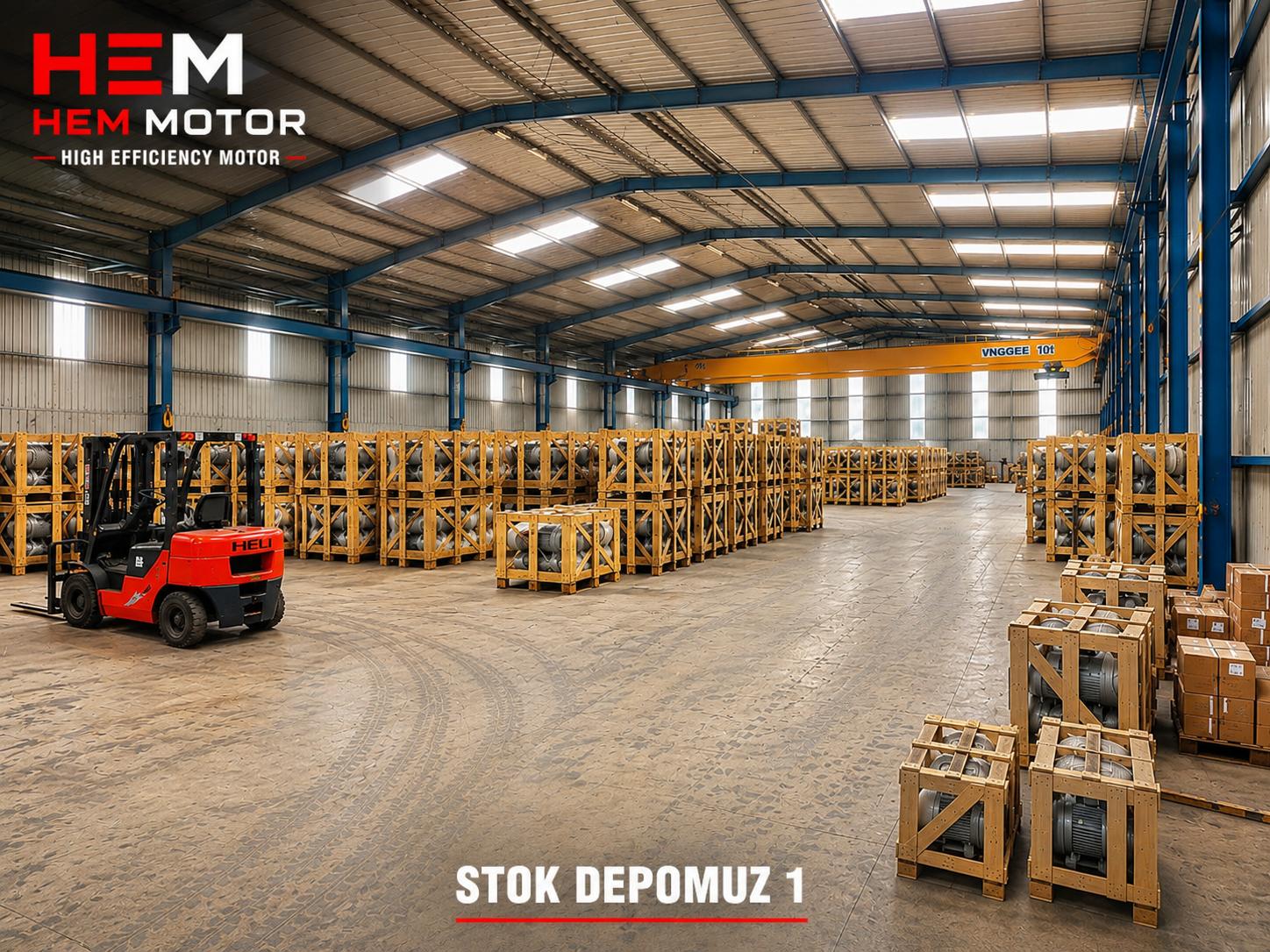
For industrial projects and corporate customers, the after-sales need goes beyond a single motor. In plants where many motors are used together, stock management with standard type codes, fast spare supply, project-based technical documentation and single-point support matter greatly. As HEM Motor, we offer our corporate customers a holistic after-sales approach, from project-specific motor-range planning to identifying critical spares in advance.
Manufacturer's assurance is not just a warranty document; it means a reachable technical team at the moment of failure, a fast RMA process, continuous spare-parts access and fast supply from stock. The continuity of a plant depends not only on the motor's performance on day one but also on how quickly a solution can be found when it fails. For this reason, we recommend that you evaluate after-sales assurance as a criterion beyond price when choosing a supplier.
Common Situations in Fault Diagnosis
A significant share of the reports received in the after-sales process actually stem not from the product but from environmental conditions or application errors. Knowing these situations in advance both reduces the risk of failure and speeds up diagnosis when a real fault occurs. The most frequently encountered headings are:
- Overheating: Usually caused by insufficient cooling, a blocked fan cowl, no derating at high ambient temperature, or overloading. A production defect originating from the winding is rare.
- Abnormal noise and vibration: Mostly caused by misalignment at installation, loose base bolts, an unbalanced coupling or bearing wear. Correct installation and alignment solves most of these problems.
- Not running / struggling to start: Could be phase loss, wrong tap (star/delta), low voltage or wrong pole/speed selection. The supply and connection are checked first.
- Early bearing failure: Could be due to wrong grease in a hot environment, drive-induced bearing currents (lack of grounding/EMC) or wrong coupling load.
Thanks to this classification, the technical team quickly narrows down the possible causes according to the reported symptom. Often the customer can solve the problem on site by applying a simple checklist (supply voltage, direction of rotation, cooling, connection tightness); when a real product fault is involved, the RMA process begins with a sound diagnosis.
The Difference Between Warranty, Service Life and Expected Operating Time
Two concepts often confused in the after-sales process are the warranty period and the service (operating) life. The warranty period is the time during which the manufacturer's assurance is legally/contractually valid and production defects are covered. The service life, on the other hand, is the total operating time expected of the motor when run under suitable conditions, and is usually far longer than the warranty period; a correctly selected and maintained industrial motor serves for many years depending on its insulation and bearing life.
Knowing this distinction is important for setting expectations correctly. When the warranty period ends, the motor's life does not end; on the contrary, with periodic maintenance, correct greasing and operation under suitable conditions, the motor continues to run efficiently throughout its service life. The manufacturer's after-sales support is also not limited to the warranty period: spare-parts supply, technical consultancy and repair when needed continue throughout the motor's entire service life. This continuity shows why supplier selection is a long-term decision, especially for industrial motors that are long-lived investments.
Frequently Asked Questions
Is a motor with a burnt winding covered by warranty?
This depends on the cause of the burnout. A winding fault arising from a manufacturing or material defect is covered by warranty. However, burnouts resulting from wrong voltage/frequency, phase loss, overloading, running without derating in an unsuitable environment, or unauthorized intervention (rewinding) are generally outside warranty. During inspection, the root cause of the fault is identified and coverage is assessed.
Can I send the faulty motor back directly?
You first need to report the fault and obtain RMA (return authorization) approval. In the preliminary assessment it is determined whether the fault is installation/use-related or product-related; most problems can be solved with remote technical support. In product-related cases an RMA number is issued and the motor is sent with this number and in suitable packaging. This ensures the process is tracked correctly.
What is done for an out-of-warranty fault?
If the fault turns out to be outside warranty coverage, the situation is reported to you transparently and solution options are offered: repair, supply of the necessary spare part or a new motor recommendation. Being out of warranty does not mean support ends; the technical team guides you to get the motor running again or to replace it with a motor better suited to the application.
Selecting the right motor, and having a strong after-sales assurance behind it, is critical for the continuity of your plant. To work with manufacturer's assurance on electric motor supply, warranty and technical support, you can get in touch with HEM Motor and request a quote for fast delivery from stock and corporate project support.
Related content: service life and warranty period in IE3 motors, delivery and acceptance inspection, rewind or buy new and protection with thermal relay and fuse.