English
 Türkçe

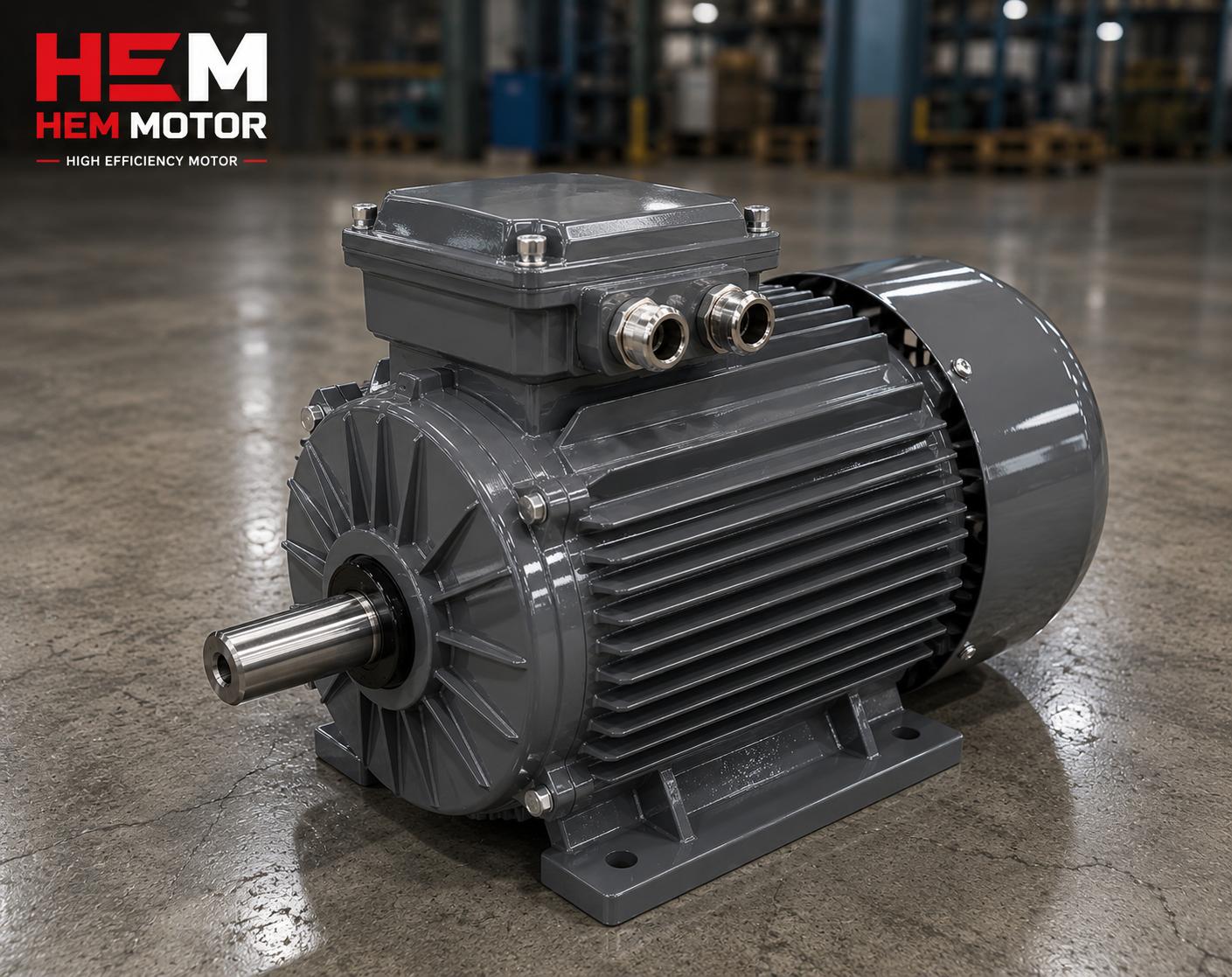

When buying a geared motor (motor + reducer together), the thing buyers wonder about most is how the price is determined. Behind the same phrase "geared motor" lie dozens of configurations whose prices can differ greatly. What confuses a buyer is this: why does a serious price difference arise between two "geared motors"? In this article we cover the main factors affecting geared motor prices one by one: reducer type, reduction ratio, output torque, frame size, motor power and efficiency class, material and mounting options. Without giving any fixed currency or numbers anywhere, we explain "what raises the price and why" with engineering logic, so that when you receive a quote you can read the line items correctly.
Note: This article differs from our worm gear reducer price factors article where we cover worm gear reducer price factors separately; here we cover the general price logic of the geared motor.
1. Reducer Type: The Biggest Price Driver
The factor that most affects geared motor price is the type of reducer used. Each type offers a different mechanical structure, a different efficiency and a different torque capacity.
Worm Gear Reducer
Works with a worm screw and bronze gear combination; gives a 90-degree-angled output and is compact. Economical at small and medium powers, advantageous in some applications with its self-locking feature. It is usually the most affordable reducer type. There are frame options from HEM30 to HEM130. See our worm gear reducers page for details.
Helical Reducer
Offers high efficiency with helical gears; more efficient than a worm gear and suited to higher powers. Because efficiency is high it lowers energy cost, but as an initial investment it is usually higher than a worm gear.
Bevel-Helical Reducer
Provides a 90-degree-angled, high-efficiency and high-torque output with a helical and bevel gear combination. Preferred for heavy-duty and high-power applications; since its structure is more complex, the price band is higher. Our K Series bevel-helical reducers are widely used with motor powers from 0.75 kW to 15 kW. We cover the economic comparison between bevel-helical and worm gear in our K Series bevel-helical vs worm gear article. For the product, our helical worm gear reducers page is a guide.
Planetary Reducer
The compact but structurally most complex type, offering very high torque density in the same frame; usually in the highest price band.
In short: type selection is made according to both the mechanical requirement and the budget. In applications wanting high efficiency and high torque, bevel-helical/helical stand out; for an economical and compact solution, worm gear stands out.
2. Reduction Ratio (i): Determines the Output Speed
The reduction ratio (for example 1/10, 1/30, 1/100) shows how much the motor speed will be reduced. A 1400 rpm motor with a 1/30 ratio reducer gives roughly 46 rpm output. As the ratio increases (for example 1/80, 1/100):
- Output speed drops more, output torque increases.
- In worm gears very high ratios sometimes require a double stage, which affects the price.
- Some non-standard intermediate ratios may require special manufacture and raise the price.
The most preferred ratios (for example 1/10, 1/20, 1/30) are in standard production so they are usually more affordable; exceptional ratios raise the cost. You can see the effect of reduction ratio on output speed in practice in our 220V single-phase geared motor output speed article.
3. Output Torque and Frame Size
As the output torque (Nm) the reducer must carry increases, a larger and stronger frame is needed. Frame size (such as HEM30, HEM40, ... HEM130) directly determines the amount of material, gear sizes and bearing capacity. A larger frame:
- Uses more cast iron/aluminum material.
- Contains larger gears and shaft.
- Offers higher torque and radial load carrying capacity.
Therefore output torque and frame size are among the basic components of the price. Choosing the frame according to the real torque need of the application both optimizes the price and lets you avoid an unnecessarily large (and expensive) choice. For correct matching of shaft and key dimensions, our motor shaft diameter and key dimensions article is useful.
4. Motor Power and Efficiency Class (IE3/IE4)
The "motor" side of the geared motor is also an important part of the price. As motor power (kW) increases, the motor price rises. The efficiency class is also decisive:
- IE3 motor: Premium efficiency; mandatory by regulation across a wide power range.
- IE4 motor: Super premium efficiency; although its initial investment is higher than IE3, it pays back with energy savings in a continuously running application.
We examine the gain in combining an efficient motor with a reducer in our using an IE4 motor with a reducer article. For suitable motor options for the reducer, see our efficient electric motors page and in general our IE4 electric motors page. For the general factors that make up the motor price, our factors affecting electric motor prices article is a comprehensive resource.
Frame-Power Matching: The Logic That Determines Price
There is a direct match between the reducer frame and the motor power, and this match significantly determines the price. For example, in HEM series worm gear reducers each frame suits a certain motor power range: small frames (HEM30, HEM40) with small powers such as 0.06 - 0.37 kW; medium frames (HEM63, HEM75) between 0.37 - 3 kW; and large frames (HEM110, HEM130) with higher powers such as 2.2 - 11 kW. As the frame grows, the price of both the reducer and the motor attached to it increases.
Getting this match right is critical: choosing a frame larger than needed means unnecessary cost, while choosing one smaller than needed means early wear and failure. Clarifying the application's real torque and power need both optimizes the price and provides a reliable solution. The compatibility of the motor's IEC frame size with the reducer's input connection is also part of this match; an incompatible choice can bring extra adapter or special manufacture cost.
Application-Based Selection: Which Configuration for Which Job?
The most practical way to evaluate price correctly is to start from the character of the application:
- Conveyor belt: Medium torque, continuous operation. Usually a worm gear or helical reducer; if efficiency matters, helical stands out.
- Mixer / agitator: Low output speed, high torque. A bevel-helical or high-ratio worm gear is suitable.
- Lifting / crane: High torque and safety margin. Bevel-helical or planetary; the service factor is chosen high, which affects the price.
- Small dosing / feeding: Low power, compact. A small-frame worm gear is the most economical solution.
When the right type and frame are chosen for each application, the price does not swell unnecessarily; with a wrong choice you either pay extra or experience failure in a short time. You can review suitable reducers on our worm gear reducers and helical worm gear reducers pages.
5. Material and Frame Type
Whether the reducer body is aluminum or cast iron affects the price. An aluminum body is light and economical at small/medium powers; a cast iron body offers durability in heavy-duty and harsh environments but is more costly. Likewise on the motor side, an aluminum body is preferred at small powers, and a cast iron body for heavy duty and large powers.
6. Mounting Type and Connection Options
How the motor connects to the reducer (IEC flange B5/B14), the mounting position (M1-M6) and the output shaft type (solid shaft, hollow shaft, sleeve, etc.) affect price and lead time. Standard configurations are usually more affordable and faster to supply, while special shaft/flange requests may go into special manufacture. For mounting positions and lubrication, our reducer mounting positions article is a guide. You can find which motor fits the reducer in our worm gear and NMRV reducer motor matching article.
7. Monoblock or Separate Motor + Reducer?
Buying the geared motor as a monoblock (integrated) versus sourcing the motor and reducer separately leads to different price and maintenance outcomes. The monoblock solution is compact and connection-trouble-free; separate sourcing can offer advantages in flexibility and part replacement. We cover this decision in detail in our geared motor vs separate motor + reducer article and our monoblock geared motor purchasing article.
8. Stock or Special Manufacture?
A standard configuration can be supplied quickly from stock and is usually more affordable; a non-standard ratio, shaft or frame request requires special manufacture, extends lead time and affects cost. We cover this distinction in our stock standard motor vs special manufacture article. Why products of the same kW are priced differently is explained in our brand, origin and warranty difference in motor price article.
Total Cost of Ownership: Price Is Not Just the Tag
When buying a geared motor, looking only at the purchase price can be misleading. In a continuously running drive system, energy consumption makes up the largest part of the lifetime cost; the purchase price is small next to this total. A more efficient (but higher initial-investment) helical or bevel-helical reducer + IE4 motor combination can be more economical in the long run than a cheap, low-efficiency solution.
So the price evaluation should be done on three axes: purchase price, energy cost (efficiency) and maintenance/downtime cost. A low-efficiency reducer, although it looks cheap, more than makes up the difference by consuming extra electricity over the years. We cover the ratio of maintenance and operating cost to purchase price in our electric motor maintenance and operating cost article, and the price line items in a proforma and quote in our proforma and quote reading article.
Maintenance and Spare Part Cost
The reducer type affects not only the purchase price but also the maintenance cost. In worm gear reducers the bronze gear can wear over time and requires oil changes; helical and bevel-helical reducers usually have a longer-life gear structure. In a continuous and heavy-duty application, spare part availability and ease of service are an important part of the total cost. Since the reducer mounting position affects lubrication, a wrong position can increase maintenance cost; therefore mounting and lubrication should be considered together at the selection stage. You can find the long-term advantage of using an efficient motor in a geared drive in more detail in our using an IE4 motor with a reducer article. You can reach all our products and services from our home page.
Frequently Asked Questions
What affects the price of a geared motor the most?
The biggest driver is the reducer type (worm gear, helical, bevel-helical, planetary). This is followed by reduction ratio, output torque and frame size, plus motor power and efficiency class. In general, configurations requiring high torque, high efficiency and a large frame are in a higher price band. Choosing according to the real need of the application lets you avoid unnecessary cost.
Which reducer type is most economical?
At small and medium powers a worm gear reducer is usually the most affordable option and, with its compact structure, is enough for many applications. However, in continuously running heavy applications requiring high efficiency and high torque, a bevel-helical/helical reducer, although higher in initial investment, can provide a long-term advantage in energy and durability.
Does a high reduction ratio raise the price?
Standard ratios (for example 1/10, 1/20, 1/30) are usually affordable. Very high or non-standard intermediate ratios sometimes require a double-stage structure or special manufacture; this can affect price and lead time. Therefore meeting your output speed with standard ratios as much as possible is economical.
Get a Quote
Let us determine the most correct and economical geared motor together according to your application's real output speed and torque need. For a quote with the right type, ratio, frame and efficiency class, reach us at +90 (532) 345 49 86 or via our contact page. You can find which information to provide when requesting a quote in our information to provide when requesting a quote article.
Price Evaluation Checklist
- Which reducer type suits your application (worm gear/helical/bevel-helical/planetary)?
- Has the required output speed and the corresponding reduction ratio been determined?
- Has the real output torque (Nm) been calculated; is the frame chosen accordingly?
- Are the motor power (kW) and efficiency class (IE3/IE4) suitable for the need?
- Is the frame material (aluminum/cast iron) suitable for the environmental conditions?
- Are the mounting type, position and output shaft standard or special manufacture?
- Has the monoblock vs separate, stock vs special manufacture decision been made?