English
 Türkçe


One of the most fundamental decisions shaping the price and value of an electric motor is whether the frame material will be aluminium or cast iron. Both options have been used side by side in industry for years; yet each rests on a different cost-value logic. An aluminium frame offers a light, compact and economical solution, while a cast iron frame brings durability for heavy duty, high power and harsh environments. In this article, HEM Motor examines the effect of frame material on price and value in terms of weight, heat dissipation, vibration damping, service life and total cost of ownership. Our aim is to clarify which frame truly adds value in which application and how to read a quotation correctly. This article contains no price figures; the focus is the right value decision.
A common mistake in motor selection is to look only at the initial purchase cost and ignore the long-term effect of the frame material. Yet the right frame choice affects the failure frequency, maintenance need and energy efficiency throughout the motor's working life. An economical frame used in the wrong environment can fail quickly, creating a cost far above the initial saving. That is why the frame material decision is not a price decision but a value decision.
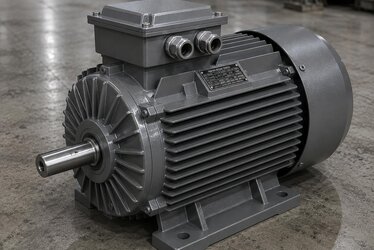
Characteristics of Aluminium Frame Motors
Aluminium frame motors stand out with their light structure and compact dimensions. Low weight eases handling and mounting, which is an advantage especially in frequently relocated machines and applications close to hand tools. Because aluminium has high thermal conductivity, heat dissipation is efficient at small powers. From a production standpoint, aluminium casting is a mass and economical process; therefore aluminium frame motors are usually positioned as an economical solution in the small and lower-medium power range.
- Lightness: Easy handling, mounting and relocation.
- Compact size: An advantage in tight layouts.
- Good heat transfer: Efficient heat dissipation at small powers.
- Economical production: A favourable cost-value balance at small powers.
- Typical use: Small machines, pumps, fans, light-duty drives.
Characteristics of Cast Iron Frame Motors
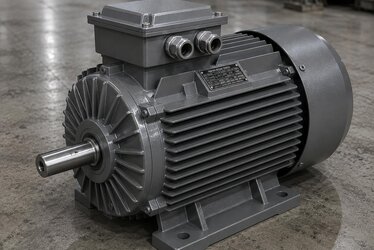
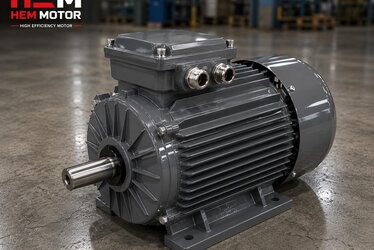
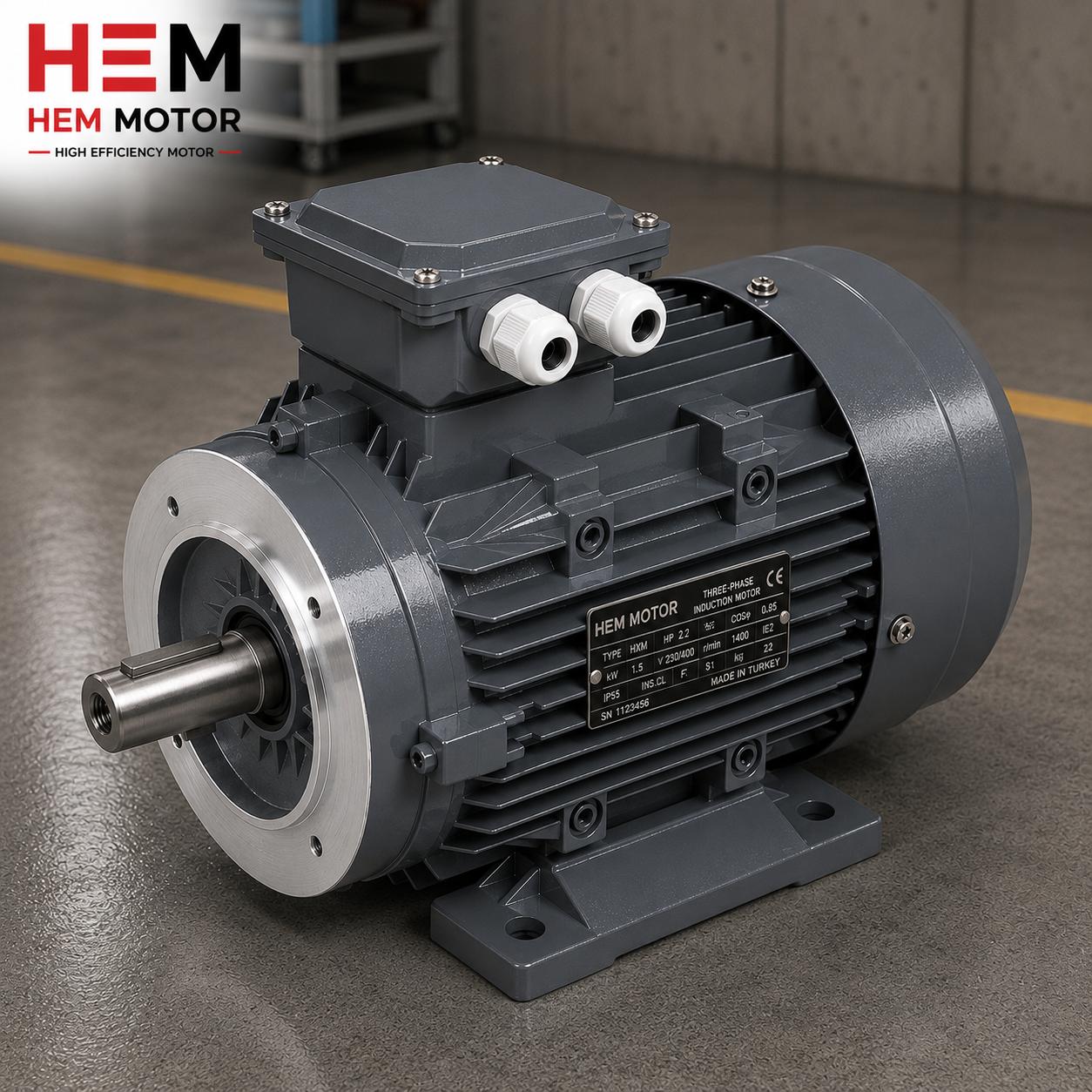
Cast iron frame motors are considered the reference for mechanical strength and long life. The cast frame is heavier and more massive; this mass provides a major advantage in damping vibration and resisting mechanical impact. In heavy-duty applications, at high powers and in harsh environments, the cast iron frame preserves the motor's structural integrity. Together with the right paint system against corrosion, it runs reliably for years in outdoor and humid environments. Therefore, high-power and heavy-duty motors are almost always produced with cast iron frames.
- Mechanical strength: High resistance to impact, vibration and heavy load.
- Vibration damping: The massive frame absorbs vibration for quiet, stable running.
- Corrosion resistance: Suitable for outdoor and humid environments with the right paint.
- High power: The standard choice at large powers.
- Long life: Long working life even in heavy duty.
Cost-Value Comparison Table
| Criterion | Aluminium Frame | Cast Iron Frame |
|---|---|---|
| Weight | Light | Heavy |
| Size / Compactness | Compact | More massive |
| Mechanical strength | Medium | High |
| Vibration damping | Low-medium | High |
| Heat dissipation (small power) | Very good | Good |
| Corrosion resistance | Good (oxide layer) | Very good with paint |
| Typical power range | Small / lower-medium | Medium / large |
| Heavy-duty suitability | Limited | Very suitable |
| Initial investment tendency | Economical | Higher |
| Long-term value | High in light duty | High in heavy duty |
The table is a qualitative comparison; the right choice is made according to the application's load, environment and life expectancy.
Heat Dissipation and Vibration Damping
Two technical effects of the frame material directly determine the motor's life: heat dissipation and vibration damping. Aluminium's high thermal conductivity helps keep winding temperature low at small powers. But as power grows and the environment gets harsher, the massive structure of the cast iron frame both distributes heat more stably and absorbs mechanical vibration. Since vibration is one of the most important factors shortening bearing and winding life, the cast frame's damping advantage is directly reflected in life in heavy duty. For the effect of vibration and balance on motor quality, the vibration and balance acceptance values article deepens the topic.
Corrosion and Environmental Conditions
Environmental conditions are one of the most important factors determining the value side of frame selection. In humid, dusty, chemical or outdoor environments, the cast iron frame offers long life with the right paint and coating system. Cataphoresis coating and C4/C5 class paint protect the cast frame against corrosion for years. The aluminium frame also shows good resistance in certain environments thanks to its natural oxide layer; but in heavily corrosive environments, the protection the cast frame provides with paint is more reliable. On this, the corrosion protection in cast iron motors and paint DFT and C5 corrosion class articles clarify the coating thickness decision.
The Total Cost of Ownership Logic
The real cost of a motor is not only its purchase price. Total cost of ownership is the sum of initial investment, energy consumption, maintenance, failure and downtime costs. In light duty, at small power and in dry environments, the aluminium frame offers the best value with its low initial investment and adequate life. In heavy duty, at high power and in harsh environments, the cast iron frame provides a lower total cost thanks to low failure and long life despite a slightly higher initial investment. In other words, value lies not in the frame itself but in the frame's suitability to the application. This logic also applies in the rewind and replacement decision; the rewind or buy new article completes this comparison.
Reading a Motor Quotation Correctly
When evaluating a motor quotation, one must look not only at the total amount but at what is being offered. Frame material, efficiency class (IE3/IE4), protection degree (IP), insulation class, frame size and warranty scope determine the real value of the quote. If there appears to be a difference between two quotes at the same power, that difference usually arises from the frame material, protection degree or efficiency class. Reading the quote correctly lets you choose not what looks cheap but what best suits the application and is most economical in the long term. The winding material has a similar value effect; the copper and aluminium winding difference article explains this.
- Is the frame material suitable for the application's load and environment?
- Are the efficiency class (IE3/IE4) and insulation class stated?
- Is the protection degree (IP) adequate for the environment?
- Are the warranty scope and manufacturer assurance clear?
- Which is more advantageous in terms of total cost of ownership?
Which Frame Adds Value in Which Application?
In practice the decision can be summarised as follows: at small power, in dry and light duty, when a compact and economical solution is sought, the aluminium frame adds value. At high power, in heavy duty, in vibrating, humid or outdoor environments, when long life and low failure are expected, the cast iron frame adds value. Frame machining quality and tolerance also affect the value of the cast frame; the frame machining, tolerance and concentricity quality article explains this detail.
The Indirect Effect of Frame Material on Energy Efficiency
Although the frame material does not directly determine the efficiency class, it has an indirect effect on the motor's real field efficiency. A frame that dissipates heat well and damps vibration keeps the winding temperature and mechanical losses low, allowing the motor to run closer to its rated efficiency. A motor that overheats or vibrates runs below its nameplate efficiency; because heat increases resistance losses and vibration creates mechanical friction loss. Therefore, the right frame produces value not only for durability but also for lifetime energy cost. Especially in continuously running and high-power motors, stable heat management creates a significant energy difference over the years.
To understand the efficiency value correctly, the IE code and rated values on the motor nameplate must be read. The frame material is a supporting element that helps preserve this efficiency value in the field. Therefore, when evaluating a motor's total value, the frame and the efficiency class should be considered together.
Production Quality and the Frame
Two frames made of the same material do not always offer the same value; production quality is decisive. In a cast iron frame, casting quality, porosity, machining tolerance and surface quality directly affect the motor's vibration, alignment and life performance. A poorly machined cast frame can lose the advantage the material offers. Similarly, a well-produced aluminium frame can show durability above expectations at small power. Therefore, when making the frame decision, one should look not only at the type of material but also at the manufacturer's production quality and assurance. Manufacturer assurance ensures that the value promised by the frame material is genuinely obtained.
The Right Frame by Power Range
In practice, frame material choice is largely shaped by the power range. At small powers, the aluminium frame is the dominant solution with both its lightness and economical production; at these powers a cast frame usually brings unnecessary weight and cost. At medium powers, the choice varies with the application's severity: aluminium is sufficient in light and dry duty, while cast iron takes the lead in vibrating or harsh environments. At large powers, the choice is almost always cast iron; because the mechanical forces, heat load and vibration arising at these powers can only be safely handled by a massive cast frame. Therefore, the frame material of large-power motors is in practice not a preference but a necessity.
Determining the right frame by power range avoids both unnecessary cost and inadequate durability. Choosing cast iron at small power means needless spending, while choosing aluminium at large power means a risk of early failure. That is why the power range is the first compass of the frame decision.
The Frame in Terms of Maintenance, Repair and Rewind
Frame material also affects the motor's maintenance and repair process. The cast iron frame withstands repeated disassembly, reassembly and rewinding better; this is an important advantage in long-life heavy-duty motors. The aluminium frame, being lighter, is easy to remove and refit, but in many repeated repairs the threads and bearing seats must be carefully protected. Since rewinding is often economical compared with buying new on high-value large motors, the cast frame's suitability for repair lowers the total cost of ownership. Therefore, in heavy duty the cast frame produces value not only while running but also during maintenance and repair.
- Cast frame: Withstands repeated disassembly and rewinding.
- Aluminium frame: Light and easy to handle; requires careful repair.
- Bearing seat: More wear-resistant in the cast frame.
- Long-life motors: The cast frame preserves repair value.
Common Value Mistakes
The most common mistake in frame selection is short-term thinking. Choosing an aluminium frame for heavy duty just to lower the initial investment quickly returns as vibration, overheating and failure. The opposite is also true: needlessly choosing a large cast frame for light and dry duty brings extra weight and cost. Another mistake is evaluating the frame material alone and ignoring the efficiency class, protection degree and insulation class. The right value decision considers all these criteria together and focuses on the application's real need.
Frequently Asked Questions
Is an aluminium frame motor of lower quality than cast iron?
No. The two materials serve different purposes. An aluminium frame offers high value at small power and in light duty with its lightness and good heat dissipation. Cast iron stands out with its durability in heavy duty and at high power. Quality is measured not by the type of material but by its suitability to the application.
Which frame should be preferred outdoors?
In outdoor environments with high humidity and corrosion risk, the cast iron frame offers more reliable long life with the right paint and cataphoresis coating. Since its massive structure also damps vibration, the cast frame is usually a better value decision in harsh sites.
Why is total cost of ownership more important than the initial price?
Because a motor's lifetime cost is mainly determined by energy, maintenance and failure-downtime expenses. An economical frame used in the wrong environment can fail quickly, creating an expense far above the initial saving. Choosing the right frame provides the lowest total cost in the long term.
Frame material selection is a value decision, not a price one. HEM Motor supplies both aluminium and cast iron frame motors according to your application's load, environment and life expectancy, from stock with fast delivery and manufacturer assurance. Share your need with us; reach out for the frame that adds the most value to your application and for a correct quote.