English
 Türkçe

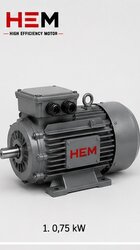
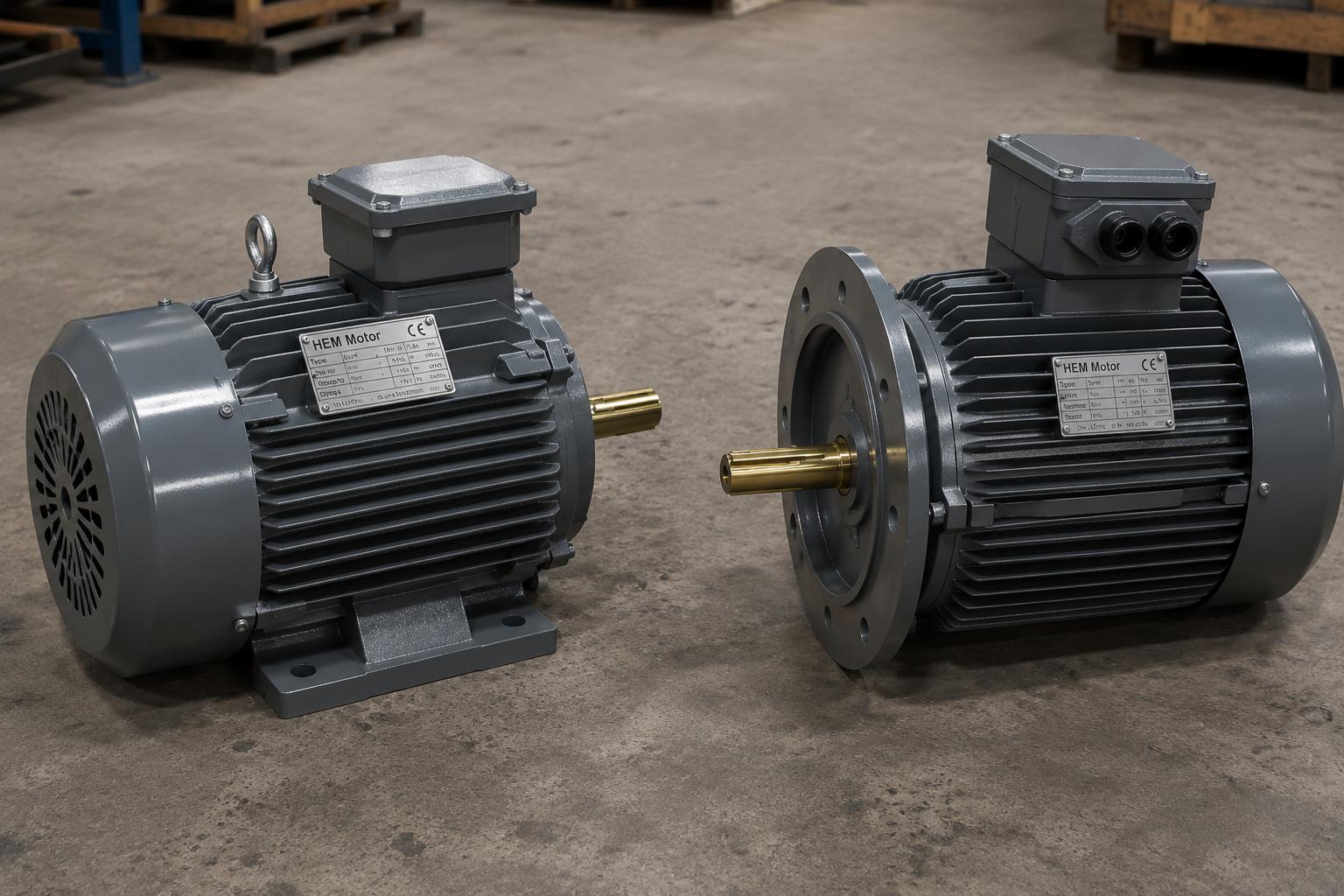

The real service life of a cast iron electric motor in the field is usually decided not by its winding or bearings, but by the paint and coating system wrapping its body. At a coastal terminal, inside a process plant full of chemical vapor, or on a field pump exposed to rain and sun, a mechanically flawless motor can still be ruined within a few seasons if the coating was chosen incorrectly: the body rusts, the cooling fins clog, and the motor ends up as scrap well before its time. In this article we treat paint and coating on cast iron motors not as a single layer of color but as a system. We explain ISO 12944 corrosivity categories (from C1 up to C5-M and CX), dry film thickness (DFT, in microns), the primer-and-topcoat logic, how the cast surface is prepared, and which coating system is right for which environment, all backed by concrete tables. Our goal is to help you define not just a RAL color code when you buy, but the corrosion load the motor will face and the matching level of durable protection.
In most purchasing conversations, paint is the last topic discussed and the least questioned. Yet corrosion is the motor's quietest but most persistent enemy: it advances not in a day but over months, and by the time it is noticed it has usually left permanent damage on the body surface. That is why defining the coating correctly from the start is far cheaper and safer than intervening in the field later. At HEM Motor we offer cast iron motors with coating systems matched to different corrosivity categories, from stock and with fast delivery; this article is a field guide to help you describe the right system and speak clearly at the quotation stage.
Speaking About Corrosion With a Standard: ISO 12944 Categories
Instead of talking about coatings as simply "good paint / bad paint," the industry uses a common language: ISO 12944. This standard divides the environment that steel and cast surfaces face into atmospheric corrosivity categories. As the category rises, the corrosion load increases, and the required coating system becomes correspondingly thicker with more layers. The first task when selecting a cast iron motor is to place its operating environment in the correct category, because every coating decision derives from it. A wrong category leads either to wasted money (an overly heavy system) or to early corrosion (an overly light system).
When determining the category, you must look not only at geography but also at the micro-environment. In the same plant, a pump 50 meters from the sea may be C5-M while a motor in an enclosed heated panel room may be C2. Local factors such as the direction of salt-laden wind, a ceiling that constantly condenses, or a position right above an acid tank describe the motor's true corrosion load far more accurately than a generic catalog statement.
| Category | Typical Environment | Example Application | Recommended Total DFT (microns) |
|---|---|---|---|
| C1 (very low) | Heated indoor, dry | Indoor panel, clean workshop | ~80-120 |
| C2 (low) | Lightly polluted indoor | Warehouse, unheated building | ~120-160 |
| C3 (medium) | Urban/industrial, humid | Food line, general industry | ~160-200 |
| C4 (high) | Chemical load, high humidity | Process plant, water treatment | ~200-280 |
| C5-I / C5-M (very high) | Heavy chemical / coastal salt | Port, coastal plant, chemicals | ~280-320 |
| CX (extreme) | Offshore, aggressive chemical | Offshore, chlor-alkali | ~320-400+ |
The critical point: putting a motor designed for C3 into a C5-M environment melts away its warranty in the field. Salt spray, chloride ions and constant humidity seep beneath a thin coating and start pitting corrosion on the cast surface. That is why evaluating the environment one step higher, especially at the coast and in chemical processes, is a wise form of conservatism. The cost of stepping up one level is usually a small percentage of the motor's total price; the cost of early corrosion is motor replacement plus a production stoppage.
Dry Film Thickness (DFT): The Numeric Measure of Protection
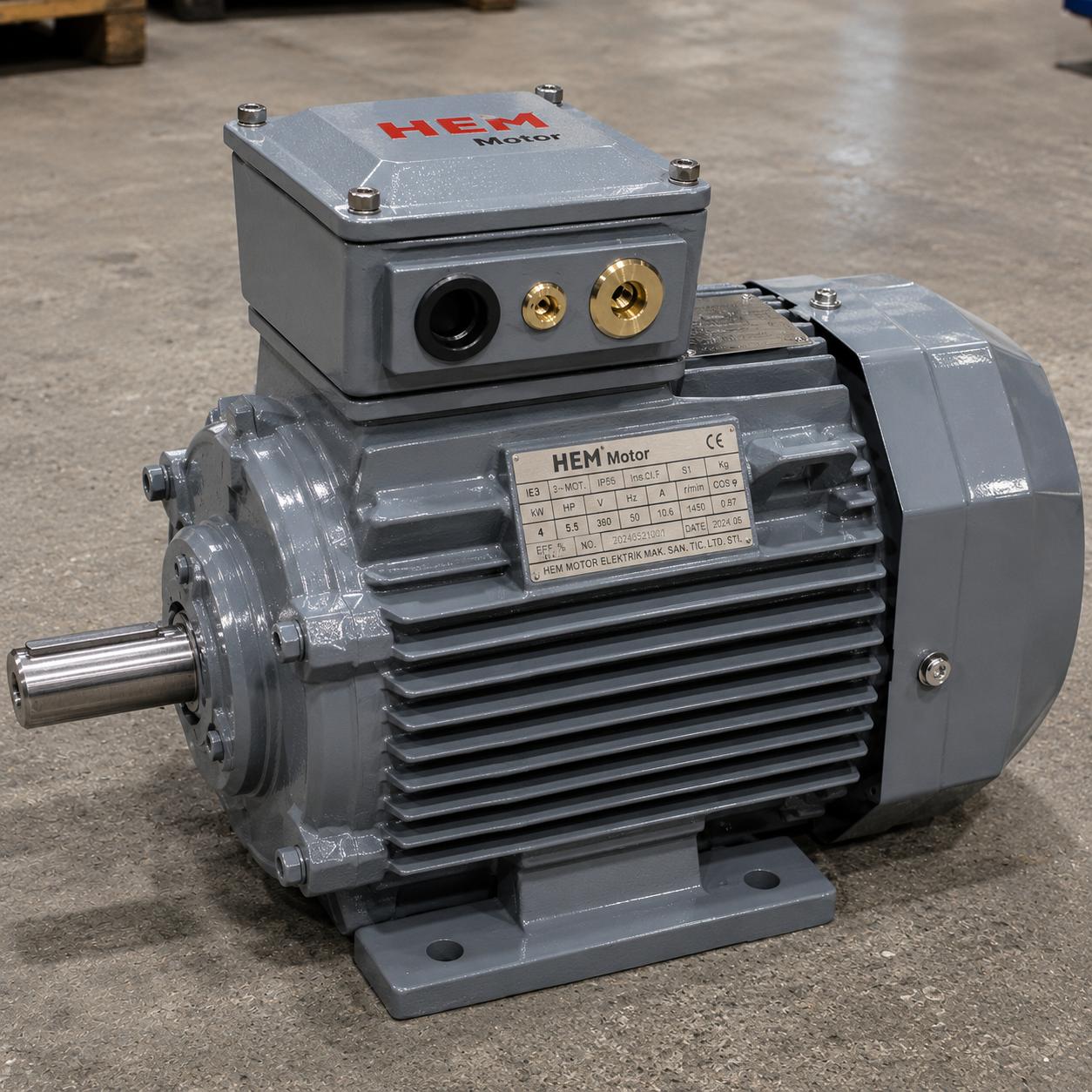
You cannot judge a coating's protective power by eye; its measure is dry film thickness (DFT), expressed in microns (µm). DFT is the real film thickness remaining on the surface after the paint has cured. Corrosion protection depends largely on this thickness: without sufficient DFT, even the best resin cannot form a durable barrier against moisture and salt. In the field, DFT is measured with magnetic or eddy-current gauges, and the acceptance criterion is often the "85-15 rule" (85% of readings must not fall below the nominal value, and none below 80% of nominal).
Thinking of DFT as a single number is misleading; what truly matters is how that thickness is distributed across the layers. In a three-layer system each coat has its own function, and if one is missing the protection weakens even if the total DFT is met:
- Primer: provides adhesion to the cast surface and cathodic/barrier protection; zinc-rich or epoxy primers are preferred. The primer is the foundation of the system; even a thick topcoat over a weak primer flakes off.
- Intermediate coat: delivers the main barrier thickness, usually a high-solids epoxy-based layer. Most of the total DFT comes from here.
- Topcoat: provides UV resistance, color stability and chemical resistance; polyurethane topcoats hold color outdoors, while epoxy topcoats chalk over time.
On cast iron motors, total DFT is set by the environmental category. While one or two coats may suffice for C3, C5-M requires a three-layer system of zinc primer + epoxy intermediate + polyurethane topcoat and a total DFT above 280 microns. A cataphoretic (e-coat / electrophoretic dip) primer reaches every corner of the cast surface, so it provides excellent base protection especially on complex finned geometries; together with a powder or liquid topcoat on top, it forms a strong system. The fin roots and body corners that spray paint struggles to reach are fully covered by the dip method.
| Coating System | Primer | Intermediate/Topcoat | Typical Total DFT | Suitable Category |
|---|---|---|---|---|
| Single-coat standard | - | Epoxy/alkyd 1 coat | ~60-80 µm | C1-C2 |
| Two-coat general industry | Epoxy primer | Polyurethane topcoat | ~120-160 µm | C3 |
| Three-coat heavy duty | Zinc/epoxy primer | Epoxy intermediate + PU | ~200-280 µm | C4 |
| Marine/chemical system | Zinc-rich primer | High-solids epoxy + PU | ~280-320+ µm | C5-M / CX |
| Cataphoresis + powder | E-coat dip | Powder topcoat | ~120-200 µm | C3-C4 (complex geometry) |
Cast Surface Preparation: The Invisible Half of Protection
Even the most expensive paint will not hold on a poorly prepared cast surface. The surface of a cast iron body can carry mold-sand residue, casting skin and oil. The correct system brings the surface to metallic cleanliness through blasting (near Sa 2.5 cleanliness grade) or chemical pretreatment (alkaline wash in a phosphating/e-coat line), then applies the primer. Surface profile (roughness) is critical for the mechanical keying of the primer; on a very smooth surface primer adhesion weakens, while on an overly aggressive profile the peaks remain exposed. So pretreatment is as decisive as DFT and is a standard step in quality manufacturing.
The quality of surface preparation is hard to judge by eye, but its consequences are clear: on a well-prepared surface the coating holds for years, while on a poorly prepared surface the paint blisters within a few months and rust creeps underneath. That is why serious projects may request surface preparation and DFT measurements as a quality record. The quality of the casting itself plays a role here too: a porous, poorly machined cast surface makes it hard even for the best coating to adhere.
RAL Color and OEM Requests
Color is usually a matter of aesthetics or brand coding; standard motors are typically offered in tones such as RAL 5010, RAL 7030 or RAL 9005. But it must be remembered that color is the job of the topcoat, while corrosion protection comes from the system beneath it. In OEM projects a special RAL code may be requested; in that case the topcoat is expected to satisfy both the color code and the required corrosivity category together. In other words, a "special color" request is not independent of the corrosivity category; the correct order defines both together. We also cover this in our RAL color and custom paint article.
Choosing the Right Coating System
The right choice becomes clear with answers to three questions. First: where will the motor operate? An indoor dry workshop, the seaside, or a hall full of acid vapor? This sets the ISO 12944 category. Second: what is the target durability? ISO 12944 classifies durability as low (L), medium (M), high (H) and very high (VH); longer life in the same category requires a thicker system. Third: how complex is the surface geometry? On a densely finned body, a dip-based (cataphoretic) primer reaches corners better than a sprayed primer.
- Coastal and salty environments: zinc-rich primer + high-solids epoxy + polyurethane, total ≥280 µm; see our marine and coastal protection guide for detail.
- Chemical process: high chemical-resistance epoxy system, C5-M/CX level if required.
- Outdoor field (rain, UV): a UV-resistant polyurethane topcoat is essential; epoxy-only topcoats chalk over time.
- Indoor dry environment: C1-C2 standard coating is sufficient; excess DFT is unnecessary cost.
- Food and hygienic areas: an easy-to-clean, smooth-surfaced topcoat; a system resistant to frequent washdown.
It is also important to consider the coating system together with the motor's non-corrosion protections; for example IP protection class, breather/condensation drainage and terminal box gasket form, along with the body paint, a holistic water-and-moisture defense. When sending a motor to the coast, requesting both the C5-M paint and IP66 sealing together provides a holistic defense rather than piecemeal protection. The cast iron body's own corrosion behavior matters here too; gray iron's natural mass and wall thickness leave more margin against corrosion than bodies made from thin sheet.
Frequently Asked Questions
Does a C5-M coating increase the motor's IP protection class?
No. Paint and IP protection are two different things. Paint is the corrosion protection of the body's outer surface; the IP class is the sealing against dust and water entering the motor. At the coast both are usually required together: both a C5-M coating and IP65/IP66. The correct order defines both the corrosivity category and the IP need of the environment together; one does not replace the other.
Is cataphoresis (e-coat) sufficient on its own?
Cataphoresis is an excellent primer/base protection because the dip method reaches the entire geometry, but its UV resistance is limited. Outdoors, applying a powder or liquid topcoat over the e-coat is recommended. This combination provides both corner protection and color and UV durability. Indoors, e-coat alone may be sufficient for many applications.
Is keeping DFT high always better?
More DFT than necessary both raises cost and can cause mud-cracking or adhesion problems at excessive thickness in some resins. The correct approach is to target the nominal DFT suitable for the environment's category and verify it with a thickness gauge. So the target is not "the thickest possible" but "category-appropriate and verified."
Let us clarify together the right corrosivity category and coating system for your cast iron motor. Share with us the operating environment, the target durability and a special RAL code if needed; request a quote for fast delivery from HEM Motor stock with a suitably coated body and a correct system recommendation. Long life in the field always begins with a correctly defined coating system.