English
 Türkçe

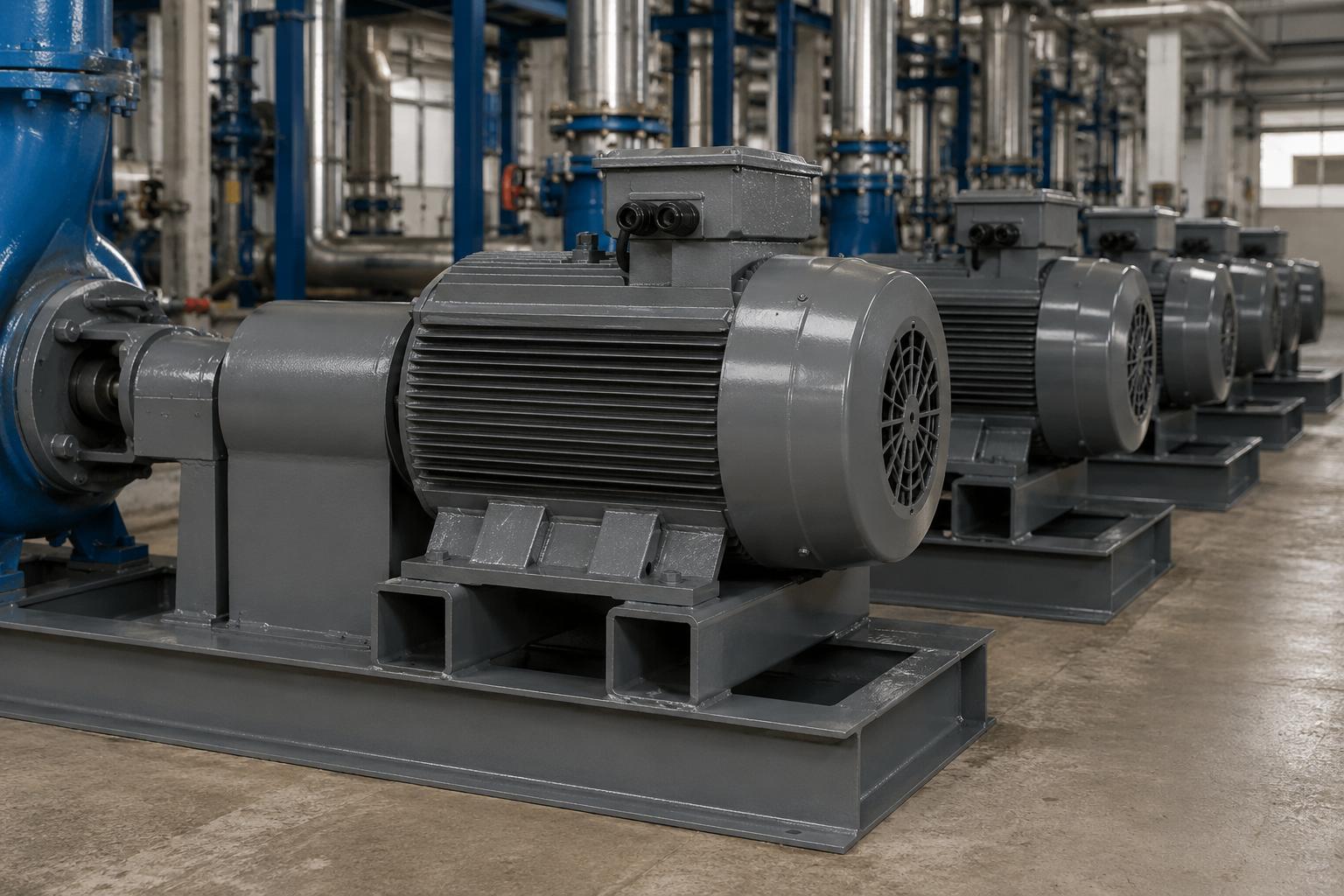

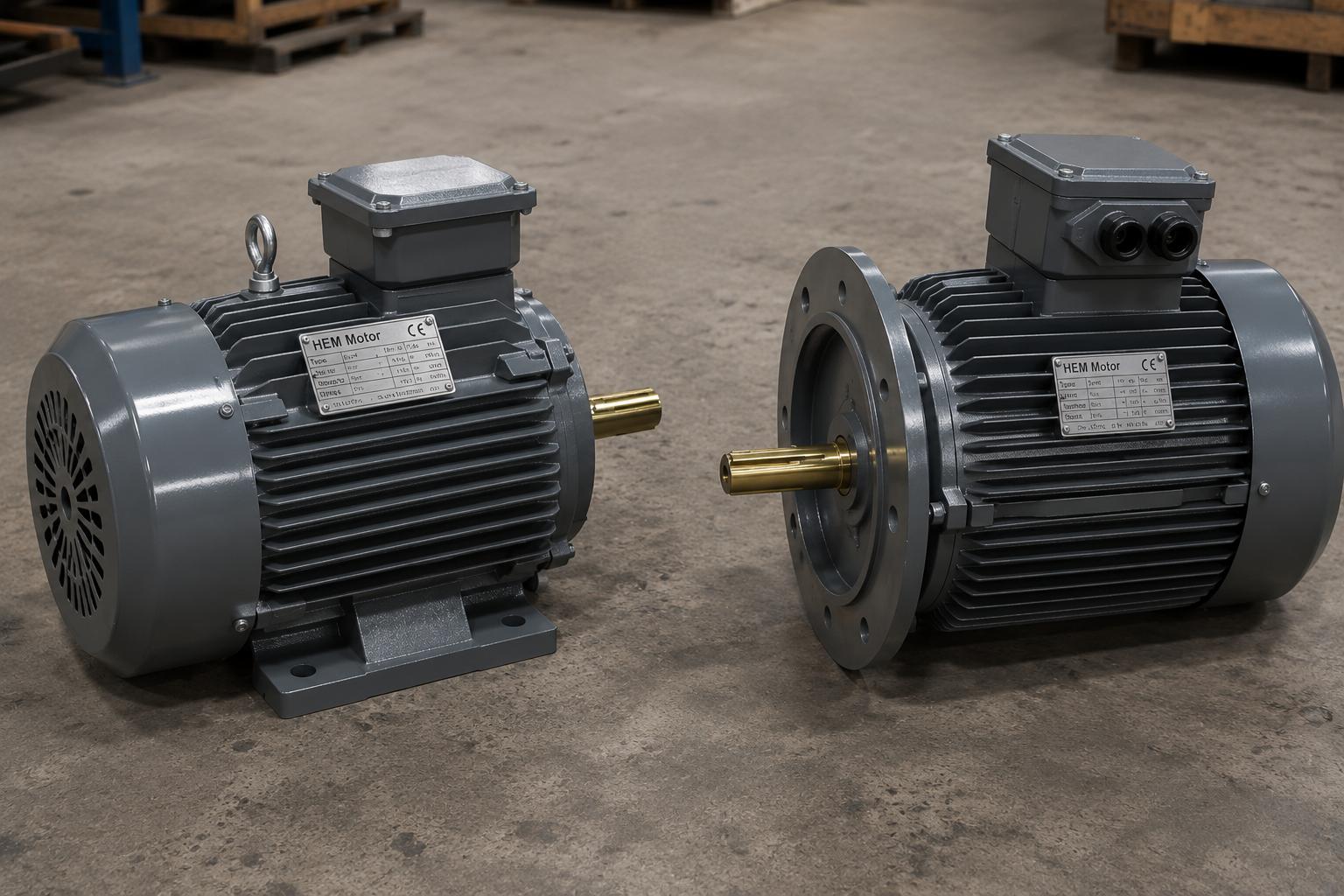
In any belt-and-pulley driven system, one of the most critical yet frequently overlooked mechanical components that determines how efficiently and reliably the motor will run is the slide rail (tensioning rail) assembly. A cast iron framed motor, with its heavy and rigid structure, is ideal for high-torque belt-pulley applications; however, the weight of the motor frame makes it harder to keep the belt at the correct tension. Incorrect belt tension leads to premature bearing failure, belt slip, overheating and energy loss. This is exactly where the slide rail comes in: by precisely sliding the motor along its axis, it lets you set belt tension accurately and re-tension during periodic maintenance. In this article we cover slide rail selection for cast iron motors, rail dimensions matched to the IEC frame size, the radial load the belt force imposes on the shaft, and correct mounting and accessory selection in detail.
What Is a Slide Rail and Why Is It Needed?
A slide rail is a mounting system consisting of two U-shaped or prismatic profile rails fixed to the floor or base, onto which the motor feet are bolted. The motor can be moved back and forth along the belt axis on these rails by means of an adjusting (tensioning) bolt. In belt-pulley drives the belt stretches and elongates over time; without a slide rail you would have to dismount the motor or add shims to compensate for this. Because cast iron motors are heavy, manually pushing the motor to adjust tension is impractical; the tensioning bolt slides this heavy frame with micrometric precision.
- Belt tension adjustment: Setting correct pre-tension when a new belt is fitted.
- Periodic re-tensioning: Compensating belt elongation over time.
- Easy belt replacement: Loosening and changing the belt without fully dismounting the motor.
- Alignment: Controlled motion that helps keep the pulleys in the same plane.
On a motor with correct frame-to-power matching, slide rail selection is also easier. To clarify the frame size and power relationship, our article on cast iron motor frame size and power matching is a good starting point.
Rail Length and Profile Selection to Match the IEC Frame
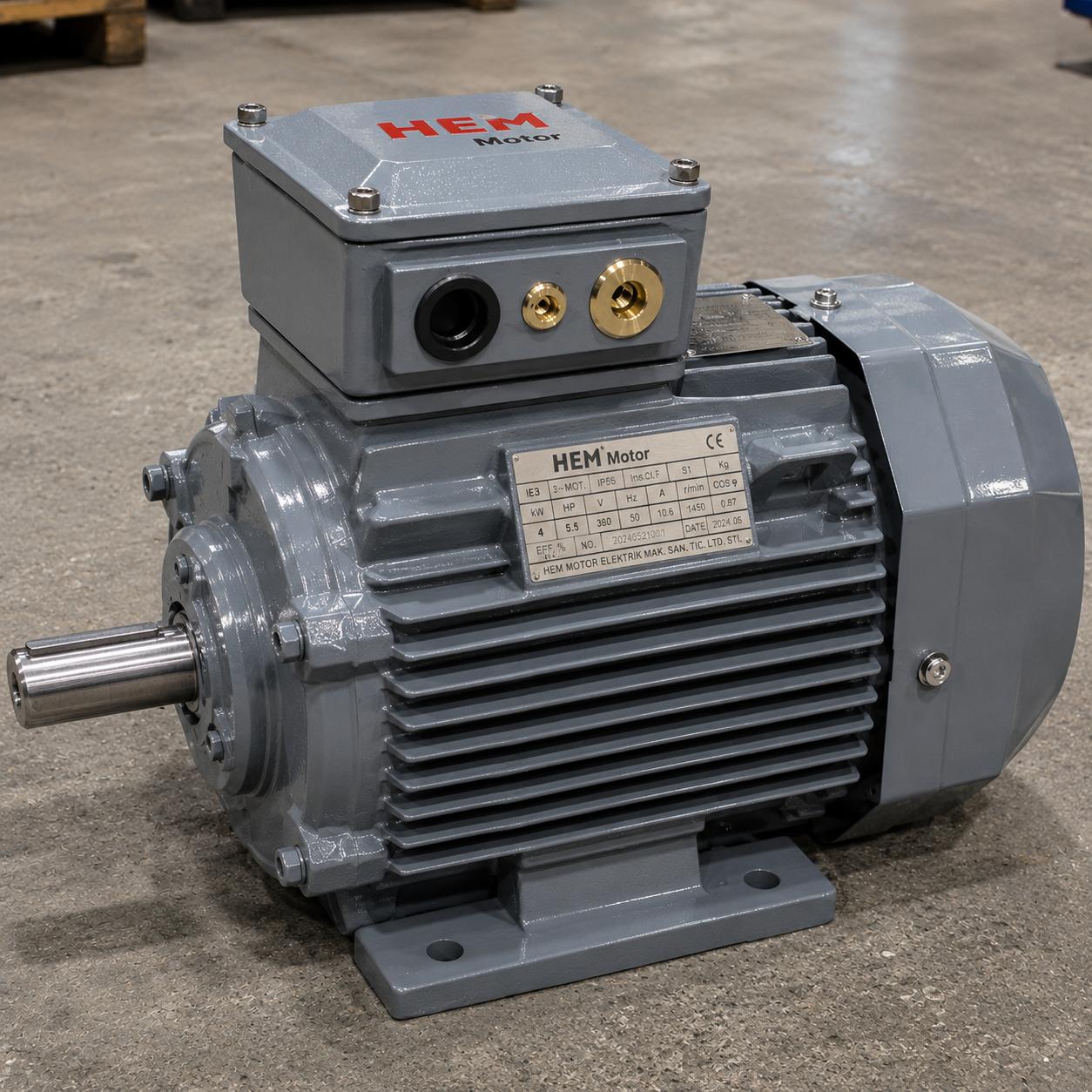
The first rule in slide rail selection is that the rail must suit the motor's IEC frame size and foot hole spacing. Each IEC frame size has a different standard foot hole spacing (longitudinal B dimension); the rail must have slot length to seat these holes plus extra stroke margin to slide the motor. The general rule is that the rail should be roughly 1.5-2 times longer than the motor's foot distance, so sufficient belt tensioning stroke is provided.
| IEC Frame Size | Typical Power Range | Recommended Rail Type | Approx. Rail Length | Tensioning Stroke |
|---|---|---|---|---|
| 80-90 | 0.75-1.5 kW | Light profile rail | ~250-300 mm | ~40-60 mm |
| 100-112 | 2.2-4 kW | Medium profile rail | ~300-360 mm | ~50-70 mm |
| 132 | 5.5-7.5 kW | Heavy profile rail | ~400-450 mm | ~60-90 mm |
| 160 | 11-15 kW | Heavy profile rail | ~500-560 mm | ~80-110 mm |
| 180-200 | 18.5-30 kW | Reinforced heavy rail | ~600-700 mm | ~100-140 mm |
| 225-250 | 37-55 kW | Reinforced heavy rail | ~750-850 mm | ~120-160 mm |
The values in the table are approximate references based on typical catalogs; for exact dimensions you should consult the manufacturer rail table for your frame size. For shaft height (H dimension) and axial alignment, our article on shaft height and axial alignment offers complementary information.
Profile Type: Flat Rail or Prismatic?
Rail profiles are generally flat-based U profiles or prismatic sections that stay more rigid in the belt pull direction. For heavy cast iron motors and high belt forces, reinforced, thick-walled profiles are preferred. For light applications standard bent-sheet rails are sufficient, but under high vibration or shock loads cast or thick steel rails provide longer life.
Belt Force, Radial Load and Bearing Life Relationship
The technical core of slide rail selection is the radial load that belt pre-tension imposes on the motor shaft and bearings. The tighter the belt, the more securely power is transmitted; however excessive tension adds a bending moment to the shaft end and a constant radial load on the bearing. This load directly affects bearing life. The rigid frame and strong bearings of cast iron motors handle this load well, but tension must still be kept within manufacturer limits.
- Insufficient tension: Belt slips, heats up, power transmission drops, belt wears prematurely.
- Excessive tension: Shaft bends, bearing overloads, noise and vibration increase.
- Correct tension: Optimum force set to the manufacturer's belt deflection value.
The radial load the belt transfers to the shaft increases as the pulley diameter shrinks; therefore the largest possible pulley diameter should be preferred. For correct shaft, key and pulley matching, our article on shaft diameter, key and coupling is useful. For the role of bearing and journal quality under this load, see our article on bearing and journal life.
Correct Mounting and Accessory Selection
A common mistake in slide rail mounting is failing to fix the rails parallel and coplanar to each other. If parallelism between the two rails is lost, the motor tilts as it slides, the pulleys go out of alignment and the belt walks to one side. The following steps form the basis for correct mounting:
- When anchoring the rails to the floor/base, check parallelism and the same level.
- When bolting the motor to the rails, ensure the foot holes can slide freely in the slots.
- Tighten the tensioning bolt gradually to bring the belt to the manufacturer deflection value.
- Verify pulley alignment (with laser or straightedge), then tighten the foot bolts.
- A few hours after first run, re-check belt elongation and re-tension.
On the accessory side, galvanized or painted rails offer corrosion advantage; for humid and open-field plants stainless or cataphoresis-coated options should be preferred. For safe handling of the motor before mounting, see our article on lifting eyebolt and safe handling, and as a mechanical connection alternative, our article on flexible/rigid coupling selection.
Periodic Re-tensioning and Maintenance
The belt elongates fastest in the first 24-48 hours; therefore the first re-tensioning is critical. Afterwards, belt deflection should be checked at regular intervals (weekly or monthly depending on the application) and readjusted with the tensioning bolt if needed. The slide rail slots should be cleaned periodically and lightly greased when necessary so the motor slides smoothly without sticking. When planning maintenance, belt temperature, noise and vibration should also be observed; an overheating or squealing belt is usually the first sign of incorrect tension.
Belt Type and Slide Rail Combination
Slide rail selection cannot be considered independently of the belt type used. V-belts (classic or narrow V), toothed (timing) belts and poly-V belts demand different tension and alignment precision. Narrow V-belts require higher pre-tension due to high power density, which makes a more rigid and reinforced slide rail mandatory. With toothed belts tension can be kept slightly lower since there is no slip; however alignment precision is far more critical and the slide rail parallelism must be sub-millimeter. The correct belt-rail combination directly determines both the efficiency and the maintenance interval of the drive system.
- Classic V-belt: Medium tension, high error tolerance; standard rails suffice in most applications.
- Narrow V-belt: High power transfer, high pre-tension; reinforced rail recommended.
- Poly-V belt: Low vibration, compact pulley; requires precise alignment.
- Toothed (timing) belt: Slip-free, synchronous drive; low tension, high alignment precision.
As the number of belts increases, the total radial load on the shaft also increases; in multi-belt drives bearing selection and frame rigidity become even more important. Here the impact resistance and rigidity of the cast iron frame provide an advantage; to explore further see our cast iron vs aluminum frame comparison and, for the importance of casting quality, our article on EN-GJL casting grade difference.
Tensioning Direction, Motor Position and Common Mistakes
When positioning the slide rail, the motor's tensioning direction must be on the same axis as the belt pull direction. In horizontal drives it is sufficient to place the rails parallel to the belt axis; however in setups where the motor is positioned above, to the side or at an angle, the tensioning direction and bolt access must be planned in advance. A misaligned slide rail shifts the motor pulley out of pulley alignment during tensioning and shortens belt life.
In addition, having the tensioning bolt accessible and easy to turn during maintenance greatly simplifies the field technician's job. In some applications double-sided rails (tensioning bolt on both feet) are preferred; this provides balanced and equal sliding on heavy motors. In single-sided systems the motor may rotate slightly as it slides, so pulley alignment must always be re-verified after tensioning.
- Rails fixed at different levels: Motor sits tilted, belt walks to one edge.
- Foot bolts jammed in the slot: Motor cannot slide, tensioning bolt is strained.
- Pulley alignment not verified after tensioning: Belt wears early, vibration increases.
- Corrosion-prone rails: Slots rust, motor eventually becomes unable to slide.
For corrosion protection and long life in open fields, our article on corrosion protection and open-field use is a complementary resource.
Frequently Asked Questions
Is a slide rail mandatory on every belt-pulley motor?
It is not technically mandatory but strongly recommended. Without a slide rail the motor must be dismounted each time to adjust belt tension, which wastes time and risks alignment. Especially on heavy cast iron motors, the slide rail makes both mounting and periodic maintenance significantly easier.
How do I determine the rail length?
Rail length is determined by the motor's foot hole spacing and the required belt tensioning stroke. The general rule is that the rail should be about 1.5-2 times longer than the motor's longitudinal foot distance; this provides enough stroke both to fit a new belt and to compensate an elongated one. We recommend confirming the correct dimension from the manufacturer rail table for your IEC frame size.
How tight should I tension the belt?
Correct tension is set to the belt deflection value specified by the manufacturer, not by guesswork. Typically the deflection that should occur when a certain force is applied at the belt midpoint is defined in millimeters. Over-tensioning shortens bearing life, under-tensioning causes slip; the manufacturer's range should be used as the basis between the two.
Long-Lasting Drive with the Correct Slide Rail
The slide rail is a component that looks small but directly determines the performance and life of belt-pulley driven cast iron motors. A rail matched to the correct IEC frame size, sufficient tensioning stroke, parallel and proper mounting and periodic re-tensioning all extend the life of both the belt and the bearings and reduce energy loss. As HEM Motor we supply suitable slide rails, pulleys and mounting accessories for your cast iron motors from stock with fast delivery; contact us for the correct rail dimension and motor selection for your application to request a quote.