English
 Türkçe

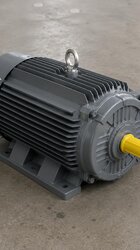

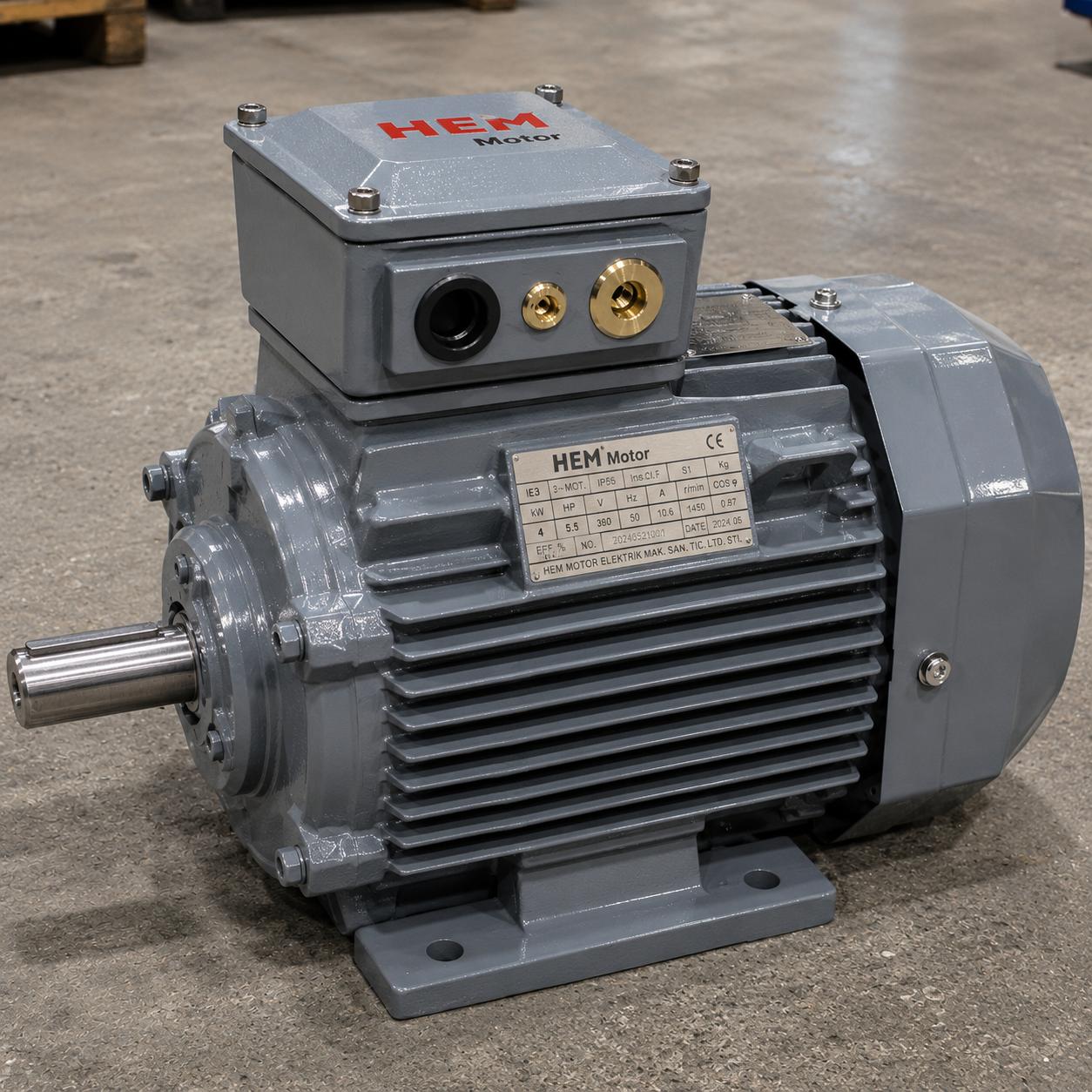

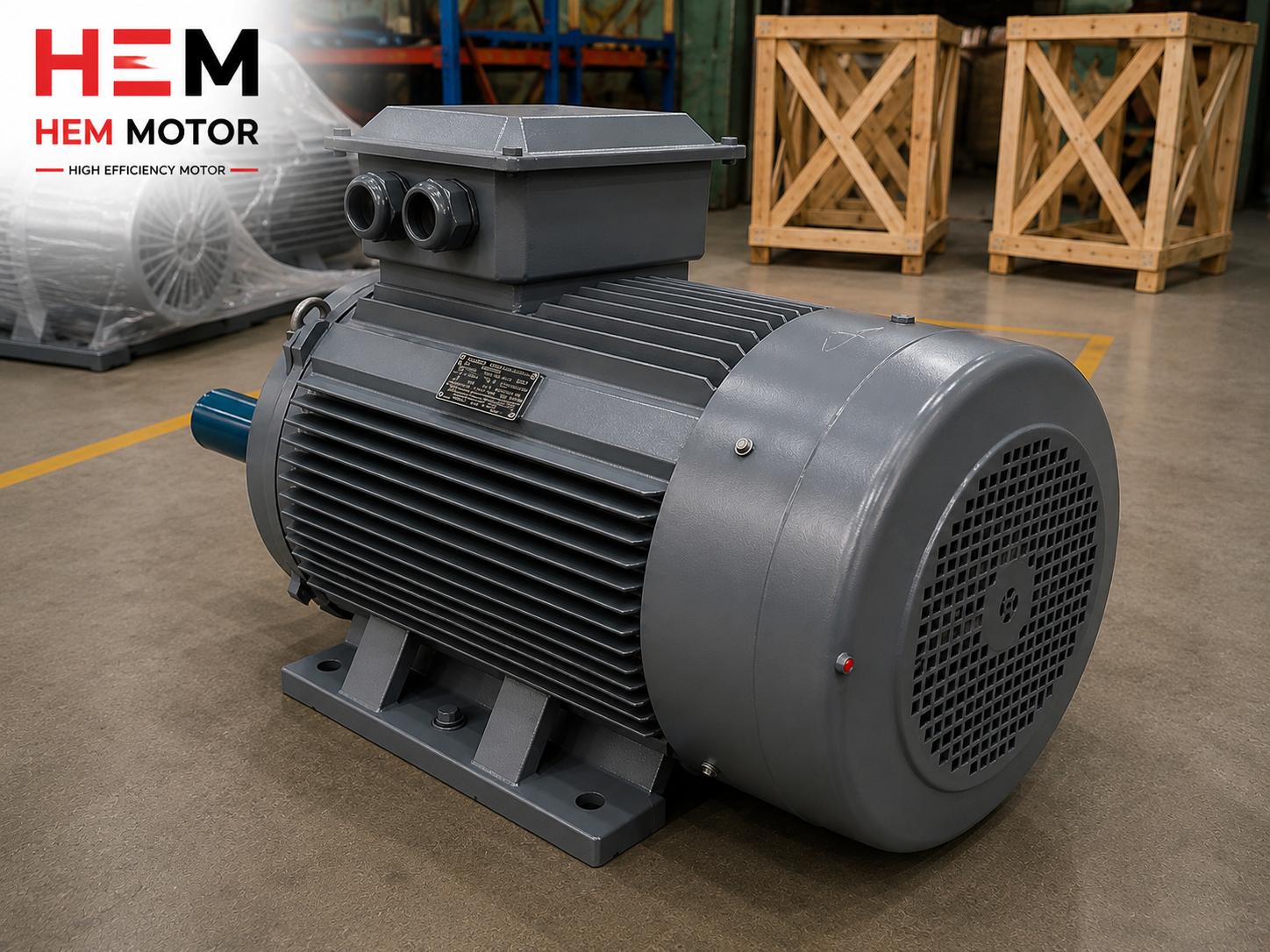
In large cast iron framed electric motors, bearing selection is one of the most critical decisions determining motor life and reliability. While rolling element bearings (ball and roller) have been the default in standard industrial motors for decades, the picture changes as the frame grows, the speed rises and the power increases. Especially in IEC frame sizes of 250, 280, 315, 355 and above, in two pole (3000 rpm) high speed applications, and in large industrial fans and pumps, the sleeve bearing (also called journal bearing) frequently offers longer life, lower vibration and quieter operation than a rolling element solution. At HEM Motor, guiding you to the right sleeve bearing option on large cast iron framed motors is the most valuable part of the purchasing decision. This article covers how the sleeve bearing works, oil film and lubrication methods, its advantages and limits versus rolling bearings, axial load behaviour and which application calls for which bearing, in engineering language but focused on the buying decision. Our aim is to help you reach the longest motor life without surprises in the field by clarifying the right bearing configuration before you order.
What Is a Sleeve Bearing and Why Is It Preferred in Large Cast Iron Frames?
A sleeve bearing is a bearing type in which the shaft rotates directly inside a bushing (usually white metal / babbitt lined), with a thin oil film acting as the load carrying element between shaft and bearing. In a rolling bearing the load is carried through point or line contact via balls or rollers, whereas in a sleeve bearing the load is supported by a hydrodynamic oil film spread across the whole bearing surface. As the shaft starts to turn, oil is drawn into the gap between shaft and bushing and forms a pressure wedge (hydrodynamic film) that physically lifts the shaft off the bushing. At full speed there is no metal-to-metal contact, so wear is theoretically near zero. This is exactly why a properly lubricated sleeve bearing can reach operating lives measured in decades. Because this lowers the number of planned stops in large, continuously running plants, it feeds directly into the operating cost.
The cast iron frame is the natural partner of the sleeve bearing, because a sleeve bearing demands high rigidity, good vibration damping and dimensional stability, and a cast iron (grey iron) frame provides all three. In large frame sizes the mass and damping capacity of cast iron support the stable oil film the sleeve bearing forms. Unlike an aluminium frame, cast iron holds its dimensions at high temperature and heavy mechanical load, which keeps the bearing clearance under control. Our article on cast iron versus aluminium frame selection rounds out the background of this material choice. In a large motor, the frame material and the bearing type are two complementary decisions that should be evaluated together.
Another important property of the sleeve bearing is its ability to absorb impact and sudden loads. Because the oil film behaves like an elastic cushion, sudden radial impacts on the shaft are spread across the bearing surface and softened. In a rolling bearing the same impact becomes high stress at the ball-race contact point and over time can lead to fatigue pitting. For this reason, on high inertia loads such as large fans, the sleeve bearing behaves more tolerantly during both starting and operation.
Rolling Bearing vs Sleeve Bearing: Speed, Load and Life Comparison
The choice between the two bearing types is made according to speed, power, axial load requirement and maintenance approach. There is no single right answer; the application profile is decisive. The table below summarises the behaviour of both solutions in large cast iron framed motors and offers a quick comparison when deciding.
| Criterion | Rolling Bearing | Sleeve Bearing |
|---|---|---|
| High speed (2 pole, 3000 rpm) large power | DN limit stressed, life shortens | Very suitable, long life |
| Vibration and noise | Higher (contact driven) | Markedly quieter, oil film damps |
| Typical life (continuous, correct lubrication) | L10 ~40,000-100,000 h | In practice 100,000+ h, near unlimited |
| Axial load capacity | Good (especially angular/roller) | Limited; separate thrust bearing needed |
| Lubrication method | Grease (periodic) | Oil ring or forced oil circuit |
| Impact and sudden load tolerance | Medium, fatigue risk at contact point | High, film damps the impact |
| Initial cost and large frame fit | Economical in small-mid frames | Justified in large frame/high speed |
As shown, the sleeve bearing is strongest in high speed, high power radial load applications, while the rolling bearing is strongest for axial load and small-mid frames where grease lubrication is sufficient. We detailed shaft load affecting bearing life in our shaft radial and axial load limit article; the sleeve bearing decision is the natural continuation of that load analysis. We covered bearing life and quality markers in the rolling solution in our bearing and bearing life in cast iron motors article.
How Do Oil Film and Hydrodynamic Lubrication Work?
The heart of the sleeve bearing is the hydrodynamic oil film. When the shaft is stopped it rests at the bottom of the bushing and there is metal-to-metal contact, so the initial start is the most critical moment, called the boundary lubrication regime. As the shaft accelerates, oil is dragged into the narrowing wedge and builds pressure that lifts the shaft. Above a certain speed the bearing enters full hydrodynamic regime and the shaft floats on the oil. For this reason sleeve bearing motors are ideal for applications that run continuously at high speed for long periods rather than ones with frequent stop-start cycles. Oil viscosity, oil temperature and oil cleanliness directly determine film thickness. The cleaner the oil and the more correct its viscosity, the more stable the film and the longer the bearing life.
Three practical variables affect film thickness: first load, second speed, third oil viscosity. As load increases the film thins; as speed increases the film thickens; as viscosity drops (oil heats up) the film thins. This triple balance explains why a sleeve bearing motor should not be run below a certain minimum speed. At very low speed the film does not form sufficiently and the bearing stays in the boundary regime, which accelerates wear. So if continuous operation at very low speed via a drive is planned, it must always be confirmed with the manufacturer.
Lubrication Methods: Oil Ring and Forced Oil Circuit
Two main lubrication methods are used in large sleeve bearing motors:
- Oil ring lubrication: A ring rotating freely on the shaft carries oil from the oil bath in the lower bearing housing and pours it over the shaft. Simple, requires no external pump, common at medium-large powers. The oil level sight glass must be checked regularly.
- Forced (pressurised) oil circuit: An external oil pump, cooler and filter continuously feed pressurised oil to the bearing. Preferred at very high powers, high load and high temperature. It keeps oil temperature under control and delivers the longest life.
- Oil level and quality: In both methods the oil level, colour and water/dirt content are checked periodically; contaminated oil degrades film quality.
- Monitoring: Bearing temperature is usually monitored with PT100; an exceeded threshold triggers alarm or shutdown.
We explain how bearing temperature monitoring is set up in our PT100 and PTC thermistor protection article; on a sleeve bearing, temperature monitoring is practically mandatory, because when the oil film breaks down the first sign is a rise in bearing temperature.
Axial Load Limit and Important Design Notes
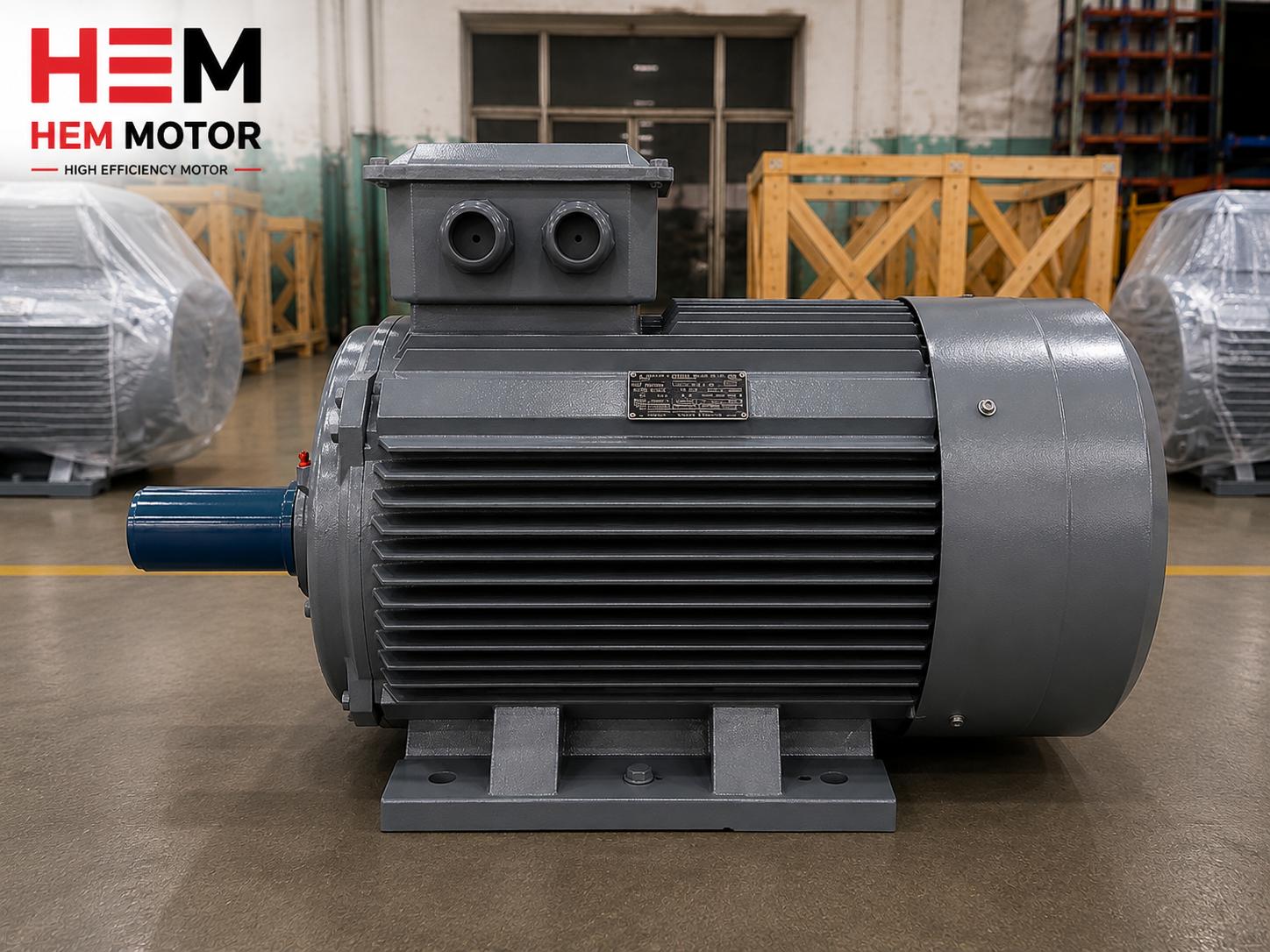
The most important limit to know about a sleeve bearing is its axial (thrust) load behaviour. A standard radial sleeve bearing cannot carry large thrust forces along the shaft axis; only the limited thrust faces on the bearing shoulders take this duty. Therefore applications with significant axial load, for example some vertical shaft pumps, require a separate thrust bearing or rolling support. In horizontal shaft large fans and centrifugal pumps the axial load is generally small and the sleeve bearing is ideal. A sleeve bearing motor also requires mountings in which the shaft can position freely in the axial direction, that is a coupling with axial float tolerance; the coupling choice is therefore critical.
- Axial float: The shaft moves axially with thermal expansion; the coupling must accommodate this movement.
- Magnetic centre: While running, the rotor settles to the magnetic centre; in a sleeve bearing the shaft can oscillate around this centre, so it is not axially fixed.
- Bearing current: In large motors fed from a drive, insulated bearings and shaft grounding may be needed.
- Alignment: On a horizontal shaft, laser alignment is the key to keeping vibration low on a sleeve bearing.
We covered coupling and alignment in our coupling selection and shaft alignment article, and bearing current with EDM damage protection in our bearing current and shaft grounding ring article. These two topics are complementary to trouble-free field operation of a large sleeve bearing motor.
In Which Application Is the Sleeve Bearing the Right Choice?
The sleeve bearing is clearly the right choice when the following profile comes together:
- Large industrial fans and blowers: High inertia, long continuous running and a demand for quietness come together.
- Large centrifugal pumps: High speed, dominant radial load and a low axial load profile are ideal for the sleeve bearing.
- 2 pole (3000 rpm) high power motors: Where the rolling bearing DN limit is stressed, the sleeve bearing adds clear life.
- Continuous process (24/7) applications: Because stop-starts are few, the film stays continuously stable.
- Noise-priority environments: Air handling units, building mechanical services and similar places with noise limits.
By contrast, rolling bearings are more suitable in applications with frequent stop-start, high axial load, small-mid frames or vertical shafts. We recommend evaluating the right frame size and power match together with our cast iron frame size and power matching article. The bearing type decision is not independent of the frame size and speed decision; when all three are handled together, the most correct and longest lived motor is chosen.
A practical tip: before ordering, bring together your application's speed (number of poles), power, mounting (horizontal/vertical), presence of axial load and operating regime (continuous/stop-start). These five pieces of information almost settle the sleeve versus rolling bearing decision and also fix the lubrication method (oil ring versus forced).
Frequently Asked Questions
Does a sleeve bearing last longer than a rolling bearing?
When correctly lubricated and in the right application, yes. Because there is no metal-to-metal contact in the full hydrodynamic film, wear is virtually nil and in practice life can far exceed 100,000 hours. However this superiority only applies in high speed, continuously running, low axial load large frame applications. If lubrication is neglected or there are frequent stop-starts, the advantage is lost and wear may even accelerate due to boundary lubrication.
Does a sleeve bearing motor carry axial load?
Only limited load. A standard radial sleeve bearing is not designed for large thrust forces; a separate thrust bearing is then required. In horizontal shaft fans and pumps the axial load is low so this is no problem, but in vertical shaft or high thrust applications it must always be stated before ordering. If not stated, bearing heating and early damage may appear in the field.
Is maintenance of a large sleeve bearing motor difficult?
Not difficult, but different. Instead of grease, oil level and oil quality are monitored; an oil ring system needs periodic oil changes, a forced system needs filter and cooler maintenance. Monitoring bearing temperature with PT100 is strongly recommended. Set up correctly, the maintenance burden differs from a rolling system but is manageable, and the long life is well worth this maintenance.
At HEM Motor we size the sleeve / journal bearing option on your large cast iron framed motors to your application, offering oil ring or forced oil lubricated solutions together with a bearing temperature monitoring option. For fast delivery from stock and the right bearing selection, share your project's speed, power and load profile with us; request a quote for the most suitable bearing configuration. The right bearing is the greatest life gain in a large motor, and the right choice delivers years of trouble-free operation.