English
 Türkçe

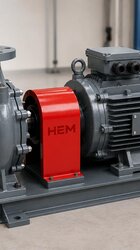
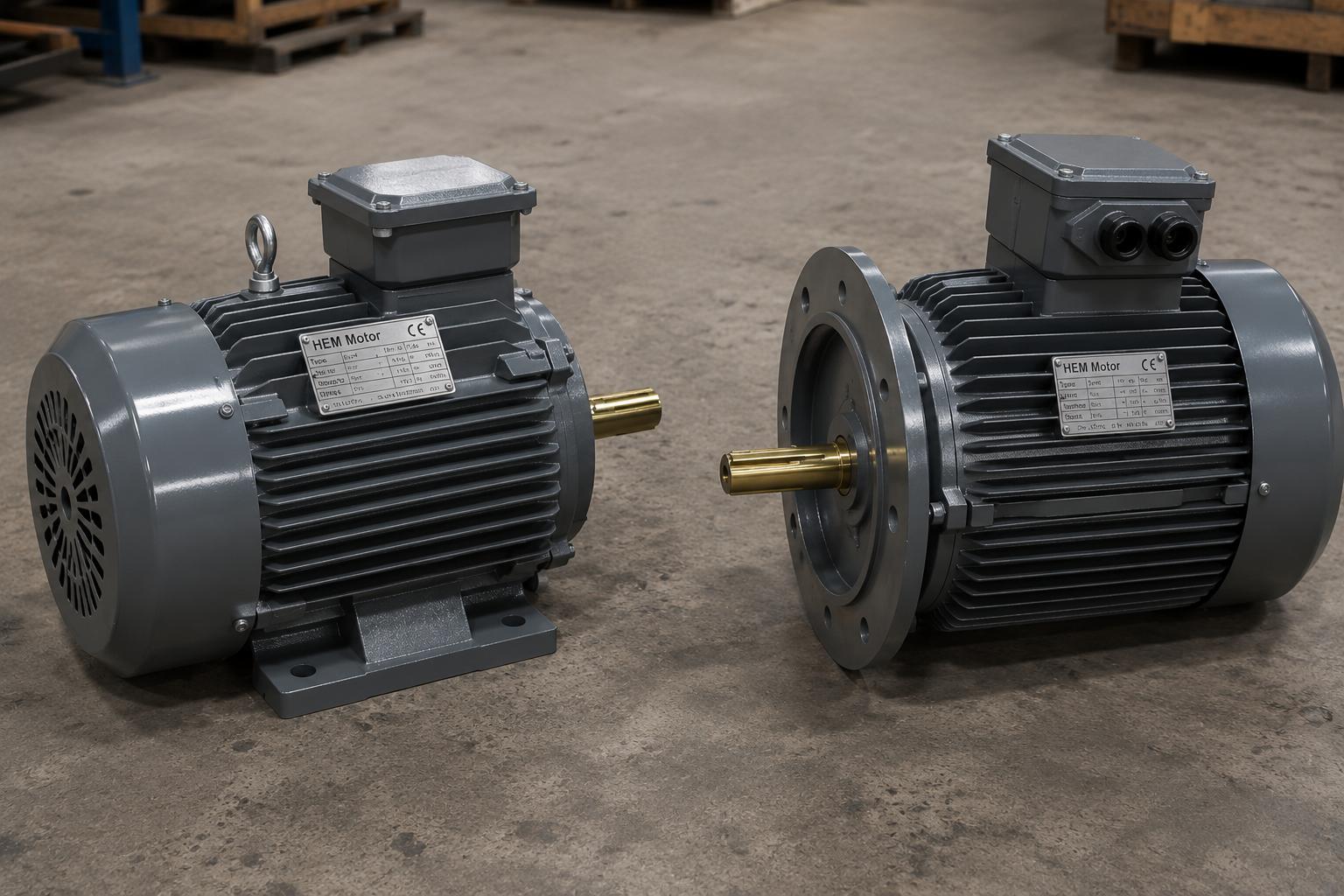

In electric motors running on a variable frequency drive (VFD) there is a danger invisible to the eye that quietly kills the bearing: bearing current. The drive's fast switching creates an unwanted voltage on the motor shaft; when this voltage exceeds a certain threshold, it breaks through the bearing's oil film and discharges from ball to race surface as a tiny spark discharge (EDM – Electrical Discharge Machining). Each discharge tears a microscopic piece from the surface, creating pitting; over time these pits accumulate into the characteristic "fluting" (washboard) pattern, the bearing runs noisily and fails early. In this article we cover how bearing current arises, the role of common-mode voltage (CMV), EDM damage, and protection methods such as the shaft grounding ring, insulated bearing and CMV filter, plus which protection to choose when, from HEM Motor's perspective.
How Does Bearing Current Arise? Common-Mode Voltage (CMV)
In an ideal sinusoidal supply the sum of the three phases is zero and no voltage forms on the shaft. But a VFD produces voltage as fast on-off pulses (PWM); the sum of these pulses is not zero at every instant, and a voltage called "common-mode voltage" (CMV) appears. This voltage couples to the shaft through the motor's parasitic capacitances (winding-frame, winding-rotor, rotor-frame) and creates a "shaft voltage" on the shaft.
The shaft voltage appears between the two races of the bearing. The bearing is normally insulated by an oil film; as long as the shaft voltage stays below the film's breakdown threshold, nothing happens. But when the voltage exceeds the threshold, the oil film breaks down and an EDM discharge occurs. The higher the switching speed (du/dt), the higher the CMV and therefore the shaft voltage. So the problem is more pronounced in modern, fast IGBT drives.
- EDM current: the spark discharge formed when the oil film breaks down; the most common cause of damage.
- Circulating current: a high-frequency current circulating through the frame in large motors; affects both bearings.
- Rotor grounding current: if the shaft is connected through the load to grounded equipment, the current path can close through the bearing.
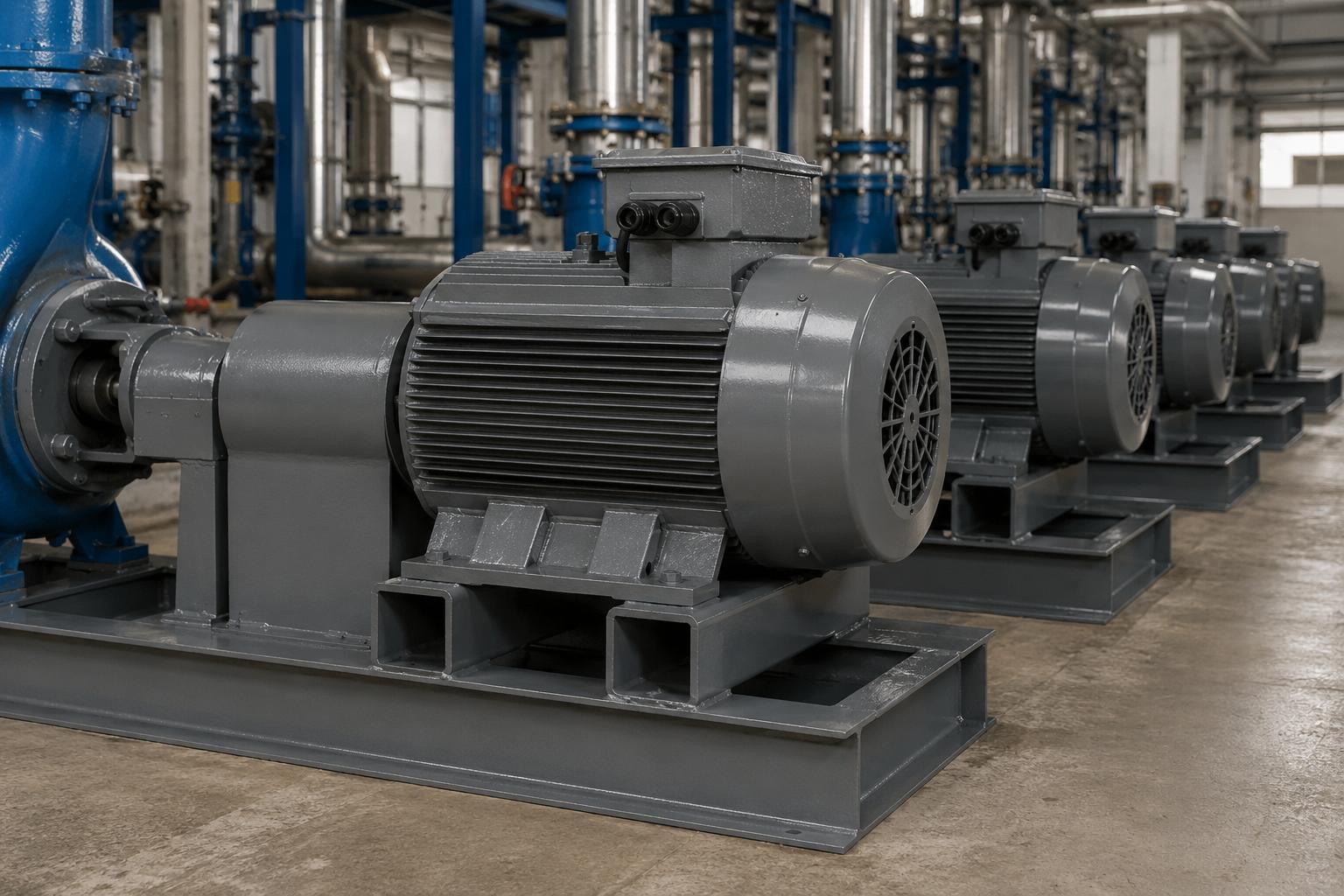
EDM Damage: Pitting and Fluting
Each EDM discharge creates a microscopic melt and material loss on the bearing surface. A single discharge looks harmless; but when the motor experiences thousands of discharges per hour, first a matte frosting and then visible pits (pitting) form on the surface. When pits line up at regular intervals the characteristic "fluting" pattern appears; this pattern is the result of the bearing wearing itself down through vibration.
| Damage Stage | Appearance | Symptom | Result |
|---|---|---|---|
| Frosting | Matte, grey surface | Slight noise | Early stage |
| Pitting | Micro pits | Rising noise, heating | Advancing damage |
| Fluting | Washboard pattern | High noise, vibration | End of bearing life |
A fluted bearing runs noisily, the grease degrades and it finally seizes. This failure is often misread as "the bearing was poor quality"; yet the root cause is electrical, and simply replacing the bearing does not solve it, the new bearing degrades the same way in a short time. The correct solution is to cut the current path or divert it to a harmless route. We also cover VFD-induced extra heating and the symptoms of bearing current in our article on VFD and bearing-current protection in induction motors.
Grease and Bearing: Why Does It Speed Up Current Damage?
The speed of bearing-current damage is also closely linked to the bearing's lubrication state. Grease forms a thin insulating film between the inner and outer races of the bearing. While this film is intact, shaft voltage can be held to a point; but when the film thins or degrades, the breakdown threshold drops and EDM discharges increase. An interesting vicious circle appears: EDM discharges also degrade the grease structure, as the grease degrades the film weakens, and as the film weakens more discharges occur. So in a bearing where current damage has begun, merely renewing the grease gives temporary relief, not a permanent solution.
The right grease type and the right lubrication interval extend bearing life in general; but as long as the electrical root cause continues, they are not enough on their own. We cover the choice of grease type, NLGI consistency and lubrication interval in our article on bearing greasing and grease type. You can find bearing type, life and insulated-bearing selection in our induction motor bearing type and insulated bearing article.
Protection Methods: What Does Each Solution Do?
There is no single "cure-all" against bearing current; the right protection is chosen by motor power, drive type and current type. The main methods are:
Shaft Grounding Ring
A shaft grounding ring (commonly the AEGIS type) is a conductive-fibre ring placed around the shaft. It discharges the shaft voltage directly to the frame (ground) through a low-resistance path before it reaches the bearing. Thus the EDM discharge occurs not in the bearing but on this harmless path. It is the most common and effective solution at small and medium power; usually fitted on the drive end (DE).
Insulated Bearing (NDE)
An insulated bearing is a bearing with a ceramic-coated outer race or fully ceramic balls (hybrid). It physically blocks current passage through the bearing. It is usually fitted on the non-drive end (NDE), because insulating one bearing is enough to cut the path of circulating current. In large motors it is a standard measure against circulating current.
CMV / du-dt / Sine Filter
A du/dt or sine filter added to the drive output softens the speed of the voltage pulses, reducing CMV and shaft voltage at the source. This lowers both the bearing current and the voltage spike on the winding insulation. We detail winding insulation and du/dt voltage spikes in our article on the inverter duty motor and du/dt filter selection.
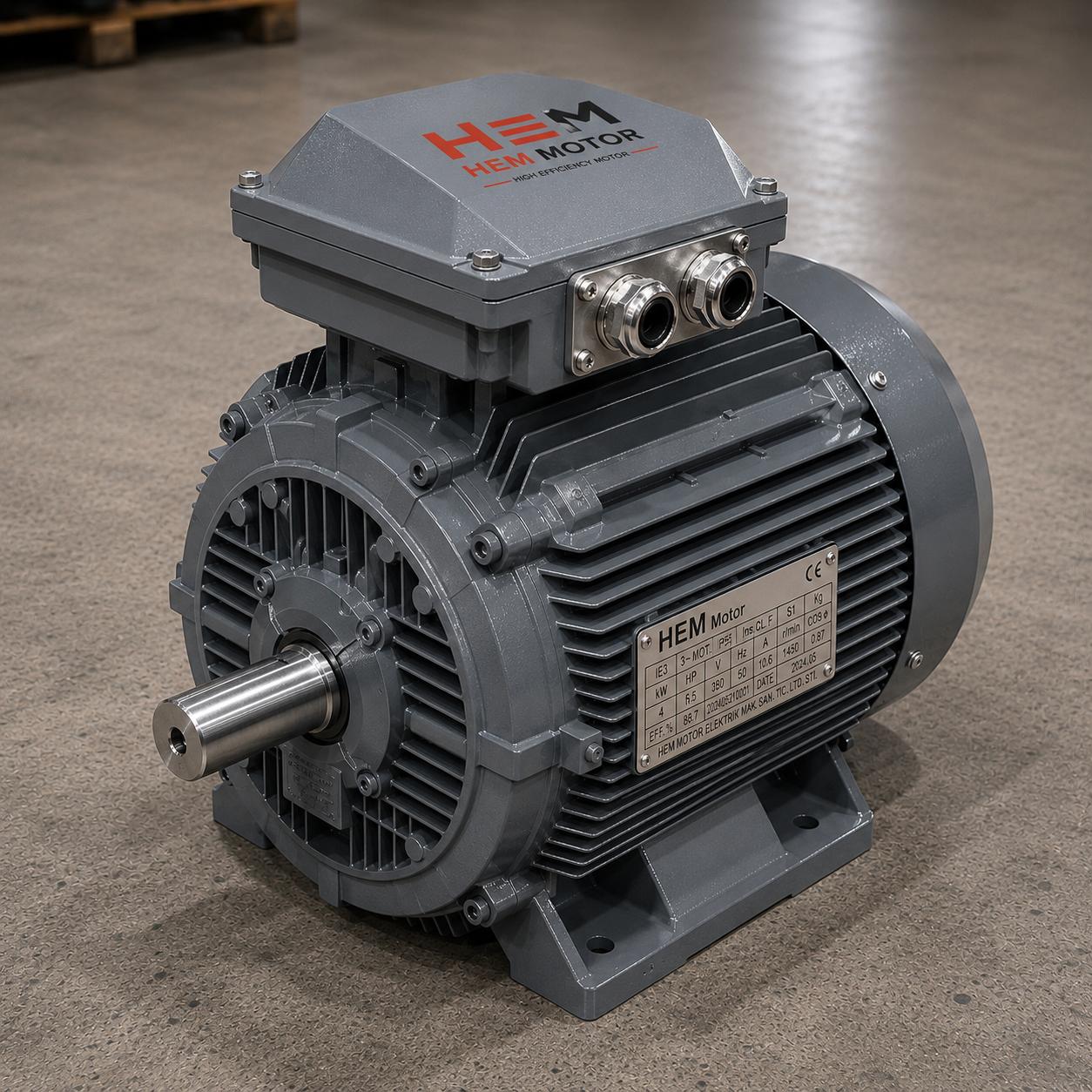
Which Protection When? Selection Matrix
To choose the right protection you must look at motor power and current type. The matrix below gives a practical guide:
| Situation | Dominant Current Type | Recommended Protection |
|---|---|---|
| Small-medium power (≈ below frame 315) | EDM current | Shaft grounding ring on DE |
| High power (≈ frame 315 and above) | Circulating current | NDE insulated bearing + DE grounding ring |
| Long cable / high du/dt | High CMV | du/dt or sine filter + grounding ring |
| Driven machine also at risk | Passage through shaft | Insulated coupling + grounding ring |
As seen, a single measure is not enough at high power; an insulated bearing and a grounding ring are usually used together. When fitting a grounding ring, the grounding of the motor and drive must also be EMC-compliant, short and low-impedance; otherwise the current cannot find the intended path. We cover this in our article on motor grounding and EMC. On the IE5 SynRM side you can find bearing protection under drive operation in our IE5 synchronous reluctance shaft grounding and bearing current article.
How Do You Diagnose Bearing-Current Damage?
If bearing-current damage is detected before the bearing fails completely, the motor is saved and unplanned downtime is prevented. Several methods are used together in diagnosis. The first sign is usually sound: as EDM damage advances, the bearing makes a characteristic hum or rattle. In vibration measurement, the fluting pattern shows up as a rise at certain frequencies, and an experienced technician can distinguish it from mechanical imbalance.
The most definitive method is to measure the shaft voltage directly. With a special probe, the voltage between shaft and frame is observed on an oscilloscope; typical EDM discharges appear as a sawtooth-like waveform where the voltage suddenly drops to zero. This waveform proves conclusively that the problem is electrical in origin. Also, when the failed bearing is removed, if grey matte areas and regular grooves are seen on the races, the diagnosis is clear. Making these checks routine at incoming acceptance helps catch the problem early; we cover this in our incoming acceptance inspection article.
In Which Applications Is the Risk Higher?
The bearing-current risk exists in every VFD system, but some conditions increase it noticeably. Recognizing these conditions allows correct prioritization of protection:
- Long motor cable: as the cable between drive and motor lengthens, voltage reflections and CMV rise; risk is high on long cables.
- High switching-frequency drive: modern fast-IGBT drives produce sharper pulses; du/dt is high.
- Large-frame motors: parasitic capacitances grow and circulating-current risk rises.
- Continuous, high-speed running: damage accelerates because the number of discharges per unit time rises.
- Poorly grounded systems: if the high-frequency current path is long and high-impedance, the current may prefer the bearing.
If more than one of these factors is present together, protection should no longer be treated as an option but as part of the design. Especially in critical process motors running 24 hours, a single bearing failure can cause a long and expensive downtime.
The Right Option at Ordering and Commissioning
Bearing-current protection is both cheaper and more effective when planned at the motor-ordering stage. Ordering a motor known to run on a VFD with a grounding-ring or insulated-bearing option from the start is far more practical than adding it later in the field. At commissioning, shaft voltage can be measured to confirm the protection works; good protection keeps the shaft voltage below the bearing's breakdown threshold.
- Clarify before ordering whether the motor will run on a VFD.
- Choose the grounding-ring and/or insulated-bearing option according to power.
- If there is a long motor cable, evaluate a du/dt or sine filter.
- Make sure grounding is EMC-compliant, short and low-impedance.
- Verify the protection by measuring shaft voltage at commissioning.
Protecting the Driven Machine Too: Insulated Coupling
Bearing current can affect not only the motor's own bearings but also the bearings of the driven machine (pump, fan, gearbox) connected through the shaft. When the shaft voltage passes through the coupling to the equipment on the other side, it creates EDM damage there too. This is noticed especially when the motor is protected with a grounding ring but the other side is not; the current, seeking the easiest path, can close through the driven machine's bearing.
An effective way to manage this risk is to place an insulated coupling between the motor and the machine. The insulated coupling electrically splits the shaft in two and prevents the current from passing to the other side. Thus, while the grounding ring on the motor side discharges the shaft voltage, the insulated coupling protects the machine side. We cover shaft-coupling matching and alignment in our article on flexible vs rigid coupling selection. A correct protection design must evaluate both the motor and the whole drive train together.
Frequently Asked Questions
Is bearing-current protection mandatory on every VFD motor?
The risk always exists, but its severity varies with motor power, drive type and cable length. At small powers and short cables the risk may be low; at medium-high power and with fast-switching drives, protection is almost mandatory. The safest approach is to protect motors that will run on a VFD with at least a shaft grounding ring.
I replaced the bearing but it failed again, why?
Because the root cause is electrical, not mechanical. Unless the current path is cut, the new bearing suffers the same EDM damage and fluting forms in a short time. The solution is to cut or divert the current path with a shaft grounding ring, insulated bearing or filter.
Shaft grounding ring or insulated bearing, which is better?
They do different jobs. The grounding ring discharges shaft voltage to a harmless path and is very effective against EDM current. The insulated bearing physically blocks current passage through the bearing and is needed especially against circulating current in large motors. At high power the best result comes from using both together.
Manufacturer Stock and Fast Delivery with HEM Motor
In motors running on a VFD, bearing current is a fully manageable risk with the right protection; managed wrongly, it costs the plant dearly through repeated bearing failures and downtime. The HEM Motor engineering team determines the combination of shaft grounding ring, insulated bearing and filter together with you, according to your motor power, drive type and application, and recommends the most suitable protection. To supply motors equipped with the right options, backed by manufacturer stock and fast delivery, contact us and request a quote.