English
 Türkçe

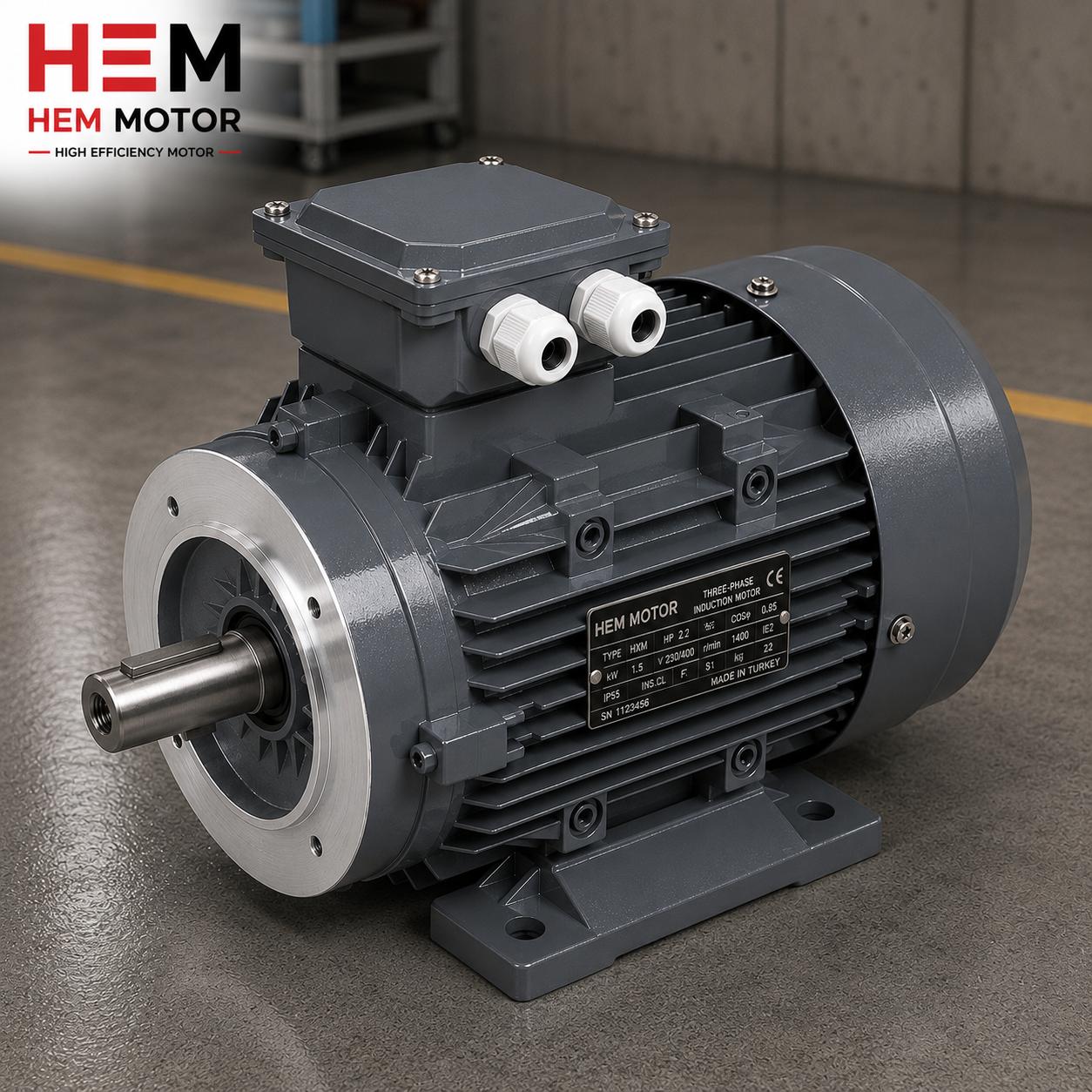

Star-delta starting is the most common and most economical method of reducing the starting current on asynchronous motors. The motor is first connected in star, keeping current and torque low; once it reaches a certain speed, it switches to delta and full torque comes in. But the critical point most engineers overlook is what happens at the moment of transition from star to delta. In the classic method this transition includes an interruption where the motor is momentarily completely disconnected from the grid (open transition). During this short interruption the motor keeps turning due to inertia and produces, at its terminals, a residual voltage that is out of phase with the grid. When the delta contactor closes, this residual voltage coincides with the grid voltage, and the result is a current surge (transient) far above the rated current and a harsh torque shock. This shock, which fatigues the mechanical transmission elements and stresses the coupling and gearbox, often overshadows the advantage the initial starting brought.
In this article we compare open transition versus closed transition star-delta starting: the cause of the current and torque surge at transition, the softening role of the resistor that comes into play in closed transition, contactor sequence and timing, and the right starter selection for your application. The goal is to control the transition shock while softening the start.
Open Transition: The Current Surge at the Moment of Transition
A standard star-delta panel has three contactors: line (main), star and delta. The sequence is: the main and star contactors close, the motor starts in star; then the star contactor opens and, after a short dead time, the delta contactor closes. This dead time is the problematic point of open transition. The instant star opens, the motor disconnects from the grid but keeps turning; the rotor field induces a residual voltage in the stator winding. The amplitude of this voltage is high, its phase is shifted relative to the grid and continuously changing.
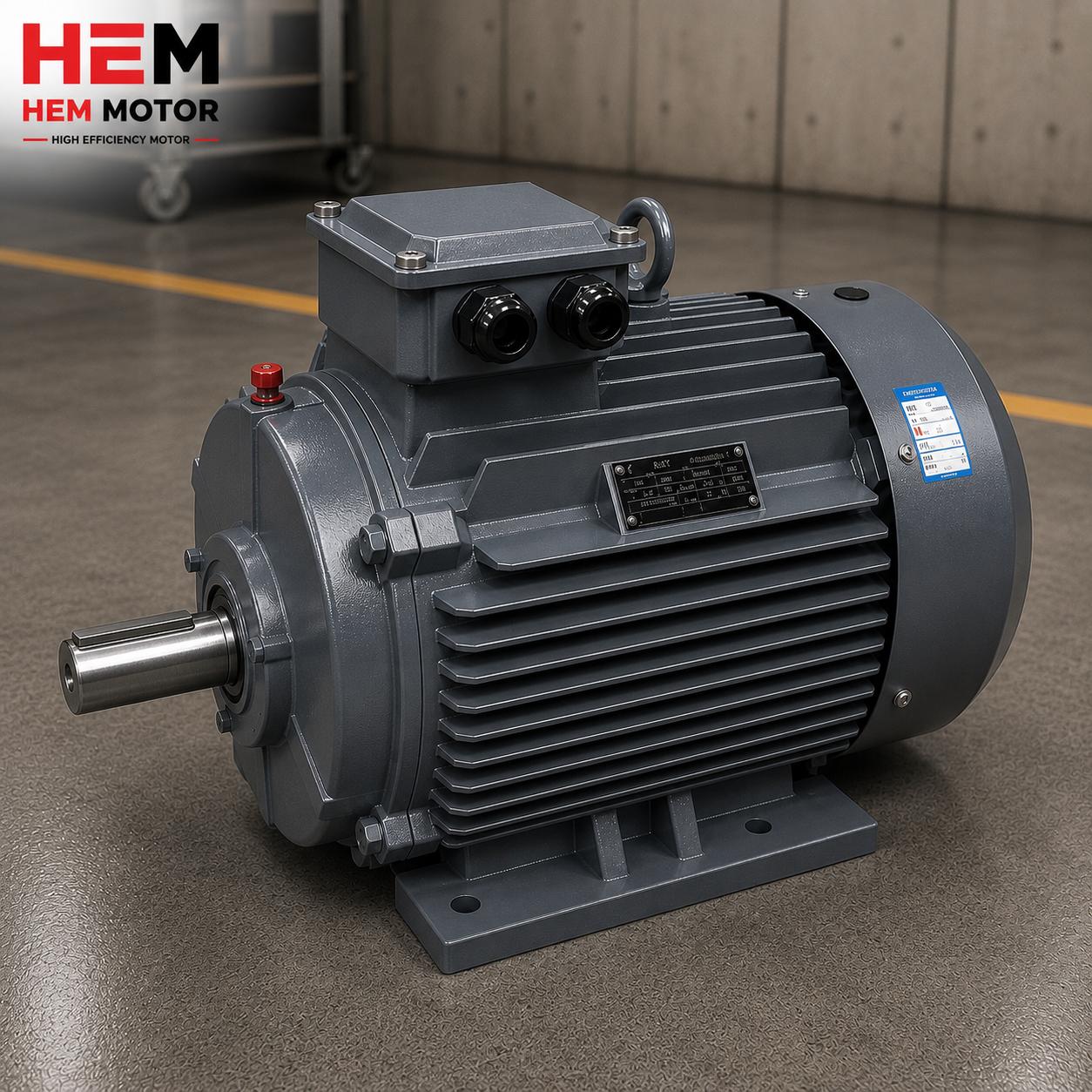
When the delta contactor closes, the motor's residual voltage and the grid voltage can, in the worst case, coincide in opposite phase. In that case the two voltages add and a current pulse, higher even than the starting current and able to reach 10-15 times the rated current, hits the motor. At the same moment the torque also makes a sharp surge; the shaft, coupling, belt-pulley or gearbox feels this sudden torque as a shock. Although these shocks do not cause a failure in a single instance, in frequently starting applications they accelerate mechanical fatigue and electrically erode the contactor contacts.
Closed Transition: Soft Transition with a Resistor
The closed transition method ensures the motor never disconnects from the grid at the moment of transition. For this, a fourth contactor and a transition resistor group are added to the panel. During the transition, before star opens, the resistor contactor closes; the resistor acts as a bridge between star and delta. The motor stays connected to the grid through the resistors during this short instant, so there is no sudden phase coincidence between the residual voltage and the grid. After the transition is complete, the resistor is removed from the circuit. As a result, both the current surge and the torque shock are noticeably damped.
Open Transition vs Closed Transition Comparison
| Feature | Open transition | Closed transition |
|---|---|---|
| Grid connection at transition | Interrupted (dead time) | Maintained through resistor |
| Transition current surge | High (up to 10-15x rated current) | Low, damped |
| Transition torque shock | Harsh | Soft |
| Panel complexity / cost | Low (3 contactors) | High (4 contactors + resistor) |
| Effect on mechanical transmission | Fatiguing | Protective |
| Suitable application | Light load, infrequent start | Sensitive/heavy load, frequent start |
As seen, open transition is simpler and more economical; it is sufficient for lightly loaded, infrequently starting applications tolerant of mechanical shock. Closed transition brings more components and cost but largely eliminates the transition shock; it is preferred for sensitive gearboxes, long conveyors, pumps (sensitive to water hammer) and frequently starting systems.
Contactor Sequence and Timing
In both methods the contactor sequence and time settings are critical. Points to watch in open transition:
- Star time: The motor should reach the highest possible speed before switching to delta; an early transition means a large current pulse.
- Dead time: The time from star opening until delta closes; too short risks a short circuit, too long lets the motor slow down and the shock grows. It is typically a few tens of milliseconds.
- Mechanical+electrical interlock: The star and delta contactors must never close simultaneously; mechanical and electrical interlock is mandatory.
In closed transition, additionally, the resistor contactor must come in and out at the right moment; the sequence proceeds as star → resistor in circuit → open star → close delta → remove resistor. For this reason closed transition is usually implemented with ready-made, factory-set starter modules.
To go deeper into starting and transition time, our articles on star-delta transition time and timer setting and star-delta and softstarter are directly relevant. On the starting current side, starting current (LRA) reduction methods and, for the terminal connection, terminal 230V-400V star-delta voltage selection are complementary. For the soft starter alternative, see our article on soft starter compatibility and selection.
Frequently Asked Questions
Does open transition star-delta always create a problem?
No. The current and torque surge created by open transition can usually be tolerated in lightly loaded, infrequently starting applications; that is why most standard panels are open transition. The problem becomes pronounced in mechanically shock-sensitive or frequently starting systems such as sensitive gearboxes, long conveyors and pumps sensitive to water hammer. In these cases closed transition or a softstarter/VFD should be preferred.
What is the difference between closed transition and a softstarter?
Closed transition only softens the moment of transition in star-delta starting; the start itself is still stepped. A softstarter, on the other hand, ramps the voltage continuously and in a controlled way, softening the entire start and completely eliminating the transition shock. In very sensitive or very frequently starting applications, a softstarter or VFD is a superior solution; closed transition is a good middle ground for those who want improvement while keeping their existing star-delta infrastructure.
What does the transition resistor do?
The transition resistor is the bridge that keeps the motor connected to the grid at the moment of transition from star to delta in closed transition. By preventing the sudden phase coincidence between the motor's residual voltage and the grid voltage, it damps the current and torque surge. After the transition is complete it is removed from the circuit; it does not carry continuous current and works only during the short transition moment.
The Physics of Residual Voltage at Transition
To understand why open transition creates such a harsh shock, we need to look a little more closely at the motor's behavior at the moment of transition. The instant the star contactor opens, the motor disconnects completely from the grid, but the rotor is still turning due to inertia. The magnetic field of the turning rotor continues to induce a voltage in the stator windings; this is called the residual voltage. This voltage is initially almost as high as the grid voltage, and as the motor slows down both its amplitude decreases and its frequency drops. The most critical point is the phase angle: from the moment the motor disconnects from the grid, the phase of the residual voltage continuously shifts relative to the grid voltage. When the delta contactor closes, the phase difference between these two voltages is entirely random.
If delta closes at a moment when the residual voltage comes into opposite phase with the grid, the two voltages add and it is as if effectively twice the voltage is applied to the motor. In this case the current can exceed even the normal starting current, reaching 10-15 times the rated current; at the same moment the motor produces this sudden magnetic imbalance as a strong torque shock. This shock lasts milliseconds but creates a real shock in the mechanical system. If the phase difference happens at a lucky moment (voltages in the same phase) the shock stays small; but the designer cannot rely on this luck, because the phase difference is different at every start. Closed transition eliminates this randomness.
On Which Loads Does the Transition Shock Matter?
The practical effect of the transition shock depends on the type of load the motor drives. High-inertia loads (large fans, centrifuges, mills) keep the residual voltage high because the motor does not slow down at transition, and enlarge the shock. In pump systems sensitive to water hammer, the torque surge at transition can cause pressure waves in the pipeline. Sensitive gearboxes and long conveyor belts accumulate sudden torque shocks as fatigue in the gears and connection elements. In frequently starting applications (for example a system starting hundreds of times a day), the small shocks at each transition create both mechanical and electrical wear over time. On these loads, closed transition or a softstarter is a real necessity, not just comfort.
In contrast, on low-inertia loads tolerant of mechanical shock (small pumps, simple drives), the shock created by open transition usually causes no problem. So open transition is still the most common solution; it is simple, economical and sufficient for most applications. The right choice is made by evaluating the load's inertia, starting frequency and mechanical sensitivity together.
Starting Method Selection Guide
- Low inertia, infrequent start, tolerant load: open transition star-delta is sufficient.
- High inertia or water-hammer-sensitive load: closed transition should be preferred.
- Frequent starting and sensitive mechanical transmission: a softstarter is superior.
- If speed control is also needed: a VFD provides both soft start and speed adjustment.
- For those wanting to keep and improve existing star-delta infrastructure: closed transition is a good middle ground.
Contactor and Resistor Sizing of the Closed Transition Panel
The correct operation of a closed transition star-delta panel depends on the correct sizing of the transition resistor and the fourth contactor. The transition resistor carries current only for a short instant (typically between a few tens and a hundred milliseconds); so it is designed not for continuous current but to damp the high current pulse at transition for a moment. The resistor value is chosen according to the motor's power and the smoothness desired at transition; too low a resistance does not damp the shock enough, while too high a resistance causes the torque to drop excessively at transition. This delicate balance explains why closed transition modules are mostly supplied as factory-set, ready packages.
The fourth contactor (transition contactor) brings the resistor into and out of the circuit and is sized to carry the current at transition. The control circuit guarantees the contactors operate in the correct order and timing: first the resistor comes in, then star opens, then delta closes, and finally the resistor is removed. Any timing error in this sequence either defeats the purpose of the transition or creates a short-circuit risk.
Commissioning Checks in Open and Closed Transition
- Verify that the mechanical and electrical interlock between the star and delta contactors works.
- Check that the star time is long enough to let the motor reach sufficient speed.
- Set the dead time (in open transition) to be neither too short nor too long.
- In closed transition, test that the resistor contactor comes in and out in the correct order.
- Verify by measuring current during start that the transition shock is at the expected level.
Comparison with Soft Starter and VFD
Star-delta starting, whether open or closed transition, is a stepped method: the motor reaches full voltage in two steps (star and delta). Modern alternatives eliminate this stepped structure entirely. A soft starter increases the voltage applied to the motor with a continuous, smooth ramp; so the starting current and torque rise in a controlled way and there is no such thing as a transition shock. A VFD (frequency drive) controls both voltage and frequency together, accelerating the motor completely smoothly from zero to the desired speed; moreover it provides speed adjustment during operation too. These methods offer a clear advantage over star-delta in sensitive and frequently starting applications.
But there is a reason star-delta is still common and economical: it is simple, cheap and sufficient for many applications. Soft starters and VFDs require a higher initial investment and are electrically more complex (issues such as harmonics, EMC and shaft voltage arise). The right choice is made according to the application's real need.
The Cost and Life Balance in the Starting Decision
Looking only at the initial investment cost when selecting a starting method is misleading; the right decision is made by evaluating the total life cost of the equipment. Open transition star-delta is the cheapest panel but in the wrong application it comes back as a gearbox, coupling or pipeline failure; the repair and downtime cost of these failures can far exceed the saving made at the start. Closed transition or a softstarter looks more expensive but prevents these hidden costs by protecting the mechanical transmission. So the starting decision should be made considering the value of the motor and the load it drives, the starting frequency and the cost of a failure to operations together.
To select the right starting solution that controls both the start and the transition shock for your asynchronous motors, and to determine the motor and characteristic suited to your application, HEM Motor is by your side with its stocked product range and fast delivery advantage. For a solution suited to your load type, starting frequency and mechanical sensitivity, contact us and request a quote; let starting be soft and transition shock-free.