English
 Türkçe

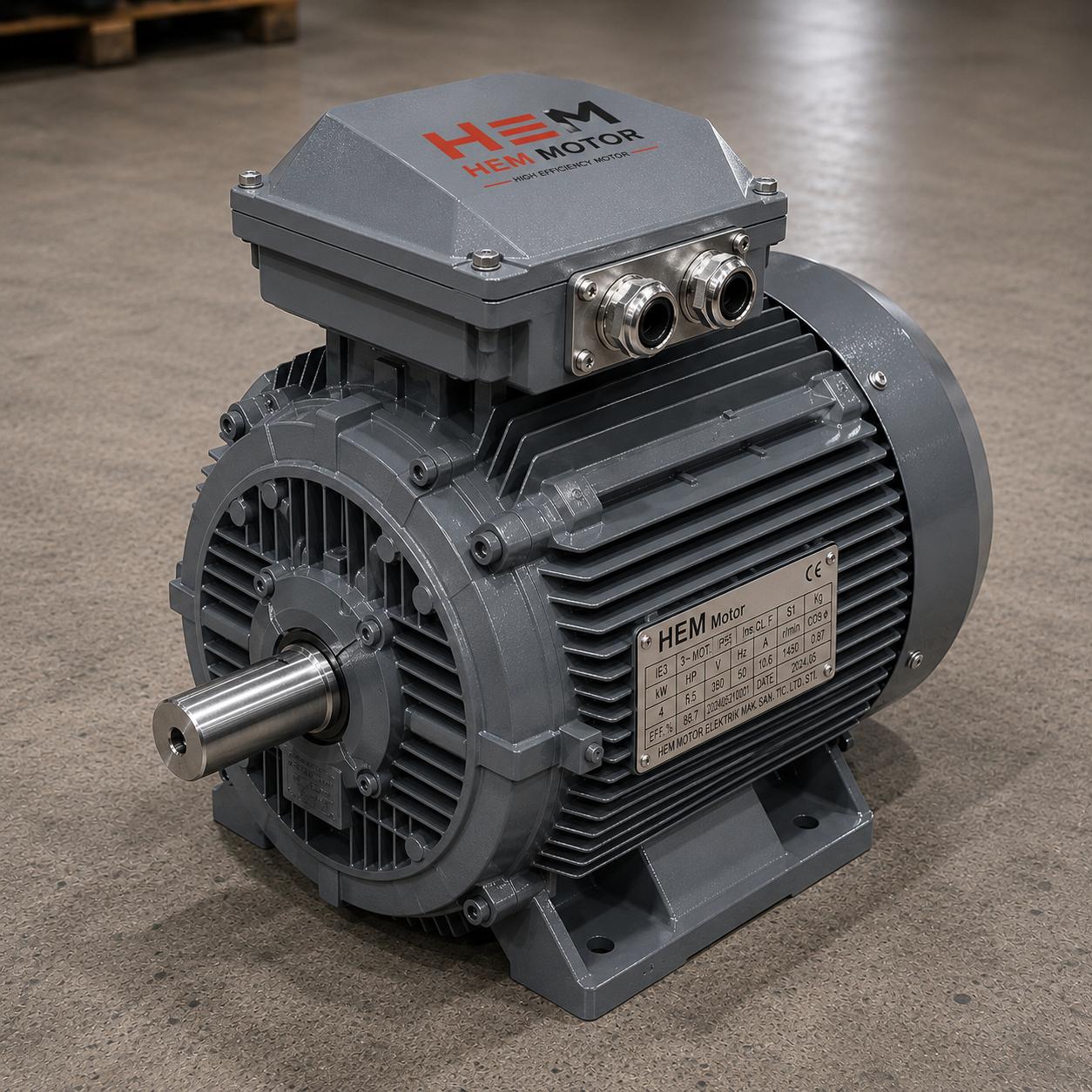

When you see a code such as "6312 C3" on a motor nameplate or on the bearing itself, the C3 at the end is not a random letter; it defines the internal clearance (radial internal clearance) of the bearing. Between the inner ring, outer ring and balls of the bearing there is a small radial play that exists before the motor runs. When this play is deliberately increased above the standard (CN) value, the C3 class is obtained, and when increased further the C4 class. So why would more clearance be deliberately wanted in a bearing? The answer is hidden in temperature, expansion and rotational speed. In this article we cover, in engineering terms but with the clarity a buyer needs, the C3 bearing internal clearance in a motor, how it differs from the standard CN, why C3 is needed in hot environments and at high speed, when C4 is required, grease compatibility and which clearance is the correct bearing arrangement for which application.
At HEM Motor, while delivering electric motors from stock, the correct selection of the bearing clearance class directly determines motor life, especially in hot processes and high-speed VFD applications. Choosing the wrong clearance is one of the most insidious causes of early motor failure.
What Is Bearing Internal Clearance?
Radial internal clearance is the total radial play measured through the balls between the inner ring and the outer ring while the bearing is not yet mounted and unloaded. This clearance decreases when the bearing is fitted onto the shaft and into the housing (due to the interference fit) and when the motor heats up. Because:
- When the inner ring is fitted tightly onto the shaft it expands and the clearance shrinks.
- While the motor runs the inner ring heats up and expands more than the outer ring; this shrinks the clearance further.
The aim is this: when the motor reaches operating temperature, the correct amount of operating clearance (close to zero but not negative) must remain in the bearing. If the clearance turns negative (preload) during operation, the balls bind, friction and heat rise, and the bearing overheats and fails quickly. This is exactly why the initial clearance (before mounting) is deliberately selected.
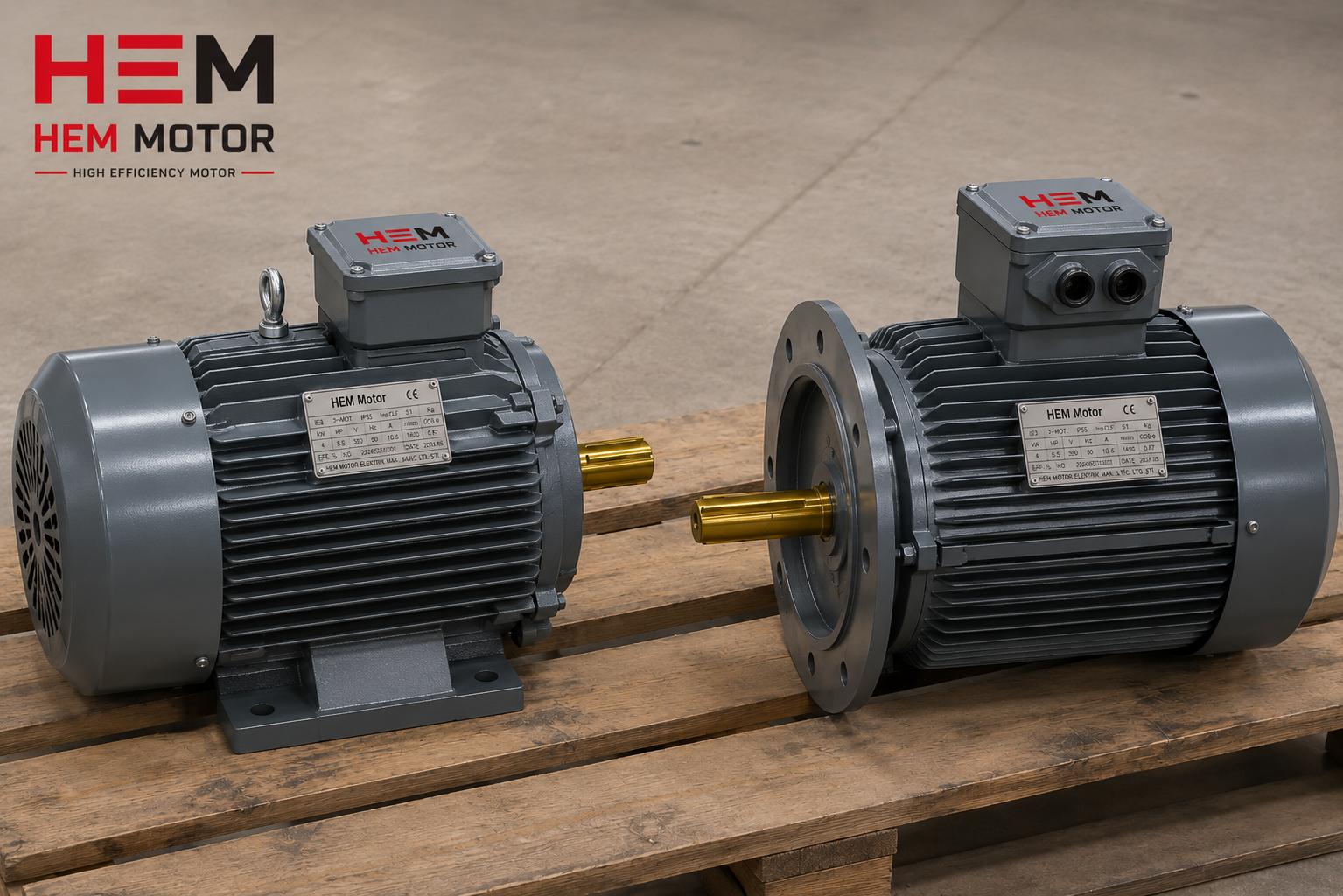
CN, C3 and C4 Classes: Clearance Comparison
Bearing internal clearance classes are ordered from least to most as C1, C2, CN (standard), C3, C4, C5. The most common in motors are CN, C3 and C4. The table below summarises these classes and their typical uses.
| Clearance Class | Radial Clearance | Typical Application |
|---|---|---|
| CN (standard) | Normal | General purpose, ambient temperature, standard speed |
| C3 | Greater than CN | Hot environment, VFD/high speed, belt-driven load |
| C4 | Greater than C3 | Very hot process, high temperature rise, heavy thermal load |
General rule: the more heat and expansion expected during operation, the larger the initial clearance selected. Most standard electric motors come from the factory with a C3 bearing because it safely covers a wide range of applications. This allows the motors to run safely in both standard and medium-to-high temperature conditions.
Why Is C3 Needed in a Hot Environment?
In a hot environment or in a motor with a high temperature rise, the inner ring expands significantly during operation. If the bearing was selected with CN (standard) clearance, this expansion can consume the initial clearance and put the bearing into preload; the result is binding, overheating and early failure. C3 clearance leaves a margin for this extra expansion; when the motor heats up the clearance shrinks but a healthy operating clearance still remains. The motor temperature rise class is directly related to this; our article on temperature rise class and temperature rise makes this connection. We also addressed derating at high ambient temperature in enclosed spaces and panels in our article on ambient temperature and derating.
The Role of C3 Clearance in VFD and High-Speed Operation
Motors running with a frequency drive (VFD) can often run above nominal speed, or are subject to extra heating while producing continuous torque at low speed. At high speed the bearing heats up more; at low speed the bearing temperature can rise because its own fan does not cool sufficiently. In both cases C3 clearance protects the bearing by leaving a margin for thermal expansion. In addition, in VFD systems bearing current is a separate risk; this is independent of clearance but affects bearing life and is managed with a shaft grounding ring. We examined VFD-induced extra heating and bearing current in our article on VFD and harmonic-induced heating and bearing current, and the shaft grounding solution in our article on bearing current and shaft grounding ring.
Compatibility With Grease
The clearance class alone is not enough; the bearing grease must also be selected to suit the operating temperature and speed. At high temperature a low-temperature grease degrades quickly; at high speed an overly thick grease increases friction and heat. A bearing with C3 clearance gives full performance together with grease of the correct temperature range and NLGI consistency. We covered grease type, NLGI consistency and lubrication interval in detail in our article on bearing greasing. Our article on bearing type and life is also complementary on bearing type and life.
Which Clearance for Which Application?
The basic guiding questions for correct bearing selection are:
- Is the ambient and process temperature high? If yes, at least C3, and C4 if very high.
- Does the motor run at high speed with a VFD? If yes, C3 is the safe choice.
- Is it belt-and-pulley driven? Belt tension brings radial load; C3 clearance is more compatible with this load.
- Standard room temperature, directly coupled, nominal speed? CN may be sufficient, but most motors already come with C3.
The shaft radial and axial load limits also affect bearing selection; we addressed the effect of belt tension and coupling thrust on bearing life in our article on shaft radial and axial load limit.
The Effect of Fit, Housing and Mounting on Clearance
Bearing clearance is not determined by the selected class alone; the fits applied during mounting also change the operating clearance. When the inner ring is fitted onto the shaft with an interference fit, it expands and consumes part of the initial clearance. A similar effect can occur as the outer ring fits into the housing bore. For this reason, on bearing replacement it is not enough to select only the same number and the same clearance class; the shaft and housing dimensions must be within tolerance and the bearing must be fitted with the correct mounting tool (by heating or with a press). Wrong mounting can put even a correctly selected C3 bearing into preload. We described bearing removal, installation and correct number selection in our article on bearing replacement. We covered bearing quality and life marks on cast-iron body motors in our article on bearing and bearing life on cast-iron motors.
Bearings in a Motor Stored for a Long Time
As much as the clearance class, the motor's storage condition also affects bearing health. In a motor that stays still for a long time the bearing rests at the same contact point; in a vibrating environment this can cause ball marks (false brinelling). Moisture also degrades the bearing grease and surface. For this reason, periodic shaft turning and moisture protection are recommended for motors that will wait a long time; we examined this in our article on storage, long-term holding, moisture and bearings. Before commissioning, it must always be checked whether the bearing turns freely and whether there is any abnormal noise.
Frequently Asked Questions
Is there any harm if I fit a C3 bearing instead of a CN one?
In most motor applications C3 is a safe alternative to CN and is already the factory standard. However, in special applications requiring precision, low vibration and operation at low temperature, excess clearance can create slight additional vibration. In general industrial motors C3 is a safe and common choice; the real risk is using CN in a hot application and putting the bearing into preload.
How do I choose between C3 and C4?
The decisive factor is the thermal expansion expected during operation. At standard and medium temperature C3 is sufficient. At very high process temperature, heavy thermal load or in applications where the inner ring heats up a lot, C4 is preferred. Going to excess and choosing an unnecessarily large clearance also brings vibration and noise; the selection must be balanced according to the application.
How do I find out the bearing clearance class from the motor nameplate or the bearing?
Look at the class mark at the end of the code on the bearing: if you see C3 or C4 at the end it is increased clearance; if there is no mark it is standard (CN) clearance. Some motor nameplates also state the bearing number and clearance class. Always keep the same clearance class on replacement; do not arbitrarily swap CN for C3.
The Effect of the Clearance Class on Vibration and Noise
Bearing clearance affects not only thermal safety but also the vibration and noise behaviour of the motor. A bearing with little clearance (for example CN or tighter) can run more quietly and with lower vibration at room temperature; this is why it may be preferred in precision applications that require low vibration. By contrast, a bearing with more clearance (C3, C4) can produce slight additional vibration or noise when cold, but since the clearance shrinks as it heats up, this difference largely disappears at operating temperature. What matters is to evaluate the real operating temperature and vibration sensitivity of the application together.
In applications that require quiet operation, the clearance choice should be considered together with the sound power and sound pressure values; we addressed the acoustic behaviour of the motor in our article on sound power and sound pressure. In most industrial applications, however, C3 clearance is the most balanced choice for both thermal safety and acceptable vibration; this is why it is widely used in standard motors. Switching to CN in a hot application in the expectation of extreme quietness would be a wrong decision, as it increases the thermal risk.
Bearing Clearance and the Motor's Maintenance Schedule
Even a bearing with the correct clearance class selected can fail early with a neglected maintenance schedule. Clearance, grease and temperature form an interrelated triangle: wrong greasing finishes off even a bearing with the correct clearance prematurely; excess or insufficient grease raises the temperature and shrinks the operating clearance. For this reason the greasing interval, grease quantity and grease type must be planned in harmony with the bearing clearance class. We compiled the periodic maintenance and check schedule in our article on maintenance and periodic check schedule.
Regularly monitoring the bearing temperature in the field is the most practical way to catch problems caused by wrong clearance or greasing early. A sudden or continuous rise in bearing temperature often points to a bearing that has gone into preload or whose grease has degraded. We described bearing temperature monitoring with a PT100 or thermistor in our article on temperature monitoring PT100 and thermistor. When correct clearance, correct grease and regular monitoring come together, the bearing becomes one of the most reliable components of the motor; when one of these three is neglected, it becomes the part that fails most often.
So that you can receive your electric motors together with the bearing clearance class (CN/C3/C4), correct grease and bearing configuration suited to your application, HEM Motor offers fast supply from stock. For the most suitable bearing selection for your hot process, VFD or belt-driven application, get in touch with us and let our team prepare a quotation with the right solution.