English
 Türkçe

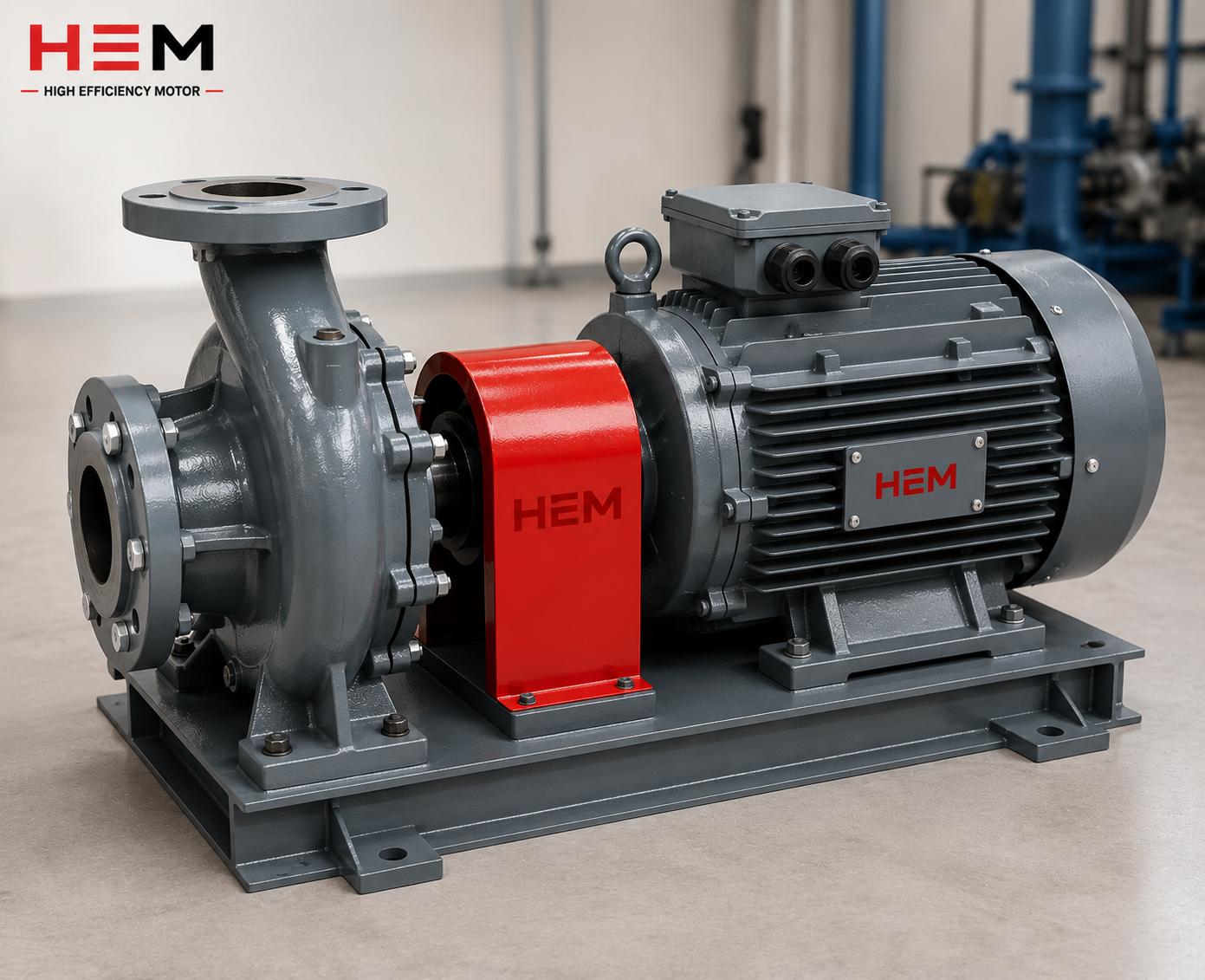

Electric motors run not only in the horizontal (foot-mounted, IM B3) position; they can work in many different positions such as shaft up, shaft down or wall-mounted. But the mounting position affects not only the layout of the motor; it directly affects its lubrication, bearing load and sealing. Ordering a horizontal motor on a wrong assumption and mounting it vertically shortens bearing life and causes sealing problems. This article covers vertical and special mounting positions (shaft up V3/V5, shaft down V1/V6, wall mounting); it explains the effect of mounting position on lubrication, bearing and seal, shaft-up oil seal and water-ingress protection, drain-hole position, bearing selection and ordering the correct mounting code, all from a purchasing-decision perspective.
Mounting Codes (IM) and Their Meanings
The motor mounting position is defined by international IM (International Mounting) codes. Horizontal foot mounting is shown as IM B3 and flanged horizontal mounting as IM B5. Vertical mounting positions begin with the letter V. Reading these codes correctly is critical for the motor to fit the site; because each code defines the orientation of the shaft and flange, and therefore the bearing and sealing design. The table below summarises the most common vertical and special positions.
| Mounting code | Position | Shaft direction | Typical application |
|---|---|---|---|
| IM B3 | Horizontal, foot | Horizontal | General purpose, belt/coupling |
| IM V1 | Vertical, flanged | Down | Vertical pump, fan |
| IM V3 | Vertical, flanged | Up | Agitator, mixer |
| IM V5 | Vertical, foot (wall) | Down | Vertical wall mount |
| IM V6 | Vertical, foot (wall) | Down | Wall mount, foot |
| IM B6/B7/B8 | Wall/ceiling, foot | Horizontal | Special horizontal wall/ceiling |
We covered how mounting codes are read and how to order positions such as B3/B5/V1 without error in our article on the IM mounting code reading guide. Considering the multi-mount (B3/B5/B35) universal frame logic also gives flexible selection with a single stock code.
The Effect of Mounting Position on Lubrication and Bearings
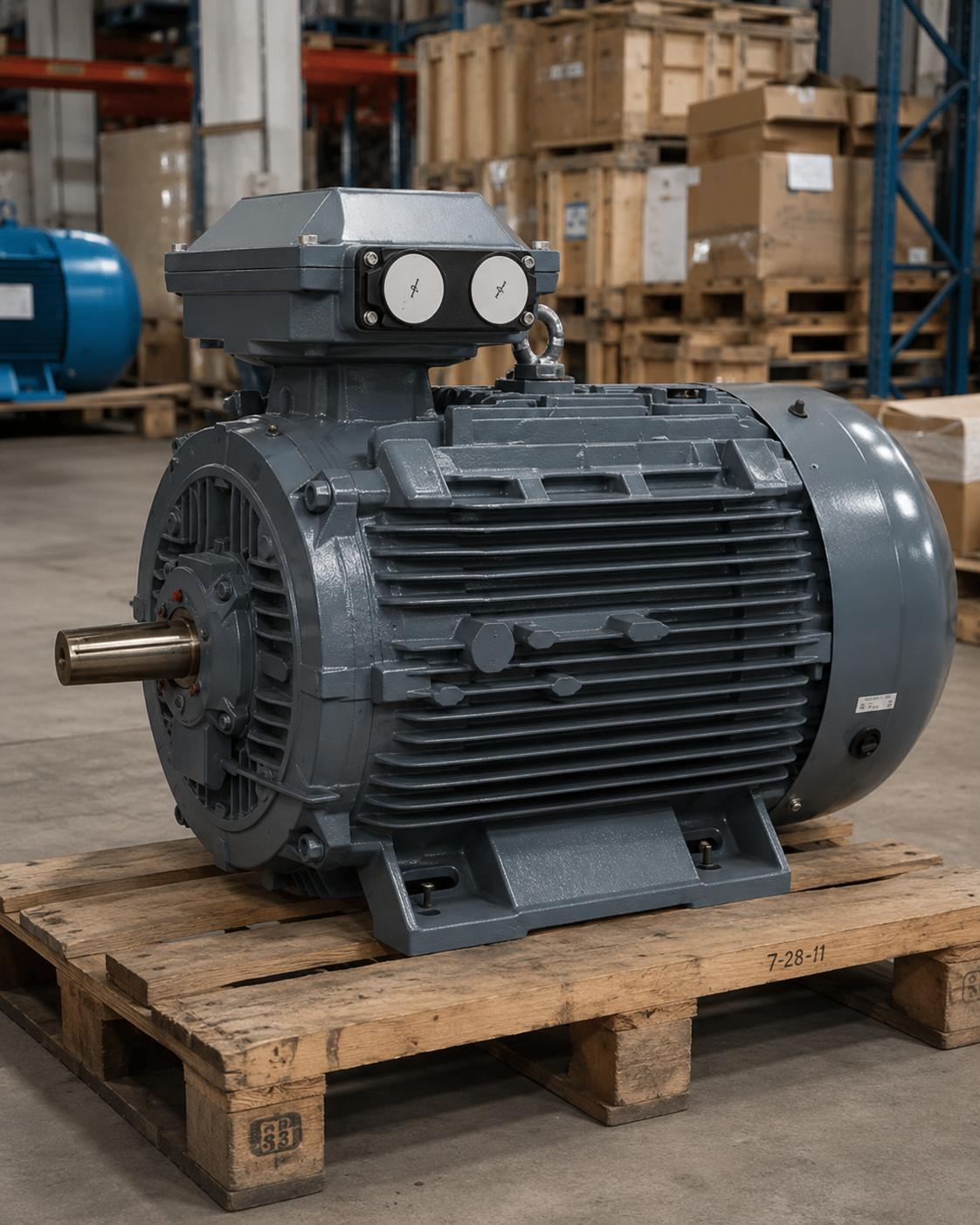
In a horizontal motor the weight on the bearing is radial, and the grease distributes in a balanced way inside the bearing by gravity. When the motor is set to a vertical position the situation changes. In the shaft-down (V1) position, the weight of the shaft and rotor becomes an axial load on the lower bearing; this load continuously stresses the lower, not the upper, bearing. In the shaft-up (V3) position the axial load reverses. For this reason, in vertical motors the bearing must be selected to carry the axial load; in some applications an angular-contact bearing or one with higher axial capacity must be fitted to the lower bearing.
Position also matters for lubrication. In a vertical position grease tends to drain downward by gravity; so vertical motors need a design that retains grease and a suitable grease interval. Because the upper bearing risks running dry as grease drains away, lubrication is watched more carefully in vertical motors. On bearing load and grease, our articles on shaft radial and axial load limit and bearing greasing and NLGI interval guide the right selection.
Shaft-Up Oil Seal and Water-Ingress Protection
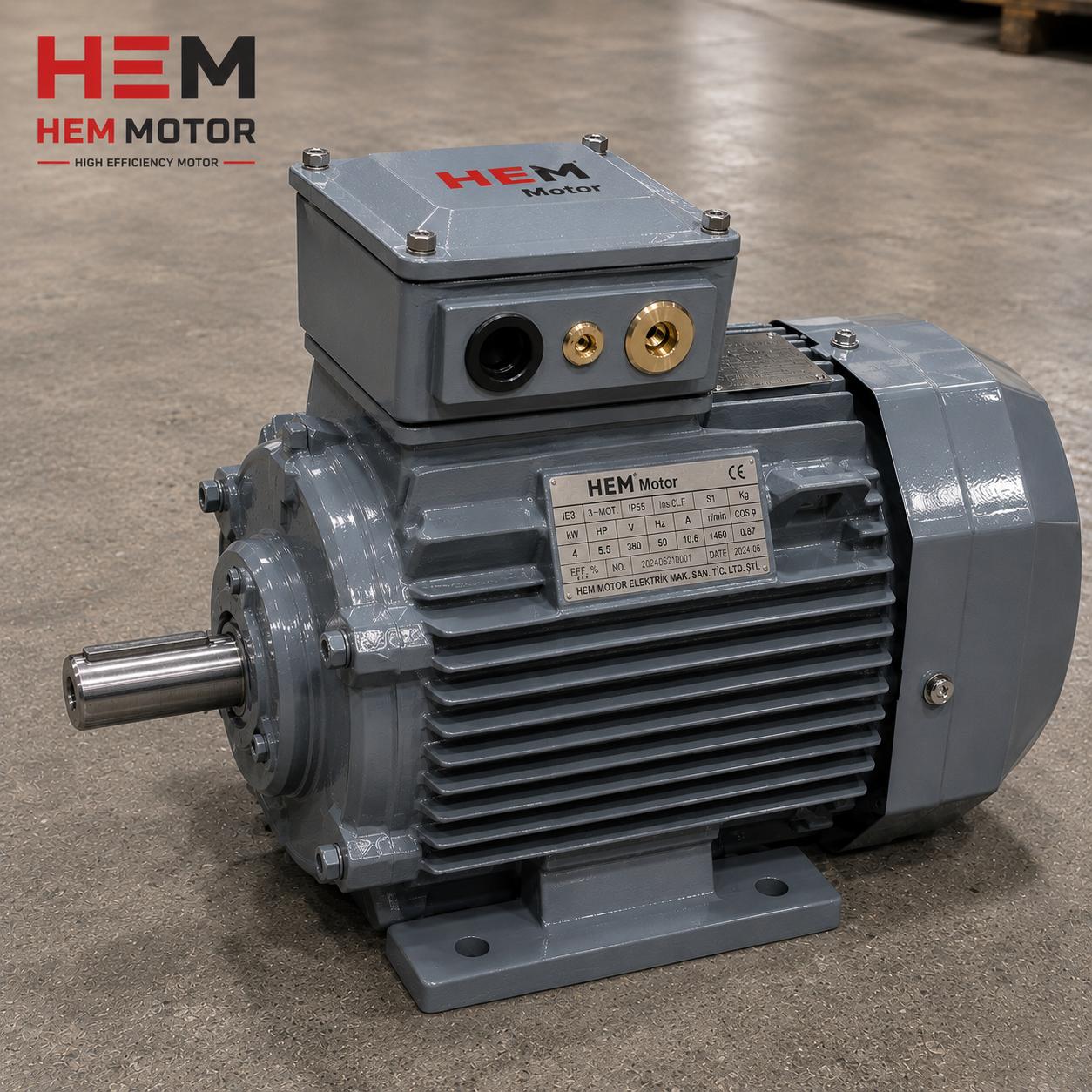
The shaft-up (V3) position is one of the most critical mounting forms for sealing. When the shaft points up, the shaft opening becomes a gap through which rain, condensation, wash water and dust can enter the motor. Gravity pulls these liquids straight to the shaft seal and inward. So in shaft-up motors a standard oil seal may not be enough; extra protection is needed. Typical solutions are:
- Drip cover (rain hat): A protective cap fitted over the shaft that directs water and dust away from the shaft opening. It is almost a standard need in V3 mounting.
- V-ring seal: Creates an additional splash/water barrier between the shaft and the housing.
- Double seal or labyrinth seal: An extra sealing layer for harsh, wet environments.
- Raised protection class (IP55/IP56/IP65): Increasing housing protection against water and dust ingress.
For shaft seal types and the right sealing choice in wet/dusty environments, our article on shaft oil seal and V-ring seal types is a detailed guide. In shaft-down (V1/V5) mounting the risk is lower but condensation drainage still matters; we cover this in our article on vertical mounting V1/V5 shaft-down selection.
Drain-Hole Position and Condensation
Every motor housing has drain holes to let condensation that collects inside escape. For these holes to do their job they must be at the lowest point according to the mounting position. When a horizontal motor is set to a vertical position, the drain holes positioned at the factory for the horizontal position may no longer be at the bottom; in that case condensation cannot drain and collects inside the motor, damaging the insulation and the bearing. So the motor must be ordered according to its real mounting position, so the drain holes are opened on the correct side or the plugs are moved to the right position.
- Drain holes must be at the lowest point in the mounting position.
- Drains in the wrong position lead to water collection and corrosion.
- In damp environments a space heater reduces condensation.
- The mounting code must be stated clearly on the order; drainage is set accordingly.
Ordering with the Correct Mounting Code
For all these reasons, stating the real mounting position clearly as an IM code when ordering a motor is vital. A motor of the same power and frame can require a different bearing, seal, drainage and protection configuration for horizontal (B3), shaft-down (V1) or shaft-up (V3). Mounting a horizontal motor vertically on the assumption that "it is the same motor anyway" soon leads to bearing and sealing problems. Ordering with the correct code ensures the motor fits the site the first time.
- Mounting position (IM code): horizontal, shaft up, shaft down, wall?
- Axial load and bearing requirement (critical in a vertical position).
- Drip cover and extra seal requirement when shaft is up.
- Drain-hole position and protection class (IP).
- Environmental conditions (moisture, dust, washdown).
The Specific Risks of the Shaft-Down (V1) Position
Shaft-down (V1) mounting is the most common position in vertical pumps and fans. In this position, because the shaft opening faces down, the risk of rain and condensation entering through the shaft seal is much lower than in the shaft-up position; because gravity carries water away from the motor, downward. But this does not mean the V1 position is risk-free. The main thing to watch in V1 mounting is the continuous axial load that the weight of the rotor and shaft places on the lower bearing. This load unloads the upper bearing while continuously stressing the lower one; so the lower bearing must be selected for axial capacity.
Also, in the V1 position the extra axial thrust created by the equipment attached to the shaft end (for example a pump coupling or fan hub) must be taken into account. In pump applications hydraulic thrust, and in fan applications air thrust, is an axial force added to the lower bearing. For this reason V1 motors are usually ordered with a higher axial-capacity bearing configuration. On the sealing side, although the downward-facing shaft opening provides some protection, a suitable seal and protection class must still be selected in dusty and washdown environments.
Wall Mounting (V5/V6) and Special Positions
In some applications the motor is mounted not on the floor but on a wall or column. In wall mounting the feet are positioned facing the wall and the shaft is usually downward or horizontal. Codes such as V5 and V6 define these wall-mount forms. There are two key points to watch in wall mounting: first, a solid wall connection and suitable bolt/anchor selection to carry the motor's weight and vibration; second, the bearing and sealing design re-evaluated according to the shaft direction. In a wall-mounted motor, vibration combined with a loose connection can damage both the motor and the structure.
More special positions such as ceiling mounting (shaft down, motor upside down) are also possible, but these are the most demanding cases for sealing and drainage; in these positions every drop of water that enters the motor reaches critical zones by gravity. Such special mounts must be evaluated with the manufacturer and ordered with the correct IM code. Fixing the motor firmly to the floor or base, and the correct bolt-nut and anchor torque selection, are also critical for a vibration-free connection.
The Relationship Between Mounting Position and Cooling
The mounting position can affect not only the bearing and seal but also the cooling of the motor. A standard motor cools by passing the air drawn by the fan behind it over the housing fins. Obstacles in front of this airflow, or restrictions due to position, can reduce cooling efficiency. For example, in shaft-up mounting the drip cover fitted over the fan cowl must be designed so as not to block the air inlet opening; otherwise the motor does not cool enough and overheats. So vertical mounting accessories are selected so they do not block the cooling air path.
In vertical motors mounted in narrow or enclosed spaces, the circulation of ambient air also matters. A motor running in a hot, tight niche that cannot release the heat it gives off will see its winding temperature rise and insulation life shorten. In that case an external forced-cooling fan or ambient ventilation may be needed. When mounting position, environmental conditions and cooling are evaluated together, the motor runs with a long life and safely. In hot and dusty environments, insulation class and frame selection are also part of this evaluation.
Frequently Asked Questions
Can I use a horizontal (B3) motor in a vertical position?
It is not always recommended. The bearing, seal and drainage of a motor designed for horizontal use are arranged for the horizontal position. In a vertical position the axial load, lubrication distribution and drain position change. In low-power, light applications some motors may suit several positions, but the correct and safe route is to state the real mounting position when ordering.
Why is a drip cover needed in shaft-up (V3) mounting?
When the shaft points up, the shaft opening becomes a gap through which rain and condensation can enter directly by gravity. A drip cover directs this liquid away from the shaft opening and protects the seal and the inside of the motor. So in V3 mounting a drip cover and, if needed, an extra seal is almost a standard requirement.
Why is bearing selection different in a vertical motor?
In a vertical position the weight of the rotor and shaft becomes an axial load, and this load continuously stresses the lower bearing. In a horizontal motor this load is radial. So in vertical motors the bearing is selected to carry the axial load; some applications need a bearing with higher axial capacity. The wrong bearing choice leads to early failure in a vertical position.
For your vertical, shaft-up, shaft-down or wall-mounted applications, we can define the correct IM mounting code, bearing, seal, drainage and drip-cover configuration together. As HEM Motor, with broad stock and fast delivery, contact us to guide you to a motor suited to your mounting position; sharing your mounting form and environmental details to get a quote is enough.