English
 Türkçe

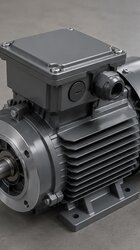

The life of an electric motor is often decided not by its winding, as we tend to assume, but by a small sealing element of a few millimetres at the shaft exit. The oil seal and V-ring seal are among the motor's most invisible yet most critical components. When these small parts fail to do their job, external dust, water and moisture reach the front bearing directly; the bearing wears early, makes noise and eventually the motor fails. The irony is this: an expensive, large motor can be taken out of service long before its time because of a wrongly chosen oil seal worth only pennies.
In this article we examine, step by step, the shaft sealing elements used in electric motors — NBR and FKM seals, V-ring and labyrinth seals — and how to choose the right one according to dusty, oily and wet environments and the IP protection class. Our goal is to enable you to make this critical decision, which protects your motor's bearing, with full awareness.
Why Is Shaft Sealing So Critical?
As the motor shaft rotates, there is an inevitable gap between the housing and the shaft. This gap is an open door for contaminants entering the motor from outside and grease/oil leaking from inside. The sealing element's job is to keep this door closed while the shaft keeps rotating. When it fails, two-way damage occurs: dust entering from outside grinds the bearing like an abrasive paste, while grease leaking from inside depletes the lubrication and leaves the bearing dry.
The front bearing is the bearing on the load side of the motor and is usually the most heavily stressed component. Protecting this bearing directly extends motor life. That is why seal selection is not a "detail" but a core engineering decision.
Types of Sealing Element
There is a correct solution for every environment. The wrong type either provides insufficient protection or creates heating and efficiency loss through unnecessary friction.
Radial Shaft Seal (Oil Seal)
The most common sealing element is the spring-lipped radial shaft seal. An elastomer lip seated on the shaft is pressed against it by a small spring and prevents both oil leakage from inside and dirt entry from outside. The most important factor determining the seal's performance is the lip material.
- NBR (nitrile) seal: Suitable for most standard applications. It withstands mineral oils, greases and normal temperatures (about -30 °C to +100 °C). It is an economical and widespread solution.
- FKM (Viton) seal: Preferred for high temperature (up to about +200 °C), aggressive chemicals and oily-vaporous environments. It offers long life in harsh conditions where NBR falls short.
V-Ring Seal
The V-ring is an elastomer ring fitted onto the shaft that rotates axially. Its lip presses lightly against a stationary surface (usually the motor cap) and, while rotating, flings water and dust outward through a centrifugal effect. The V-ring is used especially as the first line of defence against splashing water and dust from outside, as a secondary barrier in front of the oil seal. Its low friction and easy mounting are important advantages.
Labyrinth Seal
The labyrinth seal is a non-contact sealing solution. By forming interlocking narrow channels (labyrinths), it physically makes it difficult for the contaminant to reach inside. Because it is non-contact, it creates no friction or wear; this makes it ideal for high-speed, continuously running motors. It is frequently preferred in very dusty heavy-duty applications or those requiring high IP protection.
The Right Choice by Environment
The right seal is determined by the character of the environment in which the motor will operate. Here are typical scenarios:
Dusty Environments
In dusty environments such as cement, mining, crushing-screening and woodworking, the biggest threat is fine particles reaching the bearing. Here a seal system reinforced with a V-ring or labyrinth seal is needed. Because dust behaves like an abrasive material, single-layer protection is often insufficient; a multi-layer defence is ideal.
Wet and Humid Environments
On washdown lines, in outdoor applications and in humid processes, water ingress leads to bearing corrosion. These environments require V-ring-reinforced seals resistant to splashing water and compatible with a high IP protection class (IP55, IP65 and above). Achieving the required IP class is possible with the right combination of sealing elements. To procure the right product from stock and request a quote, the healthiest approach is to proceed via the current electric motor prices and protection class options.
Oily and Hot Environments
In environments with oil vapour, chemical splashing or high temperature, NBR falls short and cracks as it hardens. In these conditions an FKM (Viton) seal should be preferred; thanks to its high-temperature resistance and chemical resistance, it provides long life.
Relationship with the IP Protection Class
A motor's IP (Ingress Protection) class depends directly on the sealing elements used. IP55 denotes standard protection against dust and splashing water, IP65 dust-tightness and resistance to low-pressure water jets, while IP66/IP67 denote heavier conditions. To preserve the IP class stated on the motor's nameplate, the seals must be replaced during maintenance with new ones of the same type and quality. Maintenance done with the wrong seal can silently lower the motor's protection class.
- IP55: Standard protection for general industrial environments.
- IP65/IP66: High protection for dusty and washdown lines.
- IP67 and above: For harsh conditions with possible temporary submersion.
The Balance of Friction, Heat and Efficiency
It is wrong to think the tighter the sealing, the better. A contact seal, because it constantly presses against the shaft surface, creates a continuous friction torque. This friction leads both to a small power loss and to heating in the seal-shaft contact zone. An overly tight or poorly lubricated seal can score the shaft surface and, hardening early with heat, lose its function. Therefore the right solution is to choose the sealing that exactly meets the environment's need without raising the protection level more than necessary.
In high-speed motors this balance becomes even more critical. As the shaft peripheral speed increases, so do the heat and wear produced by a contact seal. That is why, in very high-speed applications, non-contact labyrinth seals or low-friction special seals are preferred. Correct lubrication is one of the most important factors extending seal life; a dry-running lip wears quickly.
The Effect of Mounting Errors on Sealing
Even if the right seal is chosen, incorrect mounting can negate all protection. If the seal is seated crooked in its housing, the lip does not contact the shaft properly and it leaks from the very first day. The roughness of the shaft surface also matters: a too-rough surface wears the lip, while a too-polished surface cannot hold the oil film. To avoid damaging the lip during mounting, a suitable mounting tool must be used and the seal installed in the correct direction (with the spring side facing the oil).
- Correct orientation: The seal lip must face the environment to be protected.
- Shaft surface quality: Proper roughness determines both sealing and seal life.
- Damage-free mounting: Sharp edges and keyways can cut the lip; a mounting sleeve must be used.
Maintenance and Correct Supply
Regularly observing a motor's sealing performance gives advance warning of major failures. A grease trace accumulating around the shaft, oil dripping under the motor, or an unusual sound coming from the housing is often the first sign that the seal can no longer do its job. If these early signals are ignored, a small leak of a few weeks can turn into complete wear of the front bearing and a costly motor failure. Including a sealing check in the periodic maintenance plan is the lowest-cost preventive measure.
Sealing elements are wearing parts; they must be inspected and replaced at certain intervals. A hardened, cracked or worn-lipped seal should be replaced immediately. Keeping spare seals and V-rings in stock allows the motor to be quickly recommissioned during an unplanned stop. When conveying your request to your supplier, clarifying the shaft diameter, the seal outer diameter and width, the material type (NBR/FKM) and the required IP class ensures the right product arrives the first time. For a wide product range you may evaluate the industrial electric motor and high-IP-protection motor options.
Frequently Asked Questions
What is the main difference between an NBR seal and an FKM seal?
An NBR (nitrile) seal is an economical solution for standard temperature and mineral-oil environments. An FKM (Viton) seal is far more durable in high temperature, aggressive chemicals and oily-vaporous environments. As the environment gets harsher, FKM should be preferred.
Should I use the V-ring instead of the oil seal or together with it?
The V-ring is generally used not instead of the oil seal but together with it as a secondary barrier. Especially in dusty and wet environments, it forms the first line of defence against dirt and water from outside, extending the life of the oil seal.
What happens if I replace the seal with the wrong type during maintenance?
A seal of the wrong type or quality can lower the motor's IP protection class and weaken the sealing. In that case dust and moisture reach the bearing and it wears early. During maintenance, always use a seal of equivalent type and dimensions to the original.