English
 Türkçe

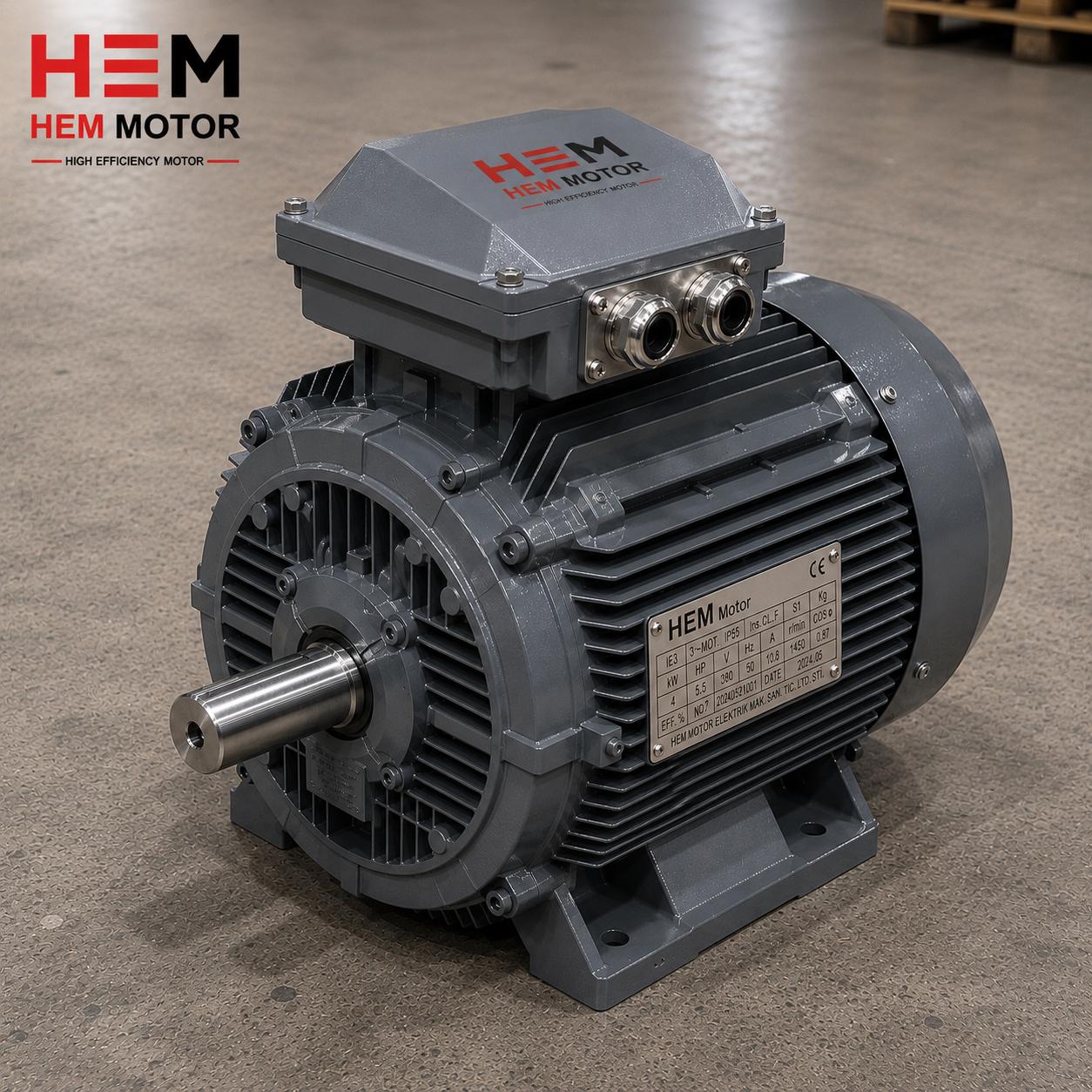

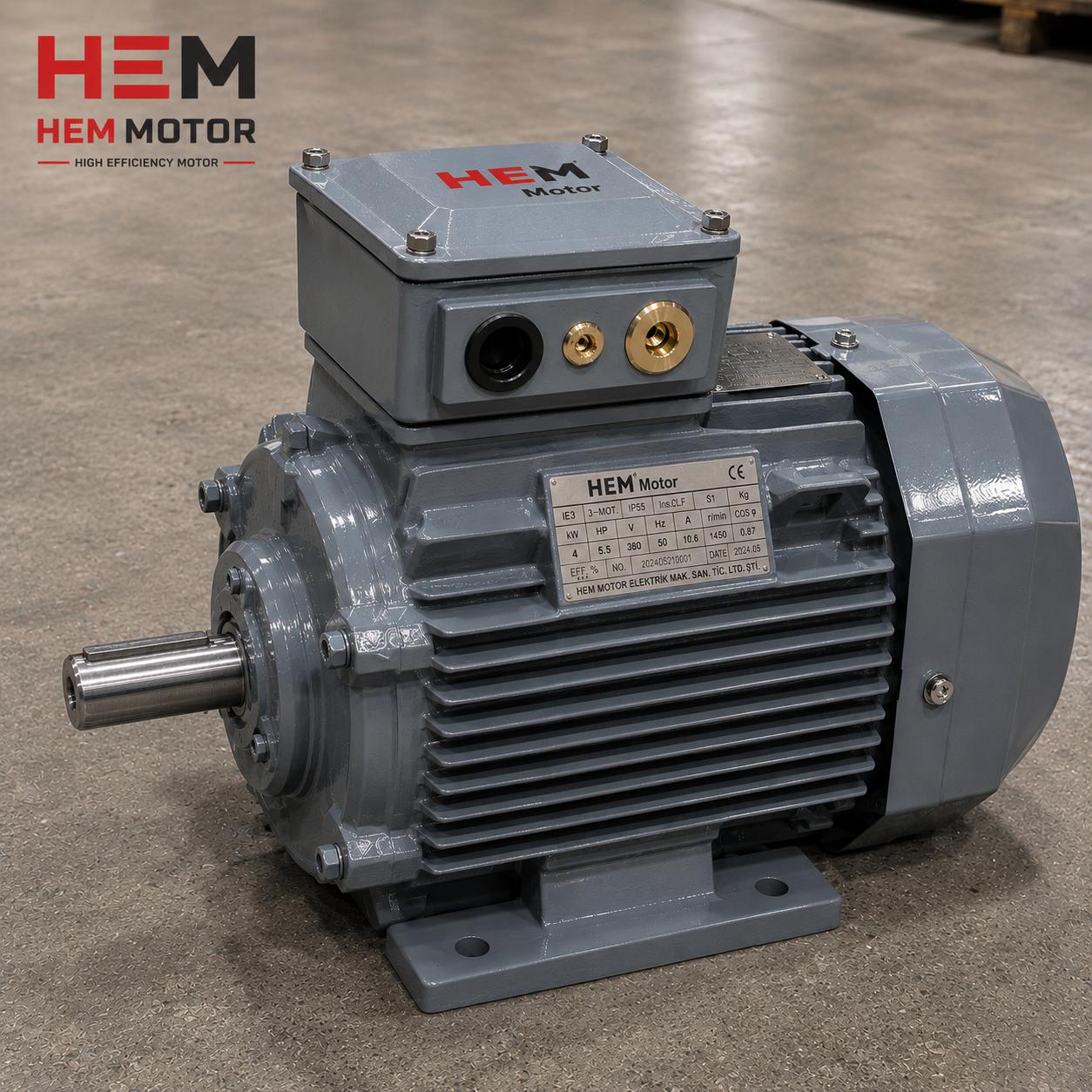
When you look at a motor's nameplate, you easily read its power, speed, current and efficiency class; but especially on a motor built to the NEMA standard, the single letter next to the "CODE" heading (for example G, J, L) remains meaningless to most people. Yet this locked rotor code letter (NEMA code letter) is critical information that directly determines the current the motor will draw from the grid at the moment of starting, that is, the starting (inrush) current. Reading the code letter correctly is the key to correctly sizing the motor's panel, cable, fuse and protection elements. A code letter read wrongly or ignored means tripping protection at start, voltage drop and a wrongly selected contactor.
In this article we explain what the NEMA code letter is, the meaning of the locked rotor kVA/HP value, how the starting current is calculated from the nameplate, the code letter versus starting current table, the relationship of this value with LRA / Ist / In on the IEC side, and panel-protection sizing, with a focus on correct reading and selection. The goal is to make a reliable electrical design starting from a single letter on the nameplate.
What Is the Locked Rotor Code Letter?
The locked rotor condition represents the instant the rotor is held still (locked), that is, the first instant voltage is applied to the motor. At this moment the motor is not yet turning, so the back electromotive force is zero and the motor draws a current far above its rated current, typically 5-8 times. The NEMA code letter expresses this power draw at start as a standard range. The definition is based on the locked rotor kVA the motor draws per horsepower (HP): kVA/HP. Each letter corresponds to a specific kVA/HP range. As the letter advances through the alphabet (from A to V), the locked rotor kVA/HP and therefore the starting current increase.
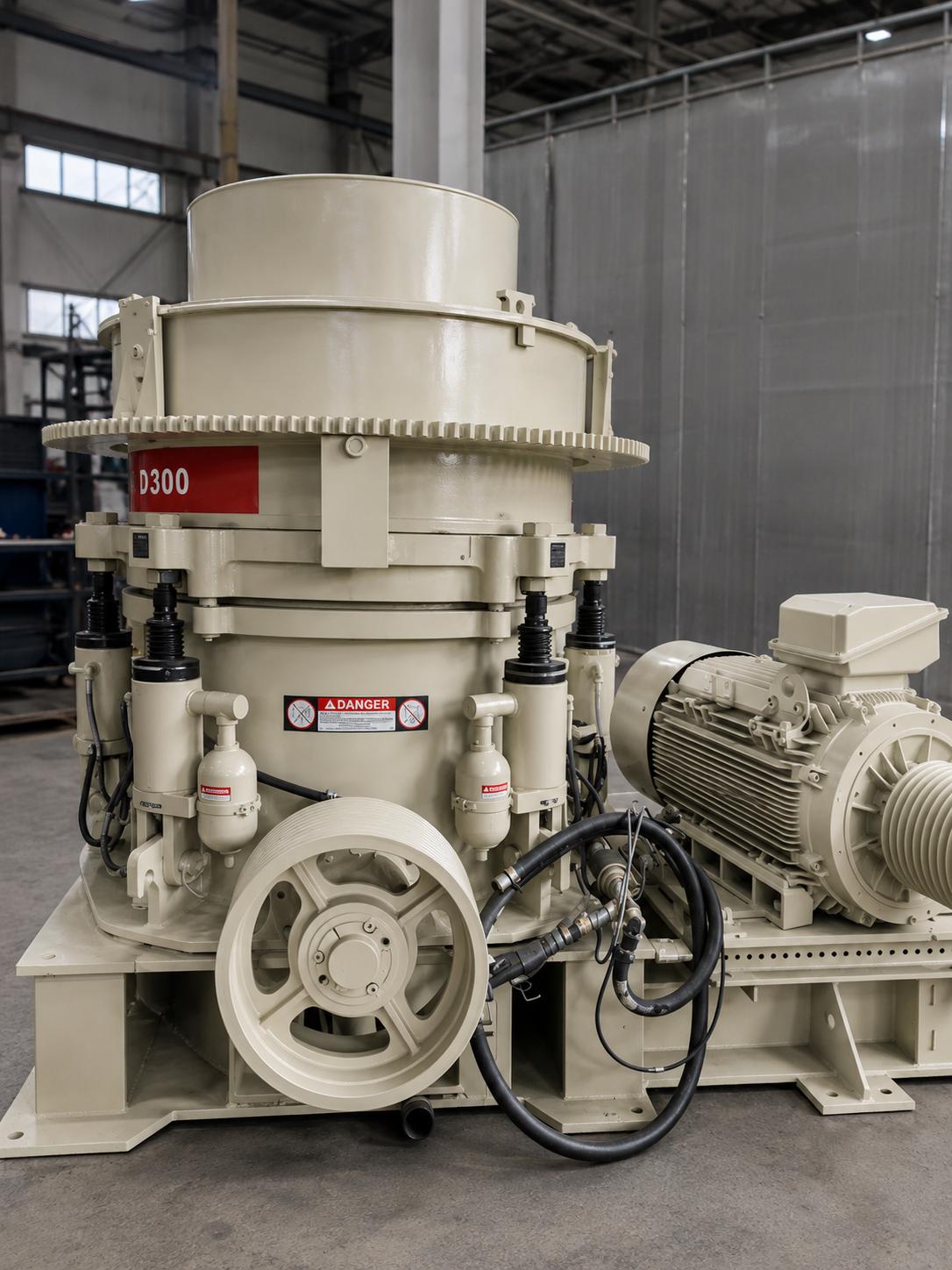
The basic logic for calculating the locked rotor current (LRA) from the nameplate code letter is this: take the kVA/HP range of the code letter, multiply by the motor's HP value to find the locked rotor kVA; then divide this kVA by the motor's rated voltage to obtain the locked rotor current. On a three-phase motor, the formula involves dividing the kVA by (root3 × line voltage). This way, without running the motor, just by looking at the nameplate, you can estimate the magnitude of the current at start.
NEMA Code Letter - kVA/HP Table
The table below summarizes common NEMA code letters with their locked rotor kVA/HP ranges and the roughly corresponding starting current level.
| Code letter | Locked rotor kVA/HP | Typical starting current level |
|---|---|---|
| B | 3.15 – 3.55 | Low |
| F | 5.0 – 5.6 | Medium |
| G | 5.6 – 6.3 | Medium |
| H | 6.3 – 7.1 | Medium-high |
| J | 7.1 – 8.0 | High |
| K | 8.0 – 9.0 | High |
| L | 9.0 – 10.0 | Very high |
| M | 10.0 – 11.2 | Very high |
In practice, most standard efficiency NEMA motors are in the F-K range. High-efficiency motors, because they use lower rotor resistance and larger conductor cross-sections to reduce iron losses, generally have a higher code letter; that is, high efficiency often means higher starting current. This is an important point to watch in protection and panel sizing.
Relationship with the IEC Side: LRA, Ist/In and Starting Current
While the NEMA world uses the code letter, the same information is expressed differently in the IEC world. On the IEC nameplate and in catalogs, the starting current is usually given as the Ist/In ratio: the ratio of the start current to the rated current. On a typical IEC asynchronous motor this ratio is between 5 and 8. Some sources also list the LRA (Locked Rotor Amperes) value directly. The bridge between the two systems is this: if you divide the locked rotor current calculated from the NEMA code letter by the motor's rated current, you obtain a value equivalent to IEC's Ist/In ratio.
| Expression | System | Meaning |
|---|---|---|
| Code letter (B-V) | NEMA | Locked rotor kVA/HP range |
| LRA | NEMA / general | Locked rotor current (amperes) |
| Ist / In (Ia/In) | IEC | Ratio of starting current to rated current |
| Locked rotor torque | Both | Starting torque (a separate parameter) |
The point to watch: the code letter gives information only about current, not about starting torque. Starting torque is defined in NEMA by a separate design class (Design A, B, C, D) and in IEC by a torque class (N, H). A motor drawing high starting current does not mean it will produce high starting torque; these two must be evaluated separately.
Panel and Protection Sizing: Correct Reading and Selection
Knowing the starting current correctly affects every component of the panel:
- Fuse / breaker: It must not trip on the starting current pulse but must cut quickly on a short circuit; an appropriate characteristic (gG, motor breaker) is selected according to the code letter.
- Contactor: Sized in the AC-3 category to carry the motor's starting current and rated current.
- Thermal / overload relay: Set to the rated current; the start time and current are considered so it does not trip during starting.
- Cable cross-section: Checked to limit the voltage drop at start; the cross-section grows over long distances and with high starting current.
- Transformer / supply: On large motors with a high code letter, starting can cause a voltage collapse on the grid; if needed, a starting method (star-delta, soft starter, VFD) is evaluated.
To go deeper into nameplate reading and electrical sizing, see our articles on reading IE3 motor nameplate ratings and reading the motor nameplate efficiency value and IE code. On the current-cable-protection side, the guides on rated current, cable, fuse and contactor selection and motor protection circuit breaker (MPCB) setting are directly complementary. For the starting torque side, our article on starting torque, rated torque and DOL is useful.
Frequently Asked Questions
Is a motor with a higher code letter more powerful?
No. The code letter shows the current at start (locked rotor kVA/HP), not the power. A higher code letter means higher current at start; it does not mean a more powerful motor. Interestingly, high-efficiency motors usually have a higher code letter, because low resistance and large conductor cross-sections increase the starting current.
My nameplate has no code letter, how do I find the starting current?
On IEC-labeled motors, instead of a code letter, the Ist/In ratio (for example 6.5) or the LRA value directly is usually given. The starting current is calculated as Ist/In × rated current. If neither is on the nameplate, request the Ist/In ratio from the motor catalog or the manufacturer; the typical value is between 5 and 8.
Does the code letter also tell the starting torque?
No. The code letter gives information only about the starting current. Starting torque is defined in NEMA by the design class (Design B, C, D) and in IEC by the torque class (N, H). High starting current does not automatically mean high starting torque; the two parameters are evaluated separately.
Calculating the Locked Rotor Current Step by Step
A numerical example helps to turn the code letter into a design value. Suppose you have a motor with "CODE J" on its nameplate, 400 V three-phase and about 30 HP. The code letter J says the locked rotor value is roughly in the 7.1-8.0 kVA/HP range; let us take an average value in the calculation. First we find the locked rotor kVA: we multiply the kVA/HP value by the motor's HP power. This product gives the apparent power the motor draws from the grid at start, in kVA. Then we divide this kVA, in the three-phase formula, by (root3 times line voltage) to obtain the locked rotor current in amperes. This current comes out typically 5-8 times the motor's rated current; the panel, cable and protection must be sized to this value.
The practical value of this calculation is that you can estimate the starting pulse just by looking at the nameplate, without running the motor at all. Especially in systems where several motors are connected to the same panel, the starting current of the motor with the highest code letter determines the main supply and transformer sizing. The point to note when calculating is that the code letter gives a range; for a precise design, taking the upper bound of the range is on the safe side, because the real motor can be at any point in that range.
Why Is the Starting Current High in High-Efficiency Motors?
There is a fact that seems contradictory at first: as the motor's efficiency rises, the starting current usually increases. The reason lies in the design philosophy of high-efficiency (IE3, IE4, IE5) motors. To increase efficiency, designers focus on reducing the losses during operation: larger cross-section copper conductors are used, rotor resistance is lowered, better quality steel is used for iron losses. Low resistance means less heat loss in operation; but that same low resistance causes the motor to draw current more easily and higher at start. So the design choices that raise efficiency tend to raise the starting current. When replacing an old standard-efficiency motor with a high-efficiency equivalent, you need to check that the starting current has increased and whether the existing panel/protection can handle the new starting pulse.
This is a problem frequently encountered but overlooked in motor replacements. An IE4 motor of the same power and same speed can have a higher code letter than the old motor it replaced; this can mean the existing fuse trips at start or the contactor is stressed. So in efficiency upgrade projects, the right engineering approach is to look not only at the efficiency class but also at the code letter and starting current.
Common Mistakes When Reading the Code Letter
- Mistaking the code letter for a power indicator; it is only the starting current level.
- Confusing the code letter with starting torque; torque is defined by a separate class.
- Taking the lower bound of the range and undersizing protection.
- Not considering that the starting current rises in a high-efficiency equivalent.
- Skipping the search for the Ist/In ratio when there is no code letter on the IEC nameplate.
The Effect of Starting Current on Voltage Drop
The most concrete field problem showing the importance of the locked rotor current is the voltage drop experienced at start. The high current the motor draws while starting creates an instantaneous voltage drop across the supply cable and the transformer's internal impedance. This drop both reduces the voltage at the motor's own terminals (which lowers the starting torque, since torque is proportional to the square of the voltage) and causes voltage fluctuation in other consumers connected to the same bus. The brief dimming of factory lighting or the disturbance of sensitive electronics when a large motor with a high code letter is started direct-on-line is a situation frequently encountered in real life. Knowing the code letter allows this voltage drop to be calculated in advance and precautions taken if needed.
The precaution is often switching to a starting method that lowers the starting current. Star-delta starting reduces the starting current to about one third; a soft starter ramps the current in a controlled way; a VFD provides the smoothest start by controlling both current and frequency. Which method is chosen depends on the starting current calculated from the motor's code letter, the grid's strength (short-circuit capacity) and the starting torque need. Starting a high-code-letter motor direct-on-line on a weak grid can cause voltage collapse.
NEMA Design Classes and Their Relationship with the Code Letter
To fully interpret the code letter, you also need to know the design classes by which NEMA separates motors according to their torque-current characteristic. Design B is the most common general-purpose class: normal starting torque, normal starting current. Design C offers high starting torque; for applications starting under load such as conveyors and crushers. Design D has very high starting torque and high slip; for shock loads such as presses and cranes. This design class defines the motor's starting torque; the code letter defines the starting current. Together they give the full picture of the motor's starting behavior: how much current it will draw (code letter) and how much torque it will produce with that current (design class).
Ignoring this distinction leads to serious errors in motor selection. Choosing a motor for an application needing high starting torque just because it has low starting current can result in a start that cannot lift the load. Conversely, choosing an unnecessarily high-torque and high-current motor on a light load unnecessarily increases panel and protection cost.
Documenting Nameplate Information Correctly
When keeping a motor inventory in a plant, the code letter or Ist/In ratio of each motor should be recorded. This information becomes invaluable in a future motor replacement, panel revision or fault investigation; because the starting current explains why each component of the panel was selected the way it was. Asking for the code letter when buying a new motor, archiving a photo of the nameplate and, if needed, requesting the locked rotor current test data from the manufacturer is the foundation of a correct and sustainable electrical design.
To correctly read your motors' nameplate values and correctly size their panel and protection, and to select a motor in the right power-speed-code letter combination, HEM Motor is by your side with its stocked product range and fast delivery advantage. For a starting characteristic suited to your application and the right motor selection, contact us and request a quote; let a single letter on the nameplate turn into a solid design.