English
 Türkçe

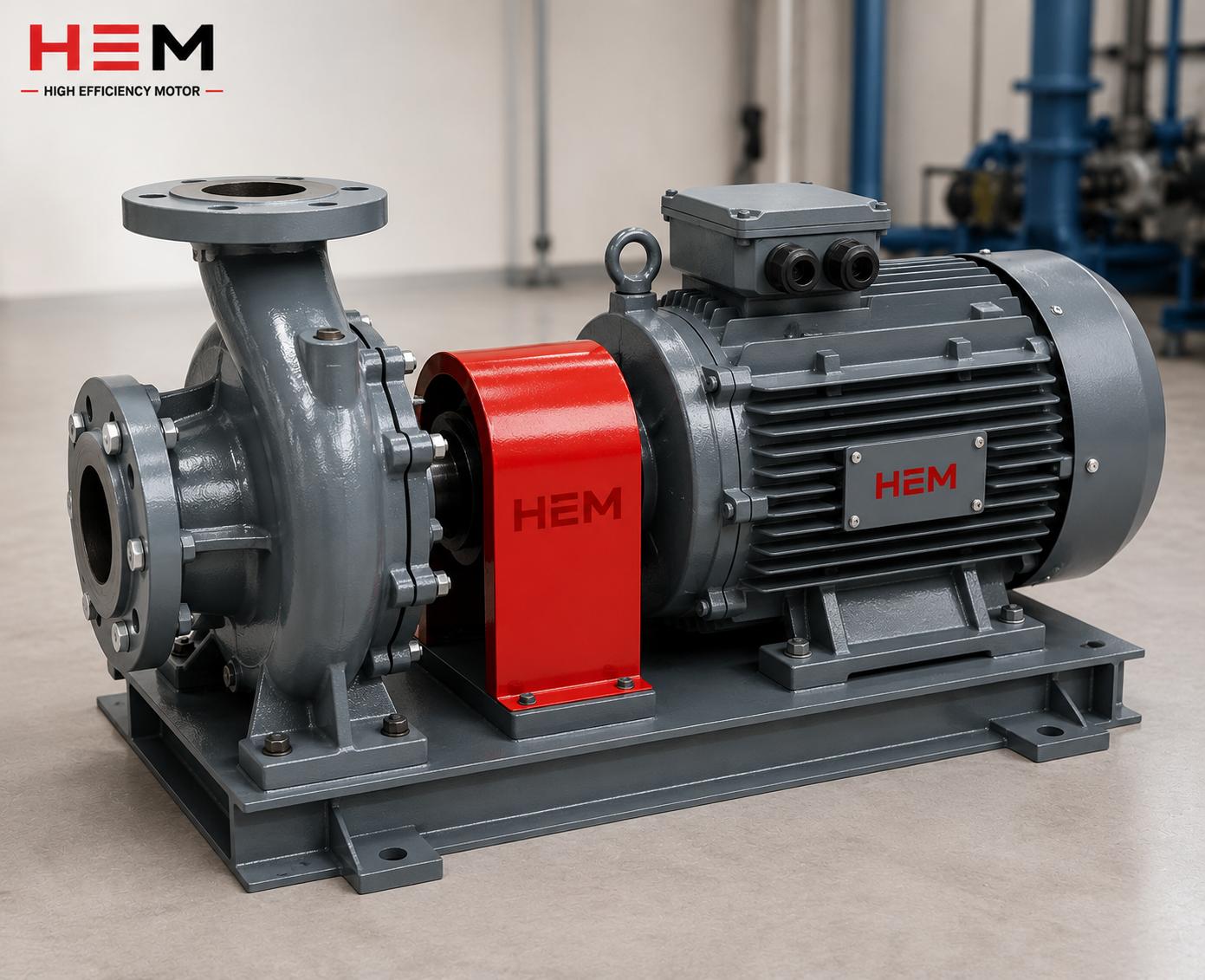

Most three-phase electric motors have a dual-voltage construction that allows them to run at two different voltages by re-arranging the bridges in the terminal box. A motor whose nameplate reads 230/400V or 400/690V runs at the correct voltage with the same windings by switching it to a delta or star connection according to the supply. Correctly understanding which connection to make on which supply, how the terminal bridging works, its relationship with star-delta starting and the low-current advantage of 690V both prevents the motor from burning out and ensures the correct cable, fuse and drive selection.
In this article we cover, in practical terms, the terminal connection of 230/400V and 400/690V dual-voltage motors, which bridging to make on which supply, the relationship with star-delta starting, the cable and cost advantage that low current brings at 690V, and correct voltage/connection selection. The goal is to help you connect your motor correctly and confidently order a motor suited to your supply.
How Does Dual Voltage Work? Star and Delta Connection
A three-phase motor has three windings. These windings can be connected in two ways:
- Delta (Δ): The winding ends are connected end to end; full line voltage is applied to each winding. This connection is used for the lower voltage.
- Star (Y): One end of each winding joins at a common point (star point); each winding sees 1/√3 (about 58%) of the line voltage. This connection is used for the higher voltage.
The motor windings are designed for a specific phase voltage. This phase voltage is fixed; what changes is how the windings are connected. For example, in a 230/400V motor each winding is designed for 230V: on a 400V supply it is connected in star (400/√3 ≈ 230V across each winding), and on a 230V supply it is connected in delta (230V directly across the winding). The key rule: low voltage = delta, high voltage = star.
Terminal Bridging
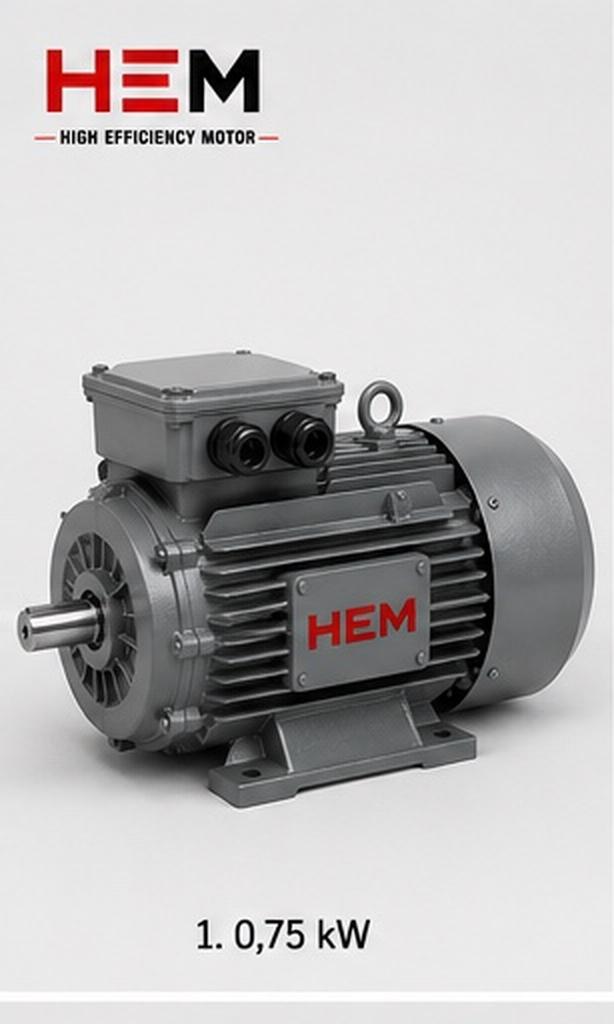
A standard motor terminal box has six leads: U1-V1-W1 (winding starts) and U2-V2-W2 (winding ends). The position of the bridge plates (link bars) determines whether it is star or delta:
- Delta (low voltage): The bridges are positioned vertically to join U1-W2, V1-U2, W1-V2.
- Star (high voltage): The bridges join U2-V2-W2 on a single bar (star point); the supply comes to U1-V1-W1.
Setting the bridge position correctly is critical. A 230/400V motor connected in delta on a 400V supply applies 400V to its windings and burns out quickly. For terminal connection and bridging details, our article on terminal connection: star and delta bridging at 230/400V guides you step by step.
Which Connection on Which Supply?
In Türkiye and Europe the standard low-voltage supply is 400V (phase-to-phase), 230V (phase-to-neutral) three-phase. Some industrial plants use a 690V three-phase distribution. The two voltages on the motor nameplate determine which connection to make on which supply:
| Motor Nameplate | Supply Voltage | Connection | Voltage Across Winding | Note |
|---|---|---|---|---|
| 230/400V | 400V | Star (Y) | ~230V | Most common use |
| 230/400V | 230V | Delta (Δ) | 230V | Low-voltage supply / special |
| 400/690V | 400V | Delta (Δ) | 400V | Standard 400V supply |
| 400/690V | 690V | Star (Y) | ~400V | 690V industrial distribution |
Note: the same motor is not labelled both 230/400V and 400/690V; these are two separate winding designs. A motor that will run on a 400V supply must be connected in star if it is 230/400V and in delta if it is 400/690V; in both cases the correct voltage falls across the winding but the connection is opposite. So always read the nameplate before connecting the motor. You can also find the topic of supply fluctuation and voltage tolerance in our article on voltage tolerance and grid fluctuation.
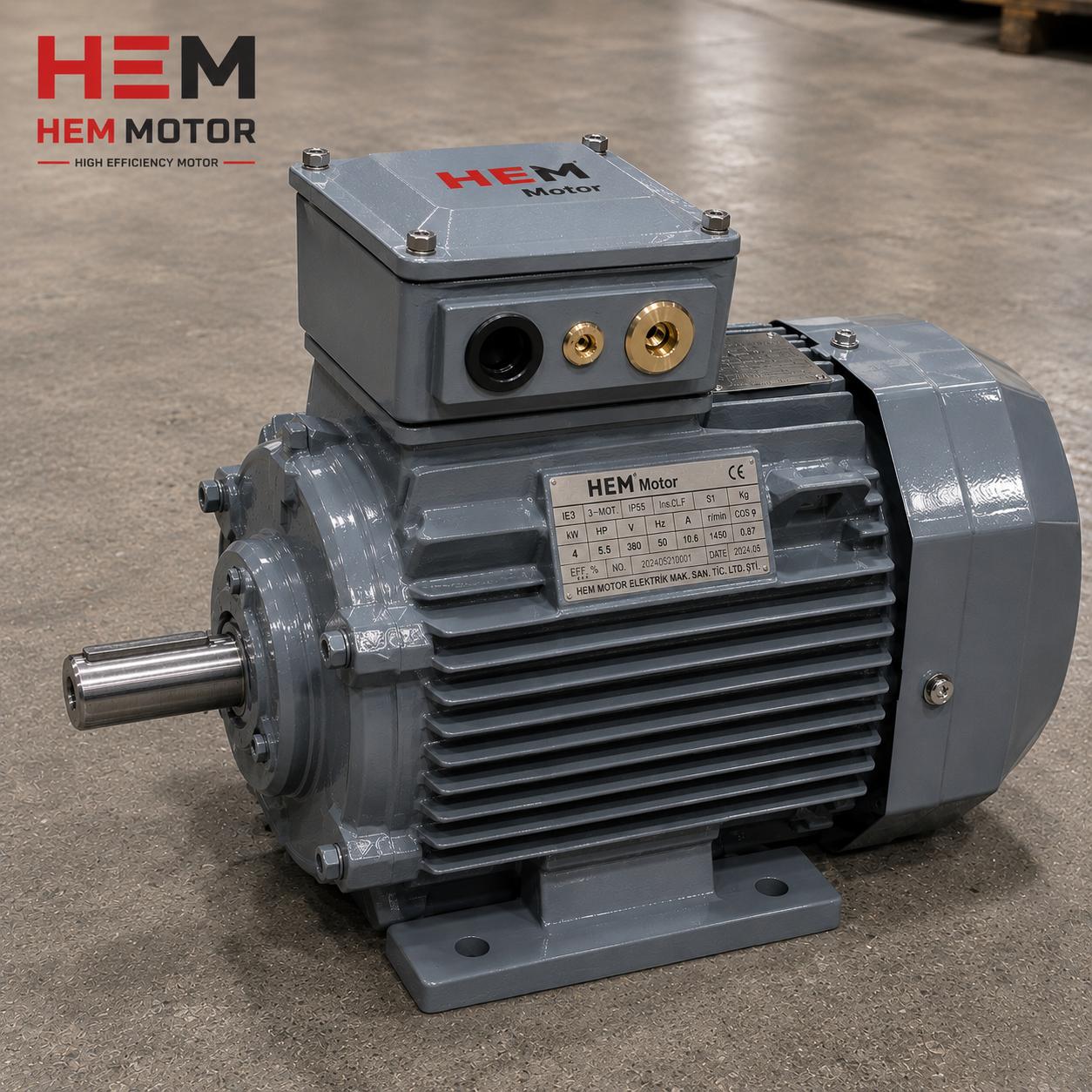
Relationship with Star-Delta Starting
The star and delta connection of a dual-voltage motor should not be confused with the star-delta starter; but they are directly related. Star-delta starting is a method of reducing the starting current by starting the motor in star (low current, low torque) and then switching to delta (full voltage, full torque). This method can only be used when the motor's running connection is delta.
That is, to perform star-delta starting on a 400V supply the motor must be one that runs in delta at 400V; this is a motor labelled 400/690V. A 230/400V motor already runs in star at 400V, so star-delta starting cannot be applied to it. This is one of the most commonly confused points in the field.
- If you want star-delta starting at 400V: choose a 400/690V motor (it runs in delta at 400V).
- If it will run direct-on-line (DOL) or with a drive at 400V: a 230/400V motor (star at 400V) is sufficient.
For alternative methods such as part-winding starting, our article on part-winding 12-lead starting is helpful.
The Low-Current Advantage of 690V
When a motor of the same power runs at 690V, because power is the product of voltage and current, the current it draws is about 42% lower than at 400V (in the ratio 400/690). Low current brings several practical advantages:
- Thinner cable: a smaller cross-section cable suffices for the same power; cable cost and voltage drop decrease.
- Smaller switchgear: contactor, fuse and breaker current ratings drop.
- Advantage in long-distance distribution: 690V provides notable savings in large plants with long cable runs.
- Preferred at high power: 690V distribution is common on high-power motors (hundreds of kW).
For this reason large industrial plants prefer a 690V supply, especially on high-power pump, fan and compressor motors. However, the insulation requirements and drive compatibility at 690V differ; the motor must be of an insulation class suitable for 690V. You can also examine the effect of the 50/60 Hz difference on power in our article on motor rated voltage and the 50/60 Hz difference.
Correct Voltage and Connection Selection
When ordering a motor, clearly state your supply voltage (400V or 690V), your starting method (DOL, star-delta, drive) and the application. Based on this, the correct nameplate (230/400V or 400/690V) and the correct connection are determined. The wrong choice leads either to the motor burning out or to the starting method being inapplicable.
Consequences of a Wiring Error
On a dual-voltage motor, the wrong connection leads to one of the most common and most expensive motor faults. There are two typical mistakes:
- Connecting in delta on the high voltage: if you connect a 230/400V motor in delta on a 400V supply, each winding sees 400V instead of 230V. The current spikes, the winding overheats and the insulation burns within minutes. This error usually results in irreversible winding damage.
- Connecting in star on the low voltage: if you connect the motor in star at a lower voltage than required, insufficient voltage falls across the winding; the motor produces weak torque, cannot lift the load, and struggles with excessive slip and heating.
So before commissioning, always read the motor nameplate, measure the supply voltage and visually confirm that the bridge plates are in the correct position. A megger (insulation resistance) measurement and a direction-of-rotation check also secure quality at first start.
Connection Under Drive (VFD) Operation
If the motor will run with a variable frequency drive (VFD), the connection decision is made according to the drive's output voltage. On a standard 400V output drive, a 230/400V motor is connected in star and a 400/690V motor in delta. Under drive operation there is no need for star-delta starting, because the drive already limits the starting current with a soft ramp. In this case the connection is chosen only to ensure the correct voltage falls across the winding. Grounding and EMC rules must also be observed in drive systems; our article on grounding and EMC: connection in a VFD system is complementary.
Torque and Current in Star-Delta Starting
Understanding the logic of star-delta starting is important for correctly selecting a dual-voltage motor. Since each winding sees 1/√3 of the line voltage in star, at starting the motor:
- Starting current: drops to about 1/3 compared to delta (a large supply surge is prevented).
- Starting torque: drops in the same proportion, to about 1/3.
This low torque is the most important limitation of star-delta starting: the method only works if the motor can start under low load or off-load. It is ideal for loads requiring low starting torque such as pumps and fans; but it can be insufficient on conveyors or loaded-start applications. A brief current surge occurs at the moment of transition from star to delta; to smooth this surge the transition timing must be set correctly. Alternatives such as part-winding offer a different current/torque balance; our article on part-winding 12-lead starting provides a comparison.
Today, in many applications star-delta starting has been replaced by soft starters and variable frequency drives (VFDs); these provide a smoother start, an adjustable ramp and less mechanical stress. Still, star-delta is widely used because it is simple and economical, and in this case the motor's running connection must be delta (i.e. a 400/690V motor that runs in delta at 400V).
Reading the Nameplate: Voltage, Connection and Current
The motor nameplate is the key to the correct connection and must be read carefully. The nameplate typically shows two voltages (e.g. 400/690V), the connection symbol for each voltage (Δ / Y) and the rated current for each connection. For example, "400V Δ / 690V Y, 100/58 A" means: on a 400V supply the motor is connected in delta and draws 100 A; on a 690V supply it is connected in star and draws 58 A. As you can see, the same motor draws much lower current at 690V. Misreading or ignoring the nameplate is the source of the most common and most expensive errors in the field.
- Identify the two voltage values and the corresponding Δ/Y symbol.
- See which of these two values your supply voltage matches.
- Set up the relevant connection (delta or star) with the bridge plates.
- Select cable, fuse and contactor according to the relevant rated current.
Correct nameplate reading ensures both that the motor runs safely and that the protection devices are correctly sized.
Frequently Asked Questions
How should I connect a 230/400V motor on a 400V supply?
On a 400V supply a motor labelled 230/400V is connected in star (Y); this way about 230V falls across each winding. If you connect it in delta, 400V is applied to the windings and the motor burns out quickly. Always read the nameplate before connecting and set the bridge plates to the star position.
Which motor should I buy for star-delta starting at 400V?
To perform star-delta starting at 400V the motor must run in delta at 400V; this is a motor labelled 400/690V. A 230/400V motor already runs in star at 400V, so star-delta starting cannot be applied to it. For this reason it is important to specify the starting method when ordering.
What is the advantage of a 690V supply?
A motor of the same power draws about 42% lower current at 690V. This means thinner cable, smaller switchgear and less voltage drop over long runs. 690V provides a notable cost advantage in plants with high-power motors and long distribution runs; this is why it is common in heavy industry.
At HEM Motor we supply dual-voltage (230/400V and 400/690V) three-phase motors with the correct nameplate, a connection suited to the starting method and an insulation class compatible with your supply — from stock and with fast delivery. Send us your supply voltage, starting method and power requirement; request a quote for the correct voltage and connection selection, and let us determine your motor together.