English
 Türkçe

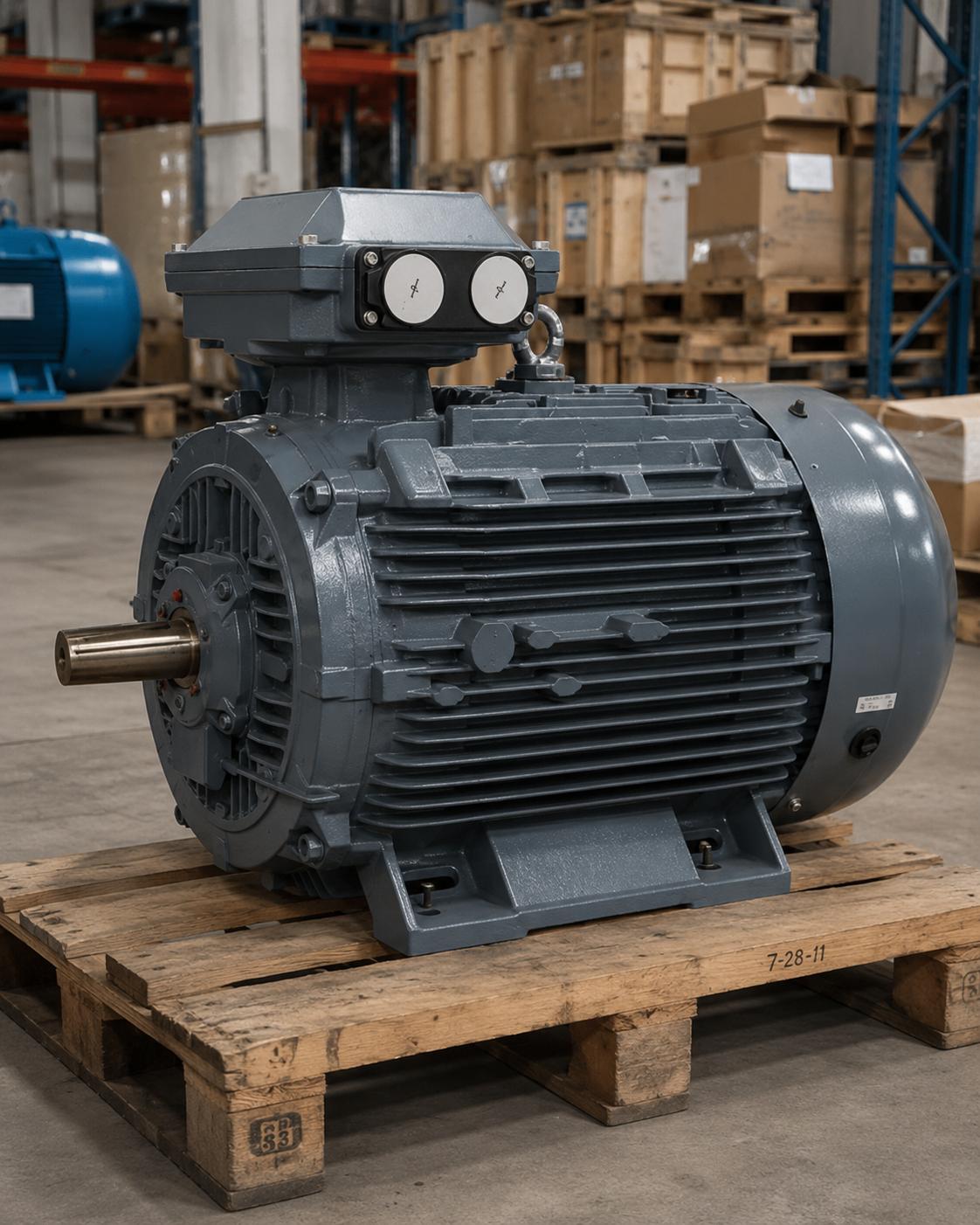

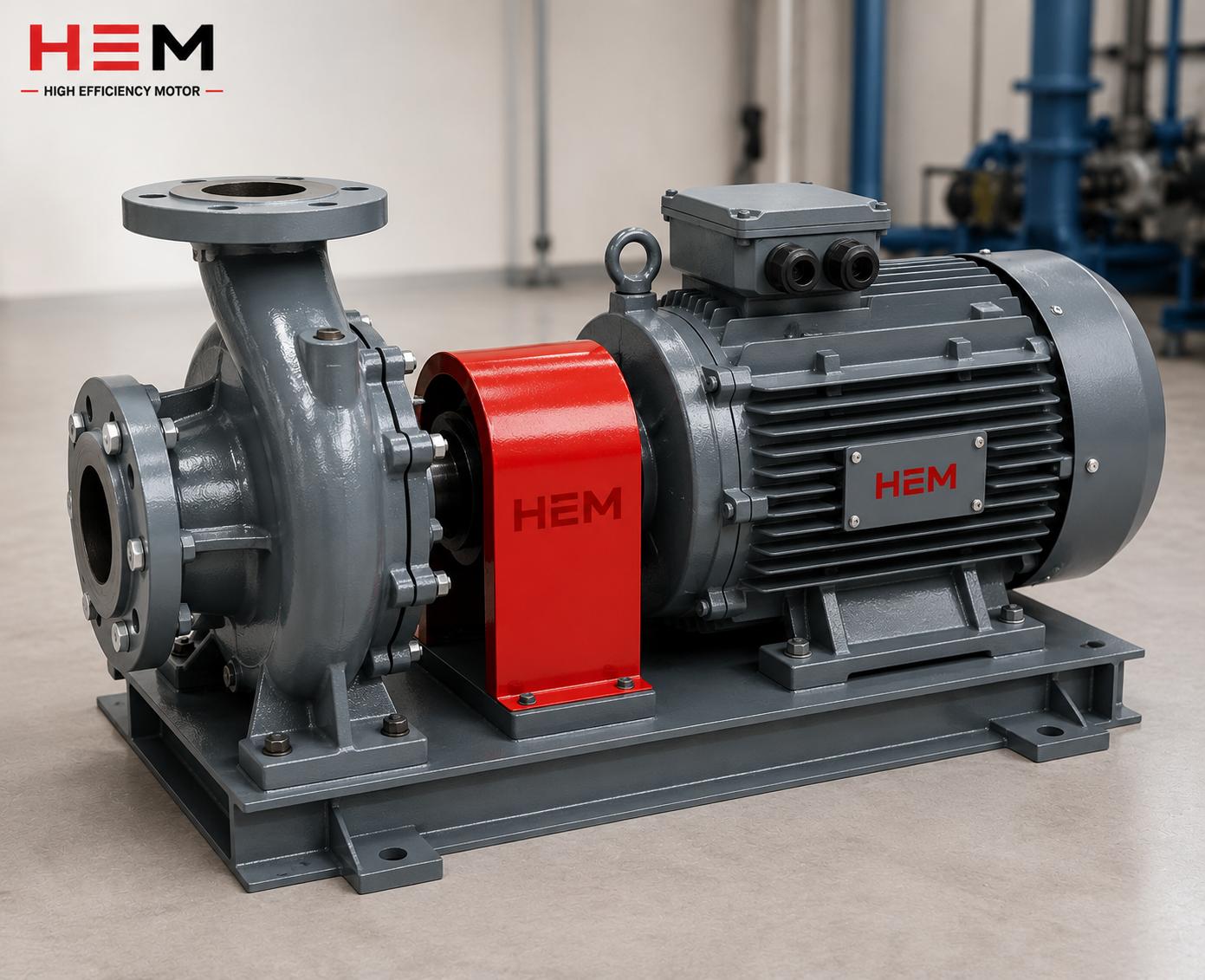
When an electric motor is mounted vertically, with the shaft pointing down (V1 mounting) and in the open air, the most vulnerable point of the motor becomes the fan cowl sitting at the very top. This is because the air-intake grilles on a standard motor's fan cowl face upward; rain, snow, leaves, bird droppings and all kinds of foreign matter can fall straight into the motor through these openings. This is where the rain canopy / protective cover (rain canopy or protective cover) comes in. This hat-shaped protection, mounted on top of the fan cowl, deflects water and solid matter coming from above while allowing the motor to draw cooling air from the side. In this article we cover, with technical tables, what the rain canopy does on vertically mounted (V1 shaft-down) motors, in which mounting position it is needed, how to select it in line with the IP protection class, and the correct option decision.
Although at first glance the rain canopy looks like a simple piece of sheet metal, in vertical mounting it is a critical option that directly affects the motor's life. On a shaft-down motor the fan cowl is at the top, so without a canopy the water entering through the cowl grilles reaches the winding and bearing directly. Many applications such as pump stations, cooling towers, vertical mixers, crane and lift drives run the motor vertically and in the open air; in all these applications the rain canopy is an almost mandatory component for the motor to complete its expected life.
Why Does Vertical Mounting (V1) Carry a Special Risk?
Motor mounting positions are defined by IM (International Mounting) codes. Horizontal foot mounting is B3, flanged horizontal mounting is B5, and vertical shaft-down mounting is V1. In V1 mounting the motor stands upright, the shaft points down and the fan cowl remains at the very top. The fundamental risk this position creates is this: the motor's cooling fan has grilles in the fan cowl to draw air from outside; in the V1 position these grilles face directly at the sky. Falling rain, melting snow, dew, dust, leaves and bird droppings fill these openings by gravity and seep inside.
The water that enters does damage by two paths. First, it collects in the fan and fan cowl region, starting corrosion and upsetting the fan balance. Second, it reaches the motor's rear (NDE) bearing region and from there the winding, lowering insulation resistance and contaminating the bearing grease with water. When water droplets enter the bearing over time, the grease is washed out, lubrication is degraded and the bearing fails prematurely. All of this leads to the motor being taken out of service before completing its expected life. In V1 mounting the rain canopy is precisely the protective element that prevents this chain of damage at source.
How Does the Rain Canopy (Protective Cover) Work?
The rain canopy is a hat-shaped protector mounted on top of the fan cowl, leaving an air gap between it and the cowl. Its working principle is simple but effective: water and solid matter falling vertically from above strike the upper surface of the canopy and run off down its edges, away along the side of the motor; they cannot reach the fan cowl grilles. At the same time, the lateral gap between the canopy and the fan cowl allows the cooling fan to draw air from the side; so the motor's cooling is not impaired. A well-designed canopy prevents water and solid-matter ingress without restricting air flow; otherwise the motor would overheat.
The size and geometry of the canopy are determined by the motor's frame size. Its diameter is chosen to cover the fan cowl sufficiently; its height so as not to obstruct air intake. If there are additional risks such as thread wrapping in textile plants, leaves in wooded areas, or droppings in bird-populated regions, a fine-mesh protective guard can be added to the fan cowl together with the canopy.
In Which Mounting Position Is a Rain Canopy Needed?
The need for a canopy is directly related to the mounting position and whether the motor is in an open or enclosed environment. The table below summarises the canopy requirement by common mounting positions and environment.
| Mounting Position | Fan Cowl Position | Environment | Canopy Requirement |
|---|---|---|---|
| V1 (shaft down) | At top, faces sky | Open air | Mandatory |
| V1 (shaft down) | At top | Enclosed, dusty | Recommended |
| V5 (shaft down, wall) | Top / angled | Open air | Usually required |
| V3 (shaft up) | At bottom | Open air | Not required (cowl at bottom) |
| B3 (horizontal foot) | At side | Open air | Usually not required |
As can be seen, the canopy is mainly critical in positions where the fan cowl faces upward (V1 and similar shaft-down vertical mountings). In the shaft-up (V3) position, since the fan cowl is at the bottom, water coming from above cannot enter anyway; in this case, instead of a canopy, the shaft oil seal and a suitable IP against water ingress on the shaft side are important. In horizontal mounting, since the grilles face sideways, a canopy is usually not required, but it can still be considered in special cases of very heavy rainfall or water spray.
Application Examples: In Which Plant Is a Canopy Essential?
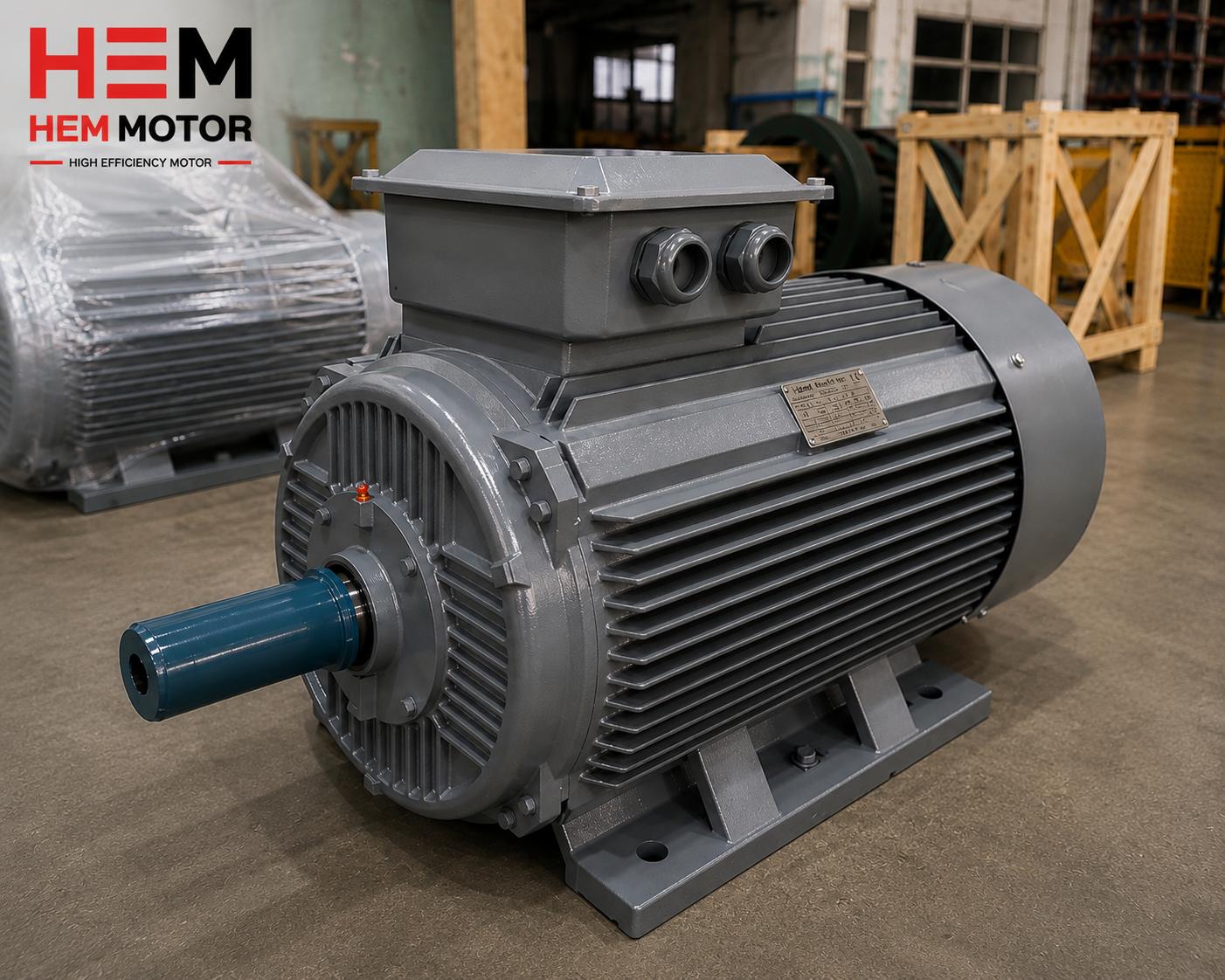
There are many applications where vertical, open-air mounting is common, and in each the canopy is needed with a different urgency. In pump stations and vertical pump drives, the motor usually runs in the V1 position, in the open air; here the canopy is an almost standard requirement. In cooling towers the fan motor is mounted vertically on top of the tower and is continuously exposed to water vapour and rain; this is one of the harshest applications and the canopy, high IP and corrosion protection are required together. In vertical agitator and mixer drives the motor stands upright on top of the tank; outdoors, a canopy is essential. In industrial fans and air-handling units, roof-mounted vertical motors are exposed to rain and snow load.
What these examples have in common is that the fan cowl faces upward and the motor is open to the sky. While the plant designer often focuses on the motor's efficiency and power, this simple but critical protection need created by the mounting position can be overlooked. Yet the canopy, at a very small cost relative to the motor's initial investment, saves the motor from premature failure and unplanned downtime. For every motor running vertically in the open air, the question of whether the fan cowl faces upward must be asked at the ordering stage.
Compatibility with IP Protection Class: Does the Canopy Replace IP?
A commonly confused point is the idea: "My motor is IP55, so no canopy is needed." This is wrong. The IP protection class defines the motor's resistance to water/dust at certain angles and conditions; however standard IP tests mostly assume the horizontal position. While the fan cowl faces directly upward in V1 vertical mounting, rain falling vertically from above and pooling water create a different stress than the IP class test conditions. Therefore the canopy does not replace IP protection; it complements it. The correct approach is to choose both a suitable IP class (IP55, IP65 or IP66 if needed) and to add a canopy in V1 mounting.
- IP55: Basic protection for general open air; should be used together with a canopy in V1 mounting.
- IP65/IP66: In environments with heavy water and dust; again the canopy reinforces protection in V1.
- Canopy: Regardless of IP class, mechanically deflects water and solid matter falling vertically onto the fan cowl.
The canopy can also provide partial shade against sunlight, reducing overheating of the fan cowl region of a motor exposed to direct sun in the open field. This is an additional advantage in hot climates.
Other Complementary Options
In vertical open-air mounting, the canopy should be considered not on its own but as part of a protection package:
- Shaft oil seal / V-ring: In the shaft-down position, prevents water and dust ingress at the shaft exit; particularly important in V1 mounting.
- Anti-condensation heater: Prevents the condensation caused by day-night temperature differences in the open air.
- Drain plug: Discharges any condensation water that still collects inside from the lowest point.
- Corrosion-resistant paint: Protects the frame against moisture and UV in the open field.
- Fan cowl protective guard: An extra barrier against solid matter such as leaves, thread and bird droppings.
When these options are considered together, a motor running vertically and in the open air can operate trouble-free for years. Choosing a single option (for example only a high IP) and neglecting the others often leads to unexpected failures.
Pre-Order Checklist
- Mounting position: V1 (shaft down), V5, V3 (shaft up), B3 etc. — determines canopy need.
- Will the motor run in the open air or in an enclosed dusty environment.
- Target IP class (IP55 / IP65 / IP66).
- Is there a risk of solid matter such as leaves, thread, bird droppings (protective guard).
- Are an anti-condensation heater and drain plug required for condensation risk.
- Frame size — determines the canopy dimensions.
Frequently Asked Questions
My motor is IP55, do I still need a canopy?
Yes, in V1 (shaft-down) vertical mounting it is needed. IP class tests mostly assume the horizontal position; yet in V1 the fan cowl faces directly upward and vertically falling rain and pooling water create a different stress. The canopy does not replace IP protection, it complements it. The best practice is to select a suitable IP class and the canopy together.
Does the canopy obstruct the motor's cooling?
A correctly designed canopy does not obstruct cooling. The lateral gap left between the canopy and the fan cowl allows the cooling fan to draw air from the side; it only deflects water and solid matter from above. If its size is chosen to suit the frame size, the air flow is not restricted and the motor runs at normal temperature.
Is a canopy also needed in shaft-up (V3) mounting?
Usually not. In the V3 position, since the fan cowl is at the bottom, water from above cannot reach the fan grilles anyway. In this case the priority is the shaft oil seal and a suitable IP class against water ingress on the shaft side (at the top). The canopy is mainly critical in V1 and similar positions where the fan cowl faces upward.
Conclusion and Supply
On vertically mounted (V1 shaft-down) motors, the rain canopy / protective cover is a critical option that directly protects the motor's life by deflecting the rain, snow and foreign matter falling vertically onto the fan cowl. The canopy does not replace a high IP class; together with it, it forms a protection package with complementary options such as a shaft oil seal, anti-condensation heater and drain plug. HEM Motor supplies its motors with the rain canopy, protective guard and IP options suited to the desired mounting position, from stock with fast delivery. Share your mounting position and environmental conditions and request a quote for an outdoor protection configuration suited to your application.
Related content: vertical mounting V1/V5 and oil seal, reading IM mounting code (B3/B5/V1), fan cowl and protective guard selection, IP protection class selection and anti-condensation heater and moisture protection.