English
 Türkçe

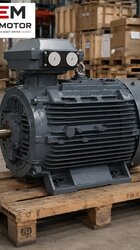
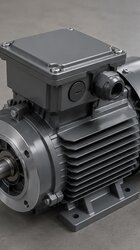
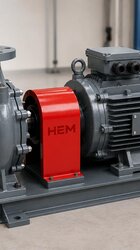
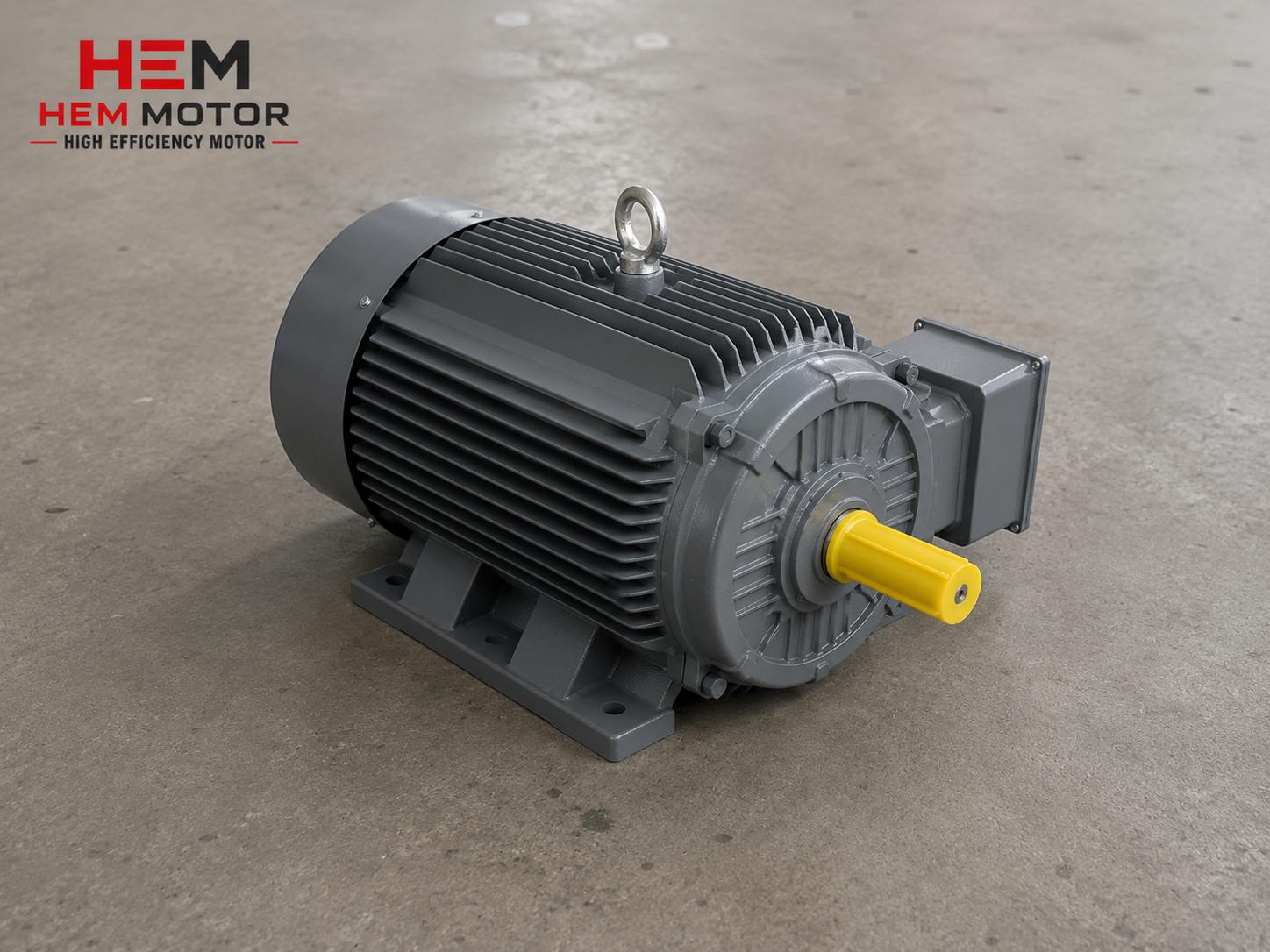

On an electric motor, the fan cowl and protection guard often look like a small line in the catalogue, yet they directly determine the motor's lifetime, operating temperature and operator safety. The fan cowl is not merely a part that covers the rotating fan; it also directs the cooling air produced by the fan onto the fins on the motor body. A wrongly selected, clogged or damaged fan cowl prevents the motor from cooling, raises the winding temperature and shortens insulation life over time. In this guide we cover fan cowl material, the additional protection guard (finger guard), measures against lint and fibre wrapping in textile and dusty environments, the rain cap in vertical mounting, and correct ordering notes, all from a buyer's, selection-focused perspective.
At HEM Motor, the standard cooling method on our cast-iron-bodied IE3 and IE4 motors is the surface-cooled (TEFC/TEFV) structure; that is, the rear fan draws air through the cowl and blows it along the body fins. In this architecture the correct choice of fan cowl is the heart of cooling. We can plan the selection process together for the right cowl configuration across our electric motors range.
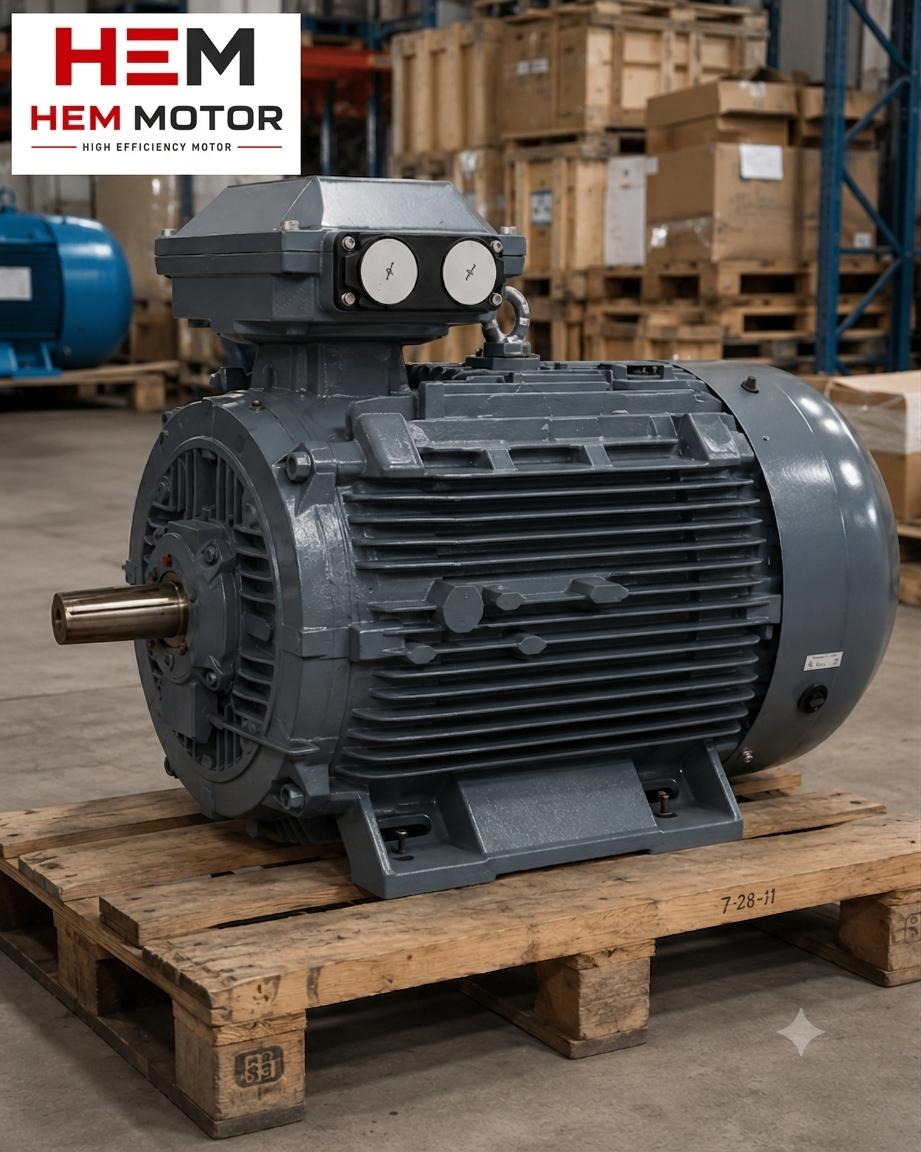
The Two Core Functions of the Fan Cowl: Airflow Direction and Contact Protection
On a standard surface-cooled asynchronous motor, a fan attached to the shaft end is placed at the rear of the motor. The fan cowl wraps around this fan and does two jobs at once. First, it directs the airflow produced by the fan, without dispersing it, onto the cast fins on the motor body; this way the cooling air passes between the fins and carries the heat outside. Second, it places a physical barrier between the rapidly rotating fan blades and human contact. The fan cowl is directly related to IC411, the standard cooling method code, which describes the closed-circuit structure where the shaft-end fan cools the body surface. We covered the detail of cooling codes in our electric motor cooling methods IC411 IC416 article.
If the fan cowl design is poor or the air inlet openings are clogged, not enough air reaches the body even though the fan turns. The result is an increase in winding temperature and faster-than-designed ageing of the F-class insulation. The fan cowl is therefore not just a cover but an active part of the cooling system.
Metal or Plastic? Fan Cowl Material Selection
Fan cowls are typically made from two main materials: metal (cast iron or pressed sheet steel) and plastic (usually reinforced polymer). The choice is made according to environmental conditions and the risk of mechanical impact.
Metal (Cast Iron / Sheet) Fan Cowl
Cast iron or thick sheet fan cowls are more resistant to mechanical impact, high temperature and harsh field conditions. In impact-prone environments such as crushers, mining, quarries and heavy industry, a metal cowl is preferred. You can find the general durability logic of our cast-iron-bodied motors in our cast iron motor cooling fins and dirt cleaning article, and insulation class selection in hot and dusty environments in our hot dusty environment motor insulation class content. The disadvantage of a metal cowl is weight and corrosion risk; in salty environments such as the coast, extra protection is needed.
Plastic (Reinforced Polymer) Fan Cowl
Plastic fan cowls are light, do not corrode and are lower cost. They are common in pump, fan, HVAC and general industrial applications. However, at high ambient temperatures and in fields with high mechanical impact risk they are not as durable as metal. In UV-exposed outdoor applications a UV-resistant polymer should be selected. For corrosion and coastal conditions, our cast iron motor coastal marine salt protection article clarifies material selection.
Protection Guard (Finger Guard) and IP2X Finger Protection
The air inlet openings of a standard fan cowl can be relatively large. To prevent the finger of an operator or maintenance person reaching the rotating fan, a fine-mesh protection guard (finger guard) is added behind the fan cowl. This guard is designed with a hole diameter below 12.5 mm so as to provide IP2X finger protection; a standard test finger cannot pass through. In facilities with heavy human traffic where unguarded access is possible, a finger guard is almost mandatory. We explained the logic of the IP protection class and what the digits mean in detail in our electric motor IP protection class selection article.
A finger guard creates additional air resistance; a very fine-mesh guard can restrict airflow. The protection guard is therefore selected in a balanced way that both provides safety and does not choke the cooling air. In applications targeting low noise, the guard geometry also affects aerodynamic noise; you can evaluate this in our electric motor noise and vibration low sound selection content.
The Lint and Fibre Wrapping Problem in Textile and Yarn Facilities
Textile, weaving, knitting and carpet facilities are a special category in fan cowl selection. In these environments the air constantly contains lint, fibre and dust. These fibres enter through the openings of a standard fan cowl and wrap around the fan blades and body fins. The lint layer that builds up over time creates two problems: it cuts the airflow and reduces cooling, and it unbalances the fan and produces vibration. The result is overheating of the motor and early failure.
For this reason, special fine-mesh cowls or a lint screen are used in textile facilities. The fine-mesh screen keeps fibres out; however, this screen requires regular cleaning because the lint accumulates on its outer surface. We detailed motor selection specific to textile machinery in our weaving knitting textile machine cast iron motor selection article. When choosing a fan cowl in a textile facility, ease of cleaning (an easily removable guard) and mesh size are the two most important parameters.
Clogging of Cowl Openings in Dusty Environments and Loss of Cooling
In dusty environments such as cement, mining, stone crushing, woodworking and food processing, the air inlet openings of the fan cowl clog with dust over time. Clogged openings reduce the amount of air the fan can draw; the cooling air does not reach the body fins sufficiently and the motor overheats. This is one of the most common situations that shortens a motor's life without any mechanical fault, purely due to lack of maintenance.
In dusty environments two strategies are used together. The first is periodic cleaning of the cowl and fins; the second is protecting the body and bearings against dust with higher sealing. You can find IP65/IP66 selection for dust sealing in our crusher motor dust sealing IP65 IP66 field article, and a periodic cleaning and inspection schedule step by step in our electric motor maintenance periodic check schedule content. In a dusty environment the cleaning interval of the fan cowl may be weekly or daily depending on the dust load of the site.
Vertical Mounting and the Rain Cap (Canopy / Rain Cap)
When the motor shaft is mounted vertically up (V1) or down (V5/V6), the upper position of the fan cowl can become exposed to water ingress. Especially in outdoor applications with shaft down and the fan cowl facing up, rain, snow and water can enter directly through the cowl openings. In this case a rain cap (canopy or drip cover) is added on top of the fan cowl. This cap prevents water from entering the cowl vertically while allowing air to be drawn in from the sides.
We covered the selection and ordering notes for vertical mounting configurations in our electric motor vertical mounting V1 V5 shaft down selection article. Motors that will work outdoors or in washdown environments also need a high IP protection; for high-pressure cleaning and washdown conditions our electric motor IP69K washdown high-pressure cleaning selection content clarifies the selection parameters. The rain cap is a simple but critical accessory that completes the IP protection in vertical mounting.
Unidirectional or Bidirectional Fan?
Cooling fans come in two types. Unidirectional fans have a blade profile optimised for a specific direction of rotation and give full cooling only in that direction. Bidirectional fans have straight radial blades and provide the same cooling whichever way the motor turns. If your motor will also run in reverse in the application (for example some conveyor, lift or machine tool applications), a bidirectional fan must be selected. A motor running in reverse with a unidirectional fan blows far less air than expected and overheats.
Bidirectional fans are generally slightly less efficient and slightly noisier than unidirectional ones; therefore a unidirectional fan is preferred when the direction of rotation is fixed. We covered the effect of fan design on cooling in the IE4 efficiency class in our IE4 motor cooling fan design article, and the external forced-cooling solution instead of a shaft fan that falls short at low speed in our IE4 motor external forced cooling fan low speed VFD content.
The Relationship Between Low Speed, VFD and the Fan Cowl
If a motor is run continuously at low speed with a VFD (variable frequency drive), the shaft-end fan also turns slowly and blows less air. In this case the cooling inside the standard fan cowl may be insufficient. The solution is to add an independently running external forced-cooling fan (separate ventilation). This fan pushes air through the cowl onto the body at a constant speed independent of motor speed. Always evaluate this in IE4 applications that require low speed. If you are targeting quiet, low-vibration operation, our IE4 motor quiet low vibration article complements fan and cowl selection from this angle.
Relationship with Condensation Drainage in Humid and Outdoor Environments
In vertical and outdoor mounting, even if the rain cap prevents water ingress, condensation can form inside the motor due to temperature changes. So that this moisture does not collect inside the body, there should be a condensation drain hole at the lowest point of the body, open on the correct side according to the mounting position. The fan cowl and rain cap manage external water, while the drain hole manages internal condensation; the two must be considered together. We covered this topic in detail in our cast iron motor condensation drain hole humid outdoor article.
The Logic of an Environment-Based Fan Cowl Selection Table
For correct fan cowl selection you first need to classify the environment. For a textile facility a fine-mesh, easy-to-clean cowl; for dusty mining and stone-crushing sites a metal cowl and frequent cleaning; for outdoor and vertical mounting a rain-cap configuration; for food and washdown environments high IP and stainless/compatible materials come to the fore. You can reach other selection guides on the topic through our electric motors blog category page. Since the fan cowl is critical on standard TEFV motors with cooling code IC411, giving a clear environment definition at the ordering stage ensures the correct cowl is delivered.
You can review our full product range and suitable configurations through the HEM Motor homepage, and we can determine together the fan cowl, protection guard and accessory package most suitable for your application.
Frequently Asked Questions
Will the motor be damaged if the cowl openings clog with dust?
Yes. Clogged openings reduce the amount of air the fan can draw, the cooling air does not reach the body fins sufficiently, and the winding temperature rises. If this continues for a long time the insulation ages rapidly and the motor fails early. In dusty environments the cowl and fins should be cleaned regularly, weekly or even daily depending on the dust load of the site.
Is a standard fan cowl sufficient in a textile facility?
Usually it is not. Airborne lint enters through the standard cowl openings and wraps around the fan and fins, cutting cooling and creating vibration. In these environments a fine-mesh cowl or lint screen with an easily removable, cleanable protection guard should be preferred. Mesh size and ease of cleaning are the two main criteria of the selection.
Is a rain cap essential on a vertically mounted motor?
If you are mounting it outdoors with the shaft down and the fan cowl facing up, or in an environment with a risk of water ingress, a rain cap (canopy) is strongly recommended. The cap prevents water from entering the cowl vertically while allowing air to be drawn in from the sides. For internal condensation, also make sure the drain hole is open on the correct side.
Get a Quote
Let us determine together the fan cowl, protection guard (finger guard), lint screen and rain cap configuration most suitable for the environmental conditions of your application (textile, dust, outdoor, food, washdown). Sending the motor frame size, mounting position and environment information is enough for the correct cowl to be selected. You can reach us at +90 (532) 345 49 86 or send your quote request through our contact page. You can start by reviewing our electric motors product range.
Purchasing and Ordering Checklist
- Has the environment class (textile, dusty, outdoor, food, washdown) been defined?
- Has the fan cowl material (metal cast iron/sheet or plastic) been selected to suit the environment?
- If there is operator access, has a finger guard been added for IP2X finger protection?
- In a textile/yarn environment, has a fine-mesh cowl or lint screen been specified?
- In a dusty environment, can the cowl be easily removed and cleaned?
- In vertical mounting (shaft up/down), has the need for a rain cap been evaluated?
- If rotation will also be reversed, has a bidirectional fan been selected?
- For low-speed operation with a VFD, has the need for external forced cooling been checked?
- Have the cooling code (IC411) and required IP class been stated in the order?
- In a humid/outdoor environment, has the drain hole been requested on the correct side?