English
 Türkçe

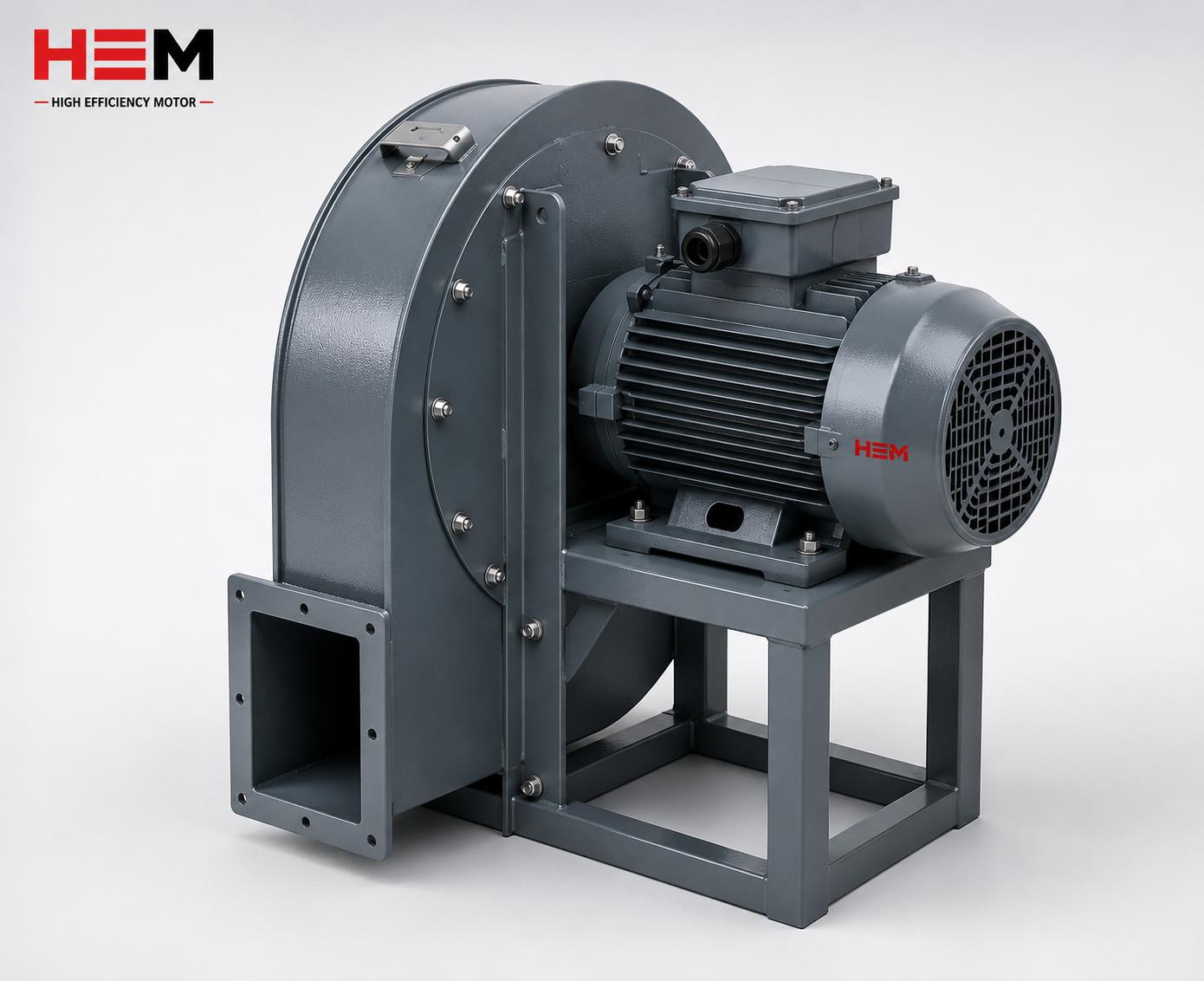

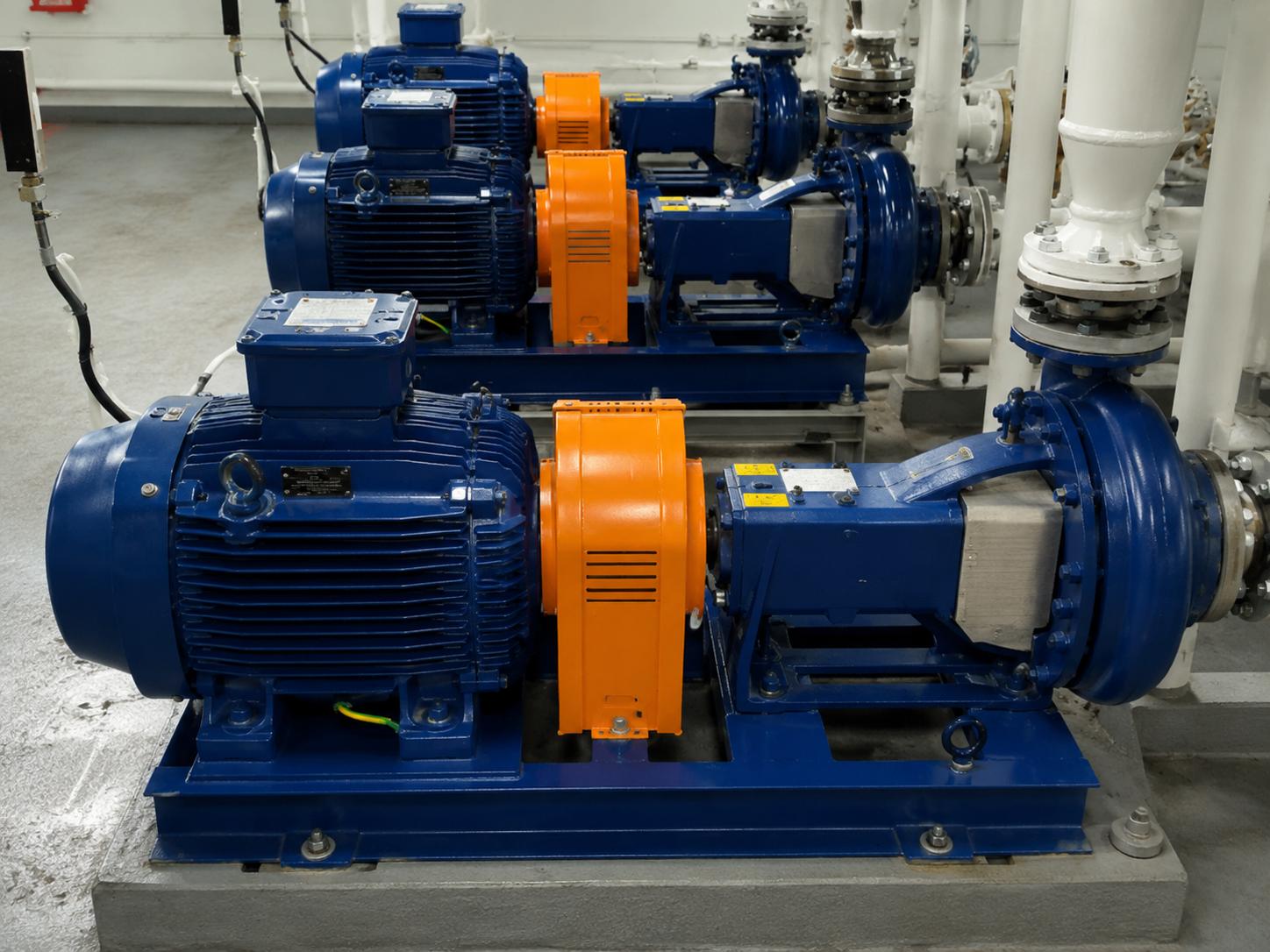
In pump, fan and blower drives a large share of the noise a motor radiates comes from a single, often overlooked component: the cooling fan behind the motor and the fan cowl that covers it. Although it is discussed less than magnetic winding whine or bearing sound, aerodynamic fan noise becomes the dominant component of total sound power, especially on 2-pole (3000 rpm) and 4-pole (1500 rpm) machines. In HVAC plants, technical rooms next to offices, hospitals, hotels or pump rooms close to living spaces, the dB(A) sound level is a purchasing criterion alongside efficiency and power. Quiet operation is no longer a luxury; it is a requirement for comfort, occupational health and environmental compliance. This article explains in detail how a low-noise aerodynamic fan cowl works, the difference between a unidirectional and a bidirectional fan, airflow optimisation, the acoustic effect of cowl geometry and the correct selection of a quiet-motor option from a HEM Motor engineering perspective.
How Fan and Cowl Design Affect Noise
In a standard induction motor the radial (bidirectional) plastic or metal fan on the shaft end has symmetric blades so the motor can cool in either direction of rotation. This symmetry is practical: the same motor produces the same airflow whether turned clockwise or counter-clockwise, so a single stock code covers both directions. Aerodynamically, however, a symmetric blade is inefficient: it generates turbulence and broadband noise as it cuts the air, and a distinct tone appears at the blade passing frequency (BPF). This tone forms a sharp peak at the frequency equal to blade count times speed, and the human ear is more sensitive to tonal noise than to broadband noise. The internal geometry of the cowl, the shape of the air inlet and the clearance between blade and cowl determine how much of this sound escapes.
Low-noise design uses three levers at once. First, optimisation of blade count and profile; skewed and variable-pitch blades spread the tonal noise into a broadband signal that the ear finds less annoying. Second, a low-resistance, flow-aligned air inlet guard on the cowl; a sharp-edged, narrow-mesh guard both throttles airflow and produces turbulence noise. Third, control of the blade tip clearance; as the gap between tip and cowl grows, leakage flow and vortex noise increase. Applied together, these three levers deliver a meaningful noise reduction without sacrificing the motor's power or efficiency.
It is worth stressing that the cowl is not merely a cover but an acoustic and aerodynamic component. A well-designed cowl guides the airflow smoothly into the fan inlet, avoids sudden expansions and contractions, and damps the pressure fluctuations forming inside. A poor cowl can act like a resonance cavity and amplify specific frequencies.
Noise Reduction with a Unidirectional Fan
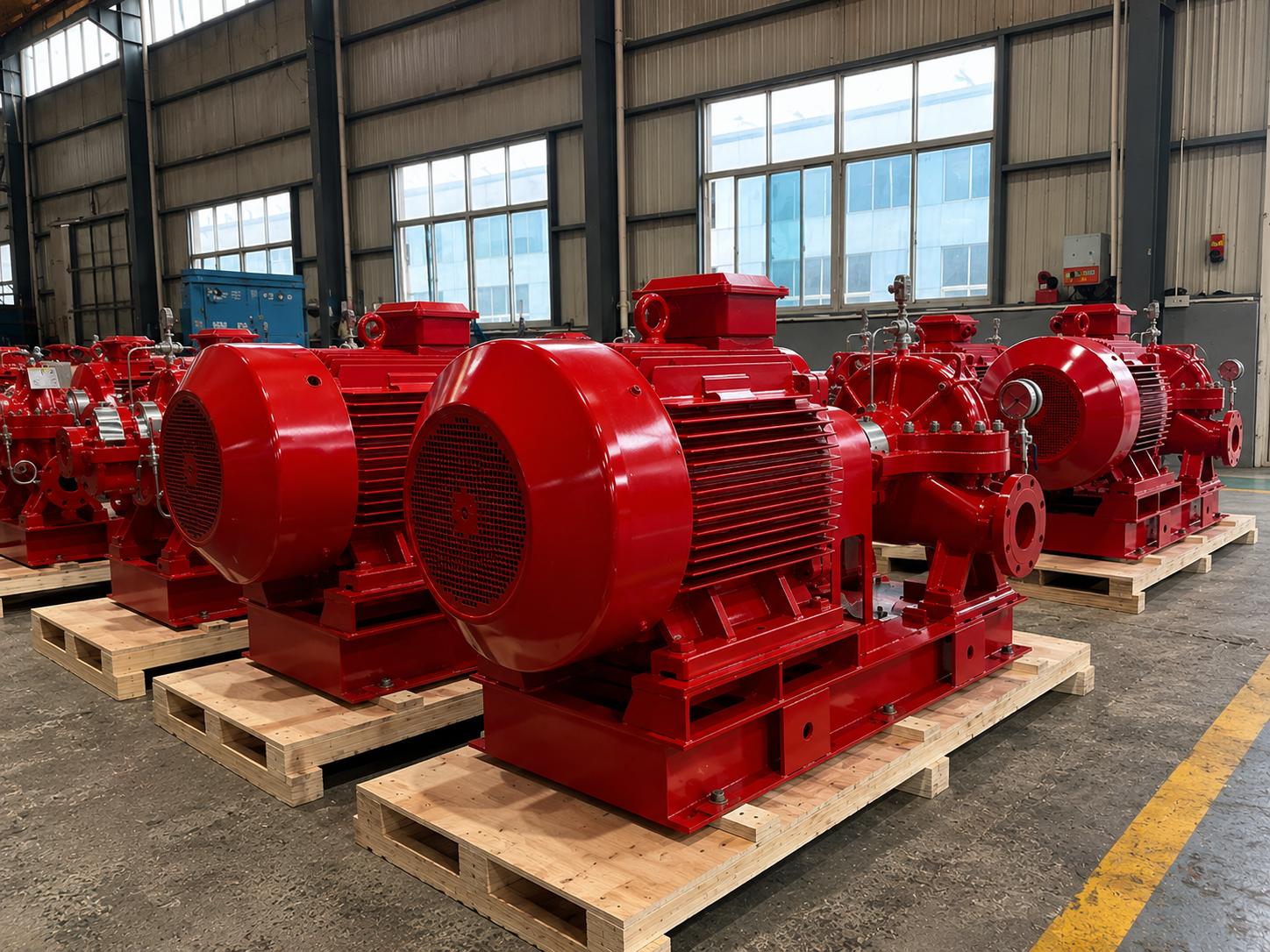
In quiet-motor options the most effective step is to replace the symmetric fan with a unidirectional aerodynamic fan. A unidirectional fan has blades optimised for a single direction of rotation, with a forward-swept pressure surface and a thinned trailing edge. It carries the same airflow with lower turbulence; it typically yields a reduction of 2 to 6 dB(A). On large 2-pole frames the gain is even more pronounced, because the peripheral speed is high and aerodynamic noise rises with a high power of speed. The cost is that the motor must be ordered to run only in that direction; if the rotation reverses, cooling airflow drops and the motor is put at thermal risk. For this reason a unidirectional quiet motor is chosen for pump and fan drives with a fixed direction of rotation. It is marked with a rotation arrow on the nameplate and frame; during commissioning the phase sequence must be verified to match this direction.
A second approach is to use a low-turbulence plastic (polyamide) fan instead of metal, or to shrink the main fan and add a forced external fan. In applications running continuously at low speed via a VFD, a forced external fan provides constant airflow independent of speed, so it can remove the main-fan noise entirely and also solve the low-speed cooling problem. A third complementary measure is to balance the motor to a low vibration class (grade R) and fit quality, low-noise bearings; as mechanical sources are suppressed, the effect of the aerodynamic improvement is heard more clearly.
dB(A) Reduction: Typical Values and Comparison
The table below shows the approximate sound pressure level (Lp, at 1 m) and aerodynamic contribution of different fan-cowl configurations on a medium-frame 4-pole motor. The values are typical and indicative; the exact figure must be based on the nameplate and the IEC 60034-9 sound report.
| Configuration | Fan type | Typ. Lp dB(A) @1m | Aerodynamic share | Rotation |
|---|---|---|---|---|
| Standard | Symmetric bidirectional | 72-78 | High | Both directions |
| Quiet option | Unidirectional aerodynamic | 67-73 | Medium | Single direction |
| Low-noise + optimised cowl | Unidirectional + guided cowl | 64-70 | Low | Single direction |
| Forced external fan (VFD) | Separate small fan | 62-68 | Very low | Independent |
As the table shows, fan and cowl selection alone can deliver a 6-10 dB(A) improvement. A 10 dB(A) drop in sound pressure is perceived by the human ear as roughly halving the loudness; the difference is therefore very noticeable in installations near living spaces. The second table below summarises the effect of pole count on aerodynamic noise.
| Poles | Synchronous speed (rpm) | Aerodynamic noise tendency | Quiet-fan gain |
|---|---|---|---|
| 2-pole | 3000 | Highest | Very marked (4-6 dB(A)) |
| 4-pole | 1500 | High | Marked (3-5 dB(A)) |
| 6-pole | 1000 | Medium | Moderate (2-4 dB(A)) |
| 8-pole | 750 | Low | Limited (1-3 dB(A)) |
Near HVAC and Living Spaces: Making the Right Choice
A motor's total acoustic performance is not set by the fan alone; all noise and vibration sources must be assessed together. Magnetic whine depends on the slot count and tooth passing frequency, while mechanical sound depends on bearing and balancing quality. For a quiet drive you must therefore plan the fan-cowl selection together with a low vibration class (for example grade B/R instead of A balancing), a suitable bearing type, a correct mounting surface and, where needed, vibration-damping mounts. In HVAC plants the motor is usually installed on a base frame; if base resonance combines with a weak housing, the total noise can rise no matter how quiet the fan.
- For fixed-rotation pump/fan drives, request the unidirectional aerodynamic fan option.
- For installations near living spaces, ask for the IEC 60034-9 sound power (Lw) report before ordering.
- If it will run across a wide speed range on a VFD, evaluate a forced external cooling fan.
- Ensure the cowl air inlet guard cannot clog and can be cleaned.
- Treat the low-noise target together with power, efficiency and IP protection class.
- Specify that the motor must be balanced to a low vibration (R) class.
Airflow Optimisation and the Cooling Balance
Throttling airflow more than necessary to reduce noise will overheat the motor. In a correct design the goal is to carry the same cooling airflow with less turbulence, not to reduce the flow. When selecting a quiet fan option, the motor's temperature class (for example 155(F) insulation, 130(B) temperature rise) and continuous duty (S1) condition must be preserved. Especially in flue-gas blowers or hot-fluid pumps operating at high ambient temperature, cooling must not be sacrificed for the sake of silence. The HEM Motor application team establishes the balance between the noise target and thermal safety on a project basis, and where needed produces a solution with an external fan, a larger frame or a different pole choice.
Aerodynamic optimisation also requires an adequate cowl outlet cross-section. On motors mounted very close to a wall, the air behind the cowl is restricted; this both reduces airflow and raises noise. It is good practice to leave at least one fan diameter of free air space behind the cowl during installation. Likewise, dust and fibre accumulating on the cowl inlet guard gradually throttle airflow, raising both temperature and noise; periodic cleaning must be part of the maintenance plan. In fibrous or dusty environments such as textiles, woodworking and grain, the choice of protection guard deserves separate care.
Maintenance, Ageing and Noise Rising Over Time
A new motor may leave the factory quiet yet grow louder over time. There are three main reasons. The first is bearing wear; when the grease reaches end of life or becomes contaminated, bearing rattle and rumble appear and add to the fan-borne aerodynamic sound. The second is the layer of dust, fibre and oil that accumulates on the fan and cowl; this build-up both creates vibration by upsetting the balance and raises turbulence noise by narrowing the air inlet cross-section. The third is loosening of connections and mounting; when foot bolts or base fixings loosen, housing vibration radiates freely and turns into a low-frequency noise. A quiet motor therefore stays quiet only with correct periodic maintenance: re-greasing per the nameplate instruction, cleaning the cowl guard and periodically measuring the vibration level.
Vibration measurement is an early warning of rising noise. An increase in RMS vibration velocity (mm/s) over time often signals a problem before it is noticed by ear. In critical HVAC and process plants, simple vibration monitoring makes it possible to manage both noise and failure risk in advance. A plan for spare motors available quickly from stock then allows a unit that has become noisy to be replaced without waiting.
Reading Acoustic Measurements Correctly: Lw, Lp and A-Weighting
The most common mistake in selecting a quiet motor is comparing sound figures from different sources directly. The sound power level (Lw) defines the total acoustic energy the motor radiates and is independent of distance; the sound pressure (Lp) is the value measured at a given distance (usually 1 m) and is affected by the room and reflections. When one supplier gives Lw and another gives Lp at 1 m, the numbers are meaningless side by side. For a correct comparison both motors must be quoted with the same definition (for example Lp dB(A) at 1 m measured in a semi-anechoic room per IEC 60034-9, at rated load on sinusoidal supply). A-weighting (dB(A)) models the ear's frequency sensitivity and reduces low-frequency components, so the linear dB and the dB(A) value of the same motor differ. It is also worth remembering that VFD supply can add magnetic noise tied to the switching frequency; a sine filter or a high switching frequency can reduce this sound.
When drafting a project acoustic specification, it must be made clear whether the target value is defined at the motor or outside the machine room. The combined sound of several motors in a pump room is logarithmically higher than that of a single motor: two equally loud sources together give about a 3 dB(A) increase. In multi-unit HVAC plants, therefore, layout and acoustic enclosure matter as much as the quietness of each individual motor. Treating quiet-motor selection as part of a holistic acoustic design prevents disappointment in the field.
Application Examples: Which Option in Which Plant
In hotel and hospital technical rooms, rooftop air-handling-unit fans and circulation pumps next to living spaces, motors with a unidirectional aerodynamic fan and a low vibration class are usually preferred. In data-centre cooling fans, where continuous operation and low noise are both critical, the combination of a forced external fan and a sine filter is often chosen. In industrial blowers and flue-gas fans the acoustic target can be more flexible; there the priority is thermal endurance and dust sealing, and a quiet fan is a secondary gain. In applications that are close to living spaces yet heavy-duty, such as commercial kitchen hood exhausts and car-park jet fans, a balanced choice between the two is needed. In every case the correct path is to clarify the duty type (S1, S3, etc.), ambient temperature, direction-of-rotation requirement and acoustic target at the ordering stage. The HEM Motor application team assesses these parameters together and recommends a motor configuration that is safe both thermally and acoustically.
Frequently Asked Questions
Does a motor with a unidirectional quiet fan run in both directions?
A unidirectional aerodynamic fan provides full cooling airflow only in the ordered direction of rotation. Turned the other way, the airflow drops noticeably and the motor may overheat. It is therefore suitable for fixed-rotation pump and fan drives; for applications needing direction changes, a standard bidirectional fan or a forced external fan should be chosen. The direction must be clearly specified when ordering.
Can noise be reduced on an existing motor by changing the fan cowl?
To a limited extent, yes. Cleaning and correctly positioning the cowl air inlet guard gives a small improvement, but the real gain comes from converting the fan to a unidirectional aerodynamic type. The safest route is to order the quiet fan option from the factory, because the fan-cowl-bearing balance is then optimised together and the warranty is preserved.
How do I confirm the dB(A) value before ordering?
Request the sound power level (Lw) measured to IEC 60034-9 and the sound pressure (Lp) at 1 m. These values change with pole count and frame; 2-pole machines usually produce the highest aerodynamic noise. If you have a project acoustic target, share it with the HEM Motor team at the ordering stage; the suitable fan, pole and frame combination is then determined together.
In selecting a low-noise pump, fan or blower motor, fan-cowl design, airflow optimisation and thermal safety must be considered together. With the right options you can achieve far quieter operation from a motor of the same power. For more information and a detailed assessment:
- Electric Motor Noise and Vibration: Low-Sound Selection
- Electric Motor Fan Cowl and Protection Guard Selection
- Sound Power (Lw) and Sound Pressure (Lp): dB(A) and IEC 60034-9
- Fan Motor Supply in HVAC Projects
- Roof Exhaust Fan Motor Selection
To choose the right product with stock availability and fast delivery in quiet-fan-option pump, fan and blower motors, contact us and request a quotation tailored to your project.