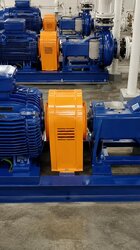
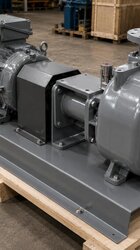
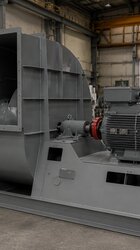
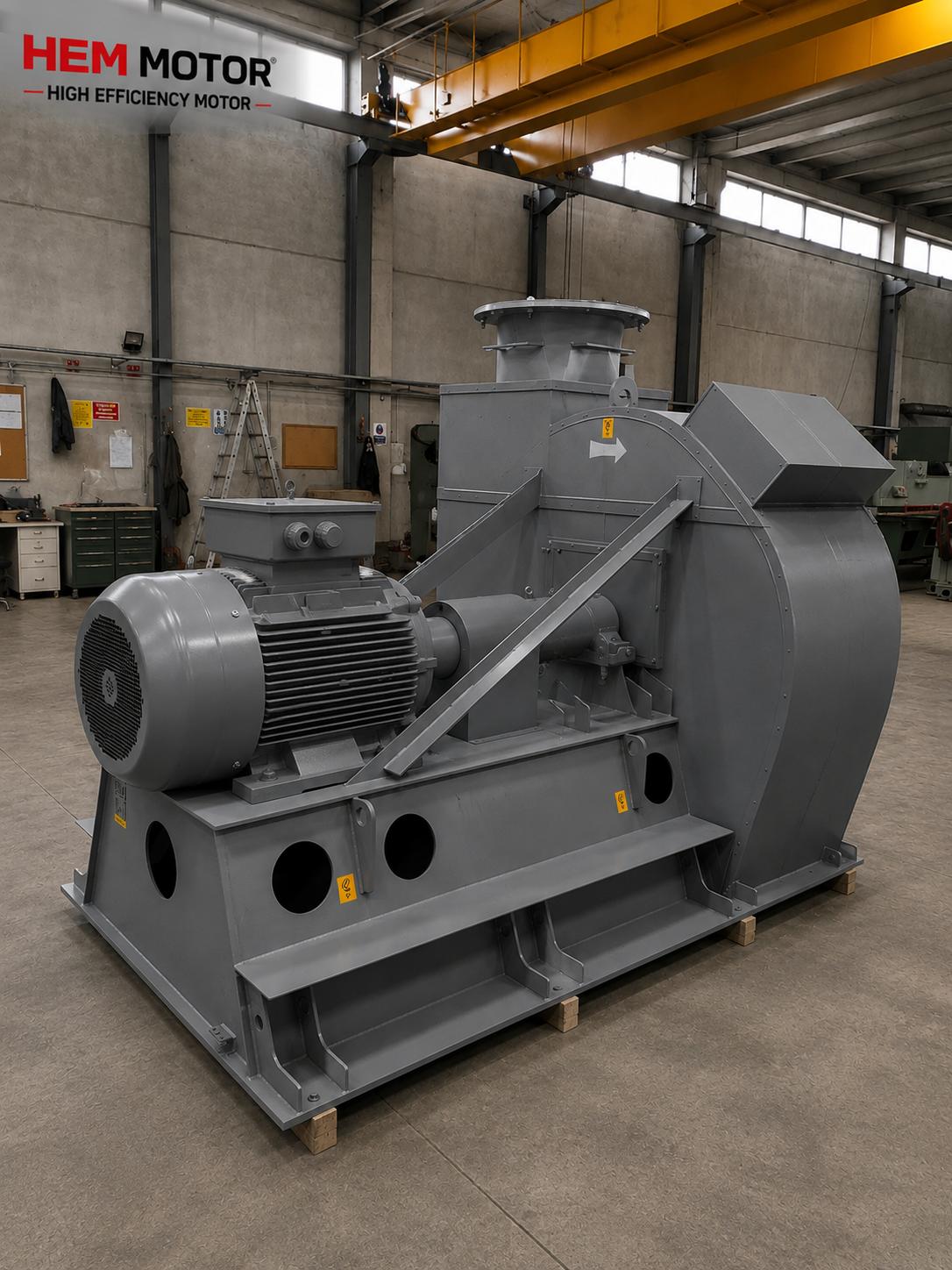
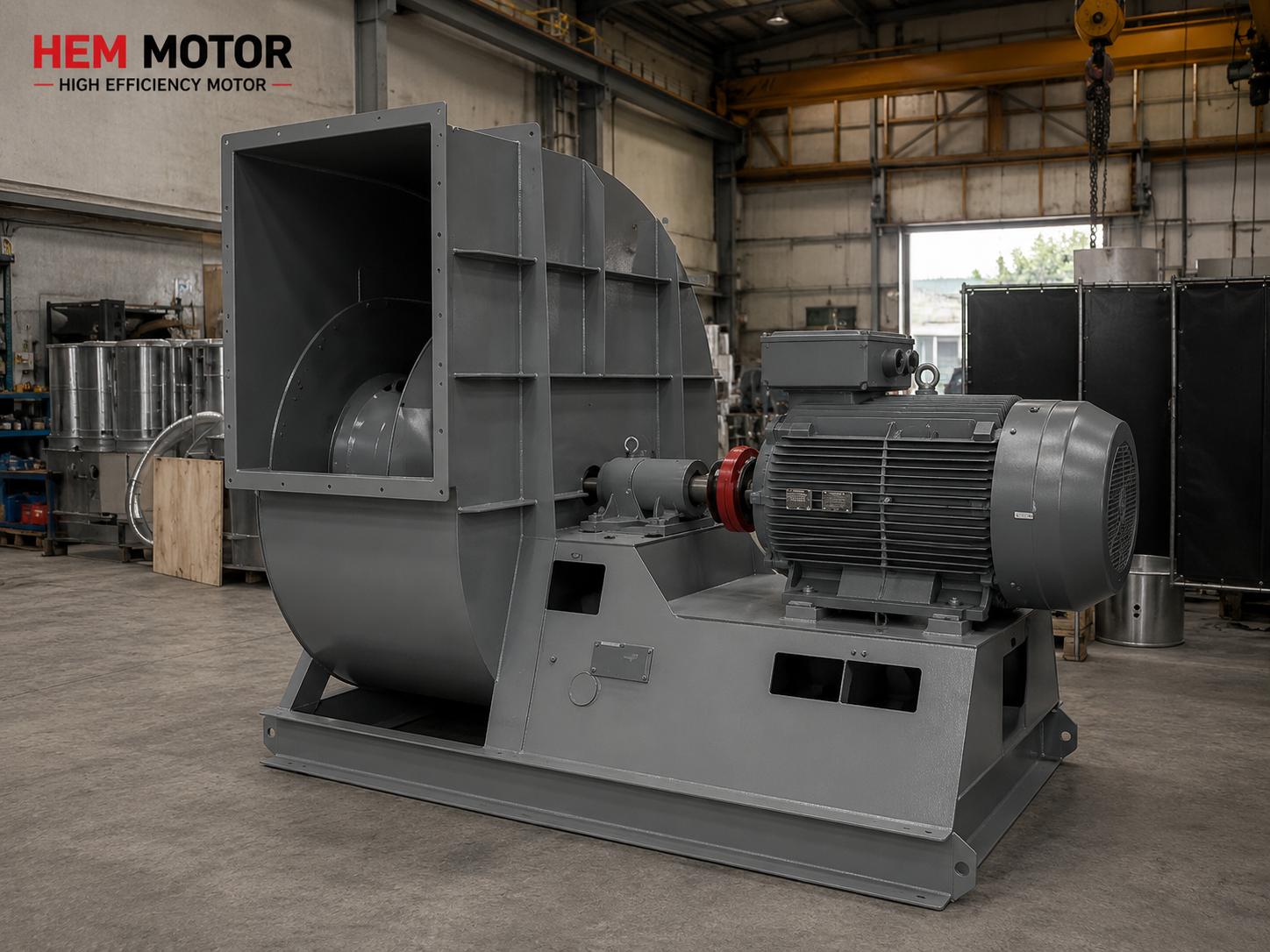
One of the most critical supply items for a mechanical contractor in an HVAC project is the fan motors. Between air-handling units, cabinet-type extractors, roof fans and inline duct fans, even a medium-sized commercial building project gives rise to a need for dozens of motors in different powers and speeds. Choosing these motors wrongly, receiving them late, or failing to pass the consultant's approval directly locks the mechanical installation schedule. This article explains, for mechanical contractors, fan and air-handling-unit manufacturers and project purchasing teams, how to manage fan-motor supply from a single source, on a project basis and in a way that speeds up the approval process. As an electric motor manufacturer and seller producing since 1979, HEM Motor supplies HVAC projects with bulk motors from its strong Turkey stock against the project list; it also prepares the technical file needed for equivalence approval as part of the sale.
From Project Specification to Motor List: How Is the Right Take-off Produced?
In HVAC projects, motor supply begins with translating the fan list into a motor list. The mechanical design gives the fan type, flow and pressure values for each space; the fan manufacturer makes the fan selection according to these values, and the motor power, speed and mounting required by each fan emerge. What the purchasing team must do is gather this scattered information into a single table. In the table each row should correspond to a space code (for example AHU-01 air-handling unit, EXT-03 kitchen extractor, RF-02 roof fan) and these columns must be present: motor power (kW), pole count / speed, frame type (B3 foot-mounted, B5 or B14 flange), frame size (for example 90L, 112M, 132S), protection class (IP55), efficiency class (IE3 or IE4), supply voltage and, if any, the information on whether it will be driven by a frequency converter.
When this table is prepared, two important gains are achieved. First, motors of the same power and speed are gathered in a single line item; if a 7.5 kW 4-pole motor is used in three different fans, three pieces are requested in a single line from the supplier instead of three separate quotes, and a quantity-based advantage arises. Second, missing information is caught at the contract stage: if the "frequency-converter driven" information of an air-handling-unit motor is not in the list, it is noticed only after the wrong motor has been installed in the field, and the replacement cost falls to the contractor. The HEM Motor sales team supports projects in translating the fan list submitted to it into a motor list in this format; in most projects, when the work proceeds over the list, the quote time drops to a few days.

Brand-Independent Equivalence Approval: Presenting a Technical File to the Consultant
In many HVAC specifications, the motor brand is either given as an example or appears with the wording "or equal". The mechanical consultant approves a motor other than the brand written in the specification only if technical equivalence is documented. At this point it is not enough for your supplier merely to sell you a motor; it must also prepare the approval file. The technical file to be submitted for equivalence approval should contain: the motor's technical data sheet (power, speed, efficiency, power factor, rated current, starting-current ratio, weight), a dimensioned drawing (shaft diameter, flange dimensions, foot-hole spacing), the efficiency-class declaration and test report, the protection-class and insulation-class information, and the conformity declarations together with documents showing the manufacturer's identity.
The criteria the consultant looks at in the equivalence assessment are well known: being the same power and speed, matching IEC standard frame dimensions exactly (so that the fan manufacturer's base and belt-pulley arrangement do not change), meeting the efficiency class in the specification, and demonstrating the service/warranty infrastructure. HEM Motor presents this file as standard for its IEC-standard-frame industrial fan motors; being a domestic manufacturer also earns an evaluation advantage for contractors seeking local-content benefit in public and private sector projects. If the efficiency-class choice is left to you in your specification, you can look at the comparison approach in our article on the IE3 versus IE4 electric motor investment to decide according to the annual running hours of the unit motors; in main unit fans that run long hours, the higher efficiency class is usually a preference reason in the approval process too.
Smoke Exhaust and Pressurization Fans Are Assessed Separately
The fans on the project's emergency side — smoke exhaust fans, jet fans, stair pressurization fans — are subject to a different regulation and certification process than comfort ventilation. For the motors of these fans, temperature-class and certificate requirements come into play; assessing these items on the same line as comfort fans leads to a return in the approval process. We have addressed the detail of this topic separately in our smoke exhaust fan motor supply guide; the scope of this article is comfort ventilation and general HVAC fans.
Technical Details That Affect Purchasing in HVAC Fan Motors
Although the fan motor looks like the most standard product in catalogues, a few details specific to the HVAC application directly affect the purchasing decision. If these details are discussed at the quote stage, the right product arrives and there is no return-and-replacement traffic in the field.
The Motor Difference in Belt-Driven and Direct-Coupled Fans
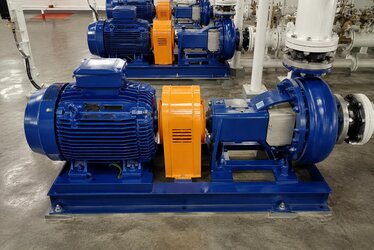
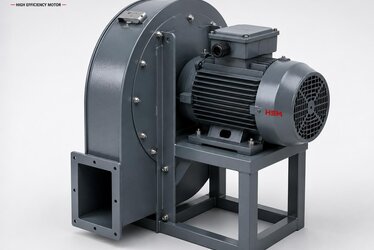
A significant part of cabinet-type extractors and older air-handling units are belt-driven; the fan speed is reduced from the motor speed by the pulley ratio. In a belt-driven system, a constant radial load sits on the motor shaft; for this reason the motor's front bearing structure and shaft diameter gain importance, the frame type is almost always B3 foot-mounted, and the motor is mounted on a tension slide. In direct-coupled (plug fan) systems the fan impeller mounts directly on the motor shaft; here B5-flange or special-flange motors are used and speed control is left to the frequency converter. Writing the drive type of each fan in the purchasing list is the simplest precaution that prevents a motor arriving in the wrong frame type.
Roof Fans and the Outdoor Environment: Protection and Insulation
The motors of exhaust fans mounted on the roof are exposed to rain, sun and a wide temperature range. For these locations IP55 protection class should be taken as the minimum, and the motor's insulation class and body paint should be assessed according to outdoor conditions. In projects on the seacoast, the salty atmosphere accelerates body and bolt corrosion; sharing the environment information at the quote stage in such projects lets the manufacturer make a suitable protection recommendation. In inline duct fans inside enclosed spaces, whether the motor stays inside or outside the airflow matters; in motors within the airflow, the temperature of the conveyed air affects motor cooling and is taken into account in the selection.
The Need for a Two-Speed Motor
In some spaces, such as car-park ventilation, the fans are designed to run at low speed in the daily regime and at high speed during peak hours. This need is solved either with a frequency converter or with two-speed (pole-changing) motors. In projects where a two-speed motor is preferred, the winding type (Dahlander or two separate windings) and the speed combination (for example 1500/750 rpm) must be written clearly in the list; since these motors are less commonly available than standard single-speed motors, confirming the stock situation before the contract secures the delivery schedule. HEM Motor is among the limited number of domestic manufacturers that keep two-speed fan motors in their production program.
Dispatch by Phase: When Should Motors Be Brought to Site?
The most common mistake of bulk purchasing is pulling all the motors to site at once. In a project where the shell construction is ongoing, the motors wait for months in a container; humidity, dust and impact risk lay the ground for warranty disputes. The right approach is to make the purchase in a single contract and split the dispatch into the mechanical installation phases. A typical split is this: first phase, basement and technical-space fans (car-park exhaust, booster-room ventilation); second phase, inline duct fans and cabinet extractors in the floor shafts; third phase, roof fans and air-handling units. If, in each phase's dispatch, the motors are labelled by space code, there is no "which motor goes to which fan" confusion in the field and the installation crew is directed to the correct space the moment the package is opened.
The supplier-side counterpart of this model is stock reservation. HEM Motor reserves the motors contracted for a project in its own warehouse on the project's behalf and dispatches on call; thus the contractor both fixes the price on the contract date and does not carry storage risk on site. For projects within Turkey, dispatch after the call is usually a matter of days; if a power change is needed in revised fan selections, the exchange is also solved quickly with standard-frame motors in stock. Our ventilation electric motors product group, aimed at air-handling-unit and extractor applications, is planned to keep in stock the power and speed combinations most requested in HVAC projects.

Commissioning Tests and the Motor in the Provisional Acceptance Process
In HVAC projects the motor's story does not end with installation; in the testing-adjusting-balancing (TAB) process before provisional acceptance, the motors are commissioned and measured one by one. A team that thinks of this process at the purchasing stage asks the supplier for two things: test values matched to each motor's serial number, and a checklist to follow during commissioning. The minimum to be done at commissioning is: insulation-resistance measurement before installation (especially for moisture control on motors that have waited on site), direction-of-rotation check (in axial fans, reverse direction seriously reduces flow and is not noticed at first glance), measuring the current balance across the three phases and comparing it with the plate value, and tension-and-alignment check together with observing the vibration level in belt-driven systems.
Recording these measurements is important in two respects. First, the consultant asks for a per-fan test record in the acceptance file; the motor current values are part of that record. Second, in the warranty process you have the initial values to hand: whether the fault of a motor whose current rises after six months stems from the installation, the fan or the motor is quickly clarified with the commissioning records. HEM Motor sends the commissioning checklist together with the motors in project deliveries and provides technical support for the TAB team's questions on the motor side.
The Commercial Counterpart of Working Project-Based With a Single Supplier
Buying fan motors in the model each fan manufacturer supplies on its own results in three or five different motor brands being mixed in the project. The long-term cost of this is reflected in the operating period: a separate spare for each brand, a separate service contact, a separate warranty process. In the project-based single-supplier model, all fan motors come from the same manufacturer, the same series; when the building goes into operation, the building management has a single spare-motor stock type and a single service contact. From the contractor's side too, when the quantity is combined the quote power increases, the approval file is prepared in one go, and the motor warranty of the whole project is gathered under one roof.
Another advantage of working directly with the manufacturer is flexibility. When fan selections are revised during the project — when it is necessary to move up one power due to a flow increase, or to change the flange type in a unit revision — talking to the manufacturer without a layer in between shortens the solution time. Since HEM Motor has worked with a manufacturer identity since 1979, in non-standard needs (two-speed motors, special shaft ends, different voltage windings) the decision is taken at the same table as the production side.
Another heading on the commercial side is the payment and warranty plan. In project-based contracts it must always be written whether the warranty period starts from the dispatch date or the commissioning date; in phase-split dispatch, the first-phase motors may wait in their boxes for months until the last phase is commissioned. In HEM Motor project contracts this matter is clarified according to the dispatch program, and the contractor in the acceptance process is not left unprotected on warranty. Similarly, leaving spare motors for the operating period should also be discussed in the contract: handing over a five to ten percent spare-motor reserve for critical unit fans to the building management at the end of the project brings the operator's first-year fault downtimes down to a matter of hours and reduces the contractor's post-acceptance service burden.
Frequently Asked Questions
The specification names a foreign motor brand; can equivalence approval be obtained with HEM Motor?
Yes. Even if a brand name appears in the specification, a technical file is submitted to the consultant under the "or equal" interpretation. When the same power, speed, IEC frame dimensions and efficiency class are met, equivalence can be demonstrated technically; HEM Motor prepares the approval file consisting of the data sheet, dimension drawing and efficiency documents together with the quote. Being a domestic manufacturer provides an additional advantage in projects where local-content points are sought.
Should we buy the project motors all at once, and does splitting into phases change the price?
Making the contract in one go and splitting the dispatch into phases is the soundest model. Since the price is set over the total quantity in the contract, partial dispatch does not spoil the price; the motors are reserved in the HEM Motor warehouse on the project's behalf and dispatched on call, labelled by space code. This way you do not store motors on site for months.
What should we state for air-handling-unit motors that will be driven by a frequency converter?
At the quote stage it is enough to state which motors will be driven by a converter and the operating speed range. The motor's insulation structure and cooling behaviour are assessed accordingly; for motors that will run continuously at low speed across a wide speed range, an additional precaution is recommended if necessary. If this information is in the list, there is no surprise in the field.
Get a Quote
Send us the fan list or the mechanical specification for your HVAC project; let us produce the motor list together and present our project-based bulk price quote with the equivalence approval file. With our strong Turkey stock, we plan the dispatch according to your installation phases. You can reach us at +90 (532) 345 49 86 or send your fan list through our contact us page; we begin preparing our quote the same day.