English
 Türkçe

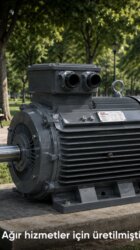
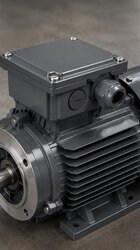
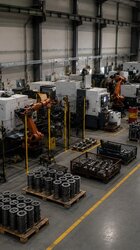
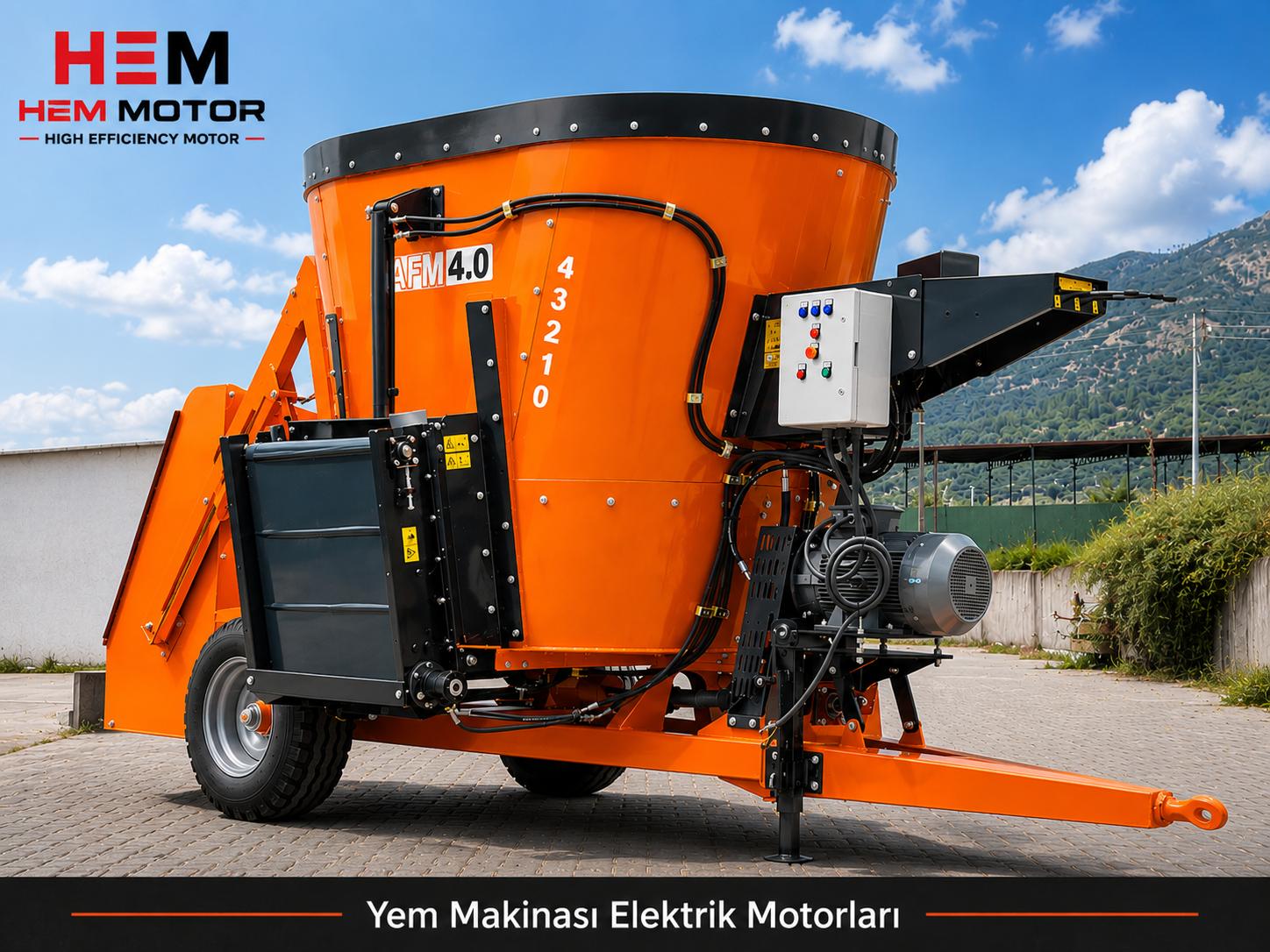

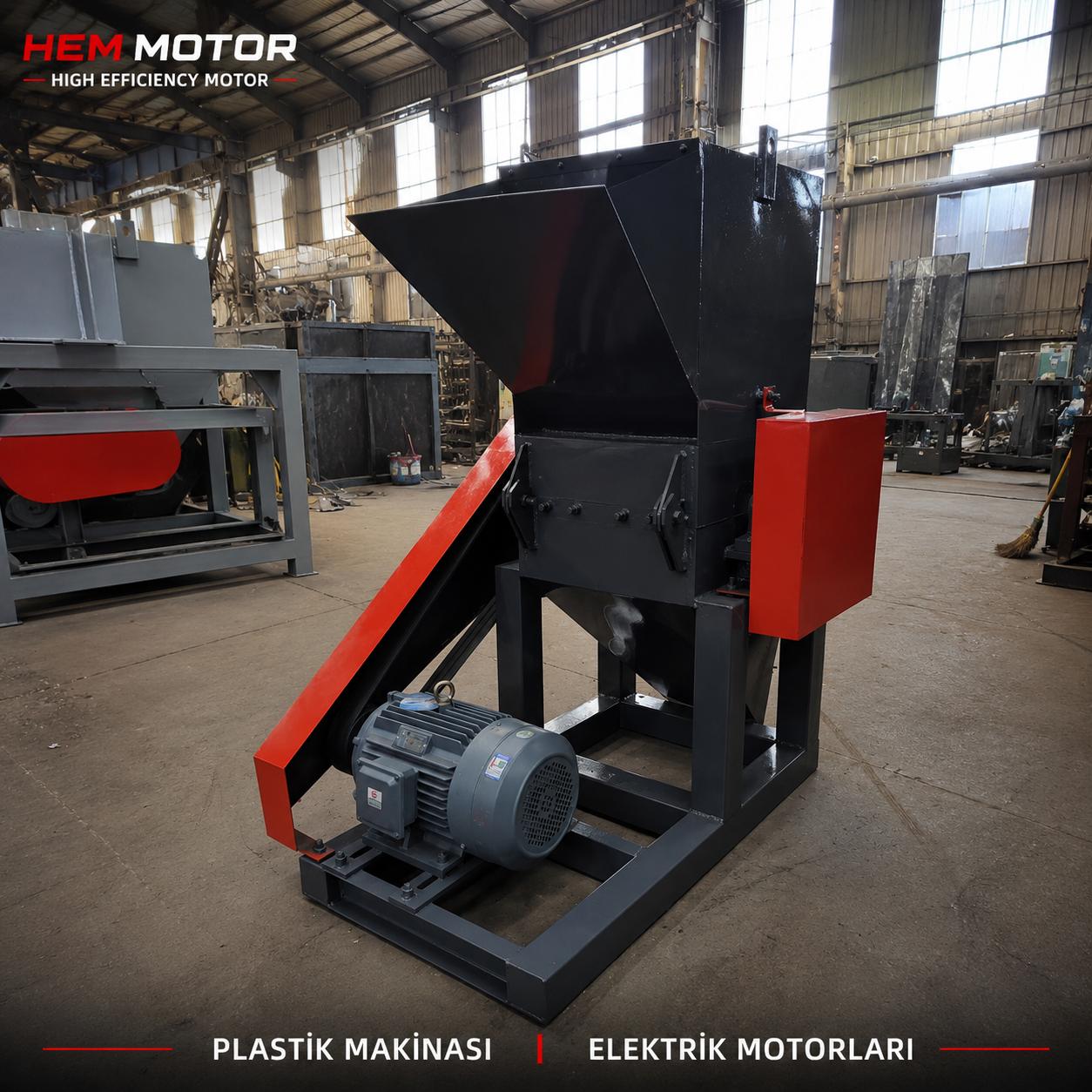
Recycling and plastic shredding plants are facilities that push electric motors to their limits within the triangle of impact load, high torque and abrasive material. When a shredder grips a mixed plastic bale, the motor faces a sudden torque peak; the granulation extruder pushes molten plastic continuously at high torque; conveyor belts transport uninterruptedly in a dusty and humid environment. In these plants, a wrongly sized or poorly bearing-equipped motor fails quickly, halting the line and creating high downtime cost. As a plant investor or procurement officer, selecting the right motor the first time is critical for both production continuity and total cost. This page is prepared to clarify the correct motor supply decision for every main piece of equipment on a recycling and plastic shredding line. For a fast quote, simply share your requirement list.
Three Factors That Strain Motors in a Recycling Plant
In these plants, motors face three main challenges: impact and variable load, high starting torque requirement, and dusty-humid environment. Because material distribution is not homogeneous in shredding and crushing machines, the motor is exposed to constantly changing load; this requires high overload capacity and a robust bearing structure. For this reason, high-efficiency cast iron body electric motors are preferred on recycling lines; the cast iron body both dampens impact and provides mechanical strength. In dusty environments, IP55 protection is the basic starting point; IP65 protection is evaluated in the dustiest crushing and screening areas.
The basic logic of motor selection under impact load is the compatibility of flywheel inertia and the motor's starting torque with the load. To explore this subject in depth, we recommend reviewing our motor selection under impact load: flywheel, inertia article. For motor selection based on the load profile of plastic injection and crushing machines, our plastic injection and crushing motor selection article is a directly relevant resource.
Shredder and Crusher Motors: High Torque and Flywheel
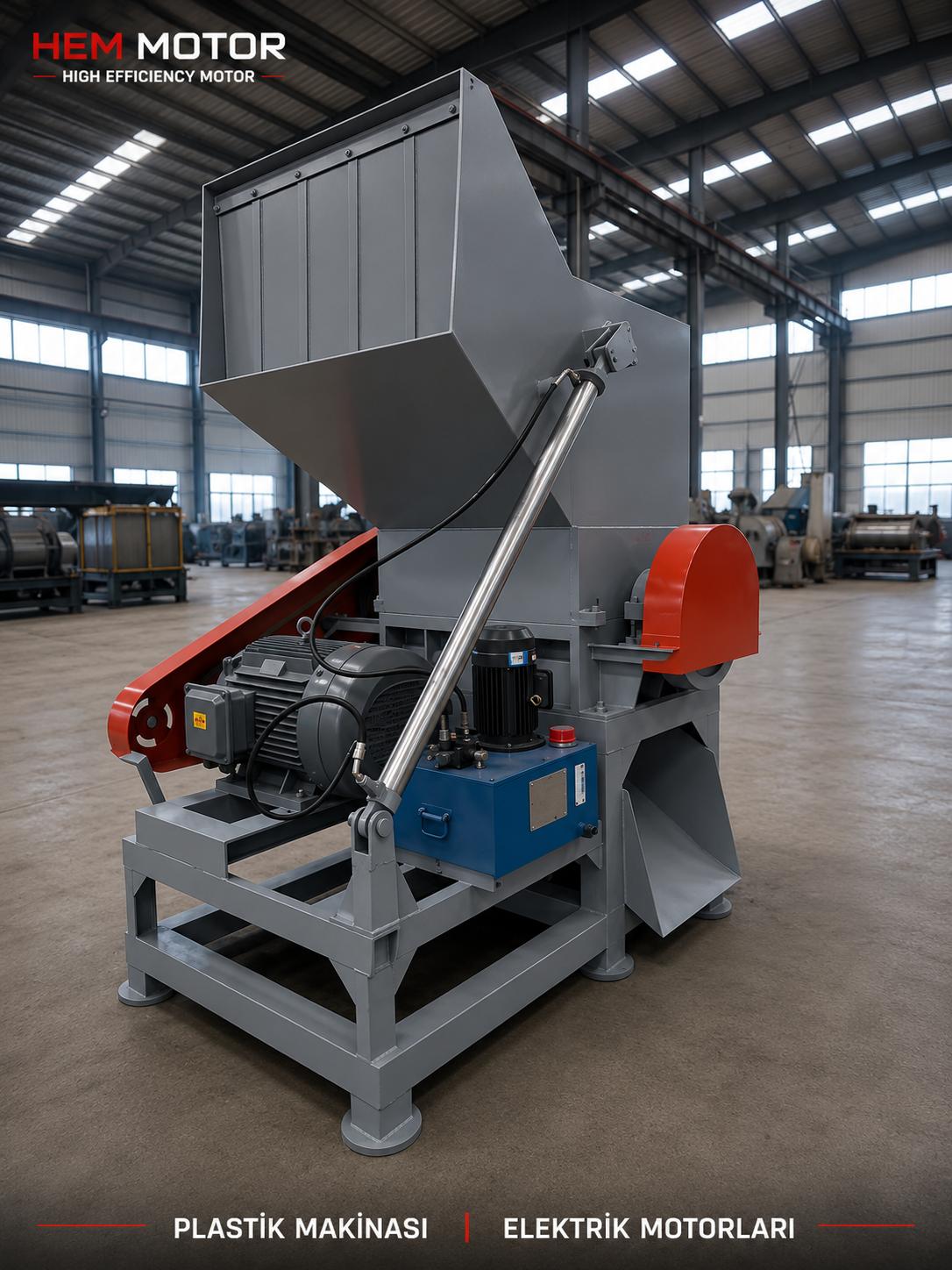
The most demanding motor in a recycling plant is the drive motor of the shredder. These machines grip large plastic blocks, bales or mixed waste and operate with sudden torque peaks. The motor must be selected to withstand these sudden load surges and frequent jam-restart conditions. In most shredders, the motor runs through a gearbox and flywheel; the flywheel inertia protects the motor from sudden impacts and enables high breakaway torque to be obtained with a smaller motor.
Speed, Power and Starting
Shredder motors are generally selected at 1000 or 1500 rpm and stepped down to a low output speed through a gearbox. In high-power crushers, star-delta or soft starter is used to reduce the high starting current that direct-on-line starting would create. For starting method selection, our motor starting: soft starter, star-delta article provides comprehensive information. To clarify the kW selection of the crusher motor, our crusher motor kW selection article applies similar logic.
Granulator and Extruder Motors: Continuous High Torque
In the recycling process, crushed plastic is washed, dried and turned into granules (pellets). The granulation extruder requires high and constant torque by continuously pushing molten plastic along the screw. This motor must be sized for S1 continuous duty, running at full load for long periods. Extruder motors are mostly selected as high-efficiency and low-vibration; because they run continuously at high load, energy cost and vibration life directly affect operating efficiency.
Since energy savings are critical in extruder and granulator motors running continuously at full load, IE4 super premium electric motors provide a fast payback. To understand the importance of duty type selection, our duty type (S1-S6) selection article is useful. For regulatory-compliant standard selection in three-phase motors above 0.75 kW, IE3 efficient electric motors are also evaluated.
Conveyor Belt, Screening and Separation Motors
Belt conveyors provide material flow in a recycling plant. These motors run continuously in a dusty and humid environment and use geared drives to produce high torque at low speed. The most common speed for conveyor motors is 1500 rpm, with 1000 rpm chosen for inclined and loaded belts requiring higher torque. Screening (vibrating screen) and separation equipment, on the other hand, require motors resistant to vibration and continuous operation.
Geared Drive and Replacement
Most conveyor and screening motors run with a gearbox; motor-gearbox matching is important for correct output speed and torque. In belt drives requiring low output speed and high torque, bevel helical gear reducers provide an efficiency advantage. For a direct replacement during an emergency conveyor motor failure, our conveyor belt motor emergency replacement checklist speeds up the process. A critical spare motor strategy is essential to prevent a conveyor motor failure from stopping production; our critical spare motor list article offers guidance on this.
Motor Protection and Bearing Life in Dusty Environments
Recycling plants generate intense dust; this dust can accumulate on the motor's cooling fins causing overheating, enter through the terminal box causing insulation problems, and reach the bearing causing early failure. Therefore, the motor's IP protection class and a regular cleaning program are critical. In dusty environments, IP65 protection and regular fin cleaning extend bearing life. To explore dust sealing, our dust sealing and IP65/IP66 protection article is useful. To evaluate bearing life under impact and dust, our bearing life: shock, dust and lubrication article provides important information. For more products and applications, visit the HEM Motor homepage and our industrial motors blog category.
Supply and Stock: Reducing Downtime Cost
In recycling plants, unplanned downtime means high production loss. Therefore, taking delivery at the right time is as important as selecting the right motor. While standard motors in the most commonly used power and speed combinations can be delivered quickly from stock, large shredder and extruder motors require lead time planning. For an accurate and fast quote, having the motor's nameplate values ready (kW, speed, frame, mounting type, IP and insulation class) simplifies the process; our information to provide when requesting a quote article offers a complete checklist.
Frequently Asked Questions
Why are the flywheel and high torque important in a shredder motor?
Because shredders grip mixed and non-homogeneous material, the motor faces sudden torque peaks. The flywheel inertia dampens these sudden impacts and enables high breakaway torque to be obtained with a smaller motor. For this reason, shredder motors should be selected as cast iron body, with high starting torque and a reinforced bearing structure. If you provide your machine's torque and speed data, we will recommend the correct motor-flywheel-gearbox combination.
Which duty type motor is required for a granulator extruder?
Since extruder motors push molten plastic at continuous, constant high torque, they must be sized for S1 continuous duty, running at full load for long periods. Because energy cost is significant due to continuous high load, IE4 high-efficiency motor selection provides a fast payback. A low-vibration structure is also preferred for long life.
Which IP protection class should I choose for motors in a dusty recycling environment?
IP55 protection is the starting point in standard zones; however, IP65 protection is recommended in the dustiest crushing, screening and granulation areas. In addition, regular cleaning of the motor's cooling fins and sealing of the terminal box are critical to prevent overheating and early failure. If you share your plant's dust density, we will determine the correct protection class together.
Get a Quote
Get the right supply support for the shredder, granulator, extruder, conveyor and screening motors of your recycling and plastic shredding plant, suited to impact load, high torque and dust protection. Send your requirement list via our contact page or call us at +90 (532) 345 49 86. Our expert team is with you for the correct power, protection and fast delivery.