English
 Türkçe

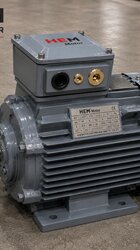

The synchronous reluctance (SynRM) motor, one of the most common representatives of the IE5 (ultra premium) efficiency class, stands out with its magnet-free rotor and low losses. But one of its strongest features is often overlooked: when running with a drive (VFD), it can operate in the constant-power region above rated speed thanks to field weakening. This capability makes it possible, with a single motor, to obtain both high torque and high speed in spindle, centrifuge and wide-speed-range drives. In this article we cover in detail the constant-torque and constant-power regions, what field weakening is, the torque-power behaviour above rated speed, the drive requirement, and which applications gain value from this capability.
What Are the Constant-Torque and Constant-Power Regions?
The operating range of a drive-fed motor splits into two main regions. The first is the constant-torque region: the motor runs in this region from zero speed up to its rated speed. Here the drive raises the voltage in proportion to the frequency (V/f constant), so the magnetic flux stays constant and the motor can produce the same maximum torque at every speed. Since power rises in direct proportion to speed, rated power is reached at rated speed.
The second region is the constant-power region: above rated speed the drive can no longer raise the voltage because it has reached the grid/DC-bus limit. As the frequency keeps rising while the voltage stays fixed, the magnetic flux must fall; this is called field weakening. As the flux drops, the maximum torque the motor can produce also drops, but because the speed rises, the power stays roughly constant. So in this region the motor runs at higher speed but lower torque, at constant power.
- Constant-torque region (0 - rated speed): Flux constant, maximum torque constant, power rises with speed.
- Constant-power region (above rated speed): Flux weakened, torque falls, power stays roughly constant.
- Transition point: The rated (base) speed; the point where the voltage hits its ceiling.
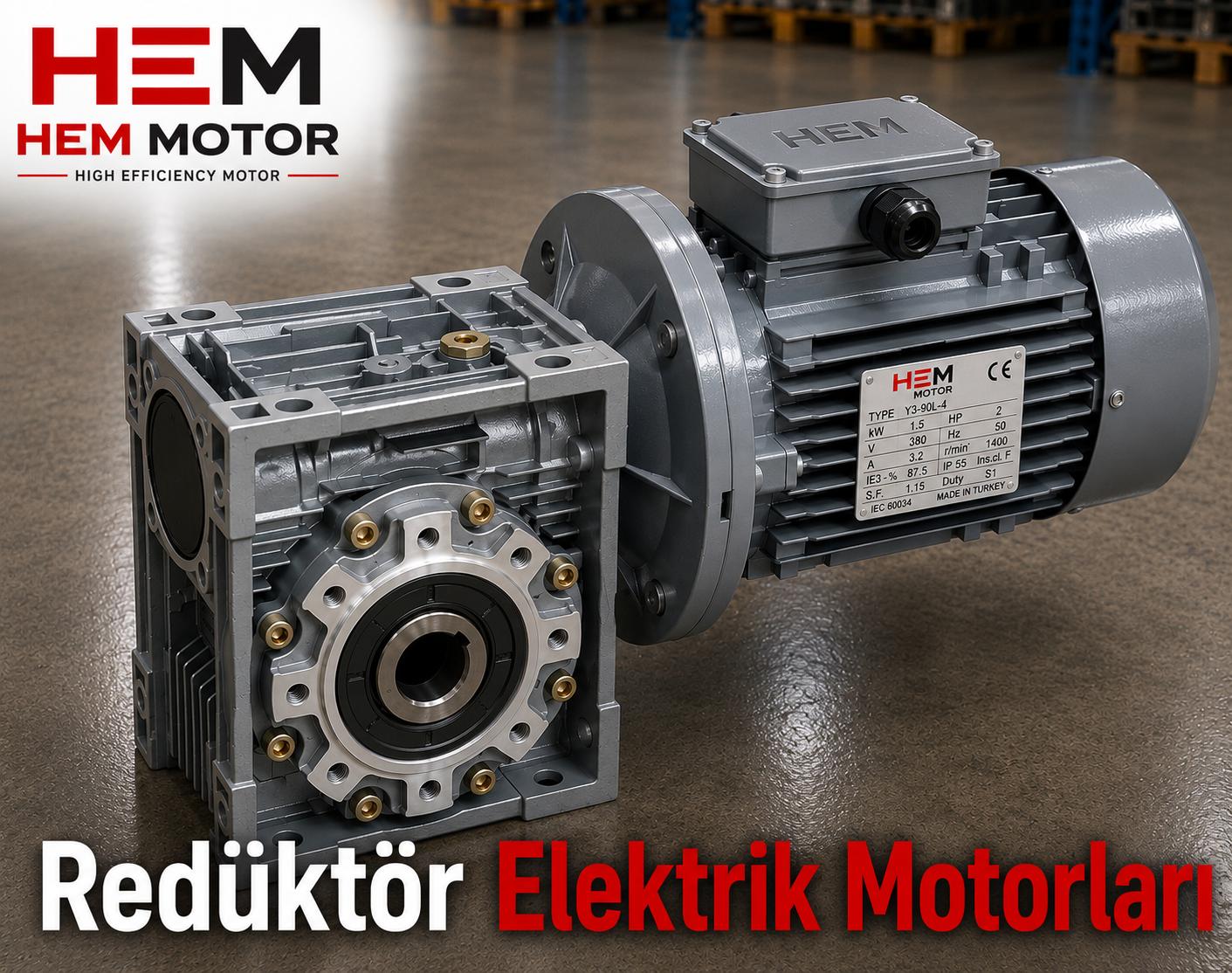
How Does Field Weakening Work?
Field weakening is a drive control technique that deliberately reduces the motor's magnetic flux to allow operation above rated speed. In a synchronous reluctance motor the flux is produced entirely by the stator current, because there are no magnets; this makes flux management flexible. The drive reduces the flux by lowering the d-axis (flux-producing) current component, and so continues to run above rated speed within the voltage limit.
The magnet-free structure of the synchronous reluctance motor offers an important advantage for field weakening: in permanent magnet motors the magnet flux is always present, so to control the induced voltage at high speed one must continually apply opposing flux (and manage the demagnetisation risk). In synchronous reluctance there is no such permanent flux, so field weakening is managed more naturally and with fewer losses; even if the drive is cut, no dangerous feedback voltage builds up at high speed. You can find the basis of synchronous reluctance technology in our synchronous reluctance motors article, and its difference from PM in our synchronous reluctance vs PM motor article.
Torque-Power Behaviour Above Rated Speed
The practical meaning of the constant-power region is this: the motor turns faster above rated speed but its torque falls in return. Because the power stays roughly constant, this is very valuable in applications that need high speed but not high torque at that speed. The table below summarises schematically the behaviour of a typical synchronous reluctance + drive system (values scaled to the rated value).
| Speed (vs rated) | Region | Maximum torque | Power |
|---|---|---|---|
| 25% | Constant torque | 100% | 25% |
| 50% | Constant torque | 100% | 50% |
| 100% (base) | Transition | 100% | 100% |
| 150% | Constant power | ~67% | ~100% |
| 200% | Constant power | ~50% | ~100% |
The width of the constant-power region depends on the motor design and the drive capacity; not every motor can go to arbitrarily high speed. Mechanical strength (the rotor's resistance to centrifugal force) and the bearing speed limit set the top speed. So in applications needing a wide constant-power range, the motor must be designed for this capability.
Why Is a Drive (VFD) Essential?
Unlike permanent magnet line-start motors, the synchronous reluctance motor cannot start directly from the grid and cannot run without a drive. For the rotor to lock onto the rotating field and produce reluctance torque, the drive must know the rotor position (usually via a sensorless/sensored algorithm) and steer the current accordingly. The constant-torque, constant-power and field-weakening regions are all managed by drive control.
For this reason a synchronous reluctance motor should always be thought of as a motor+drive package. The drive is matched to the motor with motor-specific parameters (autotune); correct parametering determines both the efficiency and the stability in the constant-power region. We covered why it does not run without a drive in our does not run drive-free, package selection and cost article, and drive parametering in our drive parametering, autotune and commissioning article.
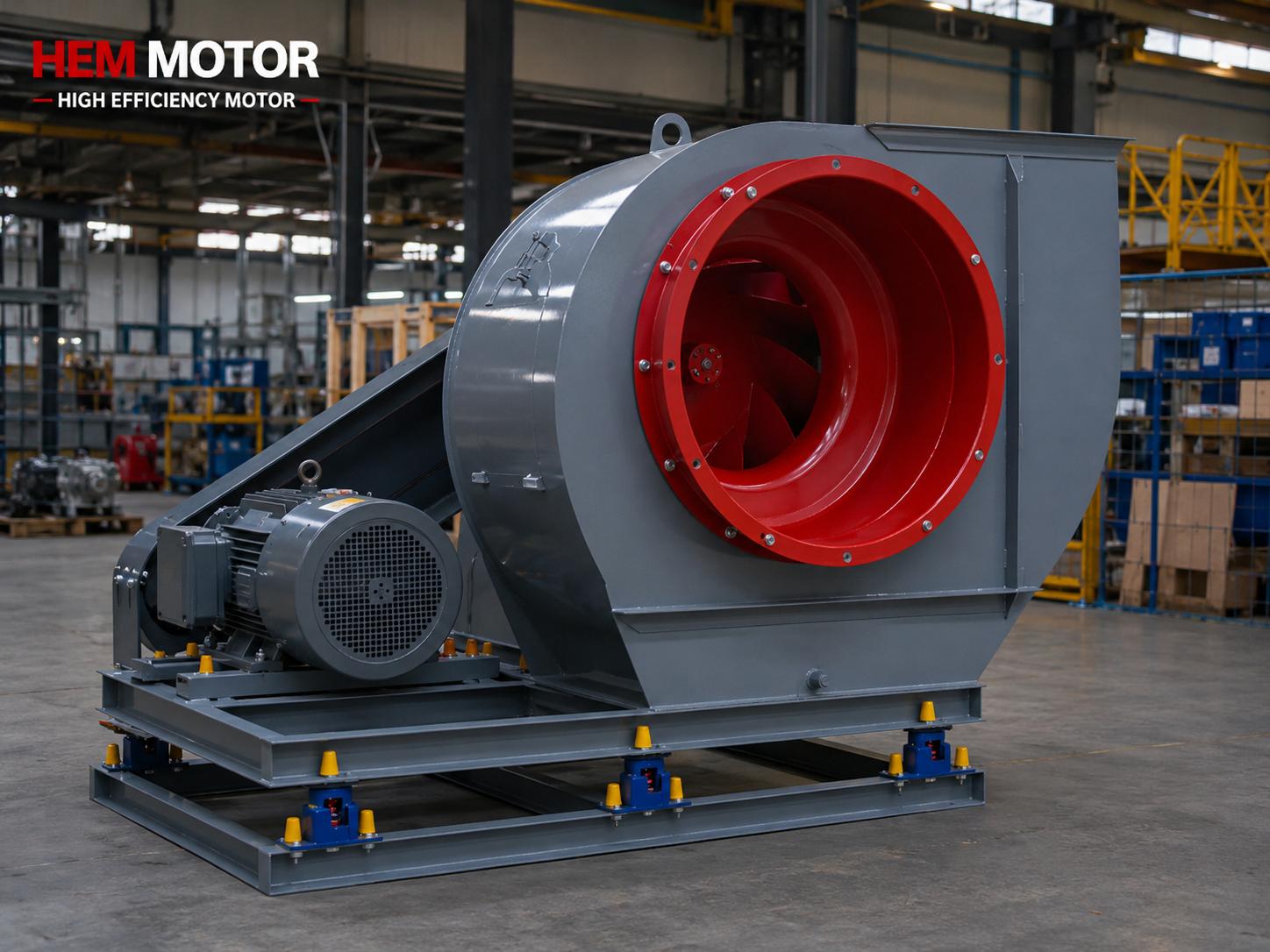
Spindle, Centrifuge and Wide-Speed-Range Applications
The places where the constant-power region truly adds value are applications running over a wide speed range where low torque is enough at high speed:
- Spindle (machining): High torque at low speed (rough cutting), low torque at high speed (fine/finish). One motor covers a wide speed range at constant power.
- Centrifuges: High torque in the acceleration phase, then separation at high speed at constant power.
- Winder lines: As the coil diameter changes, constant-power behaviour is ideal for the changing speed-torque relationship.
- Test rigs and dynamometers: Controlled power over a wide speed range.
- High-speed pump/fan: When extra flow-pressure is needed above rated speed.
In these applications the alternative is to choose a larger motor or add a mechanical gear/stage; the constant-power capability of synchronous reluctance + drive often removes this mechanical complexity, giving a more compact and efficient drive. You can study its use in a wide-speed-range application such as a textile spinning (ring) machine in our textile spinning machine case study article.
Constant Torque or Constant Power? Correct Sizing
Correct motor selection starts with knowing how much torque the load wants at which speed. Load types fall roughly into three groups:
- Constant-torque loads: Conveyor, extruder, displacement pump; torque stays roughly constant as speed changes.
- Constant-power loads: Winder, spindle; low torque at high speed, high torque at low speed.
- Variable (quadratic) torque loads: Centrifugal pump and fan; torque rises with the square of speed.
The constant-torque and constant-power regions of the synchronous reluctance motor can answer all these load types with a single flexible drive; but the motor and drive must be chosen for the speed-torque envelope the load requires. We covered power selection by constant-torque, constant-power and variable-torque load types in our constant torque, constant power and variable torque load type article.
Thermal Behaviour: Heating in the Constant-Power Region
When running above rated speed the motor's own cooling fan (if shaft-mounted) turns faster and cooling may increase; but because the stator current behaviour and the iron losses change with field weakening, the thermal behaviour must be assessed carefully per application. Conversely, when running for a long time at high torque at very low speed, its own fan may be insufficient and forced (external) cooling may be needed. We covered thermal behaviour and correct sizing in drive operation in our thermal behaviour and cooling article, and the need for forced cooling at low speed in our external forced cooling fan article.
Frequently Asked Questions
How far above rated speed can a synchronous reluctance motor go?
This depends on the motor's mechanical design and the drive capacity. The width of the constant-power region can extend up to 1.5-2 times the rated speed in some designs; the upper limit is set by the rotor's mechanical strength and the bearing speed limit. If a wide constant-power range is needed, the motor must be designed for it and the drive chosen with suitable capacity.
Does field weakening reduce efficiency?
Field weakening reduces the flux to allow high-speed operation; in this region torque naturally falls but power is preserved. Efficiency can be kept high with correct drive control. The magnet-free structure of synchronous reluctance lets it manage field weakening with fewer losses than permanent magnet motors, because there is no permanent magnet flux to control.
Is extra hardware needed for the constant-power region?
No; field weakening is provided by the drive's control algorithm and needs no extra mechanical hardware. What matters is that the drive is correctly parametered (autotune) to the motor and that the motor is mechanically suitable for the desired top speed. So the motor and drive should be chosen from the start as a package and according to the application's speed-torque envelope.
Practical Tips for the Right Choice
- Map the load's speed-torque envelope: how much torque is needed at which speed?
- If low torque is enough at high speed, the constant-power region is a big advantage.
- Choose the motor and drive as a package, suited to the top speed.
- Parameter the drive specifically to the motor with autotune.
- If there is long-duration high torque at low speed, consider forced cooling.
- Do not exceed the mechanical top-speed limit (rotor strength, bearing).
The V/f Curve and the Role of Vector Control
In the constant-torque region the drive raises the voltage together with the frequency (V/f constant); this is the most basic way to keep the magnetic flux constant. But synchronous reluctance motors demand far more than simple scalar V/f control. These motors are driven with a rotor-position-aware field-oriented (vector) control, because reluctance torque depends on steering the stator current at the correct angle relative to the rotor's magnetically easy and hard axes. The drive manages the d-axis (flux) and q-axis (torque) current components separately, providing both the highest efficiency and field weakening in the constant-power region.
For this reason the performance of the synchronous reluctance motor depends directly on the quality of the drive's control. High torque at low speed, a wide speed range and constant-power behaviour are achieved only when the drive is correctly parametered (autotune) to the motor. Wrong parametering both lowers efficiency and can cause instability in the constant-power region. This shows once more why a synchronous reluctance motor must always be bought together with a compatible and correctly tuned drive. We covered drive brand compatibility in our drive brand compatibility and multi-VFD selection article.
Part-Load Efficiency and Savings Over a Wide Speed Range
Another strength of the synchronous reluctance motor is that it keeps its efficiency well at part load and at variable speed. Many real applications never run the motor always at full load and full speed; loads such as pumps, fans and winders run at different speed and load points throughout the day. Thanks to the low losses of the magnet-free rotor and the drive's flexible flux management, the synchronous reluctance motor stays at high efficiency at these variable points too.
Another saving advantage of the constant-power region is that it can remove mechanical gear stages: covering a wide speed range with a single motor, without gear losses, raises the system efficiency as a whole. You can find its part-load efficiency superiority in our synchronous reluctance efficiency curve and part load article, and whether the efficiency gap between IE5 and IE4 justifies the investment in our IE5 or IE4 article. The annual gain analysis under continuous load is offered by our savings under continuous load in pump, fan and compressor article.
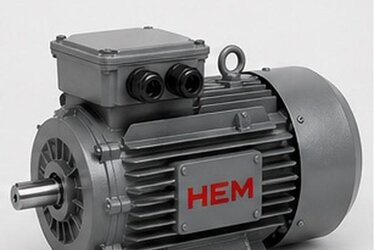
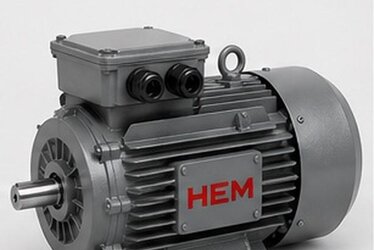
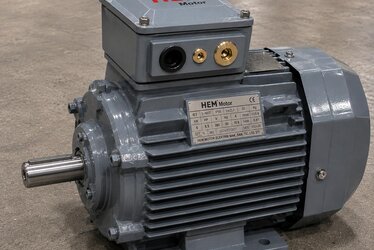
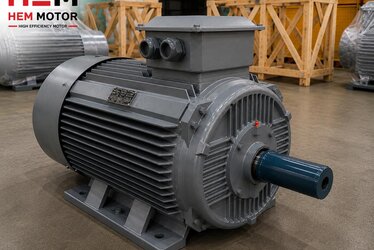
At HEM Motor we offer IE5 synchronous reluctance motors with suitable drive matching and constant-power capability, with fast delivery from stock. To determine the right motor+drive package for your application's speed-torque envelope, to build the most efficient solution for your spindle, centrifuge or wide-speed-range drive, and to request a quote, get in touch with our engineering team. Let us plan both your torque and your speed needs together with a single flexible drive.