English
 Türkçe

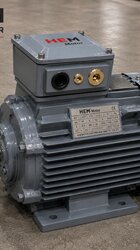
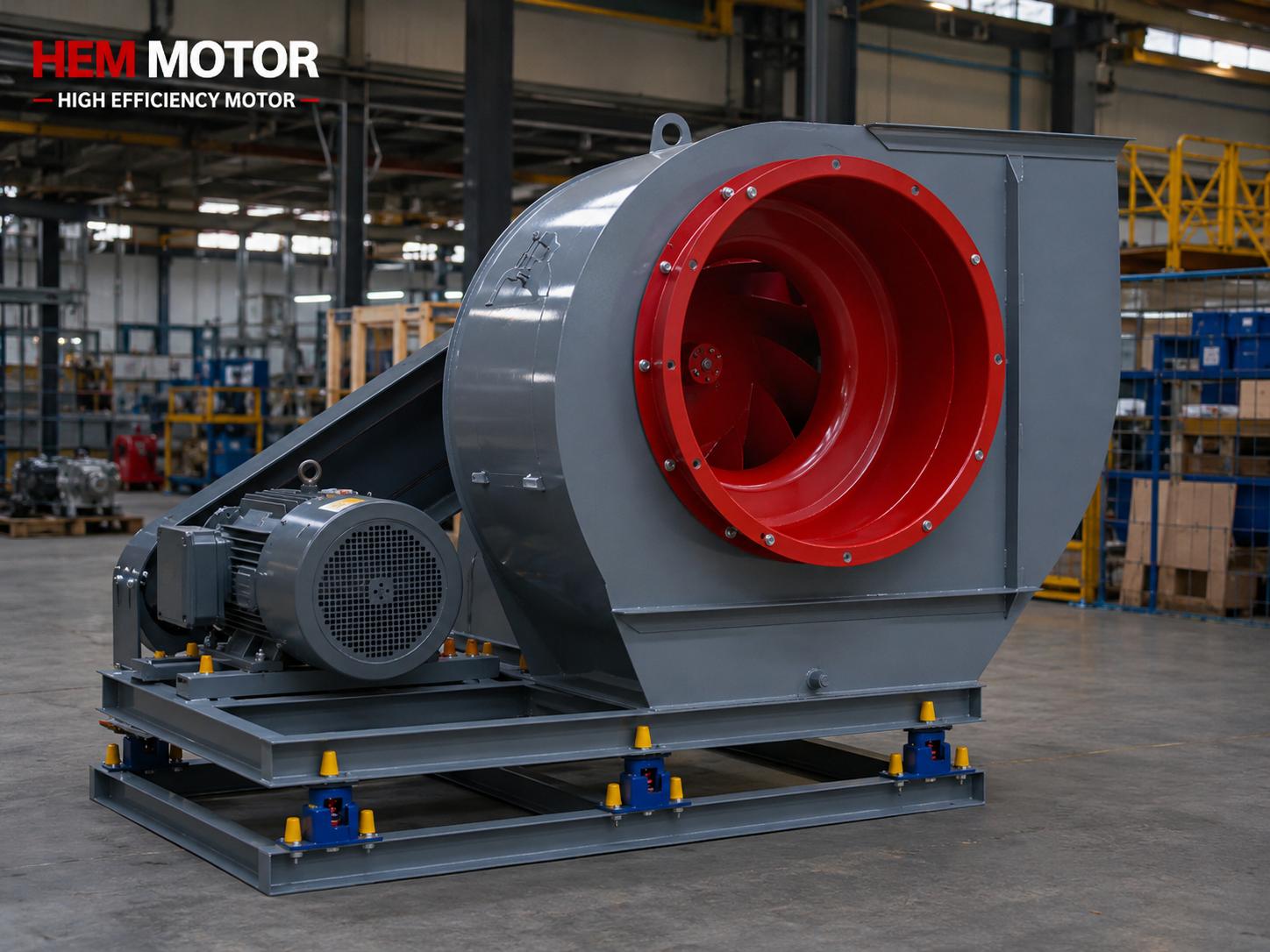

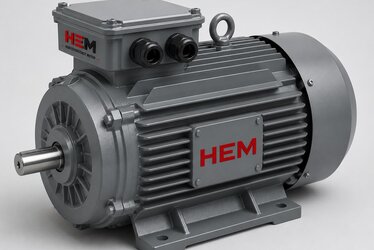
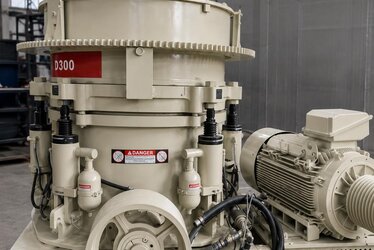
When you look carefully at the electricity bill of an industrial plant, you see that the lion's share of consumption is concentrated in three application groups: pumps, fans and compressors. These three systems sit at the heart of production lines and usually run under continuous load 16, 20 or even 24 hours a day. It is precisely here that motor efficiency stops being a mere technical detail and becomes a lever that directly determines operating profitability. IE5 efficiency class motors demonstrate their advantage most clearly in these continuously loaded applications, because savings accumulate over the year as the product of the efficiency gap and the high number of running hours.
In this article we examine, step by step, why the IE5 ultra-premium efficiency class is so critical in pump, fan and compressor applications, how annual savings are calculated, and how the savings compound when combined with a frequency converter (VFD). Our goal is to enable you to evaluate the payback period of your motor investment with concrete numbers.
Efficiency Classes: The Journey from IE1 to IE5
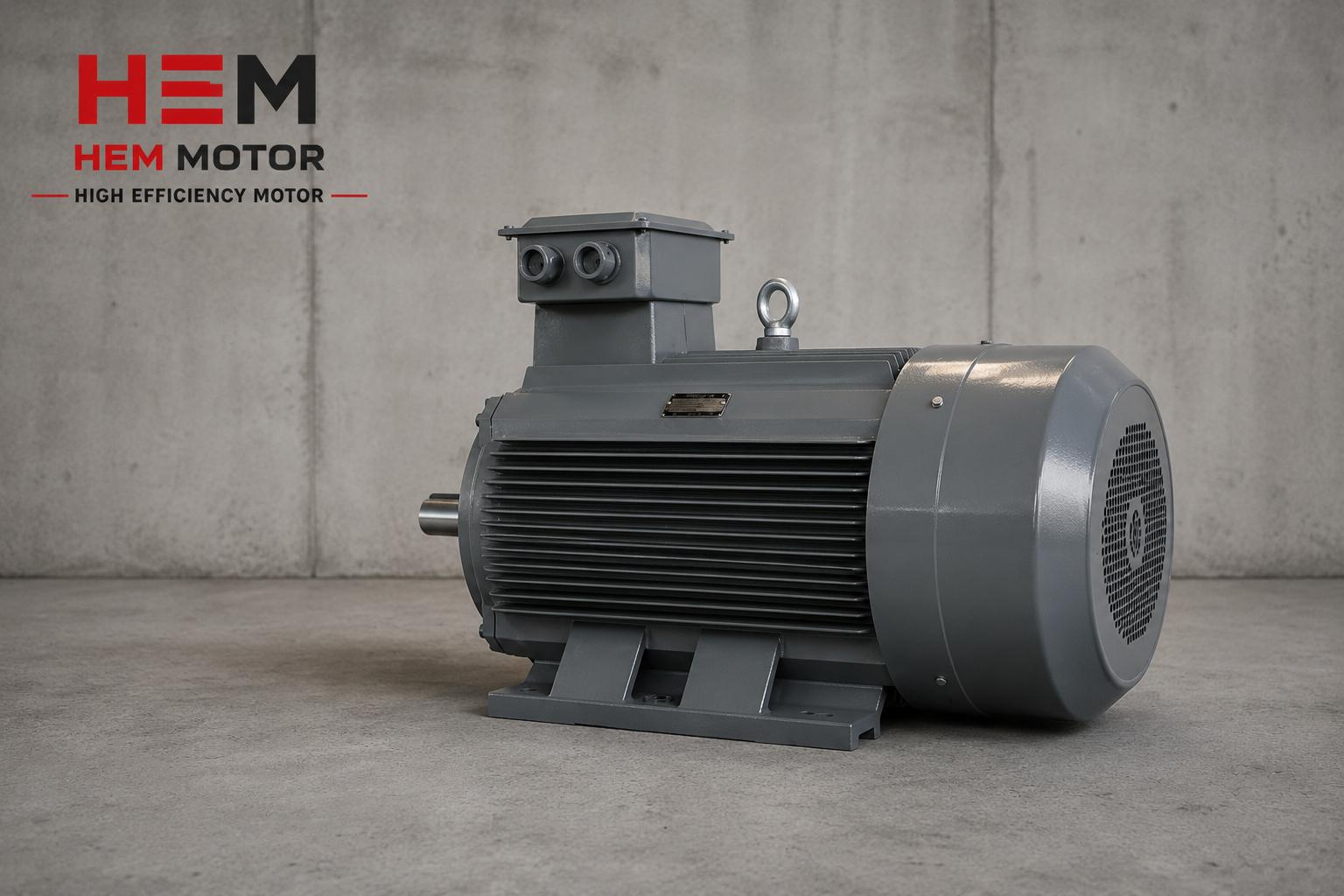
International standards classify electric motors into IE (International Efficiency) classes according to energy efficiency. IE1 denotes standard efficiency, IE2 high efficiency, IE3 premium efficiency, IE4 super premium efficiency and IE5 ultra-premium efficiency. Each higher class means the motor performs the same mechanical work with less electrical energy — that is, losses are reduced.
In the transition from IE3 to IE5, motor losses can theoretically be reduced by around 40%. Although this loss reduction may seem small, in a motor running 6000–8000 hours per year this difference turns into enormous energy savings. The key is being able to convert the percentage efficiency gap into absolute kWh savings and, from there, into annual cost savings.
Why Exactly These Three Applications?
The common feature of pumps, fans and compressors is their continuous, long-duration operation. A conveyor motor or a press motor stops frequently during the day, whereas a cooling tower fan or a process pump almost never stops. The savings formula has two factors: the efficiency gap and the running hours. The higher the running hours, the more even a small efficiency gap turns into a large annual gain. That is why an IE5 investment delivers its fastest payback in these continuous-load applications.
How Are Annual Savings Calculated?
A fundamental approach is used to calculate the annual energy savings of an IE5 motor. First you find the motor's input power separately for each efficiency class:
Input power = Shaft power / Efficiency
The difference in input power between the two efficiency classes shows how much more electricity the motor draws per hour. Multiplying this by the annual running hours gives the extra kWh consumed per year, and multiplying by the electricity unit price gives the annual cost difference.
Example Scenario: 30 kW Process Pump
Consider a process pump with 30 kW shaft power. Suppose the IE3 motor efficiency is about 93.6% and the IE5 motor efficiency is about 95.8%. The IE3 motor input power is 30/0.936 ≈ 32.05 kW, and the IE5 motor input power is 30/0.958 ≈ 31.32 kW. The difference is about 0.73 kW per hour.
If this motor runs 8000 hours per year, that means 0.73 × 8000 ≈ 5840 kWh of additional annual consumption. This saving repeats every year throughout the motor's entire service life and usually offsets the price difference between IE5 and IE3 entirely within a few years.
Savings in a Fan Application
Cooling towers, ventilation systems and industrial exhaust fans mostly run uninterrupted throughout the year. Switching to IE5 in a high-power fan motor not only lowers the energy bill but also extends winding and bearing life thanks to the motor running at a lower temperature. Lower losses mean less heat and longer maintenance intervals.
Together with a VFD: Savings Compound
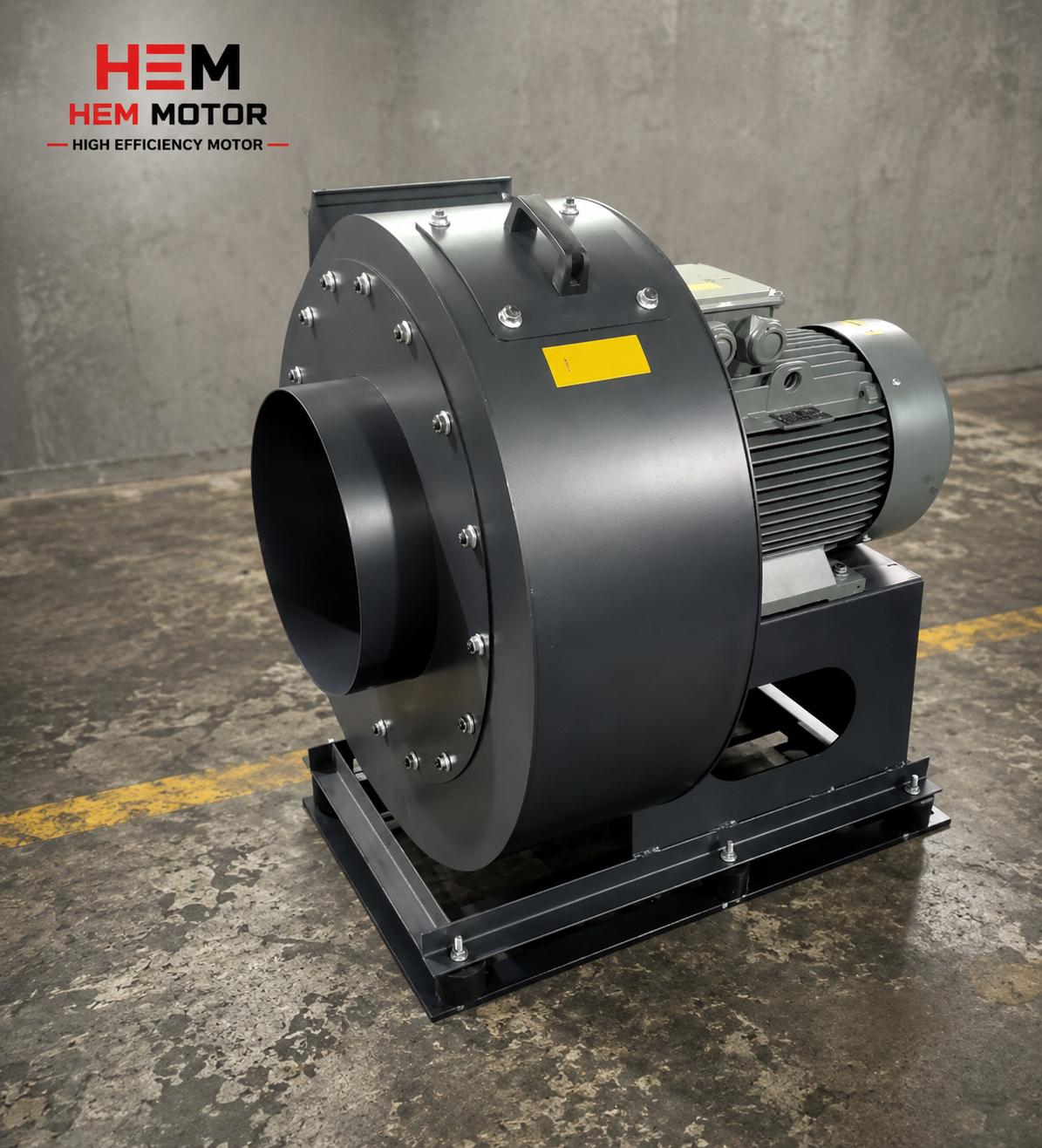
The saving an IE5 motor provides on its own is significant, but the real leap happens when it is combined with a frequency converter (VFD). Pumps and fans obey the affinity laws: when you reduce the flow by 20%, power consumption can drop by about 50%. In many plants these systems are run below nominal capacity; in a fixed-speed motor this excess capacity is wasted by throttling with a valve or damper.
- Affinity law advantage: Under variable demand, a VFD runs the motor exactly as needed, reducing energy consumption in a cubic proportion.
- Soft start: The VFD eliminates starting current surges, protecting the grid and the mechanical transmission.
- Combined gain: IE5's low base loss and the VFD's variable-speed saving stack on top of each other, maximising total gain.
In a compressor running under continuous load, a VFD adjusts the speed to the pressure demand, eliminating waste in load-unload cycles. Combined with an IE5 motor, this combination offers the highest total system efficiency. To procure the right product from stock and request a quote, the healthiest approach is to proceed via the current electric motor prices and efficiency class options.
The Continuous-Load Profile in a Compressor
Screw and piston compressors are critical systems that produce compressed air and are considered the "fourth utility" in most factories. A compressor motor stays engaged continuously in the load-unload cycle; because the motor keeps turning even in the unload phase, energy consumption does not stop. An IE5 motor runs with lower losses on each cycle throughout this continuous rotation, noticeably reducing annual consumption. Since the bulk of losses in compressed-air systems concentrate in the compressor motor and line leaks, a high-efficiency motor investment directly improves the unit cost of air.
Reading the Efficiency Gap in Terms of Heat and Life
Energy saving is not the only benefit of IE5. Every watt lost in a motor turns into heat. Because an IE5 motor runs with lower losses, it heats up less; this means the winding insulation and bearings operate at a lower temperature. Winding insulation life is directly related to operating temperature: roughly every 10 °C reduction in temperature can double insulation life. Therefore an IE5 motor reduces not only the energy bill but also maintenance and failure costs. Under continuous load, this effect also protects production continuity by preventing unplanned stoppages.
- Lower operating temperature: Winding and bearing life extend, planned maintenance intervals widen.
- Quieter operation: Improved electromagnetic design reduces vibration and noise.
- Lower cooling load: A motor that heats up less also eases the air-conditioning load in enclosed spaces.
Defining the Load Profile Correctly
The key to calculating annual gain correctly is defining the motor's real load profile. Does a pump run at full load or partial load throughout the day? Does the fan turn with a flow that varies by season? A savings calculation made without answering these questions is misleading. In practice, producing a consumption profile over a few weeks with a data logger reveals the payback of an IE5 and VFD investment most realistically. A measurement-based decision is always more reliable than an assumption-based one.
The Investment Decision: Total Cost of Ownership
A motor's real cost is not its purchase price. For a motor running under continuous load, about 95% of the lifetime cost comes from electrical energy and only 2–3% from the purchase price. Therefore, even though the initial investment of an IE5 motor is somewhat higher than IE3, it is almost always more advantageous in the total cost of ownership (TCO) calculation. The payback period shortens as running hours and electricity unit prices rise.
After determining the right efficiency class, the request you send your supplier should include power (kW), speed (rpm), efficiency class (IE5), mounting type, protection class (IP) and VFD compatibility. A technical specification with this clarity ensures both fast procurement of the right product and an easy, clear quotation. For a wide product range you may evaluate the efficient electric motor and VFD-compatible motor options.
Frequently Asked Questions
How long does the extra cost of an IE5 motor take to amortise?
This period depends on the motor's annual running hours and the electricity unit price. In continuous-load applications running 6000–8000 hours per year, the payback period usually completes within a few years, and in subsequent years the saving turns directly into profit.
Does it make sense to replace my existing IE3 motor with an IE5?
If the motor runs long hours under continuous load and a long service life is still expected, replacement usually makes sense. In low-running-hour, frequently-stopping applications the payback period is longer; the decision should always be based on the operating profile.
Does using an IE5 motor without a VFD provide savings?
Yes, an IE5 motor provides savings over IE3 even without a VFD thanks to its lower losses. However, when a VFD is added to variable-demand pumps and fans, total savings compound significantly.