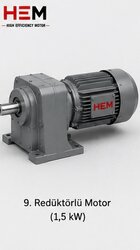
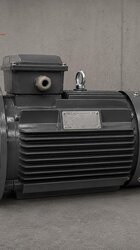
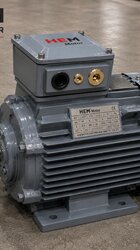
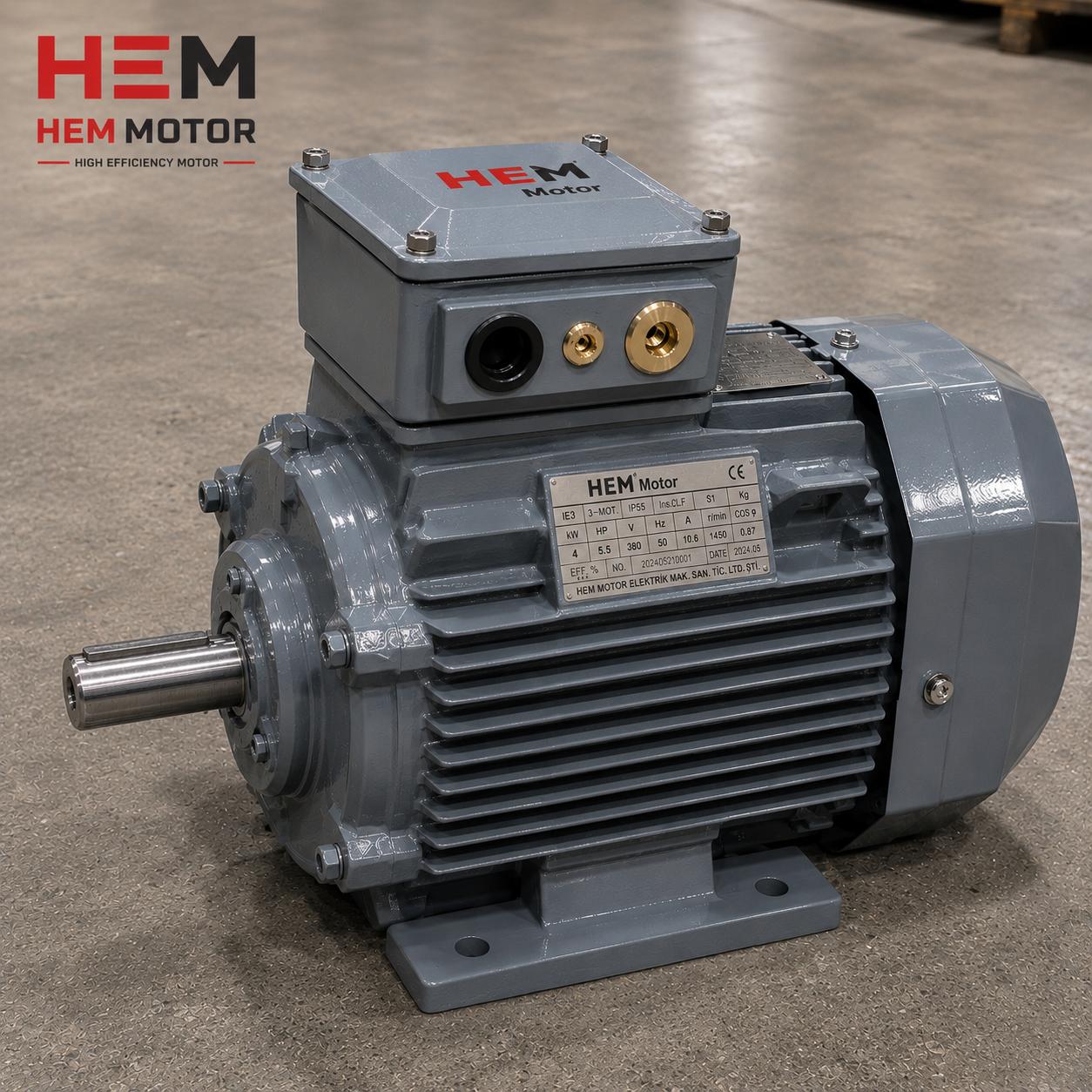
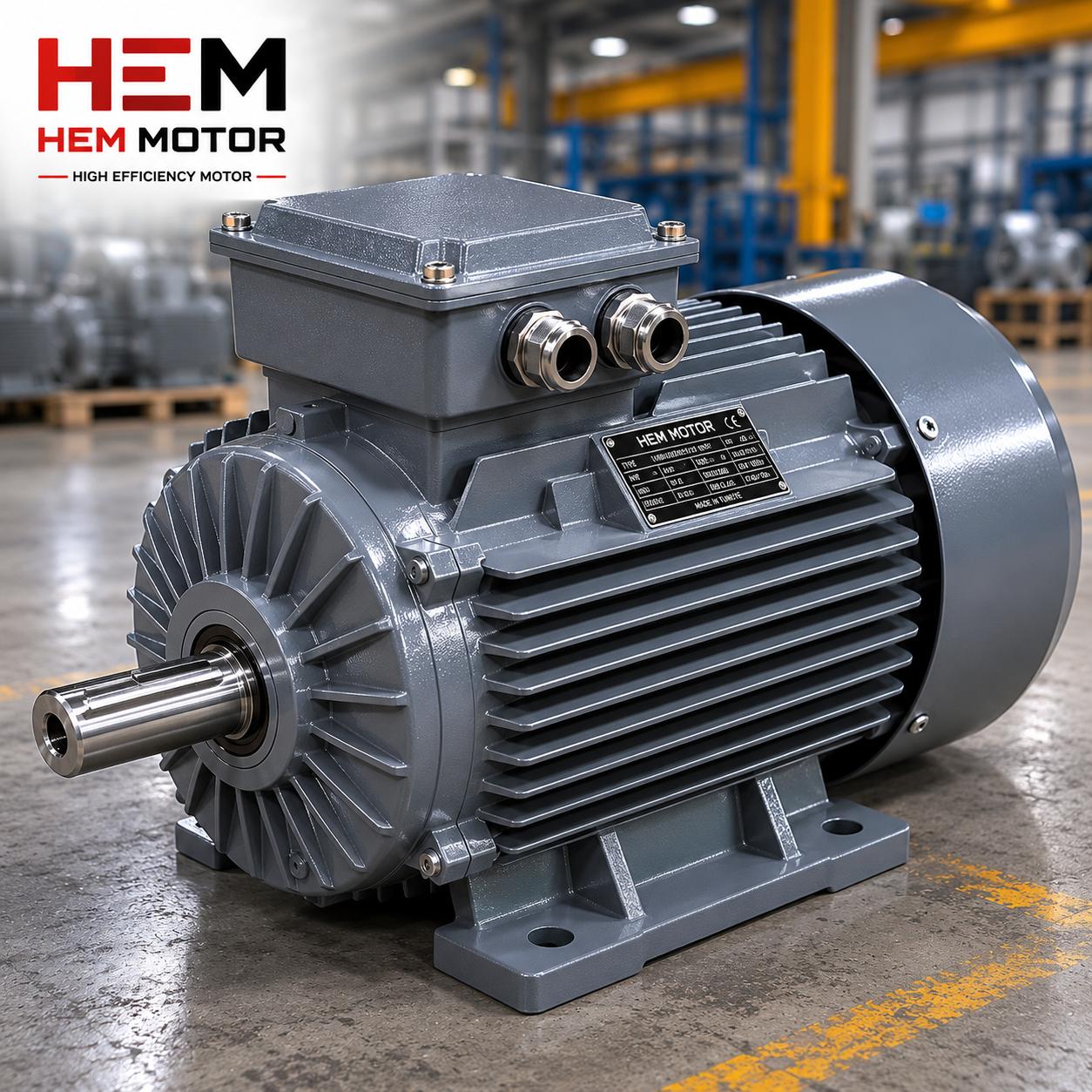
As efficiency classes rise, businesses rightly wonder about the next step: IE5, which comes after IE4, and its best-known technology, synchronous reluctance (SynRM) motors. This article clearly explains what IE5 is, its real difference from IE4, and in which cases it makes sense, before you make an investment decision. Let us set the honest frame first: at HEM Motor, the highest efficiency class in our range today is IE4 Super Premium, and we meet your IE4 motor needs from stock. IE5, on the other hand, is still a class on the horizon; on this page we are not promising you the sale of an IE5 product, but helping you set the right expectation and make the right investment for today.
If you are already running with an IE3 motor and planning to step up a class, the most sensible and accessible step today is IE4. It is healthier to place IE5 in your medium-to-long-term plan as a "technology to watch."

What Is IE5? Its Place on the Efficiency Class Ladder
In electric motors, efficiency is expressed in international IE (International Efficiency) classes: IE1 (Standard), IE2 (High), IE3 (Premium), IE4 (Super Premium) and IE5 (Ultra Premium). As the class rises, the lost energy the motor spends to produce the same mechanical power decreases; that is, a larger portion of the electricity drawn from the grid is transferred to the shaft. IE5 is the top rung of this ladder and aims to reduce losses by a further amount compared with IE4.
There is an important point here: as the class number grows, the absolute gain between two classes gradually shrinks. The savings achieved when moving from IE1 to IE3 are striking; in the transition from IE4 to IE5, however, the improvement is finer and finds significant monetary value only at very high operating hours. For this reason, IE5 is not automatically the "more correct" choice for every application.
IE5's Common Technology: Synchronous Reluctance (SynRM)
The structure most talked about for reaching IE5 efficiency is the synchronous reluctance motor. In classic asynchronous motors, current is induced in the rotor and these induction losses turn into heat. In a synchronous reluctance rotor, instead of windings or a cage, there are specially shaped lamination packets that make the magnetic flux follow preferred paths; copper/aluminum losses in the rotor are largely eliminated. The result is lower rotor heating and higher efficiency.
An important feature of SynRM is that, unlike permanent magnet (PM) motors, it contains no rare earth elements; this provides an advantage in terms of supply and cost. On the other hand, SynRM motors generally operate together with a frequency drive (VFD); they do not behave like a classic asynchronous motor that connects directly to the grid (DOL) and runs on its own. This shows that the transition to IE5 means not only changing the motor but also planning the drive infrastructure.
The Real Difference Between IE4 and IE5
When deciding, it is necessary to look at four concrete axes rather than marketing statements: efficiency gain, initial investment, infrastructure requirement and payback period.
Efficiency and Energy Gain
IE4 motors are already in the Super Premium class and efficiently transfer the great majority of a typical three-phase motor's annual energy consumption to the shaft. The additional gain IE5 offers is measured by a small percentage point in most power ranges. This small difference is barely felt if the motor runs a few hours a day; but if the motor runs continuously (S1, three shifts) for most of the year, small percentages begin to gain meaning in annual kWh.
Initial Investment and Infrastructure
Because IE5/SynRM solutions are generally a newer and less widespread technology, the initial investment burden is high; moreover, in most cases the drive requirement also creates extra cost on the panel side. IE4, on the other hand, is a mature, widespread solution that connects directly to the grid; in terms of electric motor prices, it is far more predictable and accessible today.

The Payback (Amortization) Logic
For an efficiency upgrade to make sense, the additional investment must pay for itself within a reasonable time through energy savings. Since the additional gain in moving from IE4 to IE5 is fine, the payback period falls into an acceptable zone only in applications with very high operating hours and large motor power. In low-operating-hour, small-power applications, the IE5 investment generally does not amortize in time. You can find the detailed setup of this calculation and when it is sensible to move to IE5 in our separately written IE5 Ultra Premium motor transition guide; on this page we do not repeat that article's amortization scenarios but look at the subject from the angle of technology and class positioning.
The Right Investment Today: Why IE4?
For your business's efficiency step today, the most solid choice is IE4, and the reasons are clear:
- Mature and widespread technology: IE4 Super Premium motors run on the standard grid (DOL); there is no additional drive requirement, and the risk of compatibility with your existing panel is low.
- Mechanical compatibility: The frame, foot and shaft dimensions of IE4 motors comply with the IEC standard; in most cases they replace your old motor exactly. We addressed this compatibility in detail in our mechanical compatibility in the transition to IE4 motors article.
- Accessible supply: In the 0.25 kW – 355 kW range, with 1000/1500/3000 rpm speed options, fast delivery from stock is possible.
- Regulatory compliance: In certain power and pole ranges, IE4 is already mandatory; our IE3 and IE4 efficiency mandate article summarizes which motor is required from which date.
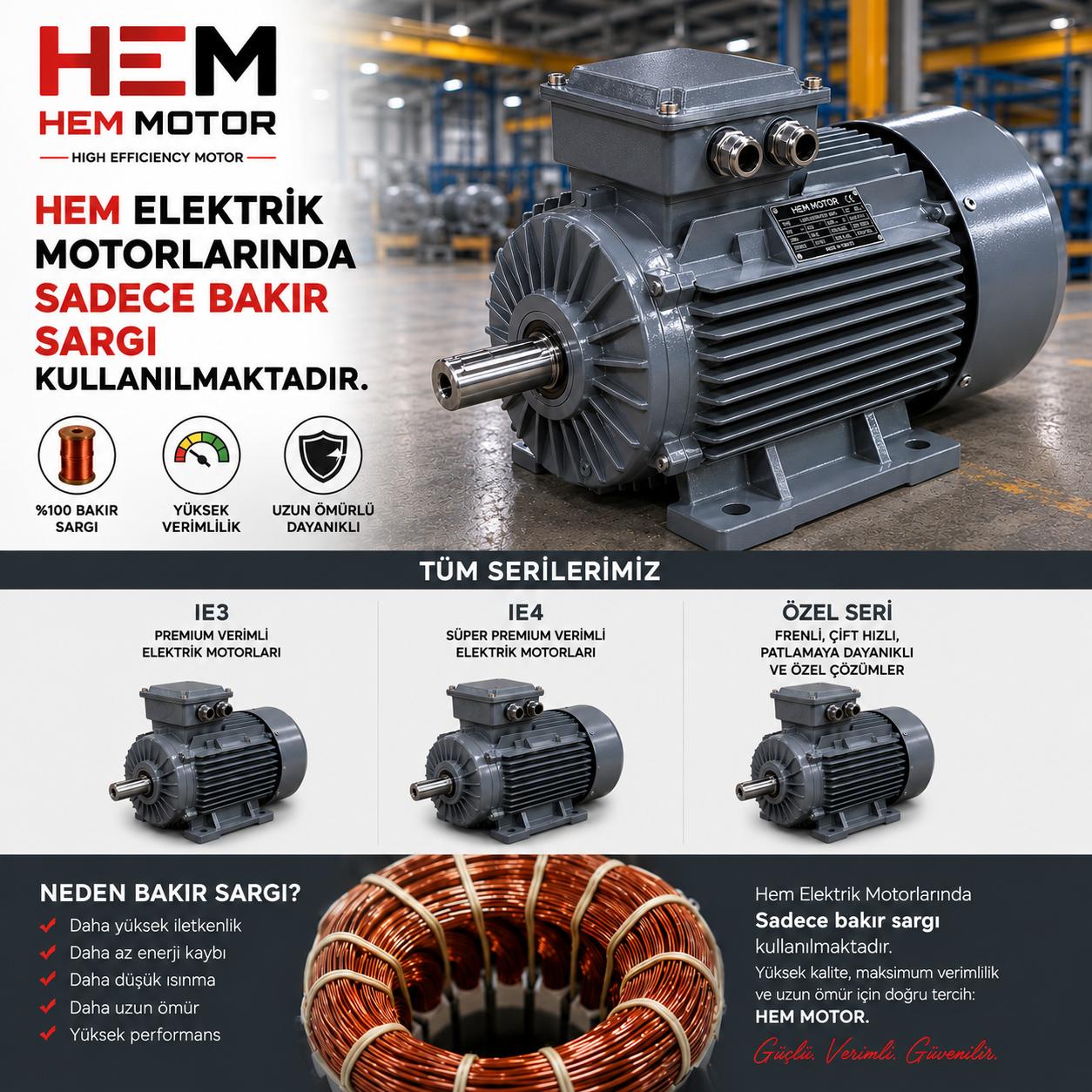
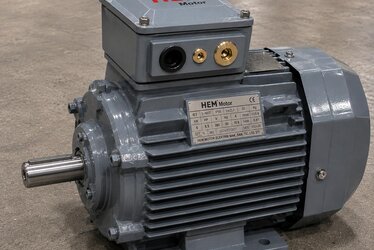
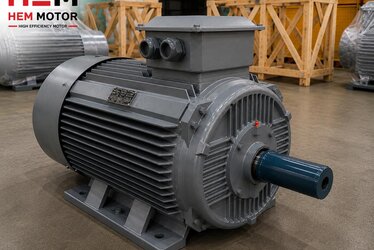
The HEM Motor IE4 range is produced with 100% copper winding, a cast iron frame, IP55 protection and Class F insulation. For product details, you can review our IE4 High-Efficiency Electric Motors page, or alternatively evaluate the still widely used IE3 Efficient Electric Motors option. You can reach the entire efficient motor family through our high-efficiency motors category.
When Should You Consider IE5?
Putting IE5 on your agenda makes sense when the following conditions occur together:
- If the motor runs very high hours per year (continuously, three shifts),
- If the power is in the medium-to-large range and accounts for a serious share of the energy bill,
- If the application already runs with a frequency drive (for example, a variable-flow pump/fan),
- If the top efficiency class is a requirement within sustainability/carbon targets.
Even when these conditions are met, for the right decision you need to measure the real load profile of your current motor and calculate the payback of the additional investment. If you want to evaluate the contribution on the carbon side, our reducing your carbon footprint with a high-efficiency motor article is a good starting point.
The Structural Difference Between SynRM and a Classic Asynchronous Motor
To understand IE5, it helps to look inside the motor. In a classic asynchronous (induction) motor, the rotor carries a "squirrel cage" made of conductive bars embedded within it. The stator produces a rotating magnetic field, this field induces current in the rotor bars, and the induced current creates its own magnetic field, dragging the rotor along. This process works, but it has a cost: the current induced in the rotor continuously produces heat through the resistance of the rotor bars. Indeed, an important portion of the motor's total losses is these rotor losses.
In a synchronous reluctance rotor, there are no conductive bars or windings. The rotor consists of specially shaped lamination packets (flux barriers) that let the magnetic flux pass easily through certain paths and with difficulty through perpendicular paths. As the stator field rotates, the rotor "locks" into the position where the magnetic resistance (reluctance) is lowest and turns in synchronism with the field. Since no current is induced in the rotor, rotor copper/aluminum loss is almost zero. This structural difference is the fundamental source of the IE5 efficiency level, and it also means the rotor runs cooler, hence a lower thermal load.
Comparison with Permanent Magnet (PM) Motors
Another path on the high-efficiency side is the permanent magnet synchronous motor (PMSM). These offer very high efficiency and power density with strong magnets placed on the rotor; however, the magnets generally contain rare earth elements, which means exposure to cost and supply fluctuation. Synchronous reluctance motors approach IE5 without needing these magnets; this makes them attractive to industry in terms of supply security and cost predictability. Still, both solutions require a drive and are not suitable for direct grid connection (DOL); this separates IE5 from the "plug-and-play" convenience on the mature IE4 motor mechanical compatibility side of today.
The Hidden Costs IE5 Brings to a Business
When evaluating an efficiency upgrade, looking only at the motor price is misleading. When IE5/SynRM is added to a system, the following items also enter the table:
- Drive (VFD) investment: SynRM mostly runs with a specially parameterized drive; panel space, cabling and the commissioning process mean additional cost and time.
- Personnel and service knowledge: A newer technology requires the local service network to mature on the maintenance and troubleshooting side. While service for classic asynchronous motors is found in every industrial zone, this network is narrower for advanced-technology solutions.
- Spare parts and replacement: In the event of a breakdown, a fast exact replacement from stock as with a common IE4 motor may not always be possible; this can increase the downtime risk on critical lines.
When these items are evaluated together, it becomes clearer that for most Turkish industrial businesses, the most balanced upgrade step today is IE4. IE4 both complies with regulations and works with existing infrastructure; this lowers both the technical and economic risk of the investment. We showed the return on this investment with a concrete consumption calculation in our payback of replacing an old motor with IE4 article.
Which Sectors Will Adopt IE5 First?
Technologies generally spread first where they will provide the greatest gain. For IE5/SynRM, these priority areas are:
- Continuously running large pump and fan systems: Applications such as water/wastewater plants and large HVAC stations that already run with a drive almost the entire year. In these applications, the IE4 threshold in pumps, fans and compressors is the reference point for today; IE5 is the next horizon.
- Energy-intensive process industry: High-power, continuously running plants where the electricity bill holds a high share of total cost.
- Organizations with a sustainability target: Large-scale businesses with carbon reporting and a top-efficiency-class commitment.
For most workshops and SMEs that do not fit this profile and run variable, low hours during the day, IE4 is the right and sufficient efficiency step for both today and the near future. If you want to draw up your business's efficiency-class inventory, our preparing for an energy efficiency audit article offers a good roadmap.
IE5 on the Horizon: Wait and See, or Move to IE4 Today?
The most common mistake in an efficiency upgrade is to continue running with the current inefficient motor by saying "let me wait for the newest." Yet an old IE1/IE2 motor loses energy every day; the excess electricity bill you pay while waiting for IE5 often already exceeds the savings that moving to IE4 today would bring. So "waiting for a higher class" is generally not a profitable strategy because of the hidden cost of running an inefficient motor.
The right approach is two-layered. In the short term, you achieve concrete savings by replacing your inefficient motors with today's accessible, regulation-compliant and mechanically compatible IE4 Super Premium motors. In the long term, you keep IE5/SynRM technology on your agenda as an option, especially for new large, continuously running, already drive-equipped applications you will install. This way you save without losing today, and you are also ready for the top class in the future when the right time comes. As HEM Motor, we provide consultancy on this roadmap both for your IE4 supply today and in efficiency-class planning.
In summary: IE5 and synchronous reluctance are an important chapter in the future of electric motors. However, being the "class of the future" does not make it the right purchase for every business today. The right, honest and economical investment for today is IE4; IE5 is the next step to be evaluated when its time and application arrive.
Another important point is this: the efficiency class alone does not make a motor "good." For an IE4 motor to truly deliver the expected efficiency, the winding quality, frame material, bearing structure and insulation class must also be high. In the HEM Motor range, IE4 models are produced with 100% copper winding, a cast iron frame, IP55 protection and Class F insulation; that is, the promise of the efficiency class is backed by material quality. This integrity is the key to differentiating from solutions that "say IE4 on the label but compromise inside," and it is the very reason that makes IE4 the right choice today.
Frequently Asked Questions
Can I buy an IE5 motor at HEM Motor?
As of today, the highest efficiency class in our range is IE4 Super Premium, and we do not sell IE5 products. IE5/SynRM is a class on the horizon that is maturing in the sector. For an efficiency upgrade, we supply the IE4 motor, which is the most correct and accessible solution for you today, from stock and provide guidance according to your need profile.
Is moving from IE4 to IE5 always more profitable?
No. The absolute efficiency gain between the two classes is fine, and the additional investment pays for itself within a reasonable time only in applications with very high operating hours and large power. In low-operating-hour applications, IE4 is the more correct choice both technically and economically.
Does a synchronous reluctance motor connect directly to the grid?
Generally no. Synchronous reluctance (SynRM) motors typically run together with a frequency drive (VFD). For this reason, the transition to IE5 requires planning not only the motor change but also the drive and panel infrastructure; this affects the total investment.
Get a Quote
To clarify your IE4 motor requirement and choose the right efficiency class, get in touch with us to obtain the right motor in the shortest time with a clear quote. Phone: +90 (532) 345 49 86 — or reach us through our contact us page. Our expert team helps you with the selection of power, speed, mounting type and efficiency class, and quickly clarifies stock availability and delivery time.