English
 Türkçe

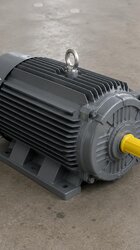
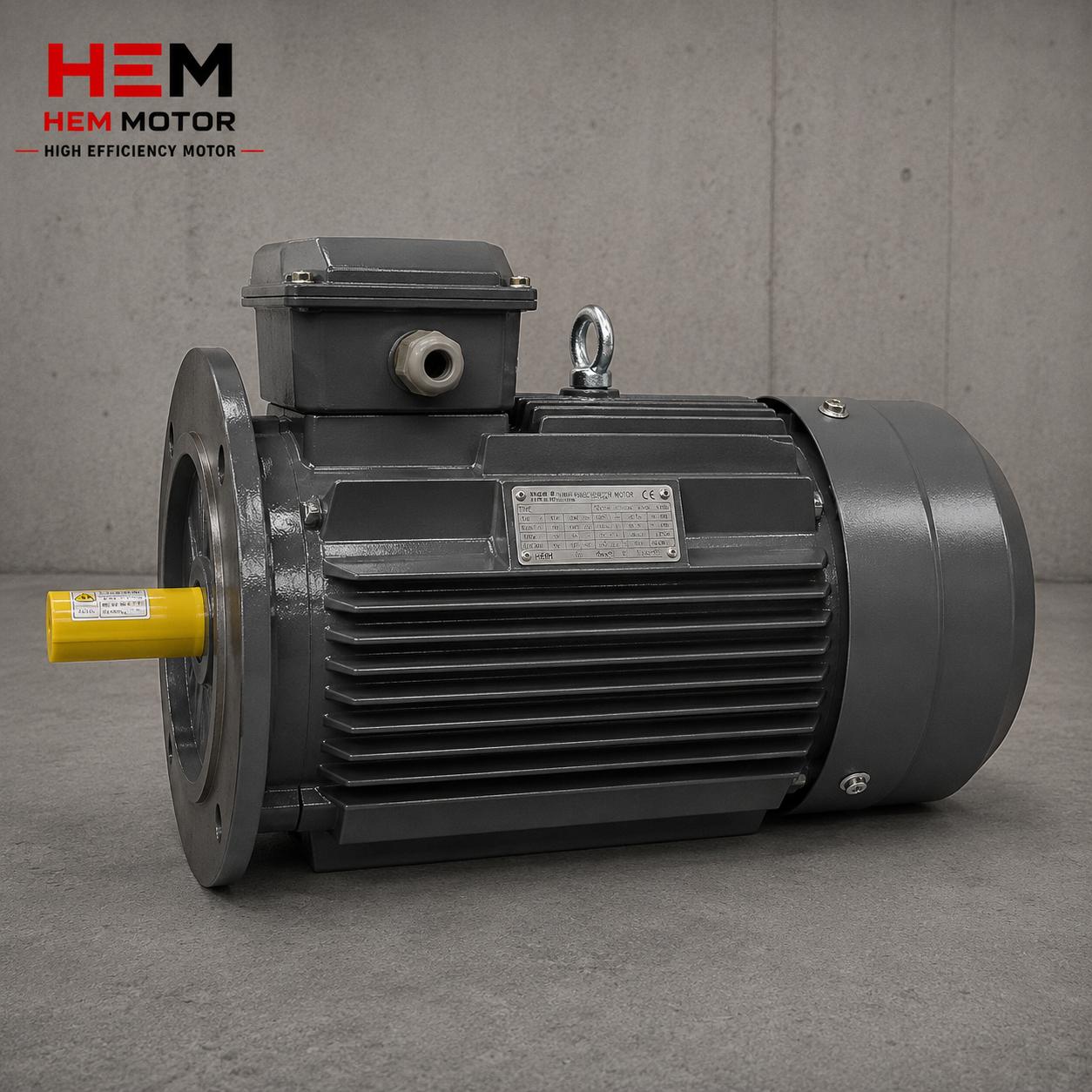

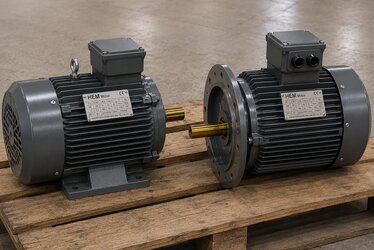
At the heart of selecting an electric motor correctly lies a single, often-overlooked question: what load type will this motor drive? Because a motor of the same kW behaves completely differently depending on the torque-speed character of the load it drives. Loads are broadly divided into three basic classes: constant-torque loads (conveyor, crane, positive displacement pump), variable-torque loads (centrifugal pump and fan) and constant-power loads (winder, lathe and some machining machines). Recognizing these classes is the key to selecting the right motor power and speed, correctly sizing the variable frequency drive (VFD) and avoiding buying an oversized or undersized motor. In this article we address the three load types one by one and explain how motor power-speed selection, VFD compatibility and correct sizing change in each. As HEM Motor, we supply IE3 and IE4 motors from 0.12 kW to 355 kW with 1000/1500/3000 rpm speed options, so we can concretely explain which motor suits which load type.
What Is Load Torque Characteristic?
The load torque characteristic describes how the torque (and therefore power) a machine demands from the motor changes as the operating speed changes. The answer to "how many kW?" in motor selection depends directly on this character.
The Torque, Speed and Power Relationship
A motor's power depends on the product of the torque it produces and its speed; that is, the same power can be obtained with high speed-low torque or with low speed-high torque. Knowing how much torque a load demands at each speed determines how much power the motor will draw at that point. We covered the basis of torque and power calculation in our rated torque calculation in IE3 motors: finding torque (Nm) from kW and speed article; this relationship is also the basis for understanding load type.
Why Load Type Determines Motor Selection
Because the motor must be able to meet the torque the load demands at each speed and do so while running without overheating. On a constant-torque load, full torque is needed even at low speed, whereas on a variable-torque load the torque demanded at low speed is very small. This difference fundamentally changes the motor power, the cooling requirement and the behavior under VFD operation. Therefore a power selection made without correctly defining the load type almost always results in either extra cost or inadequate performance.
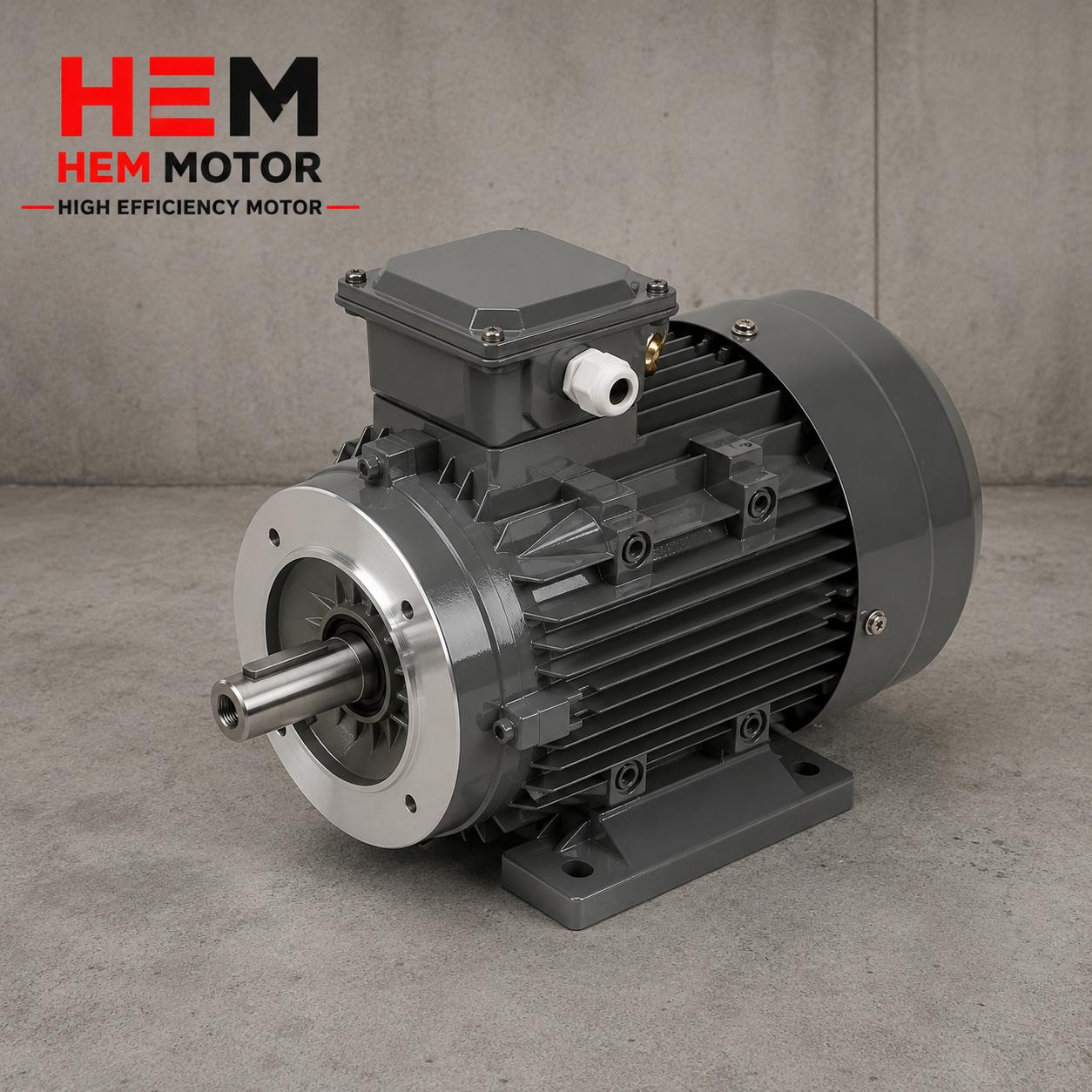
Constant-Torque Loads: Conveyor, Crane, Positive Pump
On constant-torque loads, the torque the machine demands is approximately constant regardless of speed. That is, whether the motor turns slowly or fast, it must produce the same torque.
The Meaning of Constant-Torque Character
Conveyor belts, cranes and lifting systems, positive displacement (screw, lobe, piston) pumps and many extruders fall into this class. On these loads, power increases in direct proportion to speed, because while torque stays constant, power grows proportionally as speed increases. Because full torque is needed even at low speed, it is critical that the motor can retain its torque at low speed. We covered this character in heavy-duty conveyor drive in our cast iron heavy-duty conveyor drive motor article.
Power-Speed Selection on a Constant-Torque Load
On constant-torque loads the motor is selected to meet the highest torque demand; high starting torque is usually also needed, because a full conveyor or a loaded crane requires high torque when moving from rest. We examined starting torque and selection by load in our asynchronous motor torque classes (Design N/H) and starting torque article. In low-speed constant-torque applications, a high-pole motor or geared drive is preferred; our low-speed high-pole motors for gearless direct drive explains this option.
VFD and Cooling on a Constant-Torque Load
When driving a constant-torque load at low speed with a VFD, the motor continues to deliver full torque; however, as speed drops, the motor's own fan also slows down and cooling weakens. For this reason, an external forced cooling fan is often needed in constant-torque applications requiring continuous full torque at low speed. We covered this topic in our external forced cooling fan in IE4 motors: for continuous torque at low speed on a VFD article. On a constant-torque load, a VFD provides speed control but the energy saving is not as dramatic as on variable-torque loads.
Variable-Torque Loads: Centrifugal Pump and Fan
Variable-torque loads are the class that offers the greatest energy-saving opportunity in motor selection. Here the demanded torque varies with the square of speed.
Torque With the Square of Speed, Power With the Cube
Centrifugal pumps and fans fall into this class. On these loads, torque increases with the square of speed (torque speed^2) and power with the cube of speed (power speed^3). The practical result of this is striking: reducing speed somewhat decreases power consumption by a much larger proportion. Therefore, on variable-torque loads, reducing speed with a VFD is far more efficient than throttling a valve or damper. We explained this logic in detail in our energy saving in pumps and fans with a VFD: the affinity law article.
Power Selection on a Variable-Torque Load
On variable-torque loads the motor is selected for the power demand at the highest speed (full flow/full air); at low speeds the demand drops greatly, so the motor runs easily. Oversizing is especially harmful on these loads, because a centrifugal load already draws little power at low speed; a larger-than-needed motor only lowers efficiency at partial load. For correct calculation of the required power in pumps and fans, our motor power calculation: required kW for pump, fan and conveyor article is a guide. To distinguish whether a variable-speed application has constant or variable torque, our motor selection in variable-speed applications: constant torque or variable torque article addresses this decision directly.
The VFD Advantage on a Variable-Torque Load
Variable-torque loads are the class where a VFD pays off the most. Because the power demand also drops at low speed, motor cooling is usually not a problem and forced cooling is often unnecessary. This means both energy saving and a simpler drive. We covered the gain provided by the efficient motor and VFD combination in pumps and fans in our high-efficiency motor + variable frequency drive: energy saving in pumps and fans article.
Constant-Power Loads: Winder and Lathe
On the third class, constant-power loads, the power the motor delivers stays approximately constant even as speed changes; this means torque varies inversely with speed.
The Meaning of Constant-Power Character
Winders (coil winding), lathes and some machining benches fall into this class. For example, on a winder, as the coil diameter grows the speed drops but the torque rises; the power stays constant. On a lathe too, a small-diameter part is machined at high speed and a large-diameter part at low speed, but the cutting power stays similar. On these loads it is necessary to be able to deliver constant power over a wide speed range.
Power-Speed Selection and Field Weakening on a Constant-Power Load
The constant-power region is obtained above the motor's rated speed, by field weakening with a VFD. In this region speed increases while torque drops and power stays constant. Therefore, in constant-power applications the motor and drive are selected together to deliver constant power over a wide speed range. Below the rated speed, the load usually behaves like constant torque; that is, many real machines show constant-torque character in part of the speed range and constant-power character in another part. This mixed behavior requires careful sizing of the motor-drive group.
Correct Sizing and Selection by Load Type
After recognizing the three load types, the common principle in motor selection is clear: first determine the load type, then select power and speed according to that type's most demanding operating point. Oversizing harms every load type; efficiency and power factor drop at partial load. We covered the effect of correct sizing on efficiency in our at what load to run a motor: efficiency, power margin and correct sizing article. If a VFD will be used, the way the load type changes the drive selection and cooling requirement must be planned from the start; our when a VFD with an asynchronous motor is needed supports this decision.
- Determine the load type: constant torque, variable torque or constant power?
- On a constant-torque load (conveyor/crane/positive pump), select for the highest torque and starting torque.
- On a variable-torque load (centrifugal pump/fan), select for the power at the highest speed; avoid oversizing.
- On a constant-power load (winder/lathe), select the motor-drive together for constant power over a wide speed range.
- If using a VFD, assess the forced-cooling need at low speed on a constant-torque load.
- On a variable-torque load, account for the energy saving the VFD provides via the affinity law.
- Avoid oversizing on every load type; the right power margin balances efficiency and cost.
Frequently Asked Questions
What is the basic difference between a constant-torque and a variable-torque load?
On a constant-torque load (conveyor, crane, positive displacement pump) the torque the machine demands is approximately constant regardless of speed, and power increases in direct proportion to speed. On a variable-torque load (centrifugal pump, fan), torque increases with the square of speed and power with the cube of speed. This difference fundamentally changes both the motor power selection and the energy saving a VFD provides.
On which load type does a VFD provide the most energy saving?
On variable-torque loads, that is, centrifugal pumps and fans. Because power on these loads varies with the cube of speed, reducing speed somewhat decreases power consumption by a much larger proportion (the affinity law). On constant-torque loads a VFD provides speed control but the saving is not this dramatic; on constant-power loads a VFD is used more for speed range and process.
What should I watch for when driving a constant-torque load at low speed with a VFD?
On a constant-torque load the motor continues to deliver full torque even at low speed, but as speed drops the motor's own fan also slows and its cooling weakens. Therefore, if continuous full torque is needed at low speed, an external forced cooling fan may need to be added. It is also important to pair the motor with a drive that can keep its torque at low speed.
Get a Quote
If you want to select the right motor power and speed for the load type in your application, share the machine you will drive (conveyor, crane, pump, fan, winder, etc.), the operating speed range and whether you will use a VFD with us. Our expert team will clarify the motor and, if needed, the drive sizing together according to the load character. You can call us at +90 (532) 345 49 86 or send your request via our contact page. You can review our product range on our products page and explore our power and speed options category and our home page (HEM Motor).