English
 Türkçe

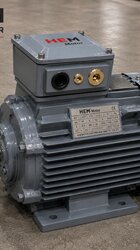
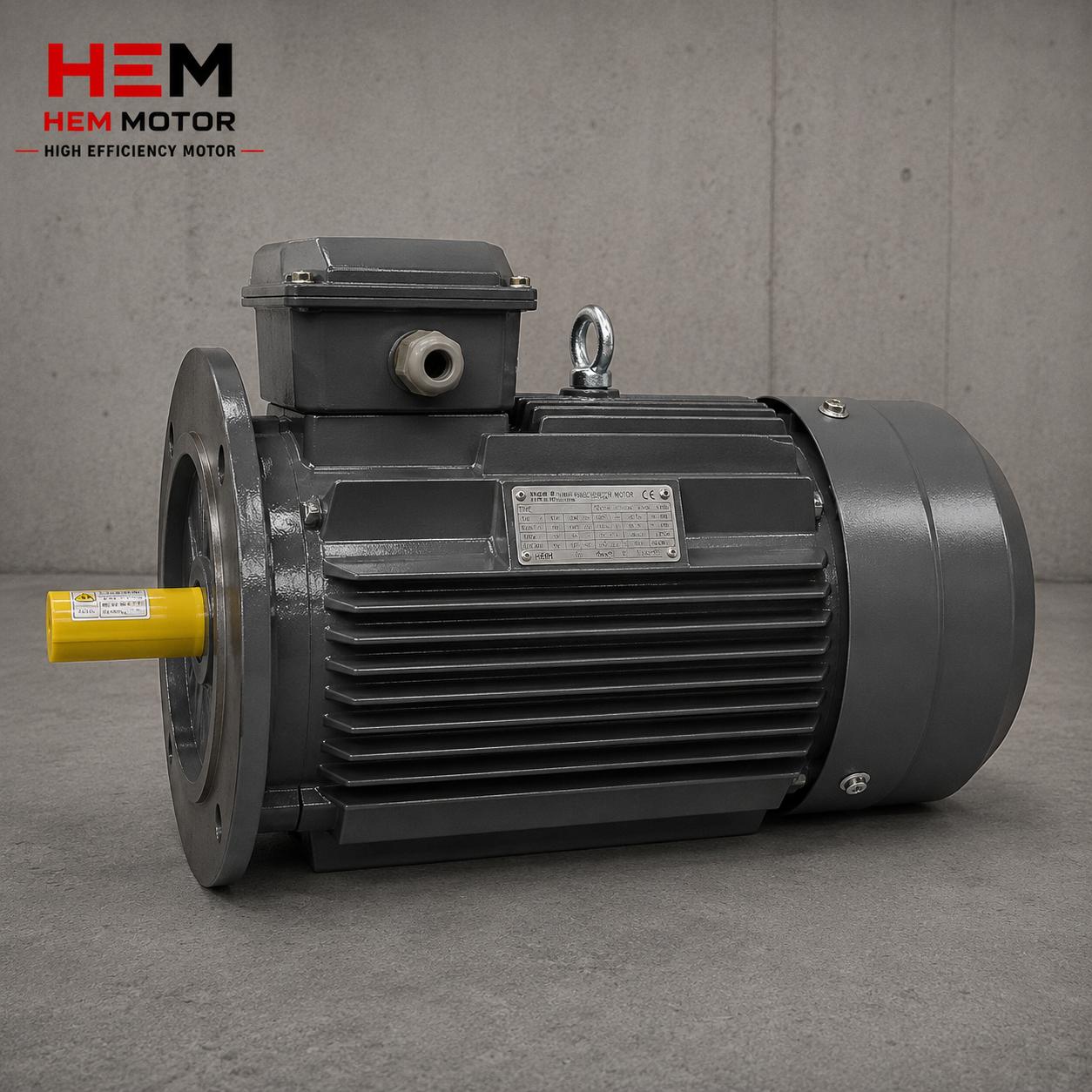

How much time does the pump, fan or compressor in your plant actually run at full load? In most continuous processes the answer is: very little. Systems usually operate in the 40-75% range of rated power, and this is exactly where the motor efficiency curve determines the real impact on your energy bill. The IE5 synchronous reluctance (SynRM) motor stands apart from the classic induction motor through its ability to hold efficiency at part load, and this characteristic directly shapes the purchasing decision in variable-load applications. If your goal is not merely to buy the highest efficiency figure on the nameplate but to achieve the genuinely lowest energy consumption in the field, reading the motor's behaviour at its operating point is essential. To source the right product from stock or on a project basis, you can contact us or review our high-efficiency electric motors range.
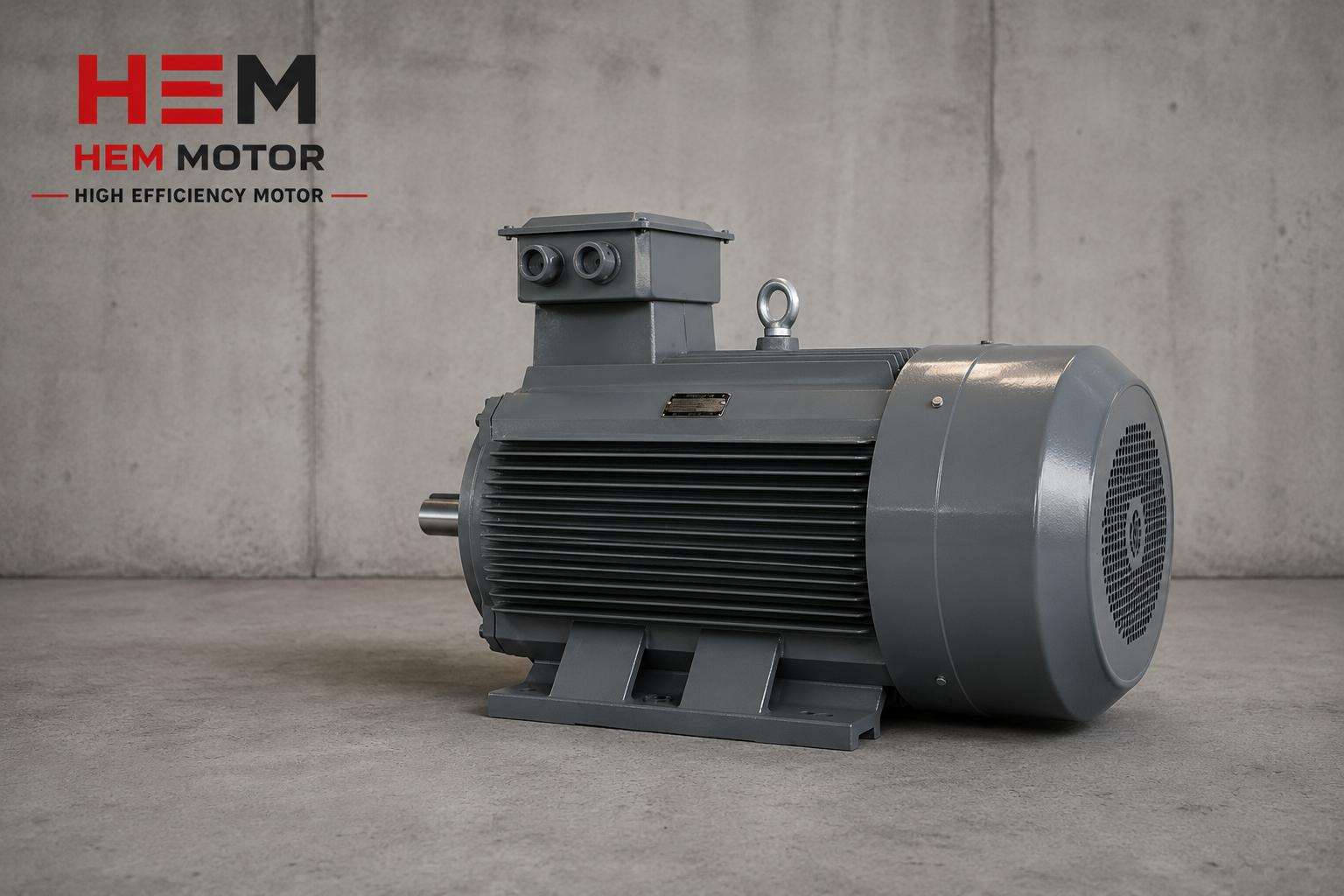
What Is an Efficiency Curve and Why Isn't a Single Value Enough?
The efficiency value printed on a motor nameplate is usually a single figure measured at 100% load (full load). Yet in the field a motor rarely stays at full load. The efficiency curve plots the motor's efficiency against load ratio (25%, 50%, 75%, 100%). The shape of this curve reveals performance at the actual operating point. In induction motors the curve typically peaks near full load and falls noticeably as load drops. In the SynRM design the curve stays far flatter, meaning the motor delivers near full-load efficiency even at 50% load.
This difference is critical for buyers who want to understand why nameplate efficiency does not always reflect field efficiency. If a plant has dozens of motors and most of them run at part load, a selection made by looking at a single full-load figure on the nameplate can be misleading. To see the real saving you must fit the motor's annual load distribution onto the curve. For a deeper look at consumption, our article on nameplate versus field efficiency is a useful companion read.
Typical Efficiency Behaviour by Load Ratio
A motor's efficiency changes with load as follows: at very low loads (below 25%) friction and fixed losses dominate, so efficiency drops in every motor type. In the medium-high band (50-100%) the motor type becomes decisive. In an IE5 SynRM motor the efficiency difference between 50% and 100% is usually limited to a point or two, whereas in a standard induction motor that gap can be much larger. In a plant running at continuously variable load, this flat curve determines the annual energy balance. In practice this explains why choosing a slightly higher class at the time of purchase pays for itself over the operating life.
The Difference Between Full-Load Efficiency and Weighted Average Efficiency
A professional assessment does not look only at full-load efficiency; it takes the weighted average of the load points at which the motor runs throughout the year. For example, in a motor running at 50% load for half the year, 75% for a quarter and 100% for the rest, the efficiency values at these three points are weighted by operating time. In an IE5 SynRM motor with a flat curve, this weighted average comes out very close to the full-load value. In an induction motor whose curve peaks at full load and drops at part load, the weighted average falls noticeably below the nameplate figure. This is the correct comparison method for a buyer.
Where Do Losses Fall in an IE5 Synchronous Reluctance Motor?
Losses in a motor fall into four main groups: copper (winding) loss, iron (core) loss, friction-windage loss and additional (stray load) loss. To understand the SynRM part-load advantage you need to see the difference on the rotor side. Although the stator side resembles a classic induction motor, the real distinction lies in the rotor, and it is precisely this difference that shapes the form of the efficiency curve.
No Magnet or Conductor in the Rotor: Lower Iron Loss
The rotor of a synchronous reluctance motor contains neither permanent magnets nor squirrel-cage conductors; it consists of a specially laminated structure that guides the magnetic flux. In an induction motor the rotor runs on current induced within the rotating field, and this induction creates a continuous copper and iron loss in the rotor. Because there is no induced current loss in the SynRM rotor, the energy converted into heat drops markedly, especially at part load. With no magnets, there is also no magnet-driven iron loss at high speed. This also means the rotor heats up less, which in turn preserves bearing and winding life. We explored the distinction between SynRM and the permanent-magnet design in our article on the difference between IE5 synchronous reluctance and permanent-magnet (PM) motors.
The Physical Reason the Curve Stays Flat at Part Load
When load falls, the current drawn by the motor also falls; since copper loss drops with the square of current, copper loss recedes rapidly at part load. What largely remains is the fixed iron loss and friction loss. In an induction motor the rotor induction losses add to this fixed burden, whereas in a SynRM motor the rotor side runs almost loss-free, so the total fixed loss is low. The result: as load drops from 100% to 50%, the efficiency curve stays horizontal rather than falling. This also brings a supply advantage with the magnet-free rotor, which we examined in our article on the magnet-free rotor supply and cost advantage.
The Role of Friction and Cooling Loss
The rotor is not the only reason for the flat curve. As copper loss drops at part load the motor heats up less; although the energy spent by the cooling fan and the windage loss stay relatively fixed within the total, the thermal balance settles at a lower temperature. This keeps the winding resistance low and supports efficiency a little further. For those curious about the effect of cooling design on efficiency, our article on the effect of cooling and fan design on efficiency in IE4 motors covers a neighbouring topic.
25-50-75-100% Load Efficiency: A Practical Comparison
For a buyer the most concrete question is this: if my motor will mostly run at 50-60% load, what does each class gain me? In IE5 SynRM motors the 75% and 50% load efficiency stays very close to full-load efficiency, meaning the curve forms a plateau across a wide load range. In a standard induction motor, efficiency at 50% load drops several points below the full-load value, and the gap widens at low loads. In continuous operation those few points translate into a serious energy difference over the year.
To make this concrete, consider this example: in a pump motor running 6,000 hours a year at an average 55% load, an efficiency advantage of a few points at part load, multiplied by the operating time, turns into a notable energy gain. The more hours and the more variable the load the motor runs at, the larger the benefit of the flat curve. If you want to see the investment comparison between efficiency classes numerically, our article IE5 or IE4? Does the efficiency difference justify the investment? answers this question directly.
Why You Must Think of It Together With a Drive
A synchronous reluctance motor does not run connected directly to the grid; it is always used with a variable frequency drive (VFD). This is the second key that turns the curve's part-load advantage into real savings: the drive turns the pump or fan not at full speed but at the speed needed, already reducing the mechanical power; the motor's high efficiency at part load then engages at this lower operating point. When the two effects stack, the total energy gain is greater than that achieved by raising the motor class alone. We detailed the package logic in our article on why an IE5 synchronous reluctance motor cannot run without a drive; for installation compatibility, our drive and installation compatibility commissioning checklist will help.
The Advantage in Variable-Load Applications Like Pumps and Fans
Pump and fan loads have a variable-torque characteristic that changes with the cube of speed. In these applications the motor almost never runs at full load; it constantly hovers at part load depending on flow. This is exactly where a motor that holds efficiency at part load makes the biggest long-term difference. While IE4 high-efficiency motors are a strong option for this duty, when the goal is maximum efficiency the IE5 SynRM solution leads in variable-speed pumps and fans. To determine whether your application needs variable or constant torque, see our content on motor selection in variable-speed applications.
In a conveyor or crusher drive running at constant load and hovering continuously near full load, the return from the part-load advantage is more limited; here full-load efficiency and mechanical robustness come to the fore. So the IE5 SynRM choice does not deliver the highest return for every application, but specifically for variable-load systems running long hours. Correctly determining the application's load profile is the first step in choosing the right class.
Which Plant Should You Convert First?
Rather than renewing several motors with a limited budget, the most sensible path is to start with the motors that run the most hours and have the most variable load profile. That is because the advantage of the flat curve grows in direct proportion to operating hours and load variability. We addressed the prioritisation logic in our article which plant should convert to IE4 super premium motors first?; the same logic applies to the IE5 transition. You can find the big picture of SynRM technology and its future place in our article IE5 and synchronous reluctance motors; and the transition decision in our IE5 ultra premium motor transition guide. You can reach all our blog topics from the IE5 electric motors category, and our entire product range from our home page.
Frequently Asked Questions
Is the IE5 motor efficiency curve really flatter than an induction motor's?
Yes. Because the synchronous reluctance rotor has no induction-driven copper and iron loss, the efficiency curve stays largely horizontal as load drops from 100% to 50%. In an induction motor the rotor losses increase the fixed-loss burden, so efficiency falls more noticeably as load decreases. This is a real operating advantage, especially for plants running at part load, and directly affects the annual energy balance.
My pump and fan motor mostly runs at 50% load; does IE5 make sense?
Pumps and fans running continuously at variable load are the applications that gain the most from motors that hold part-load efficiency. If your running hours are high and your load profile is variable, the IE5 SynRM solution is a strong candidate. Share your running hours, load profile and current motor details and we can determine the right configuration with you.
Can I run an IE5 motor with my existing drive?
A synchronous reluctance motor always runs with a suitable variable frequency drive, and not every drive is compatible with every SynRM motor; the drive must support the motor type. By sending the brand, model and motor power of your existing drive you can have compatibility verified, and if needed source the motor-drive package together.
Get a Quote
Would you like support on an IE5 synchronous reluctance motor and a compatible drive package that delivers high efficiency at part load for your pump, fan, compressor or variable-load process? Send us your power, speed, load profile and application details, and we will quickly offer the most suitable solution. Call now on +90 (532) 345 49 86 or send your quote request via our contact page.