English
 Türkçe

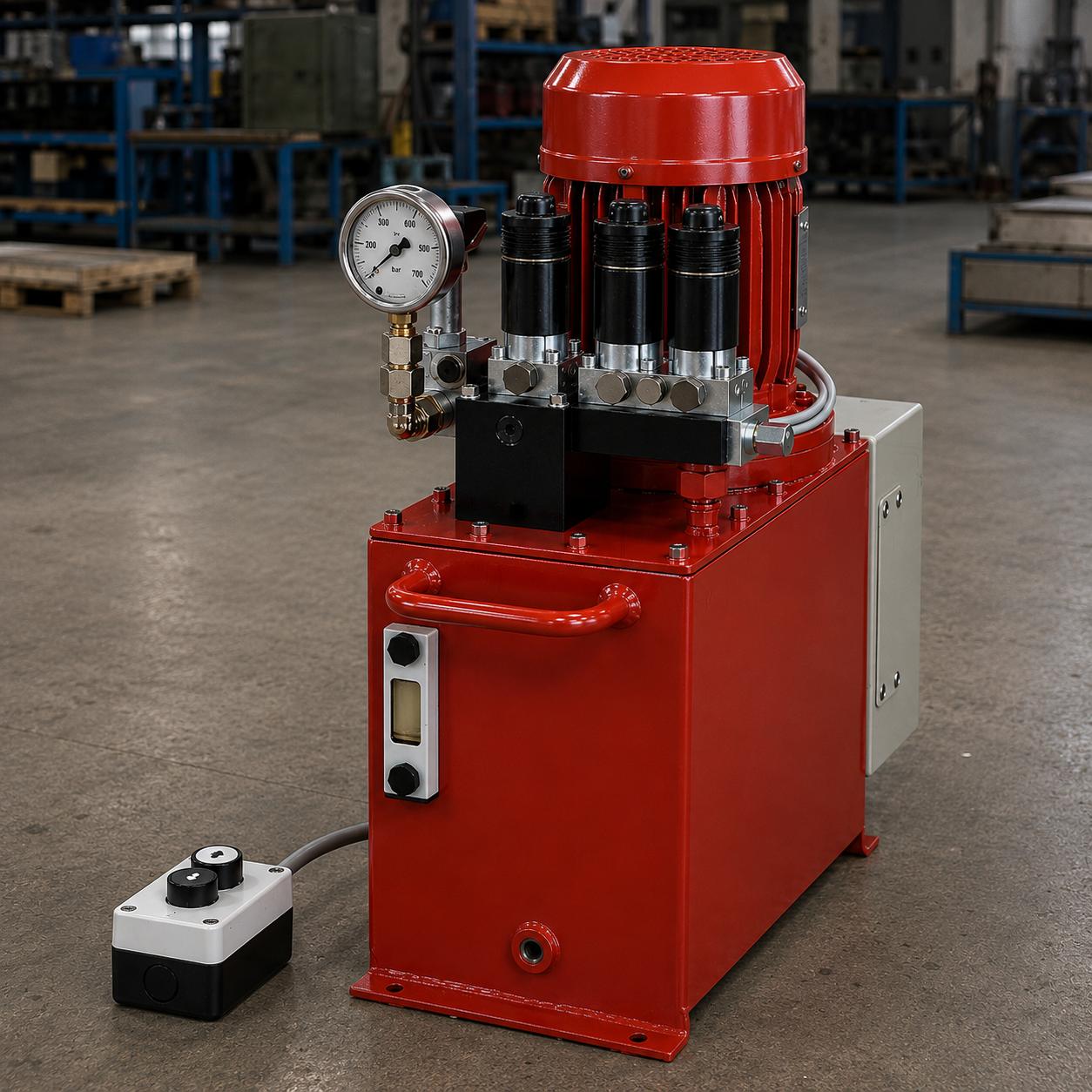

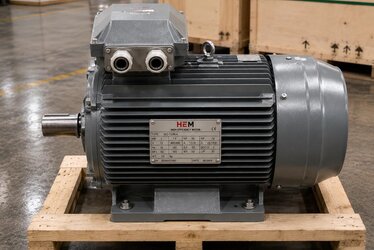
When you open the terminal box of an IE4 super premium motor, you are met with three winding starts (U1-V1-W1) and three winding ends (U2-V2-W2). The bridging you use to join these six terminals determines whether the motor will run correctly on your mains voltage. The nameplate usually shows two voltages such as 400/690 V or 230/400 V; one corresponds to a delta (D) connection and the other to a star (Y) connection. Wrong bridging either leaves the motor weak with insufficient supply or burns it within minutes with excess voltage. In this article we clarify whether an IE4 motor should run continuously in star or continuously in delta, how to read the voltage pair on the nameplate correctly, the terminal bridging, and why this must not be confused with star-delta starting.
At HEM Motor, while delivering IE4 motors from stock, one of the most common field mistakes we see is the misreading of the voltage pair on the nameplate and the wrong bridging of the terminal board. This article was written to prevent that mistake from the start.
What Does the D/Y Voltage Pair on the Nameplate Mean?
On a three-phase motor nameplate the voltage is usually given as two values separated by a slash: the lower value corresponds to the delta (D) connection, the higher value to the star (Y) connection. For example, a motor marked 400/690 V:
- is connected in DELTA (D) on a 400 V mains,
- is connected in STAR (Y) on a 690 V mains.
The logic is this: each winding of the motor is designed for a specific voltage (400 V in the example). In delta connection each winding sees the line voltage directly; that is why delta is correct on a 400 V line. In star connection each winding sees a smaller value, the line voltage divided by √3 (about 1.73); so when connected in star on a 690 V line each winding again sees ~400 V. In both cases the winding runs at the correct voltage. We also covered the basic logic of this in our article on terminal connection 230/400V star delta.
Which Connection on Which Mains Voltage?
Since the standard industrial mains in Turkey is 400 V (three-phase), an IE4 motor marked 400/690 V is connected in delta on a 400 V line. A motor marked 230/400 V is connected in star on a 400 V line. The table below summarises this relationship.
| Nameplate Voltage | Mains 230 V | Mains 400 V | Mains 690 V |
|---|---|---|---|
| 230/400 V | Delta (D) | Star (Y) | Not suitable |
| 400/690 V | Not suitable | Delta (D) | Star (Y) |
| Single value 400 V (D) | — | Delta (D) | — |
As you can see, the same terminal connection (delta or star) means different things on different mains voltages. This is why a habit such as "I always connect in delta" is dangerous; the correct connection is always determined by comparing the nameplate voltage with the mains voltage.
Terminal Bridging: Link Position
On the terminal board six screws are arranged in two rows. The top row holds U1-V1-W1, the bottom row (usually offset) holds W2-U2-V2. The bridging links (bus bars) join these terminals as follows:
- Delta (D): The links are positioned vertically; U1-W2, V1-U2, W1-V2 are joined. The end of each winding connects to the start of the next, forming a closed delta.
- Star (Y): The links are positioned horizontally; the W2-U2-V2 terminals are bridged into a single point (the star point), and U1-V1-W1 are connected to the mains.
Continuous Running Connection Must Not Be Confused With Star-Delta Starting
Let us clarify the most common conceptual mistake here. The continuous running connection (the motor remaining continuously in star or continuously in delta on the mains) is determined by the mains voltage and does not change while the motor runs. Star-delta starting is something entirely different: it is a method of starting the motor in star and then switching to delta after the speed rises, in order to reduce the starting current. In star-delta starting the motor stays in delta during operation; star is only for the first few seconds.
The critical point: to perform star-delta starting, the operating voltage on the nameplate must correspond to delta. That is, star-delta starting on a 400 V mains can only be done with a motor whose nameplate is 400/690 V (running in delta at 400 V). A motor marked 230/400 V (already running in star at 400 V) cannot be star-delta started at 400 V, because its running connection is already star. We also addressed the difference between starting methods in our article on soft starter vs VFD.
What Happens With the Wrong Connection?
- Star by mistake instead of delta at 400 V: Each winding sees √3 times lower voltage, the motor stays weak, struggles under load, its speed drops and it draws excess current.
- Delta by mistake instead of star at 400 V (on a 230/400 V motor): Each winding sees √3 times higher voltage; the winding saturates, the current shoots up and the motor burns within minutes. This is the most dangerous mistake.
This is why terminal bridging must always be done by reading the nameplate, and in case of doubt the voltage must be measured and verified before the motor is energised. The thermal protection (PTC/PT100) connection must also be correctly installed in the same terminal box; we explained this in our article on thermal protection wiring. For bridging selection on dual-voltage motors, our article on dual-voltage motor terminal connection is also complementary.
Points Specific to IE4
IE4 motors have windings optimised for high efficiency; deviation from the rated operating point can cause a more pronounced efficiency loss than with IE3. A wrong connection means not only a risk of burning but also an efficiency loss. We examined the differences between IE4 and IE3 and the transition decision in our article on staying with IE3 or moving to IE4. Mechanical compatibility should also be reviewed when moving to an IE4 motor; for this our article on IE4 mechanical compatibility is useful.
- Always compare the voltage pair on the nameplate with the mains voltage.
- Make sure all bridging links are fitted and tight; a loose link causes local heating and arcing.
- Tighten the terminal screws to the correct torque; both over-tightening and a loose connection are dangerous.
- In VFD (drive) applications the drive output voltage must also be evaluated according to this logic.
Effect on Winding Voltage, Current and Cable Cross-Section
Delta and star connection affect not only the winding voltage but also the current drawn from the line. A motor of the same power draws a higher line current in a low-voltage delta connection (for example 400 V), while it draws a lower line current in a high-voltage star connection (for example 690 V). This difference directly determines the cable cross-section, contactor and thermal relay selection. The protection and cable chosen for a motor running in delta at 400 V are different from those for the same motor running in star at 690 V. This is why, once the terminal connection is decided, the line current must be read from the nameplate and the protection elements sized accordingly. Our article on cable connection and cable lug selection provides guidance on cable and lug selection.
The mains voltage is not always at the exact nominal value; it fluctuates during the day. The tolerance between the nameplate voltage and the actual mains voltage affects motor performance regardless of the connection choice. Our article on voltage tolerance and grid fluctuation is a useful complement on this. In export or multi-country plants the 50/60 Hz difference also affects voltage selection; we addressed this in our article on multi-voltage and 50/60 Hz compatibility.
Terminal Box Orientation and Access
Comfortable access to the terminal box is also important for correct bridging. A terminal box facing the wrong way relative to the panel side makes cable entry difficult and increases the risk of a faulty connection. On most IE4 motors the terminal box can be rotated in 90° steps. Specifying the cable entry side correctly at the ordering stage makes installation easier; we explained this in our article on terminal box orientation and cable entry side. In VFD systems the grounding and EMC connection must also be made correctly in the same box; for shielded cable and bearing current you can see our article on grounding and EMC.
Frequently Asked Questions
How do I connect an IE4 motor marked 400/690 V to a 400 V mains?
You connect it in delta (D). On a 400/690 V nameplate the lower value (400 V) corresponds to delta and the higher value (690 V) to star. Since the Turkish industrial mains is 400 V, this motor is bridged in delta. If you connect it in star by mistake, the motor stays weak and draws excess current.
Can I run the same motor in both star and delta?
The running connection has a single correct option according to the mains voltage; it cannot be changed arbitrarily. However, if the motor is suitable for star-delta starting (its delta voltage equals the mains), it can start temporarily in star and switch to delta in operation. This is a starting method, not a continuous running connection.
Can I star-delta start a 230/400 V motor at 400 V?
No. The running connection of that motor at 400 V is already star; if it is switched to delta each winding sees excess voltage and the motor burns. Star-delta starting is only applied to motors marked 400/690 V, that is running in delta at 400 V.
Step-by-Step Correct Practice in Terminal Connection
Let us list the steps to follow for a faultless terminal connection in the field. Each of these steps matters for both personal safety and the correct operation of the motor, and skipping any of them can lead to costly, irreversible results.
- Cut and lock off the power: Before opening the terminal box, cut and tag the motor supply; prevent accidental energising.
- Read the nameplate: Note the voltage pair (e.g. 400/690 V) and the connection diagram. If in doubt, follow the motor manufacturer's connection diagram.
- Verify the mains voltage: Determine which value on the nameplate the supply voltage corresponds to; decide from this whether delta or star is required.
- Place the bridging links: Vertical for delta, horizontal for star; make sure all links are fitted and fully seated.
- Apply the tightening torque: Tighten the terminal screws to the torque specified by the manufacturer.
- Check the phase sequence: Confirm the phase sequence that affects the direction of rotation according to the application.
- Second-eye confirmation: Check the connection with a second authorised person before closing the cover.
Although these steps seem simple, the most common field mistake is to rush and bridge by habit without reading the nameplate. Especially in plants where motors with different voltage pairs are present together, each motor must be evaluated separately; the "we wired it this way last time" approach is dangerous. A burnt motor means not only the cost of that motor but also a production stoppage and a delay in the delivery time.
So that you can receive your IE4 motors with the correct voltage, correct connection and suitable accessories, HEM Motor provides fast supply from stock. For the most suitable IE4 motor selection and terminal connection details for your mains voltage and application, get in touch with us and let our team prepare a quotation with the right solution.