English
 Türkçe

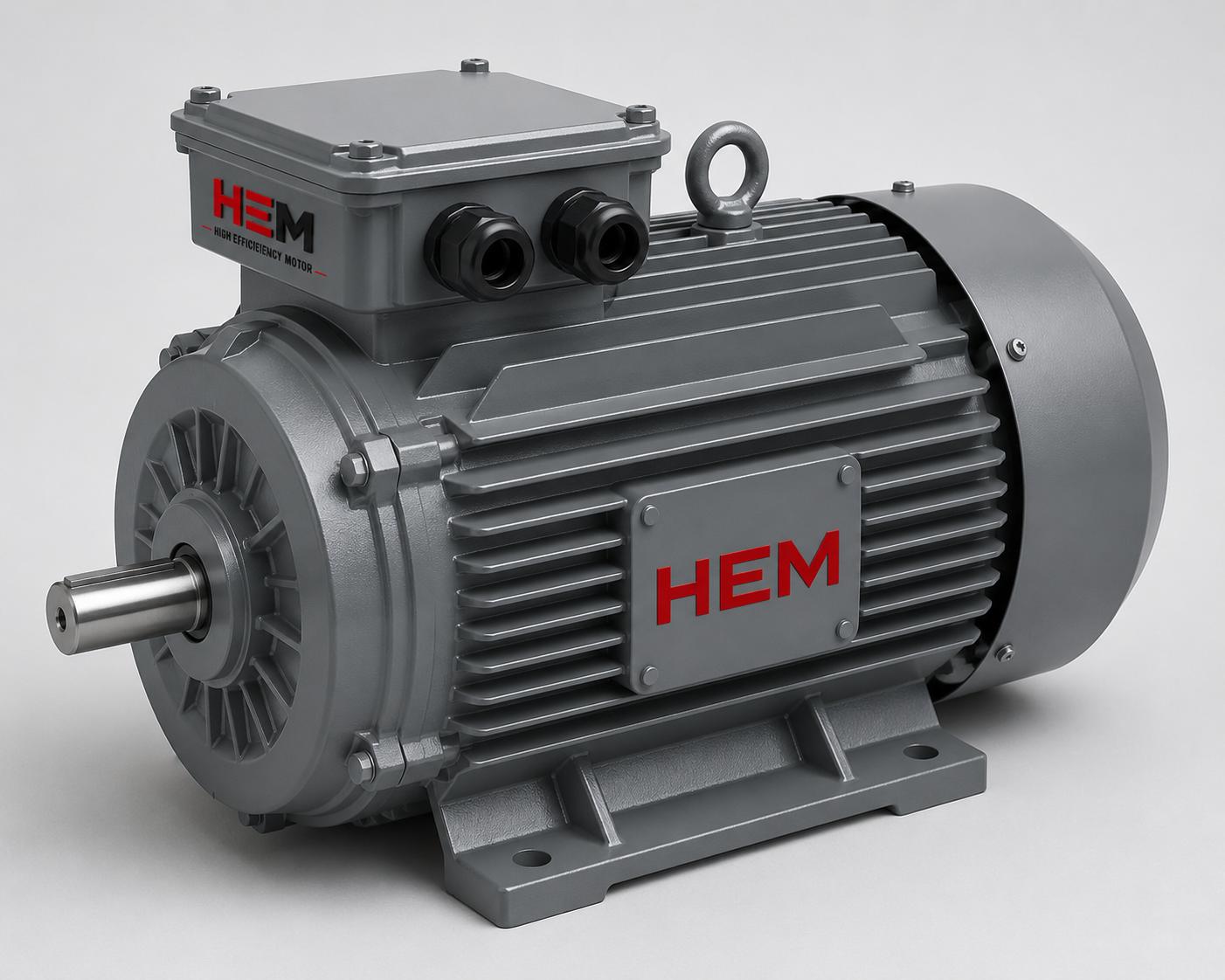

When you run an IE4 super premium motor with a frequency drive (VFD), there is a risk of losing in the bearings what you gain in efficiency, because of bearing currents. The high-frequency common-mode voltage produced by the drive creates a potential difference between the shaft and the frame; this difference punches through the bearing oil film and discharges as tiny sparks, gradually eroding the bearing race surface. This damage is called EDM (electrical discharge machining) and, if not prevented, can finish the bearing of even the highest-quality IE4 motor within months. In this article we explain, in field-practical terms, what an insulated bearing is, why the non-drive end (NDE) is usually the one insulated, what the ceramic and coated bearing options are, how it is used together with shaft grounding, and from what power rating this option becomes necessary.
First let us clarify the mechanism. A VFD generates voltage with IGBTs that switch very fast. This switching creates an instantaneous common-mode voltage where the sum of the three phases is not zero. This voltage reaches the shaft through the motor's parasitic capacitances. Between the shaft and the grounded frame, the bearing oil film behaves like a capacitor. When the voltage exceeds a certain threshold the oil film breaks down and current passes through the race surface as micro-sparks.
Types of Bearing Current and EDM Damage
It is misleading to think of the current passing through the bearing in a VFD system as a single phenomenon; in fact there are several distinct mechanisms:
- EDM (discharge) current: The sudden discharge when shaft-frame voltage punches through the oil film. This is the most common cause of damage.
- Circulating current: High-frequency magnetic flux induces a voltage around the shaft; this current enters through one bearing and exits through the other, completing its loop through the frame. It dominates in large motors.
- Rotor-to-ground current: If grounding is inadequate, current flows from the shaft into the driven machine.
The first sign of EDM damage is a matt area on the bearing race, hard to see with the eye, and darkening in the grease. As it progresses, transverse grooves (fluting / washboard pattern) appear on the race and the motor begins to emit a high-pitched whine. We covered the root cause and the shaft-grounding solution of this issue in detail in our article on bearing current and the shaft grounding ring.
What Is an Insulated Bearing and How Does It Work?
An insulated bearing is a bearing that physically interrupts the electrical path the current would take. There are two main types:
- Coated bearing: An alumina (Al2O3) ceramic coating a few hundred microns thick is applied to the outer (or inner) race by plasma spraying. This coating presents high resistance to current and opens the loop of the circulating current. It has the same geometry as a standard bearing; that is, it is a one-to-one mechanical replacement.
- Hybrid (ceramic ball) bearing: The races stay steel but the balls are made of silicon nitride (Si3N4) ceramic. Because the ceramic balls are insulating, the current path is already broken. They are also lighter and harder, giving an advantage at high speed.
Both solutions serve the same purpose: preventing the current on the shaft from passing through that bearing. The coated bearing is more economical and is preferred in most industrial applications; the hybrid bearing is used for very high speeds or critical applications.
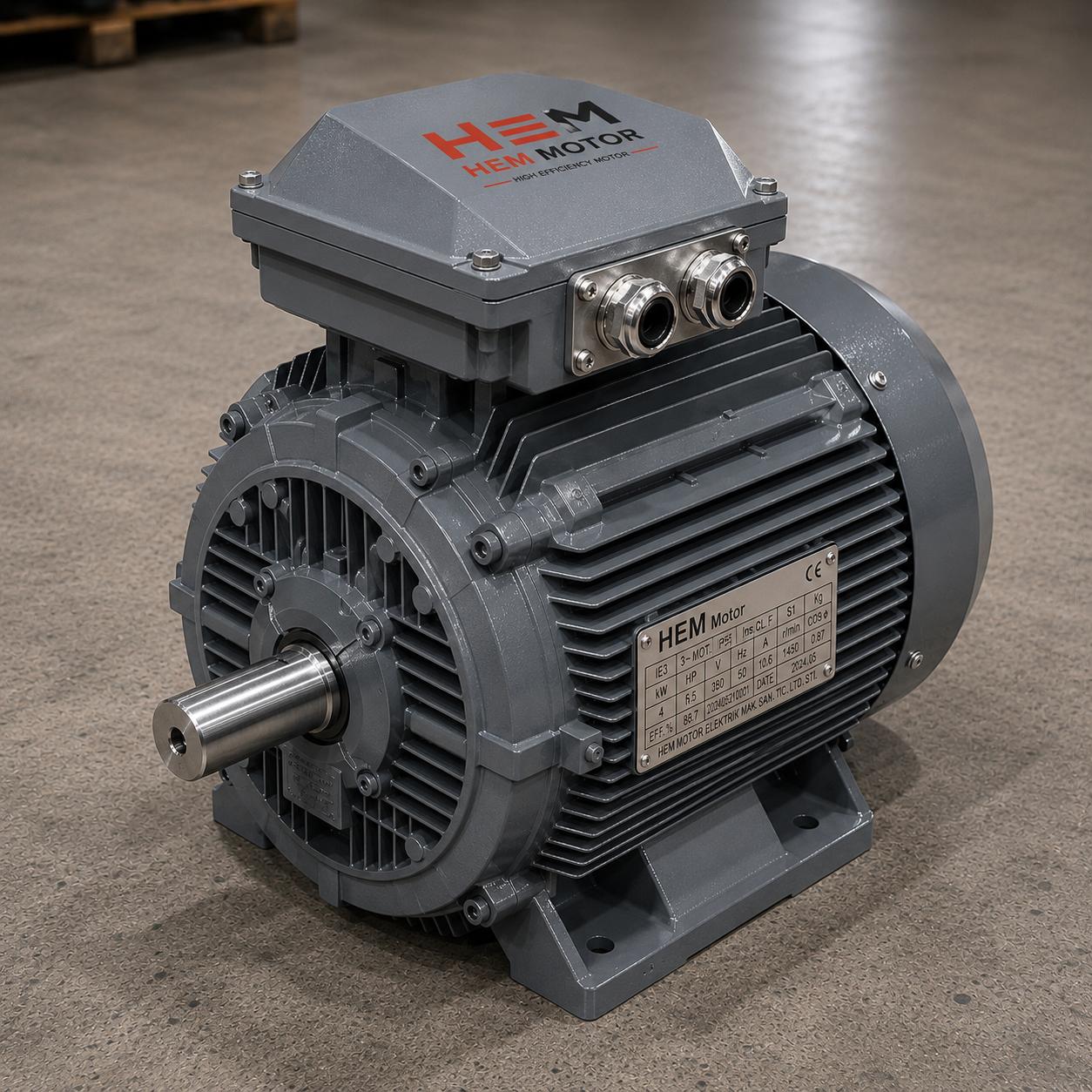
Why Is Only One Side (NDE) Insulated?
The first idea that comes to mind is "let us insulate both bearings, it will be safer"; but this is wrong. To break the circulating current, opening the circuit at a single point is enough. If both bearings are insulated and no shaft grounding ring is fitted, the charge building up on the shaft finds nowhere to discharge; the potential rises and finally discharges through the weakest point (for example the coupling or gearbox bearing on the drive side), damaging the connected machine.
The standard approach is this: the non-drive end (NDE) is insulated, and the drive end (DE) keeps a standard bearing. This way the circulating current loop is opened at the NDE, but the shaft still keeps its relationship with ground through the DE bearing (supported by a shaft grounding ring if needed). The NDE is chosen because elements such as encoders and fans are usually on this side and the drive side is mechanically more critical.
| Protection approach | NDE bearing | DE bearing | Shaft grounding | Result |
|---|---|---|---|---|
| Unprotected | Standard | Standard | None | High EDM damage risk |
| Single-side insulation | Insulated | Standard | Recommended | Circulating current broken |
| Insulation + ring | Insulated | Standard | Ring on DE | Safest, full protection |
| Double insulation (wrong) | Insulated | Insulated | None | Charge discharges to driven machine |
Use Together With Shaft Grounding
An insulated bearing breaks the circulating current, but on its own it does not solve the EDM current and the charge building up on the shaft. Therefore the strongest protection combination is using an insulated bearing on the NDE together with a shaft grounding ring on the DE. The grounding ring discharges the charge on the shaft to the frame (ground) through a low-resistance path; this way the voltage never reaches the threshold to punch through the oil film.
Correctly installing the system-wide grounding and the shielded cable is also part of this chain. For EMC-compliant grounding and shield connection, our article on grounding and EMC: connection in a VFD system offers a holistic framework. For the relationship between harmonic heating and bearing current on drive-fed motors, see our article on VFD harmonic heating and bearing current protection.
From What Power Rating Is an Insulated Bearing Needed?
The generally accepted threshold relates to shaft diameter and frame size. Circulating current increases as the frame grows, because the magnetic ring around the shaft lengthens. In practice:
- 100 kW (≈ frame 280) and above: An NDE insulated bearing is recommended as standard; circulating current dominates.
- Between 30-100 kW: With long cables, high switching frequency or critical applications, a shaft grounding ring or insulated bearing is recommended.
- Below 30 kW: A shaft grounding ring is usually sufficient; EDM current is the dominant type.
These thresholds are engineering guidance, not strict rules. Cable length, drive switching frequency, presence of an output filter and the criticality of the application affect the final decision. To evaluate C3-clearance bearing selection and drive-fed mounting together, our article on C3 bearing clearance and drive-fed mounting is helpful.
| Option | Current type it breaks | Typical use | Note |
|---|---|---|---|
| NDE insulated (coated) | Circulating current | ≥100 kW large motor | One-to-one mechanical replacement |
| Hybrid (ceramic ball) | Circulating current | High speed, critical | More expensive, lighter |
| Shaft grounding ring | EDM + shaft charge | All powers, especially <30 kW | Needs periodic checking |
| Insulation + ring | All | Critical, long cable | Safest combination |
Frequently Asked Questions
If I run my IE4 motor without a drive, directly from the mains, do I need an insulated bearing?
No. The bearing-current problem arises from the VFD's high-frequency switching. On a motor running without a drive, directly from the mains (DOL), no common-mode voltage forms, so an insulated bearing is not needed. This option makes sense particularly for inverter-fed IE4 motors.
Should I choose a coated bearing or a ceramic-ball bearing?
In most industrial applications a coated bearing (with an alumina-ceramic-coated outer race) is both effective and economical, and is a one-to-one replacement for a standard bearing. A ceramic-ball (hybrid) bearing is preferred for very high speeds, high temperatures or critical processes; it is more expensive but lighter and more durable.
I have fitted an insulated bearing; do I still need a shaft grounding ring?
Usually yes. An insulated bearing breaks the circulating current, but there is still a need for a path to discharge the charge building up on the shaft and the EDM current. Using an insulated bearing on the NDE together with a shaft grounding ring on the DE provides the most complete protection against both circulating and EDM currents.
Where Does Common-Mode Voltage Come From?
Understanding the source of the problem is the precondition for choosing the right solution. In a classic sinusoidal voltage fed from the mains, the instantaneous sum of the three phases is always zero; therefore no net potential forms between shaft and ground. The VFD output, however, is not sinusoidal; it is a series of pulses with very short rise times. The rise rate (dv/dt) of these pulses is very high, and at each switching instant the sum of the three phases is momentarily non-zero. This difference imposes a voltage on the shaft through the parasitic capacitances between the motor's stator, rotor and frame.
The shaft voltage typically ranges from a few volts to about ten volts; but what matters is not the magnitude, it is the frequency. High frequency lowers the capacitive impedance of the oil film, and even a small voltage can break the film. As the switching frequency rises, the cable lengthens and the reflected-wave effect between drive and motor grows, so does the risk. For this reason, in long-cable systems an output filter (du/dt or sine filter) protects both the winding insulation and the bearings.
Field Symptoms of Damage and Early Diagnosis
Bearing-current damage progresses silently and is usually noticed only when the bearing has completely failed. Yet a maintenance technician who knows the early signs can protect the motor in time:
- Noise: First a faint hum, then a high-pitched whistle that varies with speed. When the fluting pattern forms, the noise becomes pronounced.
- Grease analysis: Darkening of the grease and microscopic metal particles within it indicate that discharge has begun.
- Vibration spectrum: Rising peaks at bearing frequencies and their harmonics.
- Shaft voltage measurement: With a special probe and oscilloscope, shaft-frame voltage can be measured to see directly whether discharge is occurring.
Regular vibration and grease monitoring is the most practical way to catch this damage early on drive-fed IE4 motors. For general fault symptoms and causes, our article on electric motor failures: symptoms and causes offers a holistic checklist.
What to Watch When Ordering an Insulated Bearing
Because an insulated bearing is an option, it must be stated clearly when ordering the motor. It is possible to replace a standard bearing with an insulated one later in the field, but for both labour and supply of the correct part, having it leave the factory with the option fitted is always safer. The order note should include the following information:
- That the motor will be drive-fed, and the estimated cable length.
- The drive switching frequency (kHz) and whether an output filter is present.
- Whether an NDE insulated bearing or a hybrid is requested.
- Whether a shaft grounding ring is also wanted.
- The criticality of the application and the continuity requirement.
When this information is given clearly, the motor is delivered with the right protection package and there are no surprises in the field. When deciding between IE4 asynchronous and synchronous reluctance options, to see the technology difference our article on IE4 asynchronous versus synchronous reluctance also offers guidance.
Summary for Choosing the Right Option
- If the motor is drive-fed, assess the bearing-current risk from the outset.
- Below 30 kW a shaft grounding ring is usually sufficient.
- Above 100 kW treat an NDE insulated bearing as standard.
- In critical and long-cable systems request insulation plus the ring together.
- Never make the mistake of insulating both bearings and leaving no grounding path.
- Add the drive switching frequency and the output filter to the order notes.
To avoid losing in the bearings what you gain in efficiency with an IE4 motor, determining the right bearing-current protection at the ordering stage is the most economical path. According to your application's power, drive and cable distance, request a technical quotation from the HEM Motor team for an NDE insulated bearing, a shaft grounding ring, or a combination of the two; inverter-duty IE4 motors are delivered quickly from stock with suitable options.