English
 Türkçe

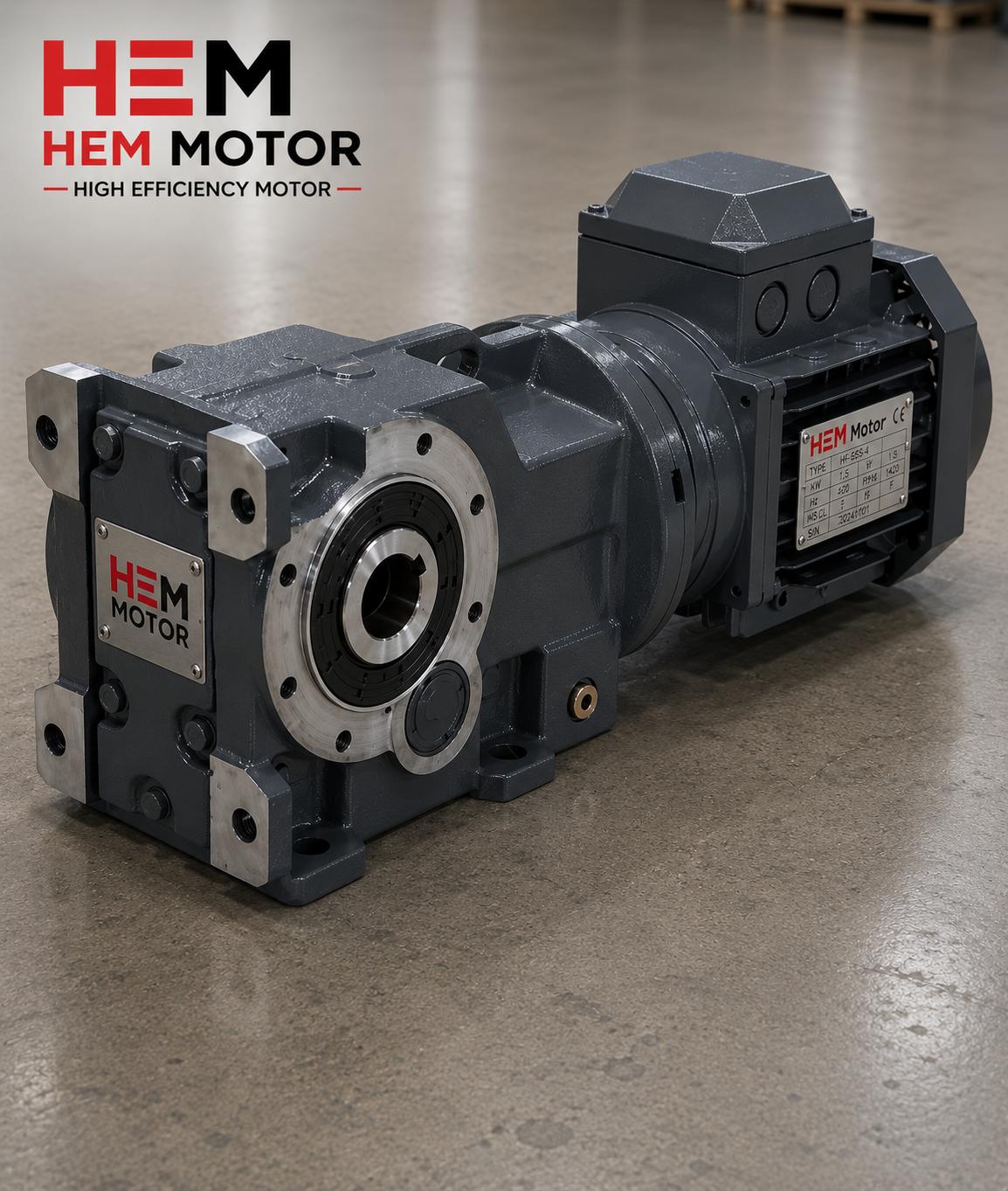

In crusher and mineral processing plants, the spiral screw classifier used to wash material and separate it by particle size is one of the harshest duty points in the entire facility. The electric motor that drives the helical screw rotating under water, slurry, abrasive minerals and continuous load is exposed to severe mechanical and environmental conditions. A wrong motor choice here quickly returns as bearing failure, loss of sealing, winding burnout and plant downtime. When the classifier stops, not only that unit but also the crusher and screening line feeding it go on hold; that is why the drive motor choice is a decision that concerns the continuity of the whole plant. In this article, HEM Motor examines screw classifier drive motor selection from a field perspective: speed, torque, gearbox, IP protection, corrosion and continuous duty.
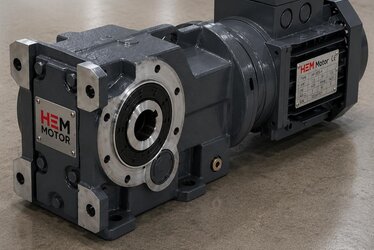
A spiral classifier carries coarse particles upward with a helical screw rotating inside an inclined tank, while fine particles overflow with the water at the weir. The screw turns very slowly, typically a few to a few tens of revolutions per minute. Such a low output speed cannot be delivered by a motor directly; a geared drive is mandatory. The motor runs at a relatively higher speed and the gearbox reduces this speed to produce high torque. Therefore, the heart of the selection is not the motor alone but the joint sizing of the motor-gearbox package. When this package is not set up correctly, either the screw cannot find enough torque or the motor heats up under constant strain.
Operating Conditions in Screw Classifier Drives
Correctly understanding the challenges the motor faces determines the selection. Rotating in a slurry bed, the screw meets a resistance that constantly changes with material density. When feed increases or particle size grows, the power drawn by the screw rises suddenly. When the plant stops and restarts, settled solids practically lock the screw, and breakaway demands a starting torque far above nominal. The points below summarise these conditions:
- Low speed / high torque: Because output speed is very low, the drive is geared to produce high torque.
- Continuous (S1) duty: The classifier runs without stopping throughout the shift; the motor must be selected for continuous thermal load.
- Wet and abrasive environment: Water, slurry and mineral dust constantly stress the frame, shaft and bearings.
- Sudden load and hard start: Settled material requires high breakaway torque at start.
- Corrosion risk: A humid, mineral-laden environment accelerates corrosion on frame and shaft surfaces.
- Vibration and impact: Irregular particle flow creates shock loads and vibration in the drive.
Speed, Torque and Geared Drive Selection
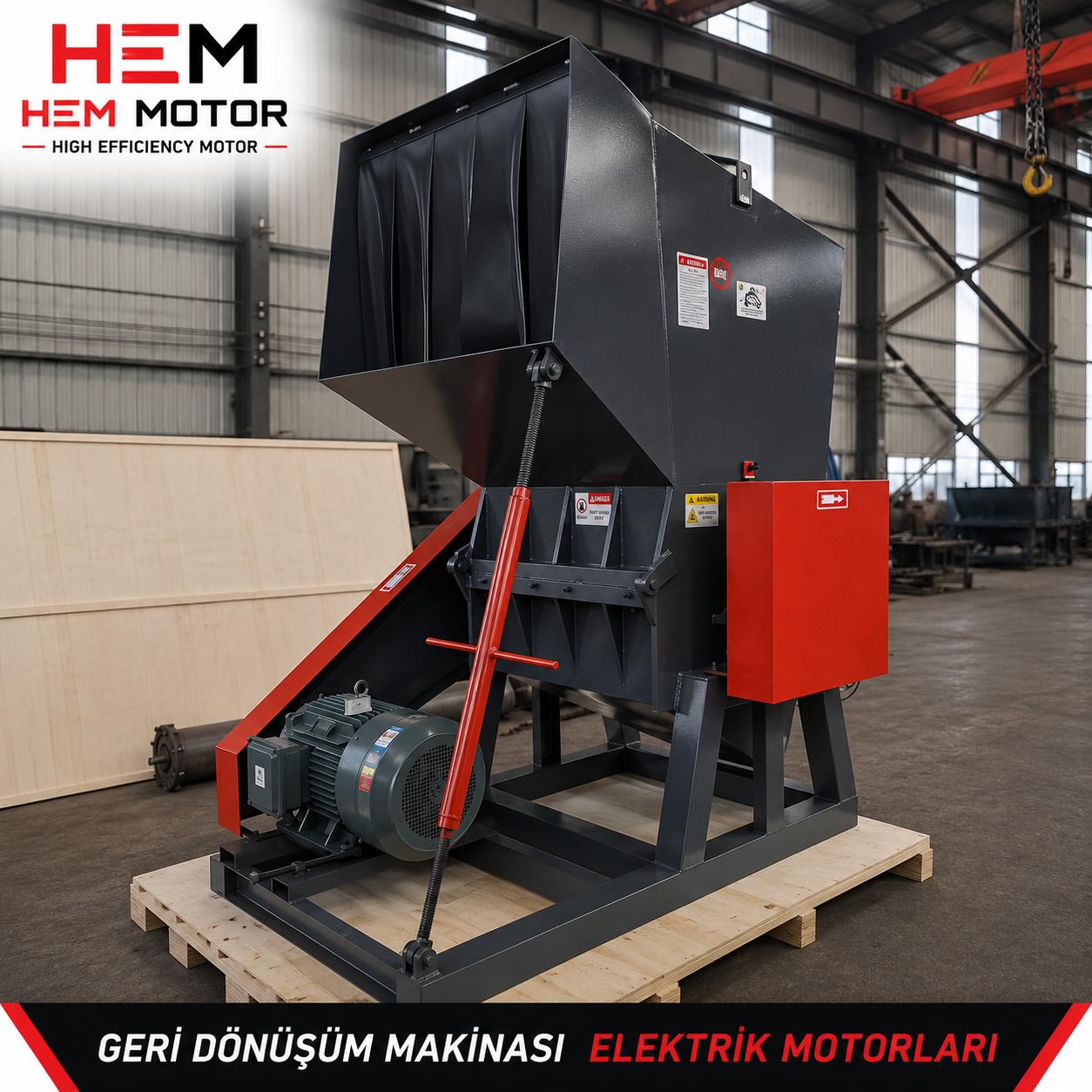
The output speed and torque the classifier needs depend on screw diameter, slope and the amount of solids conveyed. On the motor side, a medium-speed (4 or 6 pole) induction motor is usually preferred, because the more reasonable the gearbox input speed, the more balanced the gear stage and tooth load. Very high-speed (2 pole) motors are avoided here because they bring an excessively large reduction ratio and heating. A 6-pole 1000 rpm motor offers a softer input speed to the gearbox, improving both gear life and torque transmission.
Starting torque is critical. To break the screw loose in a settled slurry bed, the motor must produce high starting torque, and where needed a motor with high service factor and overload capacity should be chosen. Star-delta starting may fall short here; direct-on-line or a soft starter that preserves breakaway torque is recommended. The service factor (SF) matters when selecting the gearbox: because of shock and continuous load, the gearbox nominal torque should be selected above the calculated torque demand, with an adequate safety margin. The principles of motor selection for crusher plants and output speed and torque in geared motors apply directly.
Typical Drive Motor Power and Protection Table
| Classifier Screw Diameter (approx.) | Typical Drive Power Range | Recommended Pole / Speed | Recommended IP | Frame |
|---|---|---|---|---|
| Small (≈ Ø500-700 mm) | 2.2 - 5.5 kW | 4-6 pole (1500/1000 rpm) | IP55 (min) | Cast iron |
| Medium (≈ Ø900-1200 mm) | 5.5 - 11 kW | 4-6 pole (1500/1000 rpm) | IP55 / IP65 | Cast iron |
| Large (≈ Ø1500-2000 mm) | 11 - 30 kW | 4-6 pole (1500/1000 rpm) | IP65 / IP66 | Cast iron |
| Twin screw / heavy duty | 30 - 55 kW and above | 6 pole (1000 rpm) | IP65 / IP66 | Cast iron |
Values are for guidance; the exact selection is based on the plant's flow rate and solids load data. On wide twin-screw classifiers using two separate drives, the motors should be chosen from the same speed and torque class so they share load equally.
IP Protection, Sealing and Corrosion Measures
Around a wet classifier, standard IP55 is often the lower limit. At points with heavy splashing, washdown and condensation, moving up to IP65 or even IP66 prevents water from entering the terminal box and bearings. Shaft sealing is a separate matter: correct oil seal / V-ring selection on the gearbox output shaft and motor shaft keeps muddy water out of the bearing. Water entering the bearing is the most common failure cause, washing out the grease and shortening bearing life. The principles of oil seal and V-ring seal selection and IP65/IP66 protection upgrade apply directly.
- IP class: IP55 is the lower limit in wet zones; aim for IP65-IP66 where splash/washdown is heavy.
- Sealing: Double seal, V-ring and labyrinth sealing keep slurry out.
- Corrosion protection: C4/C5 class paint and cataphoresis coating on the cast iron frame extend outdoor life.
- Drain plugs: The frame should have a drain hole to discharge condensed water.
- Space heater: An anti-condensation heater is recommended to prevent condensation in a stopped motor.
- Stainless fasteners: Bolts, nuts and eye bolts should be stainless or galvanised.
Corrosion and Frame Material
Cast iron is the preferred frame material in classifier drives, because a cast iron frame suits outdoor and humid environments better in terms of both mechanical strength and corrosion protection. With the right paint system, a cast frame resists mineral-laden water and humidity for years. For outdoor corrosion management, the practices in corrosion protection in cast iron motors and painting and cataphoresis coating are decisive in choosing coating thickness. On outdoor plants, if the motor is also shielded from rain with a canopy or protective cover, the paint system lasts even longer.
Continuous Duty and Thermal Sizing
Since the classifier runs without stopping throughout the shift, the motor must be selected for continuous duty (S1). Because peak loads occur frequently under abrasive load, the motor must have an adequate service factor and thermal reserve. Temperature monitoring (PTC/PT100) and overload protection protect the winding during sudden blockages and reduce downtime cost. Stopping the motor immediately when the screw jams protects both the gears and the winding. For a drive architecture planned together with belt and screen feeder motors, the screen and feeder motors article completes the plant-wide picture.
Commissioning and Maintenance Tips
Even with the right motor selected, life is shortened if commissioning and periodic maintenance are neglected. Before commissioning, insulation resistance (megger) should be measured, rotation direction checked and gearbox oil level verified. During operation, vibration and bearing temperature should be monitored, and seal and drain points checked regularly. The short checklist below helps field teams:
- Before commissioning, check insulation (megger) and rotation direction.
- Verify gearbox oil level and type per the manufacturer's recommendation.
- Inspect seal and V-ring condition periodically; replace worn ones in time.
- Follow bearing greasing intervals; in wet environments choose a water-resistant grease.
- Keep drain plugs open; prevent water from collecting in the frame.
Sizing the Motor and Gearbox Together
The most common conceptual mistake in screw classifier drives is selecting the motor and the gearbox separately. In fact, these two components should be thought of as a single drive system. First, the output speed and output torque the screw needs are determined; then the gearbox ratio is selected to deliver these output values; finally the motor power is calculated to meet the speed and torque at the gearbox input. When this order is reversed, either the motor is oversized and runs inefficiently, or the gearbox is undersized and gear life is shortened.
The connection between the gearbox output shaft and the screw shaft also matters. Direct coupling, chain-and-sprocket or belt-and-pulley transmissions each have advantages; but in a wet and abrasive environment, a direct flanged gearbox connection is usually the most leak-proof and easiest to maintain. When selecting the transmission element, alignment precision, vibration and maintenance ease should be evaluated together.
Effect of Speed Selection on Screw Performance
The rotation speed of the screw directly affects classification quality. A screw turning too fast may carry fine particles up before they settle adequately, blurring the separation sharpness; a screw turning too slowly reduces throughput and increases the risk of clogging. Therefore the output speed is determined carefully according to the settling rate of the material and the desired separation size. When the motor-gearbox package is selected to provide this optimum output speed, both separation quality and energy efficiency meet at their best point. Selecting speed and power per the application is the foundation of all classifier performance.
The Cost of a Wrong Motor Choice to the Plant
Mistakes in screw classifier drives usually arise not from a single cause but from several missing decisions stacking up. When a motor with insufficient IP protection is chosen, water enters the terminal box and causes a short circuit; when a motor with a low service factor is chosen, it trips on thermal overload under sudden load and the line stops; a frame inadequately protected against corrosion rusts within a few seasons and loses its cooling fins. Each of these may look minor on its own, but combined they grow into unplanned downtime, emergency motor procurement and lost production. Because the entire crushing-screening line connected to it also stops when the classifier stops, the cost multiplies.
The right approach is to make the motor the most reliable component of the plant, not its weakest link. This is achieved by choosing slightly higher IP protection, the right frame material and adequate thermal reserve from the start. In terms of total cost of ownership over the long term, the initial investment in a heavy-duty motor stays well below the cost of recurring failures and downtime.
The Role of Temperature and Vibration Monitoring
In a drive working under abrasive and continuous load, early warning is the most valuable layer of protection. A PTC thermistor or PT100 sensor placed in the winding stops the motor before the temperature reaches a dangerous level, preventing winding burnout in cases such as screw blockage or overfeeding. Monitoring bearing vibration gives early warning of bearing wear, imbalance and coupling deterioration. These monitoring layers turn unplanned downtime into planned maintenance and protect the plant's continuity.
- PTC/PT100: Protects the motor under overload by monitoring winding temperature.
- Vibration measurement: Gives early warning of bearing and coupling issues.
- Overcurrent protection: Quickly disconnects the motor during a blockage.
- Bearing temperature: Early indication of poor lubrication and water ingress.
Frequently Asked Questions
Why must a spiral classifier motor always be geared?
The helical screw turns only a few to a few tens of revolutions per minute. A standard induction motor cannot deliver such a low speed directly; therefore the motor runs at a higher speed and the gearbox both reduces the speed and produces the required high torque. The drive is always sized as a motor-gearbox package.
Which IP protection class is needed in a wet environment?
Standard IP55 is the lower limit for most classifiers. At points with heavy splash, washdown and condensation, IP65 or IP66 prevents water from entering the terminal box and bearing. A double seal or V-ring should also be used for shaft sealing.
Why is the motor strained at start, and how is it solved?
When the plant stops, slurry and solids settle around the screw; restarting requires a breakaway torque far above nominal. The solution is a high-starting-torque motor, direct-on-line or a soft starter that preserves breakaway torque, and where needed a motor with a high service factor.
Screw classifier drive is one of the applications where a wrong choice costs the most. HEM Motor supplies motors suited to wet and abrasive environments, with high IP protection, cast iron frames and gearbox compatibility, from stock with fast delivery and manufacturer assurance. Reach us with your screw diameter, flow rate and solids load data, and request a quote for the right motor-gearbox package.