English
 Türkçe

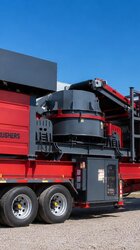
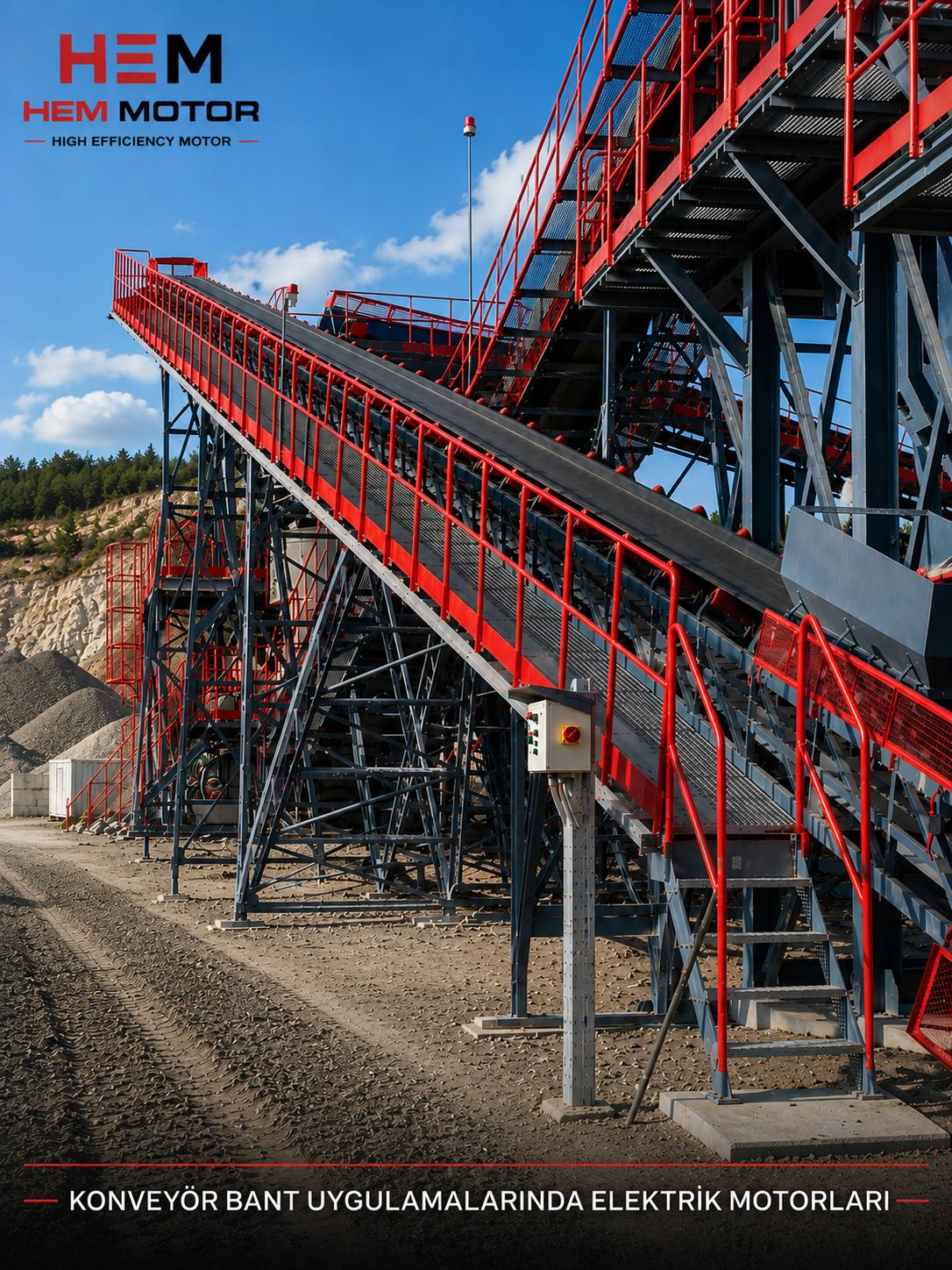

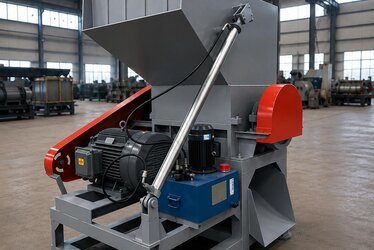
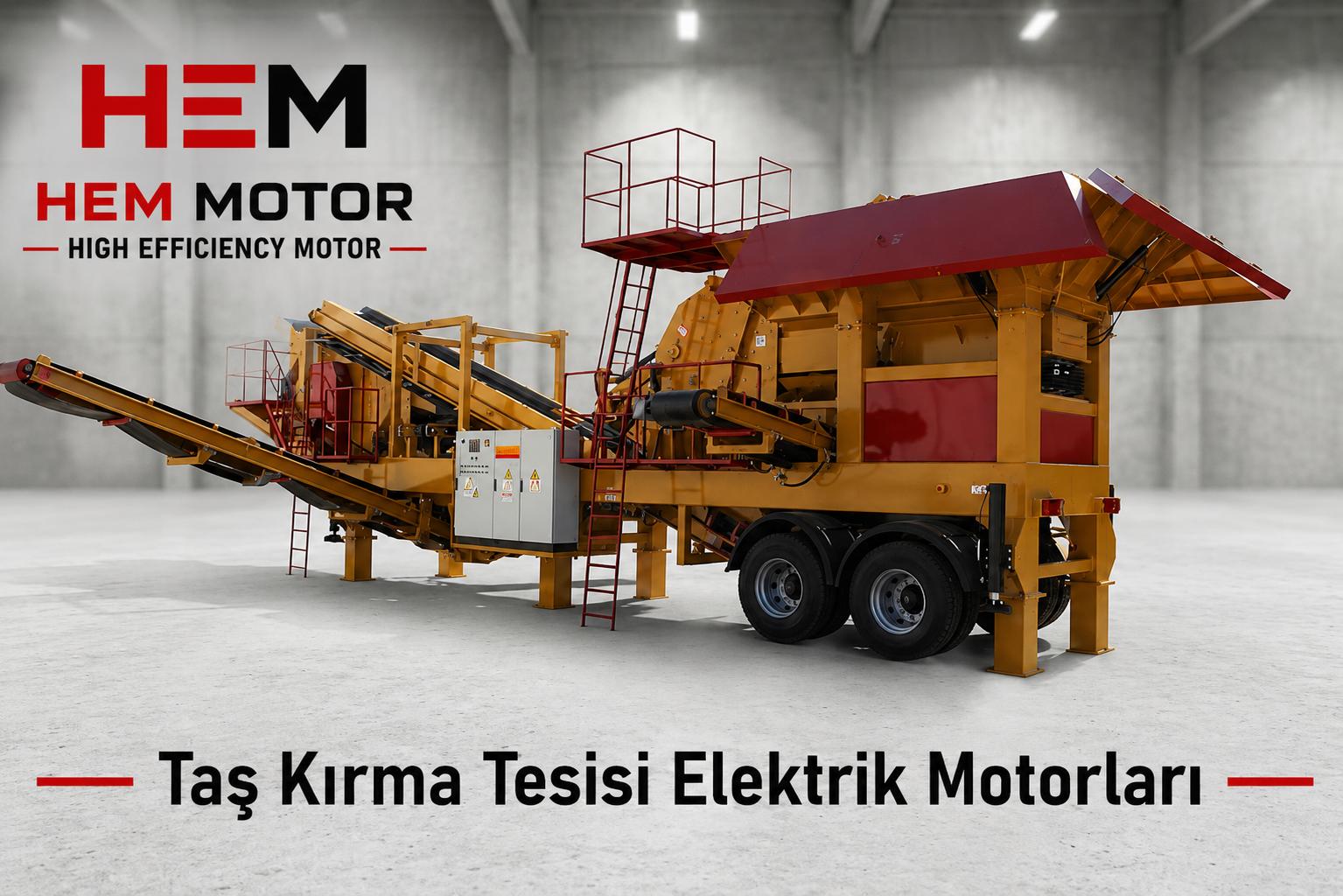
In a crushing-screening plant all eyes are always on the main crusher. Seen as the heart of the plant, the jaw, impact or cone crusher carries the largest motor and therefore sits at the centre of every maintenance plan. Yet field reality often says the opposite: the majority of unplanned stoppages come not from the main crusher but from the "small" screen motors, feeder motors and belt drive motors. In this article we treat the motors beyond the main crusher as a fleet, and explain how to correctly select the vibrating-screen, belt-feeder and conveyor drives, and how to supply them quickly when a stoppage hits.
The logic is simple: the weakest link in the chain sets the plant's capacity. Even if the main crusher runs flawlessly, when the feeder carrying material to it stops, or the screen separating crushed product fails, the plant cannot produce. These motors must therefore be thought of not as individual, independent parts but as a motor fleet keeping the production line alive. This perspective fundamentally changes both spare-parts strategy and supply decisions.
Why the "Small" Motors, Not the Main Crusher?
The main crusher motor is usually a high-power unit mounted on a solid foundation and monitored regularly. By contrast the screen, feeder and belt motors are many in number, mounted in harsher positions and often left at the bottom of the maintenance list. What these motors share is that they run in a heavy, vibrating environment, in dusty conditions and frequently under variable load.
- Vibration: Vibrating-screen drives are exposed to constant vibration, a punishing environment for bearings and terminal connections.
- Dust and abrasion: Open-yard dust clogs cooling fins and stresses sealing, which is why a high IP protection class is critical.
- High starting torque: A belt starting full or a blocked feeder demands high breakaway torque from the motor.
- Numbers: Against a single main crusher a plant runs many screen, feeder and conveyor motors; statistically the probability of failure concentrates in this crowd.
For these reasons the plant's real weak points are often these "small" motors. When one stops the crusher spins idle and the plant cannot produce. That is exactly why motor selection and supply strategy must cover the whole fleet.
Vibrating-Screen Drive Motor Selection
Screening separates crushed material by size and makes the product saleable. In a vibrating screen drive there are two basic approaches: externally driven eccentric-shaft systems and direct vibration motors. In both cases the motor is expected to be vibration-resistant, with reinforced bearings and a robust terminal box.
What to watch with vibration motors
- Centrifugal force: A vibration motor generates centrifugal force through adjustable weights; the correct force class must be chosen for the screen size and material load.
- Speed: Around 1500 rpm (4-pole) is usually preferred; fine screening may need different speed bands.
- Protection class: At least IP65 protection is recommended for dusty environments.
- Operating temperature: Continuous vibration and dust raise heating, so thermal protection is essential.
Standard eccentric-driven screens use a classic three-phase asynchronous motor. Here power and speed are set by the screen design and the required screening capacity. For the right speed you can use our pole selection guide.
Belt-Feeder and Apron-Feeder Motors
The feeder carries material to the crusher at a controlled rate. Here the motor's job is to move a conveying surface that often starts full, which demands high breakaway torque. When the feeder stops the crusher runs empty and the plant cannot produce, making the feeder motor one of the fleet's most critical links.
Typical feeder-drive choices
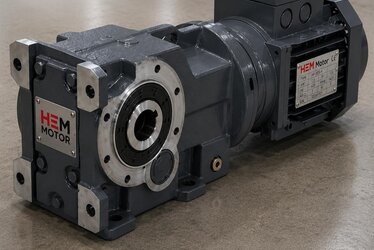
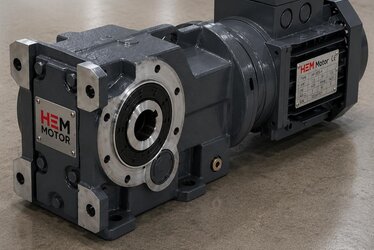
- Geared drive: Feeders usually need slow, strong rotation, so the motor mostly runs with a reducer. Flange and frame matching between motor and reducer is important.
- 4 or 6-pole motor: For lower output speed and high torque, 4 or 6-pole motors are preferred.
- Rugged frame: Cast iron frame motors provide durability for heavy industrial conditions.
- Frequency control: Drive (VFD) solutions for adjustable flow are increasingly common.
In apron feeders the load is even heavier; here the motor and reducer must be sized together with the service factor in mind.
Conveyor Belt Drive Motors
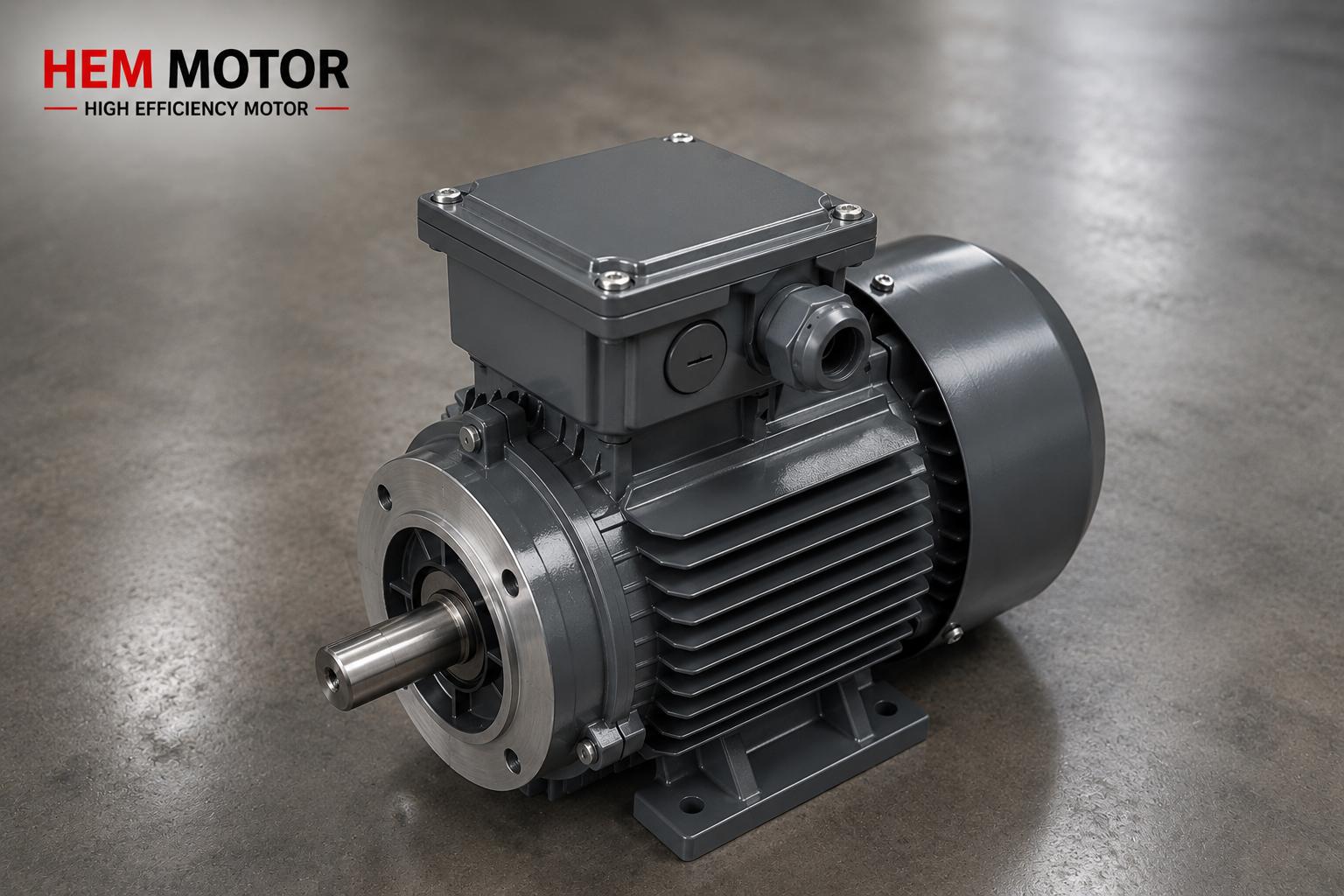
Conveyors move material from one point of the plant to another and carry crushed product to the stockpile or loading point. When a belt drive stops, the entire line before it must stop too, because material that cannot be carried piles up. So conveyor motors, though they look plain, are decisive for production continuity.
Critical points in conveyor drives
- Starting load: A belt starting full needs high torque; soft starting or a drive should be considered where needed.
- Incline: On uphill belts the power requirement rises markedly.
- Braking need: On inclined belts a braked motor or backstop may be needed to prevent rollback.
- Reducer matching: To set belt speed the motor is usually used with a reducer.
Managing the Motor Fleet: Stock and Standardisation
A crushing-screening plant may hold dozens of motors. Keeping these at random different power, speed and frame standards makes it hard to find the right spare during a failure. The smart approach is to standardise the fleet as far as possible: grouping motors of similar power and speed into the same frame and efficiency class both simplifies spare-parts management and speeds up emergency replacement.
- Critical spare list: Keep a list of the power-speed-frame data of the most critical screen, feeder and belt motors.
- Common frame standard: Prefer the same IEC frame size and mounting type (B3/B5/B35) wherever possible.
- Efficiency consistency: Keeping the whole fleet at least IE3 ensures both compliance and energy saving.
- Fast supply: Motors in standard steps can be supplied quickly from stock, the most effective way to cut downtime.
You can find how fast delivery from stock shortens a line's downtime in detail in our motor shipping to facilities guide. Supplying the right product in the right time is the essence of this fleet approach. You can reach our wide product range from our homepage.
Fast Decisions During a Stoppage
When a screen or feeder motor suddenly fails, the field team must have a clear information set at hand. A photo of the failed motor's nameplate presents the power (kW), speed (pole count), frame size, mounting type and shaft diameter in a single frame. With this data the right spare is identified quickly and the supply process begins. In most cases a correctly defined standard motor can be supplied from stock in a short time and production restarted.
What must not be forgotten is the cost dimension of this decision: the production lost while the plant is down is often many times the price of the motor. So acting on "the fastest and most suitable spare" rather than "the cheapest motor" lowers total cost.
Efficiency and Energy Cost in the Motor Fleet
Crushing-screening plants run long hours, often in shifts and throughout the year. This intensive operating profile makes the motor fleet's energy consumption one of the operation's largest cost items. Screen, feeder and belt motors that look "small" individually cause significant electricity consumption in total because of their number and running hours. That is why every motor's efficiency class in the fleet is reflected directly in the annual energy bill.
Gradually replacing old, low-efficiency motors with IE3, and where appropriate IE4, class motors ensures compliance and, because of the high running hours, amortises itself in a short time. Especially on conveyor and feeder drives running 24/7, even a single-step improvement in efficiency class means meaningful annual savings. Raising the efficiency class while standardising the fleet delivers a double gain, in both energy and spare parts.
- High-hour motors first: Start by moving the longest-running feeder and belt motors to a higher efficiency class.
- Correct power selection: An oversized motor loses efficiency at low load factor; correct kW selection matters.
- Control with a drive: On variable-flow feeders, using a drive provides both energy saving and soft starting.
FAQ
Which motors fail most in a crushing-screening plant?
Field experience shows that the majority of unplanned stoppages come not from the main crusher but from the screen, feeder and belt drive motors. These are numerous, run in vibrating and dusty environments, and demand high starting torque. So they should be treated not individually but as a fleet keeping the production line alive.
What type of motor is used for a vibrating screen?
There are two common solutions in vibrating-screen drives: direct vibration motors and standard three-phase asynchronous motors turning an eccentric shaft. With vibration motors, attention is paid to the centrifugal force class, speed and at least IP65 dust protection. In eccentric-driven screens, power and speed are chosen according to the screen design and required capacity.
Why is standardising the fleet motors important?
Standardisation lets you find the right spare quickly during a failure. Grouping motors of similar power and speed into the same frame size and efficiency class simplifies spare-parts management and shortens emergency replacement time. Because the production lost when the plant stops is far more costly than the motor itself, fast and compatible supply is the biggest saving.