English
 Türkçe

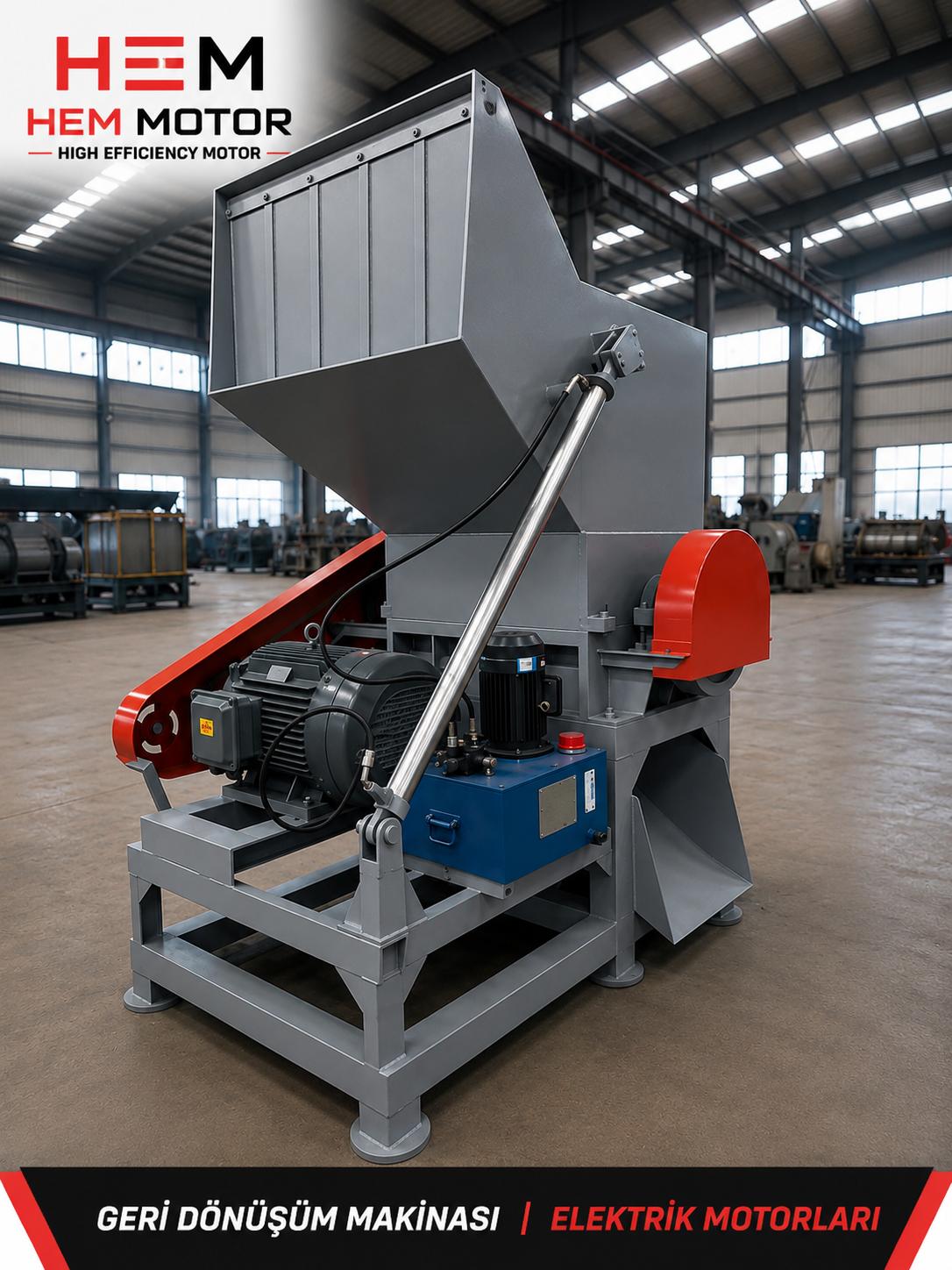

In a crusher plant, material is most often carried from the crushers to the screen and stockpile by inclined belt conveyors. These belts can be hundreds of metres long and climb at a marked incline when loaded. Here lies a critical danger: the moment the belt drive motor stops, the hundreds of tonnes of material sitting on the incline begin to drive the belt backwards. This run-back both seriously damages equipment and endangers personnel. That is why inclined belt conveyors use a non-reverse (backstop) device. In this article we cover step by step the selection of the inclined belt conveyor drive motor in a crusher plant, how the non-reverse mechanism works, the concept of a gearbox backstop, preventing the loaded belt from running back when it stops, the starting strategy, shock-load capacity and correct drive selection. At HEM Motor our goal is to help you select a safe, durable and correctly sized belt drive for the harsh crusher environment.
The Run-Back Problem on an Inclined Belt Conveyor
On a horizontal conveyor, when the motor stops the belt stops too; there is no serious run-back risk. But on an inclined belt the situation is different. The weight of the material on the belt produces a constant pull-back force due to the incline. The instant the motor loses power or stops because of a fault, this force tries to move the belt backwards, that is downhill. If there is no obstacle:
- The belt runs back quickly and material piles up at the feed point.
- The drive drum and gearbox are strained in reverse, and gears and couplings are damaged.
- The runaway belt turns the motor in reverse like a generator, creating unexpected electrical and mechanical loads.
- Most importantly, because the belt and material move uncontrolled, site safety is jeopardised.
So on inclined conveyors a non-reverse (backstop) element that mechanically prevents the belt from running back when the motor stops is mandatory. This element allows the belt to turn only in the carrying direction and locks in the reverse direction. On motor selection for long-distance and steeply inclined belt drives, our article on mine and open-pit overland belt conveyor motors complements this topic.
How Does the Non-Reverse (Backstop) Device Work?
A backstop device essentially works on the principle of a one-way clutch. Inside it are roller or sprag elements; these run free when the shaft turns in one direction and lock to stop motion when it tries to turn in reverse. On a conveyor this device performs the following: while the motor drives the belt in the carrying direction the backstop is free, and when the motor stops the belt's run-back force locks the backstop and the belt is held in place.
A backstop can sit in two basic positions:
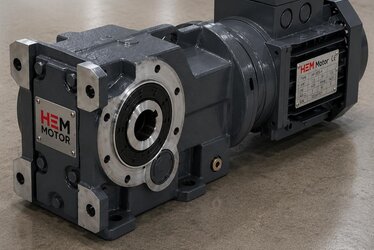
- Gearbox backstop: The non-reverse element is integrated into the gearbox or onto its input/output shaft. It is the most common solution in crusher plants, because the gearbox already carries high torque and has the structure to house the backstop.
- Drive drum backstop: A high-torque-capacity non-reverse unit mounted directly on the low-speed drum shaft. It is preferred on very heavy and long belts.
An important point: the backstop is placed not on a high-speed location like the motor shaft but, where possible, on the low-speed (high-torque) shaft side. Because the torque held on the low-speed side is more stable and safe; on the high-speed side the backstop holds less torque but the belt can slip back a little due to gearbox backlash.
| Solution | Position | Advantage | Typical Use |
|---|---|---|---|
| In-gearbox backstop | Gearbox input/intermediate shaft | Compact, integrated | Medium-large inclined belt |
| Low-speed shaft backstop | Drive drum shaft | High, stable holding torque | Very heavy, long belt |
| Braked motor drive | Brake on motor rear | Active stopping + holding | Short inclined belt, precise stop |
Selecting the Inclined Belt Conveyor Drive Motor
An inclined belt drive motor takes on a tougher job than a horizontal one. There are several basic loads the motor must meet:
- Continuous carrying torque: Belt weight, material weight and friction.
- Incline torque: The extra torque needed to lift the load along the incline.
- Starting torque: The high torque needed to move the loaded belt from rest to motion. Starting an inclined belt while loaded is the toughest moment.
- Shock load / impact: Torque surges from sudden material pile-up or blockage at the feed point.
For this reason an inclined belt motor is chosen with a starting torque reserve above the continuous power need. Since the conveyor is usually driven through a gearbox, the motor speed and gear ratio are calculated together; the output speed gives the belt speed. For general motor selection in a crusher plant, our articles on electric motor selection for crusher and stone crushing plants and, for drives other than the main crusher, screen, feeder and belt drive motors are good starting points.
Starting Strategy: Lifting the Loaded Belt Safely
One of the most critical moments on an inclined belt conveyor is the loaded start. When the belt is restarted while standing under load, the motor must produce high torque both to overcome inertia and to lift the incline load. At the same time this start must be gradual, without jolting the belt and its accessories (chain, coupling); sudden full torque can snap the belt or create shock in the tensioning system. Different starting methods are used to achieve this balance:
- Star-delta: Reduces the starting current but may give insufficient torque for an inclined loaded belt.
- Soft starter: Raises torque gradually to lift the belt without jolting; common on medium-large belts.
- Frequency inverter (drive): The most controlled solution; provides a start ramp, torque limit and, if needed, low-speed filling. It also allows controlled deceleration on stopping.
- Liquid resistance starter / slip-ring motor: For a smooth, high-torque start on very high inertia and very long belts.
Experience on the crusher side also guides the choice of starting method; our articles on starting a crusher motor (soft starter, star-delta) and, for very high inertia, liquid resistance starter and slip-ring motor clarify this decision.
Shock-Load and Impact Capacity
A crusher plant is one of the harshest environments for motors. Belt conveyors work under shock and variable load: sudden material drops at the feed point, large lumps straining the belt, or sudden stops from blockage. This shock load tests the durability of the motor and the drive train. Correct drive selection must include a service factor and a mechanical strength margin able to absorb these shocks. On shock load, flywheel and inertia effects, our article on motor selection under shock load: flywheel, inertia and crusher drive goes deeper into the topic.
Besides this, the crusher environment is harsh in terms of dust and moisture. The belt drive motor usually works in the open, under dusty and damp conditions, so a high IP protection class and suitable insulation matter. On motor protection and dust sealing, see our article on dust sealing and IP65/IP66 protection on crusher motors.
A Checklist for Correct Drive Selection
- Belt length, incline angle and belt speed
- Conveyed material throughput (tonnes/hour) and unit weight
- Sum of continuous carrying + incline torque and the required motor power
- Loaded starting torque and a suitable starting method
- Position and torque capacity of the non-reverse (backstop) device
- Service factor, shock margin and duty type
- IP protection class, dust and moisture conditions
- Gear ratio, output speed and shaft/flange compatibility
The Difference Between a Backstop and a Brake
Two concepts are often confused in the field: the non-reverse device (backstop) and the brake. Both contribute to stopping the belt, but their functions differ. A backstop locks in only one direction; it prevents the belt from running back but does not actively stop motion in the carrying direction. A brake, by contrast, can stop motion in both directions and is used to slow the belt in a controlled way. On an inclined conveyor the two are often considered together:
- Backstop: Mechanically prevents the loaded belt from running back when the motor stops. It works passively and needs no power.
- Brake: Actively slows or stops the belt in the carrying direction; it is needed for speed control especially on down-hill (regenerative) inclined belts.
On an up-hill inclined belt a backstop is usually sufficient, because the danger is run-back. But on a down-hill belt the load tries to accelerate the belt in the carrying direction; here the motor enters braking mode and generates energy. In this case a brake or a regenerative braking arrangement is needed for controlled deceleration. For braked duty and stopping strategies, see our article on braked duty types S7, S8, S9.
Maintenance and Safe Operation
Because the non-reverse device is a safety element, it requires periodic inspection. The roller or sprag elements inside a backstop can wear over time; a worn backstop can slip in reverse and allow the belt to run back a little. So in a crusher plant the maintenance of the belt drive must cover not only the motor and gearbox but also the backstop. Points to watch during maintenance:
- Backstop lubrication: Follow the manufacturer's recommended oil type and interval; a dry-running backstop wears quickly.
- Holding test: Periodically verify that the belt is held without running back under load.
- Gearbox and coupling: Since the backstop carries torque, monitor the condition of the gearbox gears and the coupling.
- Emergency stop: The pull-cord emergency stop lines along the belt must be operational.
Downtime cost is high in a crusher plant; a failure of one belt drive can stop the whole line. So correct maintenance is as critical as correct selection. On reducing failure and downtime cost, our article on motor failure and downtime cost in a crusher plant offers practical advice.
Frequently Asked Questions
Why is a non-reverse device necessary on an inclined belt conveyor?
On an inclined belt, when the motor stops the weight of the loaded material tries to drive the belt backwards (downhill). The non-reverse (backstop) device allows the belt to turn only in the carrying direction and locks in reverse. This prevents run-back, equipment damage and safety risk.
Is the backstop mounted on the gearbox or the drum?
Both are possible. On medium-large belts the backstop is usually integrated into the gearbox; on very heavy and long belts it is mounted on the low-speed drive drum shaft for high and stable holding torque. The torque held on the low-speed side is safer.
How should I size the inclined belt motor?
Add the incline torque to the continuous carrying torque to find the required power; then add a torque reserve and service factor for the loaded start. Select the starting method (soft starter or drive) and the non-reverse device accordingly. For the crusher environment, a shock margin and high IP protection are also essential.
Build the Right Belt Drive with HEM Motor
The right drive for an inclined belt conveyor in a crusher plant means bringing together a motor with sufficient starting torque, a suitable starting method, a safe non-reverse (backstop) device and a body resistant to dust and moisture. At HEM Motor we offer heavy-duty belt drive motors for crusher and crushing-screening plants, with gearbox-compatible configurations, from stock and with fast delivery. Share your belt's length, incline, throughput and operating conditions with us; request a quote for a safe and durable belt drive and keep your plant running without downtime.