English
 Türkçe

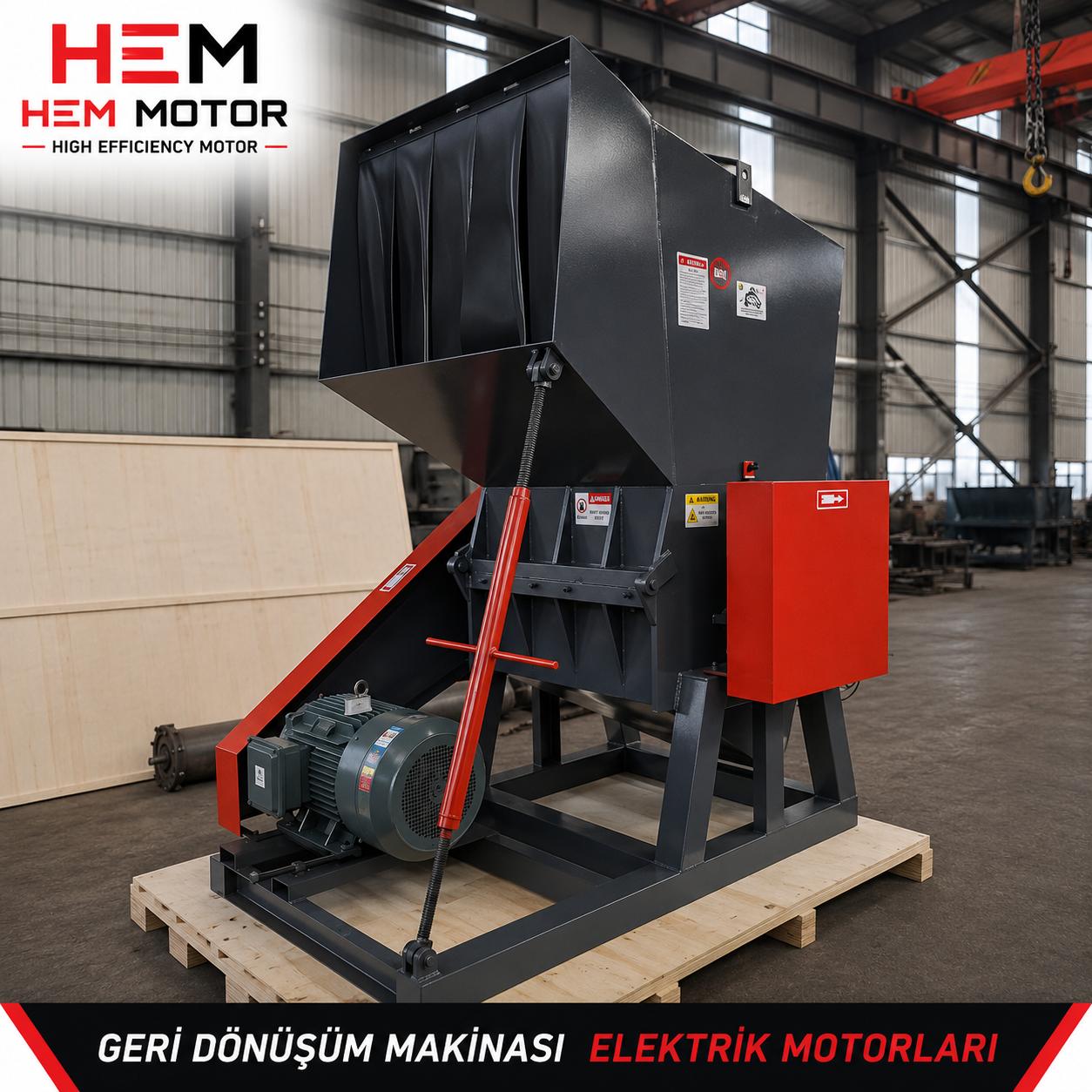

A crusher motor works in dusty, shock-loaded heavy-duty conditions; and if it is also expected to produce continuous high torque at low speed with a VFD, the motor's own shaft-mounted fan is often insufficient. This is because the standard cooling fan is mounted on the same shaft as the motor; when speed drops the fan also slows and pushes less air to the motor. Precisely in the low-speed, high-torque region where the motor heats up most, cooling weakens. The method that solves this contradiction is an independently supplied external forced cooling fan (IC416) on the motor. This fan, with its own small motor, turns at a constant speed independent of the main motor's speed and fully cools the motor at every speed. In this article, HEM Motor covers why IC416 external forced cooling is needed on a crusher motor, its difference from IC411, the constant-torque region, dusty environment conditions and the correct cooling selection.
Why Does the Standard Fan Fall Short at Low Speed?
On a standard surface-cooled motor (IC411) the cooling fan is mounted directly on the motor shaft. While the motor turns at 1500 rpm the fan also turns at 1500 rpm and pushes the required air. But when the motor speed is reduced with a VFD to, say, 750 or 500 rpm, the fan also slows in proportion and the air it pushes drops significantly. Because the air a fan pushes falls roughly with the square of the speed, when speed halves the cooling capacity can fall to as little as a quarter.
The problem is that in applications such as crushers the motor keeps producing full torque (and therefore full current and full heat) even at low speed. So while the motor heats up most at low speed, its own fan pushes the least air. This leads to winding temperature rising to dangerous levels and premature ageing of the insulation. We covered the relationship between constant torque and cooling loss at low speed in detail in our running below 50 Hz, constant torque and cooling loss article.
The Constant-Torque Region and Running with a VFD
When a motor is run below rated frequency with a VFD, it works in the "constant-torque region": voltage and frequency are reduced together and the motor can keep its rated torque at low speed. Loads such as crushers, mills and agitators demand continuous high torque in this region. This continuous loading makes the heat problem critical on a motor whose own fan has slowed. The external forced fan lets the motor run continuously and safely in this region. Without it, the motor would either have to be derated (run below its capability) or risk overheating, both of which are costly outcomes on a crusher line where production continuity matters.
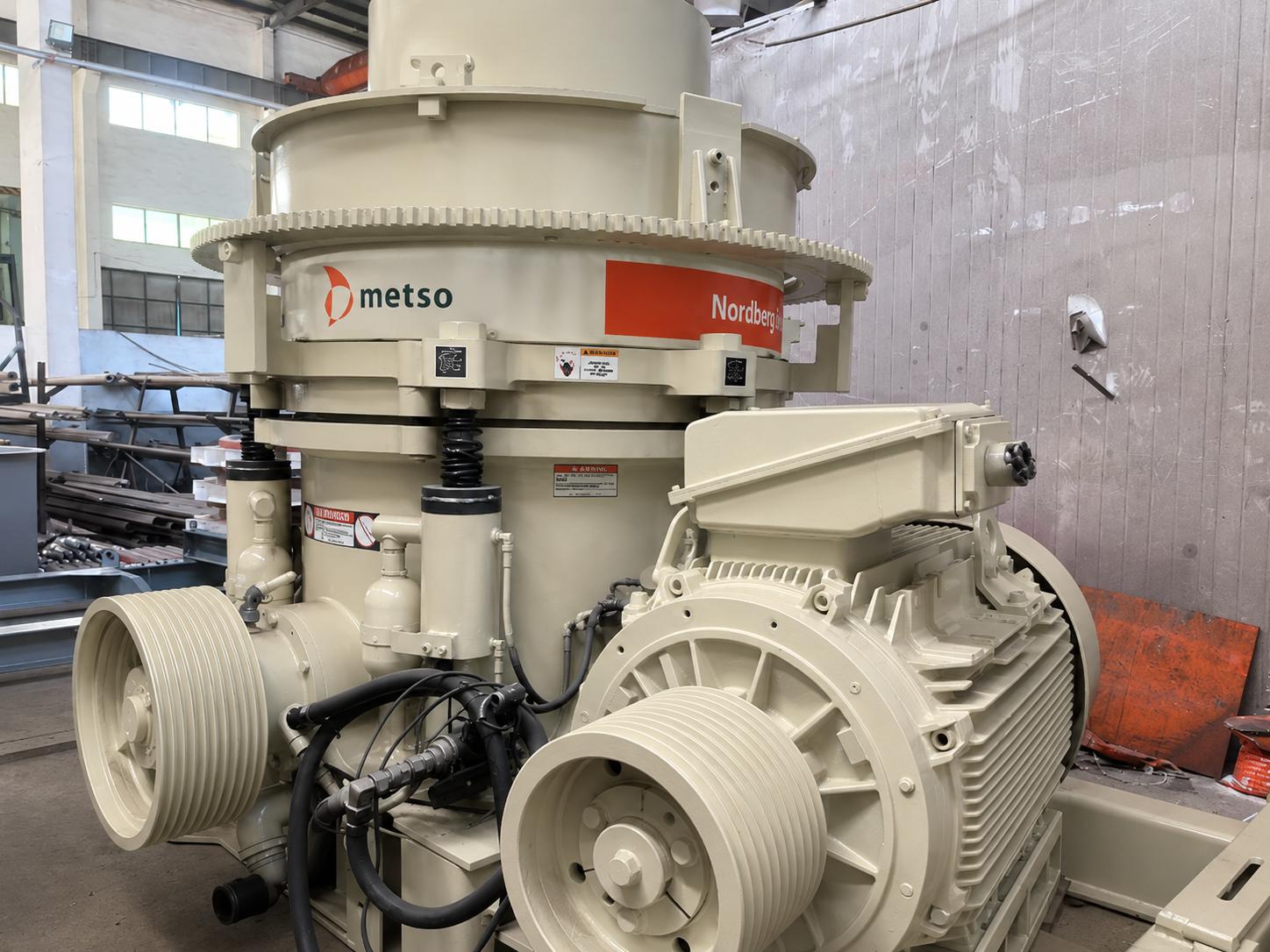
The Difference Between IC411 and IC416: Cooling Codes
Motor cooling methods are defined by IC codes according to the IEC 60034-6 standard. In a crusher application the two most critical codes are IC411 and IC416.
- IC411: Surface cooling with a shaft-mounted (the motor's own) fan. As speed drops, cooling drops too. Sufficient for constant-speed applications.
- IC416: Independently supplied (separately motorised) external forced cooling fan. It turns at constant speed independent of the main motor's speed and provides full cooling at every speed.
IC416 is preferred especially in crusher, breaker and mill applications requiring continuous torque over a wide speed range and at low speed. We compared the differences between IC411 and IC416 and their behaviour at low speed in our cooling methods IC411 and IC416 article. You can also find how the same logic is applied on IE4 motors in our external forced cooling fan on an IE4 motor article.
IC411 and IC416 Cooling Comparison Table (At Low Speed)
The table below compares the cooling capacity of the same motor at different speeds with IC411 (own fan) and IC416 (external forced fan). The values are representative and meant to show the speed-air relationship.
| Motor speed | IC411 cooling (own fan) | IC416 cooling (external fan) | Continuous torque suitability |
|---|---|---|---|
| 100% (rated) | Full | Full | Both suitable |
| 75% | Reduced | Full | IC411 limited |
| 50% | Very low | Full | IC411 insufficient |
| 25% | Almost none | Full | Only IC416 |
| 0 (at standstill) | None | Full (fan turns) | Only IC416 |
The table clearly shows that as speed drops IC411 cooling collapses, while IC416 stays constant at every speed. For this reason, on a crusher motor running over a wide speed range, IC416 is not just a comfort but a necessity that protects the motor.
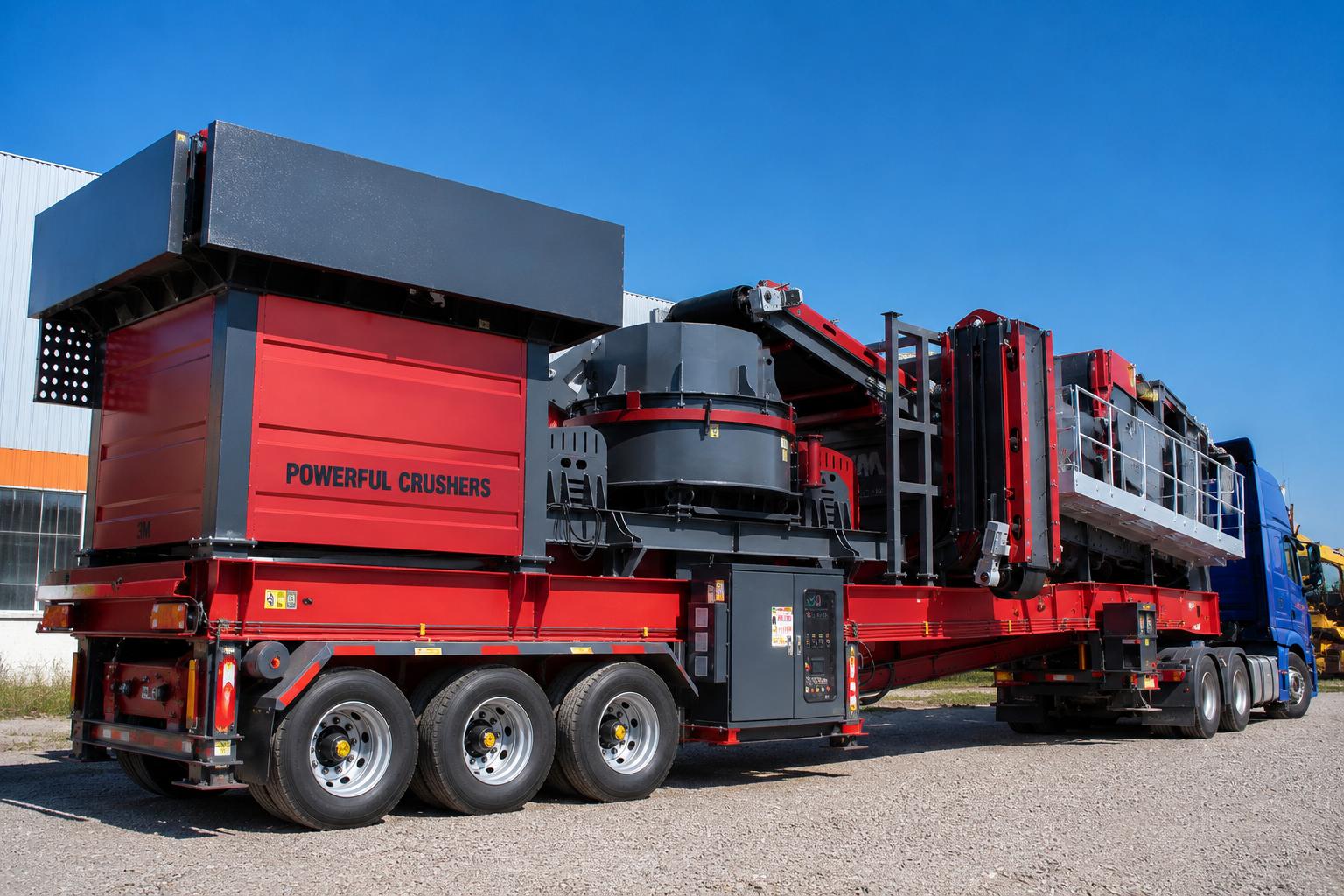
Dusty Environment: The Crusher's Greatest Enemy
A crusher site is one of the harshest environments for a motor: heavy dust, stone fragments and moisture all together. An external forced cooling fan is critical in two ways in this environment. First, it protects the winding by cooling the motor continuously; second, a filter and correct placement must be provided so that the cooling air is drawn in clean. Dusty air filling the motor clogs the cooling channels and again leads to heating.
- IP protection: At least IP55, preferably IP65/IP66 protection is recommended on a dusty site.
- Fan filter: A dust filter fitted to the external fan inlet provides clean air; the filter must be cleaned periodically.
- Placement: The fan inlet should be directed to the least dusty area.
- Temperature monitoring: A PT100/PTC fitted to the winding continuously monitors temperature.
We covered dust sealing and IP protection on a crusher motor in our dust sealing and IP65/IP66 on a crusher motor article, and heating at continuous full load in our motor cooling and overheating in a crusher plant article.
Advantages of the External Forced Fan and Correct Selection
The IC416 external forced cooling fan, in the right application, significantly increases the motor's life and reliability. Its main advantages:
- Speed-independent cooling: The motor is fully cooled even at near-zero speed.
- Continuous torque: Continuous high torque can be safely produced at low speed.
- Long insulation life: Winding temperature stays under control, lowering the risk of rewind damage.
- Wide speed range: The motor is not stressed while crusher speed is adjusted.
For correct selection, the motor's duty profile (the lowest speed, the torque at that speed and its duration), ambient temperature and dust conditions are evaluated together. For the crusher motor kW selection and general cooling strategy, our crusher motor kW selection article is a good starting point. To prevent the risk of overheating at low speed, the external fan, temperature protection and the correct IP class must be considered together.
Supply and Connection of the External Fan
Because the IC416 external forced fan has its own supply independent of the main motor, there are a few points to watch during connection and commissioning. This fan is usually driven by a small three-phase or single-phase motor and is supplied through a separate contactor, not together with the main motor.
- Independent supply: The external fan must keep turning even when the main motor stops; therefore a separate supply line is run.
- Operating sequence: The external fan is usually started before the main motor and kept running for a while after the main motor stops, so cooling continues until the motor cools down.
- Rotation direction: The external fan's rotation direction must push air towards the motor; a reversed connection completely ruins cooling.
- Protection: The external fan motor must also have its own thermal protection; if its failure goes unnoticed the main motor heats up silently.
These connection details are a precondition for getting the full benefit of external forced cooling. An external fan that is wrongly connected or whose failure is not monitored does not actually protect the motor while it is assumed to. For this reason, on motors with an external fan, the fan motor's operating status should also be monitored from the panel, and an alarm or interlock is recommended so that the main motor is protected if the cooling fan fails.
Comparison with Alternative Solutions
An external forced fan is not the only way to solve the low-speed cooling problem, but in most crusher applications it is the most practical and economical solution. Let us briefly assess the alternatives:
- Oversizing the motor (derating): Choosing a larger motor and running it at low load reduces heat, but increases cost and frame; it is often more expensive than an external fan.
- Air-water cooling (IC81W): Ideal at very high power but requires water infrastructure, which is not always available on a crusher site.
- Limiting running time: Running intermittently rather than continuously at low speed limits heat, but disrupts production continuity.
- External forced fan (IC416): Can be added to an existing motor and provides full speed-independent cooling; it is the most common and balanced solution on a crusher.
As seen, every alternative has a cost; the external forced fan is the option that best balances cost and performance in most crusher applications. We also covered the general logic of motor cooling and heavy-duty conditions in a crusher plant in our motor protection in a stone quarry and mine site article; external forced cooling is an important part of this protection.
Frequently Asked Questions
Is an external forced fan always needed on a crusher motor?
No. If the motor runs at constant, rated speed, its own fan (IC411) is sufficient. An external forced fan (IC416) is needed especially when continuous high torque is produced at low speed with a VFD. Because at low speed the motor heats up most while its own fan pushes the least air; the external fan fills this gap.
Does the IC416 fan run even when the main motor is stopped?
Yes. The external forced fan runs on its own supply, independent of the main motor's speed. This way the motor keeps being cooled even at very low speed and even during short stops. This is a great advantage in crusher applications that start and stop frequently or run for a long time at very low speed.
What else is needed for cooling on a dusty crusher site?
Alongside the external fan, high IP protection (IP55, preferably IP65/IP66), a dust filter at the fan inlet, correct fan placement and winding temperature monitoring (PT100/PTC) are recommended. Because dust can clog the cooling channels and reduce even the external fan's effect, a filter and periodic cleaning are essential.
If continuous torque is needed at low speed with a VFD on a crusher motor, the motor's own fan falls short and the IC416 external forced cooling fan is the right solution that protects the motor. As HEM Motor, for your crusher and heavy-duty applications we plan the cooling method, IP protection and temperature protection together according to the motor's duty profile, and supply the motor suited to a dusty site quickly from stock. Request a quote for your crusher motor and the correct cooling solution; with manufacturer stock advantage and technical support, we are at your side.