English
 Türkçe

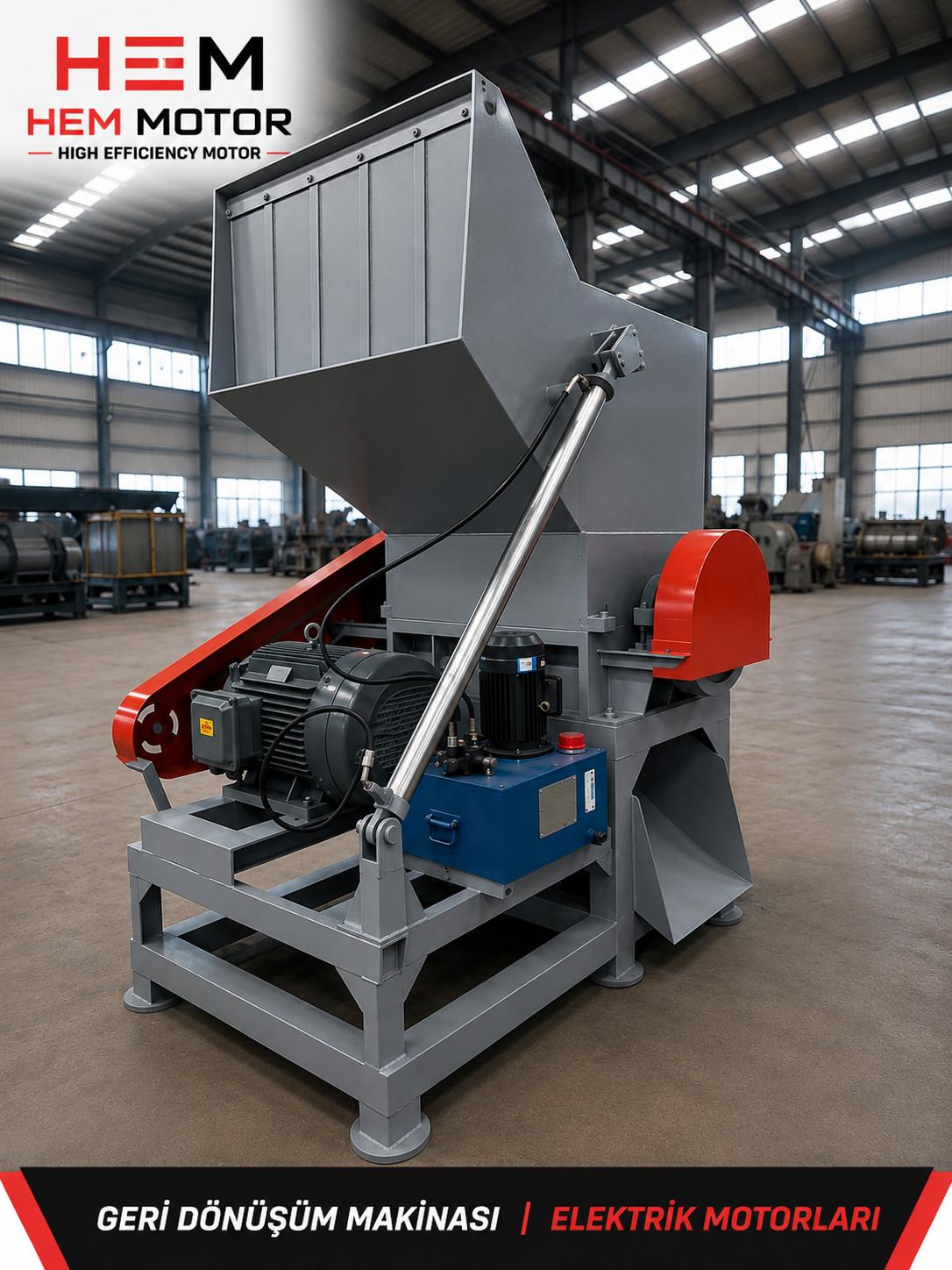

In a crusher (stone-crushing) plant, the main crusher motor is the heart of the entire line. When this motor stops, not only the crusher but the whole feeder, conveyor and screening line stops. The crusher motor operates under heavy impact load, high vibration, dust and continuous operation; this makes it prone to unexpected failures. An unplanned stop means hours of lost production, emergency maintenance cost and delivery delay. This is exactly where condition monitoring (predictive maintenance) comes in: by continuously measuring health indicators such as the motor's vibration and temperature, it gives an early warning weeks before a failure fully develops.
In modern crusher motors, condition monitoring begins with vibration and temperature sensors embedded in the frame. These sensors output the value they measure in a standard signal format: most commonly a 4-20 mA analog output, increasingly an IO-Link digital output, or industrial wireless protocols. These signals are connected to a PLC or SCADA system; thresholds and alarms are defined; and the motor is monitored remotely. As HEM Motor, we supply crusher and heavy-duty motors with the correct condition monitoring architecture. In this article we cover embedded sensors, the 4-20 mA / IO-Link / wireless output options, SCADA/PLC integration, the threshold/alarm strategy and the correct monitoring architecture selection.
Why Is Condition Monitoring Essential on a Crusher Motor?
The crusher motor operates under far harsher conditions than an ordinary industrial motor:
- Heavy impact load: The irregular entry of stone into the crusher imposes sudden torque shocks on the motor. These shocks fatigue the bearings and shaft.
- High vibration: The crushing process is inherently vibrating; unbalanced feed increases vibration.
- Dust and contamination: Stone dust clogs the cooling fins and strains the sealing.
- Continuous heavy duty: The motor runs at full load for long hours a day; the thermal and mechanical load is high.
Under these conditions, bearing wear, imbalance, misalignment or overheating are inevitable. The common feature of these problems is that they show themselves as a gradual increase in vibration and temperature before the failure fully develops. Condition monitoring catches this increase and makes maintenance planned. We detailed the cost and prevention of a motor failure in a crusher plant in our article on motor failure and downtime cost in a crusher plant.

Embedded Vibration and Temperature Sensors
The foundation of condition monitoring is sensors placed at the correct points on the motor. Two main measurements are important on a crusher motor:
Vibration Sensor
Vibration is the richest source of information about mechanical health. Bearing damage, imbalance, looseness and misalignment produce different vibration signatures. The embedded vibration sensor is usually placed near the bearing housing and measures the vibration velocity (mm/s, RMS) or acceleration. The ISO 10816/20816 standards divide vibration levels into acceptance/warning/danger zones. We explained vibration and balance acceptance values in our article on vibration and balance in electric motors (ISO 10816/20816).
Temperature Sensor
Temperature is an indicator of both electrical (winding) and mechanical (bearing) problems. A rise in bearing temperature points to lubrication failure or bearing damage; a rise in winding temperature points to overload or a cooling problem. The embedded temperature sensor (usually PT100 or thermocouple) monitors this value continuously.
When these two measurements are combined, both the mechanical and thermal health of the motor become visible simultaneously. You can find how vibration monitoring and predictive maintenance are applied on a crusher motor in our article on vibration monitoring and predictive maintenance on a crusher motor.
Output Types: 4-20 mA, IO-Link and Wireless
The signal format that carries the value measured by the sensor to the control system is the backbone of the monitoring architecture. There are three basic options:
| Output Type | Signal | Advantage | Limit | Typical Use |
|---|---|---|---|---|
| 4-20 mA Analog | Current loop | Noise-resistant, universal, cable break detected | One value per channel, one cable pair | PLC/SCADA analog input, long distance |
| IO-Link | Digital point-to-point | Multiple data, parameters, diagnostics; digital accuracy | Short distance, IO-Link master required | Smart sensor, multiple parameters |
| Wireless (industrial) | Radio (WirelessHART etc.) | No cable cost, mobile/inaccessible point | Battery life, coverage, latency | Mobile crusher, hard-to-reach motor |
4-20 mA is the most established and reliable analog standard in industry. Because it is a current loop, it is not affected by cable resistance and noise; if the signal drops below 4 mA, a cable break is recognized. IO-Link carries multiple values (vibration + temperature + diagnostics) digitally from a single sensor and allows remote parameter setting. Wireless solutions, on the other hand, reduce installation cost on mobile crushers or at points where cabling is difficult.
SCADA / PLC Integration and Remote Monitoring
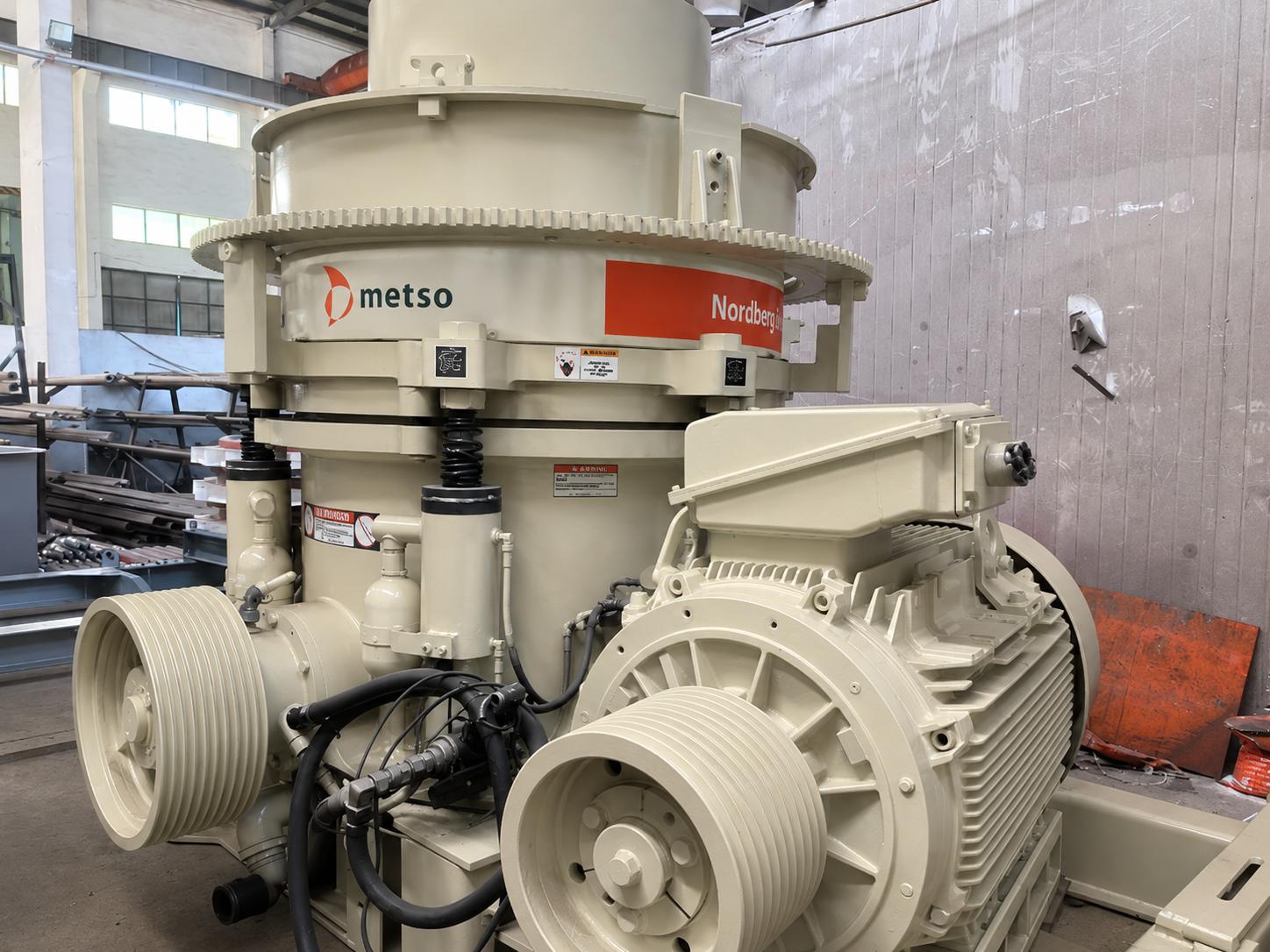
Sensor signals carry no meaning on their own; they produce value when connected to a control system. By transferring the crusher motor's condition monitoring data to a PLC or SCADA system:
- Centralized monitoring: All motors of the plant are monitored from a single screen; the operator sees the motor's health without going to the field.
- Trend and history logging: Vibration and temperature are logged over time; a slowly rising trend shows in advance that a failure is approaching.
- Automatic alarm: When a threshold is exceeded, an instant notification is sent to the operator; if necessary, the motor is stopped automatically.
- Remote access: On mobile or remote plants, the motor's condition can be monitored remotely.
This integration turns the motor from passive equipment into an active asset that continuously produces a health report. This visibility is invaluable, especially on crusher lines where the downtime cost is high.
Threshold and Alarm Strategy: Two-Stage Protection
The power of condition monitoring is that it offers graded warning. Two thresholds are defined based on ISO standards and manufacturer data:
- Warning (alarm) threshold: Gives a warning when vibration or temperature rises above normal. The motor keeps running; the operator plans maintenance or adjusts the load.
- Danger (trip) threshold: Stops the motor when the value reaches the critical limit; prevents catastrophic failure and secondary damage.
A well-designed strategy gives the team time to intervene by placing the warning threshold clearly below the danger threshold. This way the failure is resolved with planned maintenance instead of a sudden stop in the middle of production. The impact-load character of the crusher also requires considering the flywheel and inertia effect; we examined this topic in our article on motor selection under impact load: flywheel, inertia and crusher drive.
Correct Monitoring Architecture Selection: A Checklist
- Which parameters will be monitored? At least vibration + temperature is recommended on a crusher.
- Output type: 4-20 mA for a fixed plant and long distance; IO-Link for multiple data; wireless for a mobile/inaccessible point.
- Sensor location: vibration near the bearing housing, temperature on the bearing and winding.
- SCADA/PLC integration and trend logging must be planned.
- Warning and danger thresholds must be set according to the ISO standard and manufacturer data.
- Ordering the motor from the factory with the sensor option is more reliable than later installation.
The Return on a Condition Monitoring Investment
Condition monitoring is not a cost but an investment. The cost of a single unplanned stop on a crusher line, together with lost production, emergency maintenance, overtime and delivery delay, easily exceeds the cost of the condition monitoring system. Thanks to early warning:
- Bearing and bearing-seat replacement is taken into planned maintenance; a sudden stop is prevented.
- A small problem is resolved before it turns into a major failure; secondary damage is prevented.
- Maintenance resources are used when truly needed; unnecessary periodic intervention is reduced.
- The motor's life is extended; the total cost of ownership drops.
When the selection of the main crusher motor and condition monitoring are planned together, both the right-power motor and the right monitoring architecture are obtained. You can find the fundamentals of crusher motor selection in our article on electric motor selection for a crusher and stone-crushing plant.
Vibration Signatures: Which Fault Produces Which Vibration?
The real power of condition monitoring is that vibration carries not just a "high/low" level but also a signature. Different mechanical problems appear at different frequency components of the vibration, and advanced monitoring systems can distinguish the type of fault from these signatures:
- Imbalance: Produces dominant vibration at exactly the rotational frequency (1x). Impeller or coupling imbalance gives this signature.
- Misalignment: Usually causes pronounced vibration at twice the rotational frequency (2x); it is a sign of coupling and shaft alignment problems.
- Bearing damage: Produces high-frequency, broadband vibration and characteristic bearing pass frequencies. It is caught at an early stage by envelope analysis.
- Mechanical looseness: Appears as irregular vibration at multiples of the rotational frequency (harmonics); it indicates looseness of the foot, bolt or bearing housing.
On a crusher motor, because the heavy impact load can mask these signatures, the sensor location and correct filtering are important. A simple RMS vibration measurement gives the overall level; a more advanced spectral analysis shows the type and location of the fault. Therefore, when selecting the monitoring architecture, it is necessary to clarify whether you want only threshold breach detection or fault-type diagnosis.
The Importance of Sensor Location and Mounting
The accuracy of a condition monitoring system depends on the sensor being mounted at the correct point in the correct way. A wrong location or loose mounting can hide a real fault or produce a false alarm:
- The vibration sensor must be near the bearing housing: Vibration is measured most accurately right above the load-carrying bearing. Distant points attenuate the signal.
- Tight and rigid mounting: A loosely mounted sensor adds its own vibration to the measurement and loses high-frequency information.
- Three-axis evaluation: Vibration in the radial (horizontal and vertical) and axial directions shows different faults; a multi-axis sensor is preferred where possible.
- Correct contact for the temperature sensor: Bearing temperature should be measured from the point closest to the bearing, and winding temperature with an embedded RTD.
In a dusty and vibrating environment such as a crusher, having the sensors embedded in the frame at the factory is both more accurate and more durable than external sensors added later in the field. Therefore, ordering the sensor option together with the motor is the soundest approach for heavy-duty motors.
Frequently Asked Questions
Should I choose 4-20 mA or IO-Link?
If you are in a fixed plant, over a long cable distance, and working with a PLC/SCADA analog input, 4-20 mA is the most reliable and universal choice; it is noise-resistant and a cable break is detected. If you want to carry multiple values (vibration, temperature, diagnostics) digitally from a single sensor and perform remote parameter setting, IO-Link is a more advanced solution but requires a short distance and an IO-Link master. On mobile crushers or hard-to-reach points, industrial wireless solutions are considered.
Which parameters should be monitored on a crusher motor?
The two most important parameters on a crusher motor are vibration and temperature. Vibration shows bearing damage, imbalance, looseness and misalignment early. Temperature monitors both bearing (mechanical) and winding (electrical) health. Together these two make the motor's mechanical and thermal state visible simultaneously. Because of the heavy-impact and dusty operating conditions, this monitoring is especially valuable on a crusher.
Does condition monitoring really prevent unplanned downtime?
Yes. Problems such as bearing wear, imbalance or lubrication failure show themselves as a gradual increase in vibration and temperature weeks before the failure fully develops. Condition monitoring catches this increase and gives a warning; thus maintenance is performed at a planned time instead of a sudden stop in the middle of production. This significantly reduces both lost production and emergency maintenance cost.
HEM Motor supplies crusher and heavy-duty motors with embedded vibration and temperature sensors, 4-20 mA / IO-Link / wireless output and SCADA/PLC integration, with the correct condition monitoring architecture. Share your plant's structure, the parameters you want to monitor and your existing automation infrastructure with us; we will provide a quote for the correct sensor and output type selection with manufacturer stock advantage and fast delivery.