English
 Türkçe

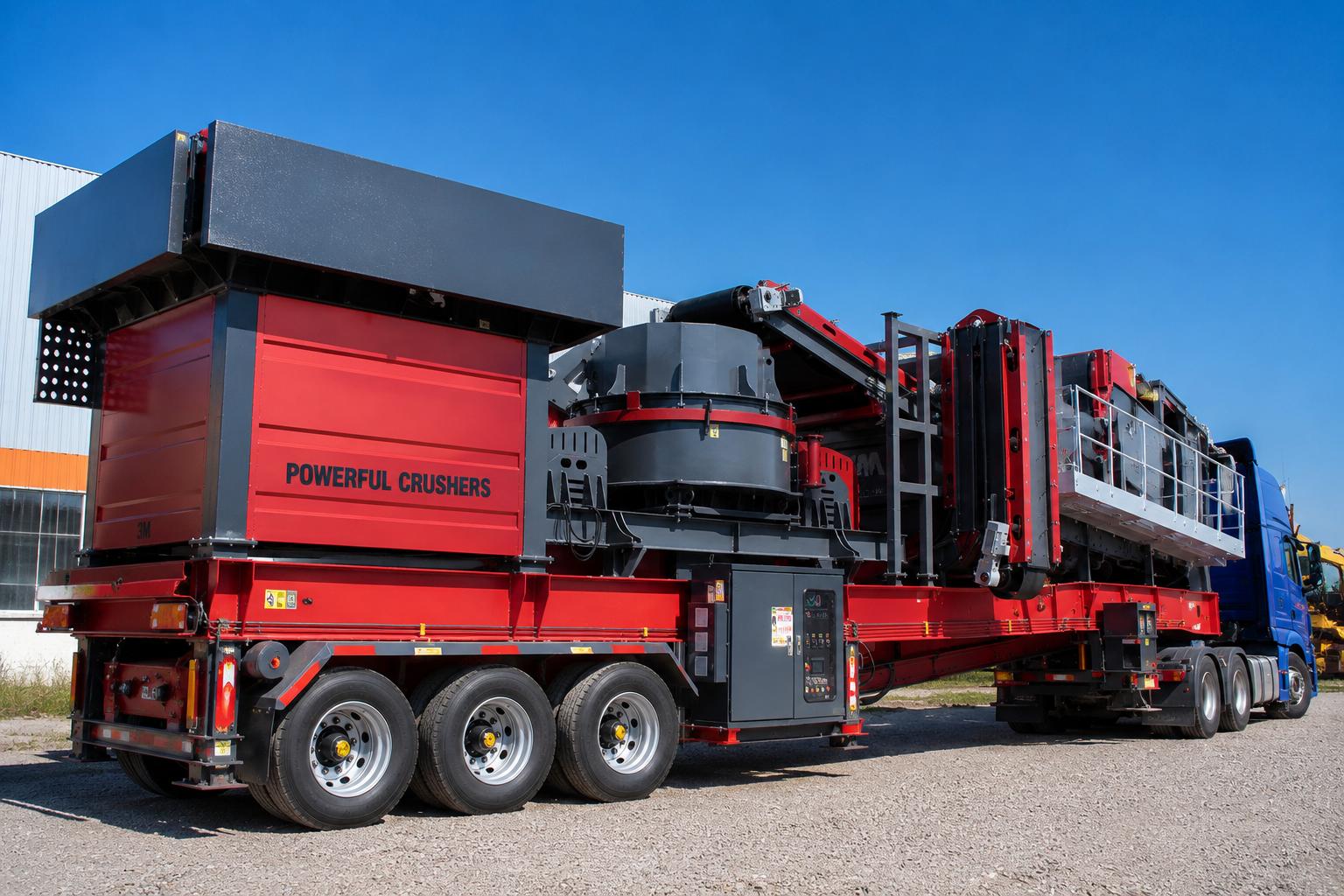

Crusher and stone-crushing plants operate not only on hot summer sites but also in cold-climate and arctic regions where winter drops to -40 °C. In crushing-screening plants in Siberia, Canada, Scandinavia, high-altitude mining sites and regions with a harsh continental climate, a standard motor can fail unexpectedly in cold weather. This is because low temperature affects every component of the motor differently: bearing grease solidifies, oils lose their viscosity, steel and cast parts become brittle, condensation and icing threaten insulation, and the starting torque needed to turn a frozen mechanism increases. In an application like a crusher that already demands high starting torque and impact load, when these difficulties pile up the motor selection becomes critical. In this article we cover the difficulties created by low temperature (-40 °C and below) in crusher/stone-crushing motors: grease and oil viscosity, steel brittleness, increased starting torque, the anti-condensation heater (space heater), low-temperature material and insulation options, and the correct cold-climate motor selection step by step.
How Does Low Temperature Affect the Motor?
Cold climate affects the electric motor through several different mechanisms, and each requires a separate measure. A standard motor is usually designed for down to -20 °C; for -30 °C, -40 °C and below, special "low temperature" options are needed.
- Grease and oil viscosity: Standard bearing grease solidifies in the cold; bearing friction increases, starting becomes harder and the grease cannot perform its lubricating task.
- Steel and cast brittleness: At low temperature metals become brittle; under impact load the risk of fracture in the shaft, body and cast parts increases.
- Increased starting torque: Frozen grease and a cold mechanism require the motor to produce more torque at start.
- Condensation and icing: Moisture condensing inside the motor during temperature changes freezes; insulation resistance drops and the short-circuit risk increases.
- Material shrinkage: Metals contract in the cold; tolerances and fits can change, and seals harden.
An important feature of these effects is that, although each may look small on its own, they reinforce one another. For example, while solidified grease increases the starting torque requirement, at the same time the shaft and coupling that become brittle in the cold must carry this high torque in an impacting manner; and when insulation weakened by condensation is added on top, a multi-directional risk is created in the field for a standard motor. That is why cold-climate motor selection should be done not with a single measure but with a set of complementary measures. The site's lowest recorded temperature, not just the average, should be the basis; because the moment the motor is most stressed is the first start on the coldest morning of the year.
In the crusher application this situation is even more critical, because the plant usually operates outdoors, unprotected and under constant dust. Mines and quarries are often established far from population centers, in regions with harsh climate conditions. A motor failure causes not only that motor but the entire crushing-screening line to stop; and since spare-part and service access is also harder in cold climate, choosing the right motor from the start directly affects the downtime cost.

Grease and Lubrication: The First Target of the Cold
The most common problem in cold climate is lubrication. A standard NLGI 2 bearing grease hardens noticeably around -20 °C and becomes almost solid at -40 °C. In this case the bearing cannot be lubricated by the grease; metal-to-metal contact, excessive friction and rapid wear begin. Moreover, hardened grease makes it harder to turn the bearing at start, increasing the motor's starting torque requirement.
The solution is synthetic greases specially formulated for low temperature. These greases retain their fluidity at much lower temperatures and operate over a wide temperature range. In cold-climate motors, the grease type, temperature range and lubrication interval must be determined according to the site. For the basics of grease selection, our bearing greasing and grease type article is a good resource. We also covered the relationship between grease and torque in cold first start in our cold first start article.
Steel Brittleness and Impact Load
The most challenging aspect of the crusher application is continuous impact load: as stone breaks, the motor and mechanism are exposed to sudden torque shocks. Steel and cast iron parts that are durable at normal temperature become brittle at low temperature; that is, they lose their ability to flex and tend to crack under sudden impact. This means a serious fracture risk for the shaft, coupling, body and cast components.
For this reason, low-temperature impact-resistant materials are used in cold-climate motors. The shaft steel, body casting and fasteners are selected to retain impact toughness at -40 °C and below. We detailed the topic of impact load and body rigidity in the crusher in our impact load, motor, flywheel and inertia article. For the impact resistance of the cast iron body, see our cast iron body impact resistance article.
Starting Torque: Turning a Cold Mechanism
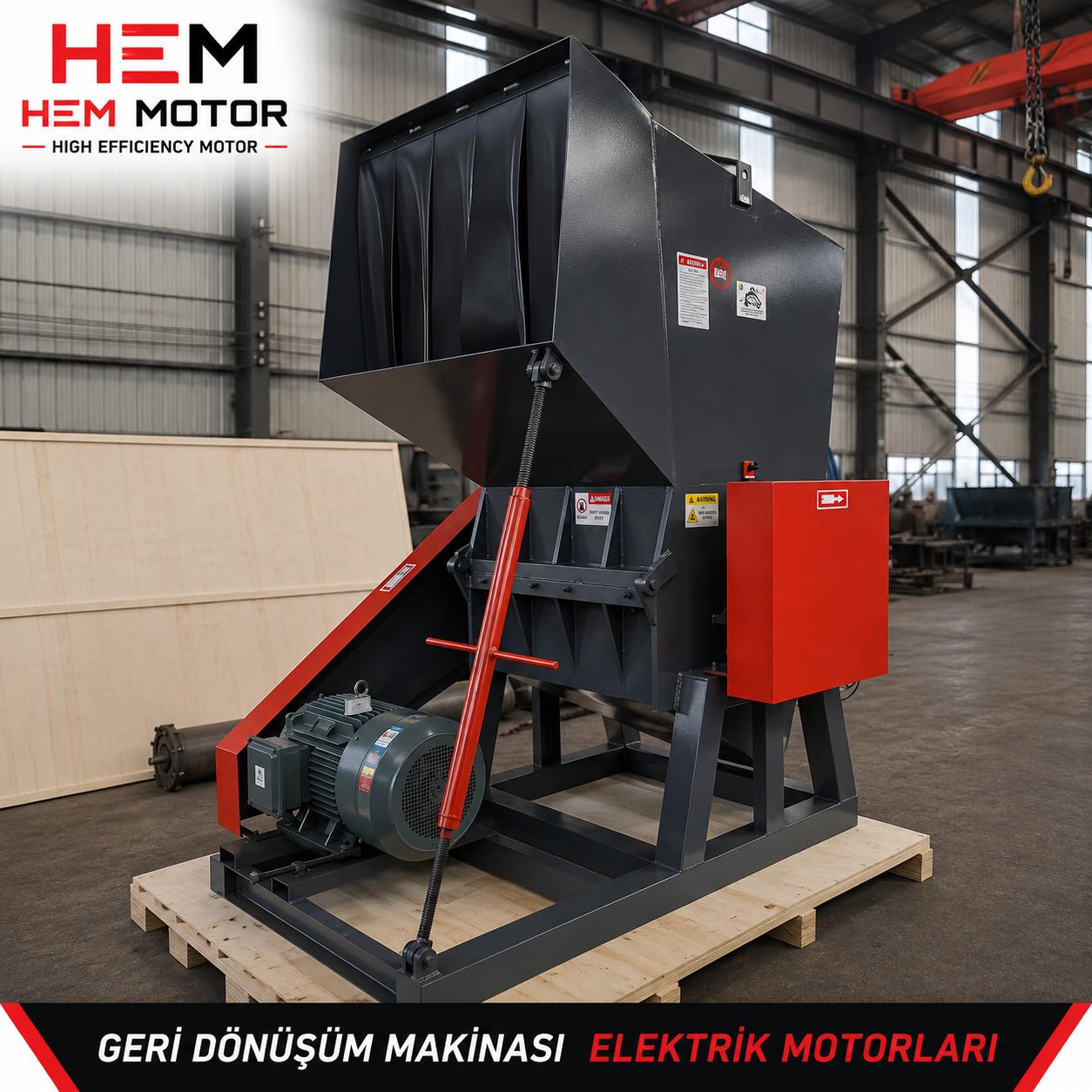
A crusher motor already requires high starting torque, because it must move a heavy, high-inertia crusher (sometimes full of stone). In cold climate, the resistance of solidified grease and cooled oil is added to this. As a result, at cold first start the torque the motor produces must overcome both the load and the additional resistance caused by the cold.
Therefore, cold-climate crusher motors are sized to have sufficient starting torque reserve. A high torque class (such as Design H) and the correct starting method (star-delta, soft starter or liquid resistance starter) are evaluated together. For crusher starting methods, our crusher motor starting article is a comprehensive guide. For general crusher motor power and speed selection, see our crusher plant electric motor selection article.
Space Heater and Condensation Control
In cold climate, the moments when the motor is stopped are as risky as when it runs. When the motor stops it cools; moisture condensing inside due to the temperature change forms water and then ice on the insulation surface. This lowers insulation resistance and increases the short-circuit risk when restarted. The solution is the anti-condensation heater (space heater).
The space heater is a heating resistor that prevents condensation by keeping the winding area slightly above ambient temperature when the motor is stopped. It is off while the motor runs and engages when it stops. In cold-climate and arctic crusher motors, the space heater is an almost mandatory option. For the working logic of the anti-condensation heater, our anti-condensation heater (space heater) article gives detailed information. For outdoor moisture protection on the crusher site, also see our anti-condensation heater in the crusher motor article.
Cold-Climate Motor Specification Table
| Feature | Standard Motor | Cold-Climate / Arctic Option |
|---|---|---|
| Operating temperature | Down to -20 °C | -40 °C and below |
| Bearing grease | Standard NLGI 2 | Low-temperature synthetic grease |
| Shaft/body steel | Standard casting | Low-temperature impact resistant |
| Space heater | Optional | Standard (strongly recommended) |
| Insulation and varnish | Standard | Moisture/condensation resistant |
| Seals/gaskets | Standard elastomer | Cold-resistant elastomer |
| Starting torque reserve | Normal | High (for cold resistance) |
Not all of these options may be needed on every site; but in a -40 °C arctic crusher plant, most of the list becomes mandatory. The correct combination is determined according to the site's lowest temperature, operating profile and stop scenarios.
Selecting the Correct Cold-Climate Crusher Motor
- Determine the site's lowest temperature: The design must be based on the seasonal minimum temperature.
- Select the grease and oil: Low-temperature synthetic grease and suitable viscosity are essential.
- Verify the material option: Low-temperature resistant steel/casting for impact load + cold.
- Add a space heater: An anti-condensation heater to prevent condensation during stops.
- Check the starting torque: Sufficient torque reserve for cold resistance and the correct starting method.
- Review the protection class: Adequate IP protection for dust, snow and moisture.
- Plan the stop scenarios: Space heater supply during long stops and, if needed, additional preheating should be evaluated.
Handling these steps together is the only way to obtain a reliable crusher motor in cold climate. Adding a single measure (for example only low-temperature grease) does not eliminate the other risks (brittleness, condensation, starting torque). The correct solution is a balanced combination of these options according to the site's conditions.
Snow, Dust and Protection Class
In cold-climate crusher motors, besides low temperature there is also a snow and dust problem. Snow that melts and refreezes can form an ice layer on the motor surface; dust is already an inseparable part of the crusher site. For this reason, the protection class must also be selected carefully in cold-climate motors. For a motor exposed to snow, rain and dust in the open field, at least IP55 and often IP65/IP66 protection is recommended. High IP protection protects both the insulation and the bearing by preventing both water and fine dust from entering.
- IP55 and above: Basic protection against dust and water ingress in the open field.
- Against snow accumulation: Rain canopy/protective roof option in vertical mounting.
- Condensation drainage: Drain holes to expel water accumulating inside the body.
- Cold-resistant seals: Sealing elements that do not harden at low temperature.
We covered dust sealing and high IP protection on the crusher site in our dust sealing and IP65/66 in the crusher motor article. For general protection against dust, moisture and impact in the open field, our motor protection at the stone quarry and mine site article is a useful resource.
Frequently Asked Questions
Will a standard crusher motor run at -40 °C?
Usually no, it is not safe. Standard motors are typically designed for down to -20 °C. At -40 °C the standard grease solidifies, the insulation is damaged by condensation and the cast parts become brittle. In this condition the standard motor either does not start at all or fails quickly. For arctic conditions a special cold-climate motor with low-temperature grease, suitable material, a space heater and sufficient starting torque reserve is required.
Why is the space heater so important in cold climate?
Because the moments when the motor is stopped are the riskiest for condensation. A running motor dries with its own heat; but when it stops it cools, and the moisture accumulated inside condenses and freezes. This water and ice lower insulation resistance and can cause a short circuit at restart. The space heater prevents condensation by keeping the winding area warm during stops. That is why it is an almost mandatory option in cold-climate and arctic crusher motors.
Why must the starting torque be higher in cold climate?
A crusher already requires high starting torque. In the cold, two effects are added: the resistance of solidified bearing grease and the additional friction of the cooled mechanism. So at cold first start the motor must have a torque reserve that overcomes this additional cold resistance on top of the normal load. Otherwise the motor struggles at start, draws excess current and trips on thermal protection. The correct solution is sufficient torque reserve and a suitable starting method.
When selecting a motor for a cold-climate or arctic crusher/stone-crushing plant, tell us your site's lowest temperature, crusher type and operating profile. Let the HEM Motor engineering team correctly determine the low-temperature grease, material option, space heater and starting torque reserve together; with our wide stock range and fast delivery advantage, contact us for a correctly optioned order and request a quote.