English
 Türkçe

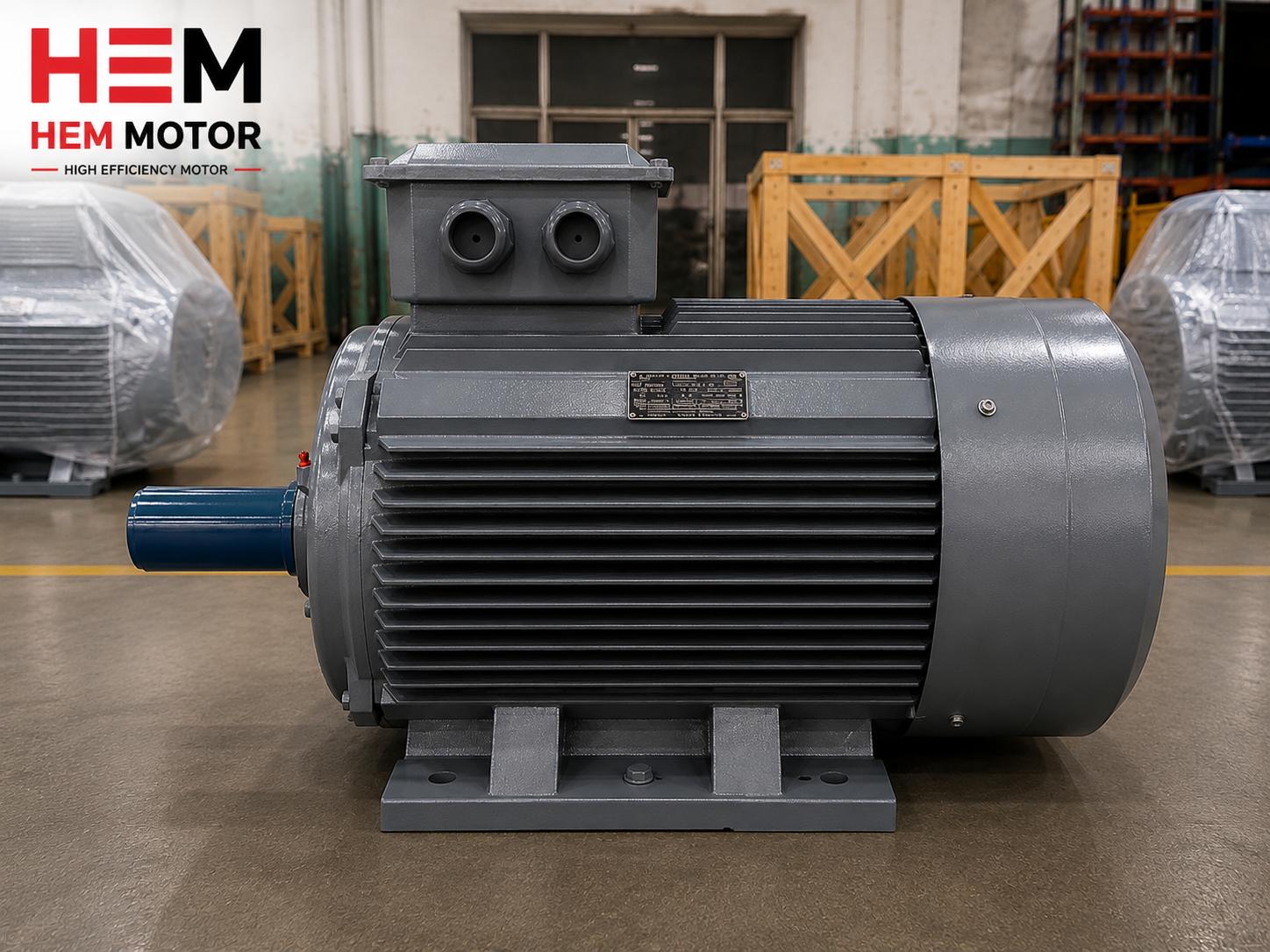

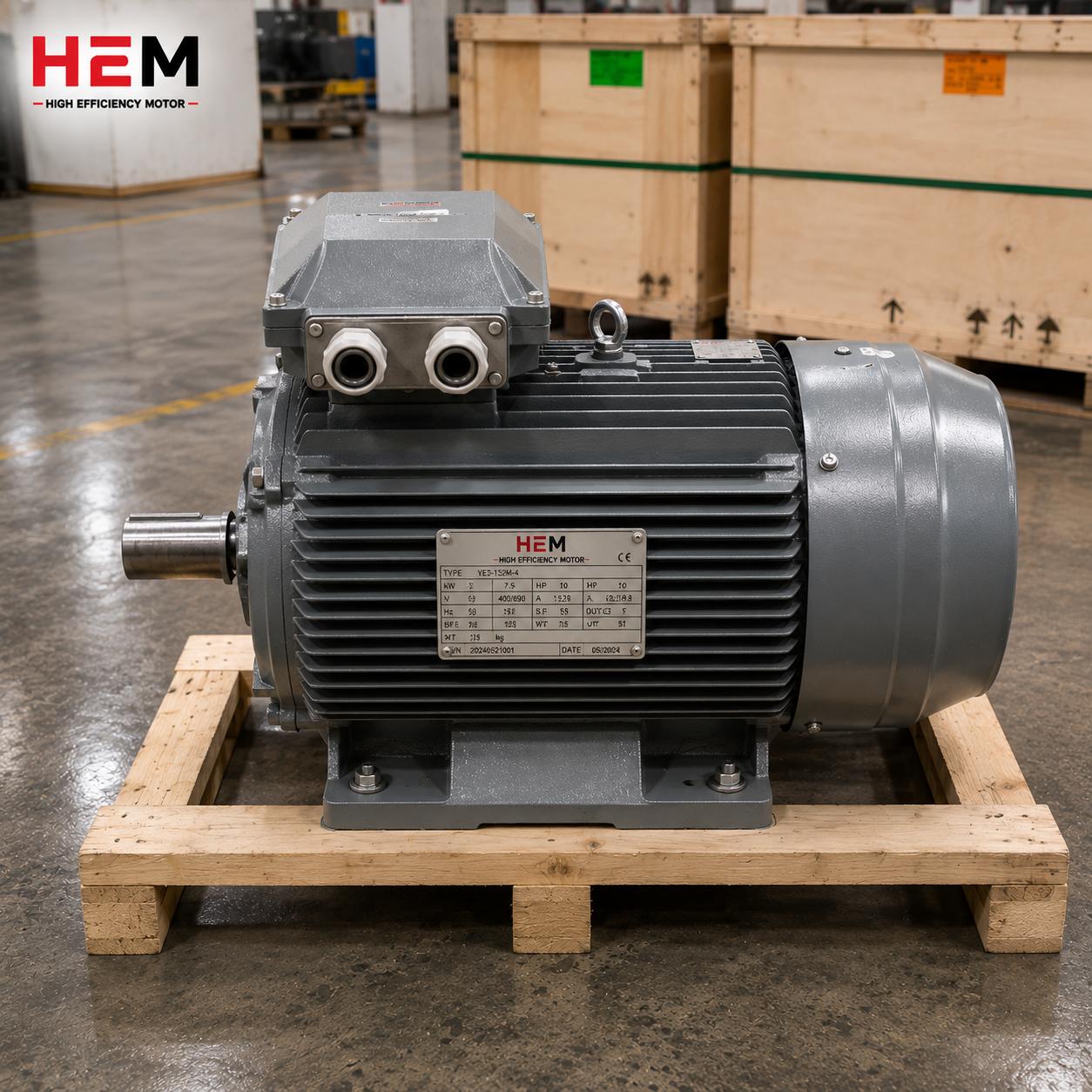
An 800 kW class electric motor is not an ordinary industrial motor; at this power every detail turns into a project line item. The starting method, the cooling type, the frame size, the weight, transport and the commissioning plan must all be put on the table long before the order. An 800 kW motor is usually the heart of a compressor, large pump, fan, mill or blower line, and when it stops the entire production behind it stops. For this reason correct procurement covers not only the motor itself but also the panel that starts it, the system that cools it, the crane that moves it to site and the delivery schedule that gets it there on time. In this article HEM Motor covers pole and speed selection (2/4 pole), the starting alternatives, cooling methods, the weight-transport realities and an end-to-end supply plan for an 800 kW ultra high power motor.
Speed and Pole Selection on an 800 kW Motor (2/4 Pole)
In this power class 2-pole (about 3000 rpm) and 4-pole (about 1500 rpm) are the most common choices. Speed selection is directly tied to the driven machine: high-speed centrifugal compressors and large fans usually run 2-pole, while mills and low-speed pumps run 4-pole. As speed rises, torque at the same power falls, which directly affects belt-pulley, coupling and bearing selection.
On a 2-pole 800 kW motor the rotor peripheral speed is very high, so balancing, bearings and shaft dynamics become critical. On the 4-pole version, speed halves while torque doubles, which is an advantage for high-inertia loads but the frame also grows. The correct pole choice determines both energy efficiency and mechanical life. We covered the 2/4 pole logic at lower power in our 200 and 250 kW high power motors 2/4 pole article; the same principles produce far sharper consequences at 800 kW.
Frame Size: Around 450 and 500
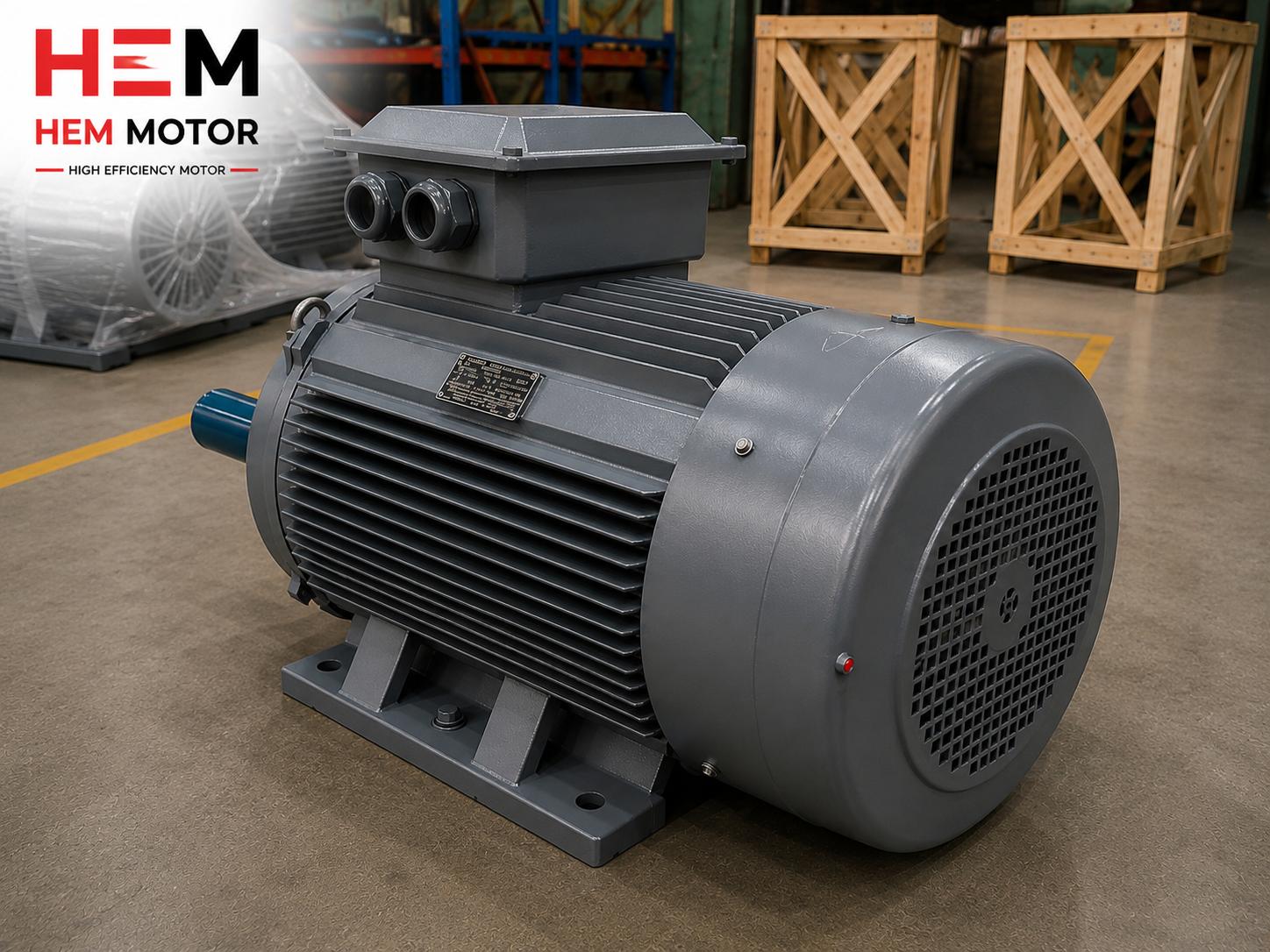
An 800 kW rating typically corresponds to the 450 to 500 frame range on the IEC scale; this varies with pole count and cooling type. The lower-speed (4-pole) version usually requires a larger frame because more copper, a larger rotor and a wider cooling surface are involved. As the frame grows, the foot-hole spacing, shaft diameter, coupling size and foundation design all change, so the frame must always be confirmed together with the drive line before ordering.
Torque and Load Matching: The Mechanical Consequences of Speed Choice
On an 800 kW motor, speed selection is not just a speed preference but directly a torque and mechanical load choice. At the same power, a 2-pole motor produces about half the torque while the 4-pole version delivers twice the torque. The torque demand of the driven machine (constant torque, variable torque or high starting torque) determines this choice. On variable-torque loads such as centrifugal pumps and fans, the speed-torque relationship is governed by the affinity law; on constant or high-starting-torque loads such as conveyors and mills, the starting torque becomes critical.
At this power, shaft diameter, key size and coupling selection are also set by torque. A wrong coupling or an undersized shaft fatigues under high torque and fails quickly. Furthermore, the inertia of the large-diameter rotor directly affects the starting time and therefore the starting method; on a high-inertia load the motor stays in starting current for a long time, and this affects the cooling and protection choice. So speed, torque, inertia and starting are not independent but links in a single chain.
Starting at High Power: Which Method, When?
Direct on line (DOL) starting is not feasible on most grids for an 800 kW motor, because the starting current reaches 6-8 times the rated current and causes serious voltage dips, stressing compensation and transformers. For this reason the starting method at high power is a design decision as important as the motor.
- Soft starter: Reduces starting current and mechanical shock. If only softening the start is needed and no speed control is required, it is the economical and compact solution.
- VFD (variable frequency drive): Provides both a soft start and full speed control. On pumps and fans it brings large energy savings via the affinity law, but it has the highest cost and panel footprint.
- Reactor/autotransformer starter: Limits starting current by reducing voltage; preferred for high-inertia loads and strong grids.
- Slip-ring (wound rotor) motor: Provides high starting torque and low starting current via rotor resistance; the classic solution for very high inertia loads such as mills and crushers.
The choice is made according to the load inertia, the grid short-circuit power and the need for speed control. Clarifying whether only a soft start or continuous speed control is required determines the decision between a soft starter and a VFD. We detailed this critical comparison in our starting: star-delta vs soft starter article.
In practice, at the 800 kW level the decision can be summarised as follows: if the load runs continuously at constant speed and you only want to soften the starting shock, a soft starter is the most economical solution. If the load is a pump or fan and frequently runs at partial load, the energy saving from speed reduction with a VFD soon pays back the drive cost. On very high inertia mills and crushers, a slip-ring motor or a liquid-resistance starter is still the most robust solution because it manages the starting torque on the rotor side and does not stress the grid. When the wrong method is chosen, the motor either cannot start or overheats on every start and shortens its life.
800 kW Motor Speed, Frame, Weight and Starting Table
The table below summarises typical speed, frame, approximate weight and recommended starting method for 2- and 4-pole motors in the 800 kW class. Values vary with cooling type and manufacturer design; exact figures are confirmed per project.
| Pole | Synchronous speed | Typical frame | Approx. weight | Recommended starting |
|---|---|---|---|---|
| 2 pole | 3000 rpm | 450 | ~4,500-5,500 kg | Soft starter / VFD |
| 4 pole | 1500 rpm | 450-500 | ~5,500-7,000 kg | VFD / Reactor |
| 6 pole | 1000 rpm | 500+ | ~7,000-8,500 kg | VFD / Slip-ring |
As the table shows, as pole count rises (speed falls) the weight and frame grow. This directly affects both the foundation design and the transport-crane plan. We explained how to set up a lead-time and transport plan at high power in our high power motor supply above 90 kW article; 800 kW is the extreme end of that plan.
Cooling Method: IC411, IC611 and IC81W
At high power such as 800 kW, cooling directly determines the motor life and the ability to deliver continuous power. Three main cooling types stand out:
- IC411: The standard surface-cooled method with a shaft-mounted fan. Economical, but the surface area can be limiting at very high power.
- IC611: Closed-circuit air-to-air heat exchanger cooling (mounted on top). In dusty environments it closes the inner air off from outside and reduces fouling.
- IC81W (CACW): Air-to-water heat exchanger cooling. Provides the highest power density; ideal for large motors in plants with a water circuit.
The cooling choice is made according to ambient temperature, dust/moisture conditions and existing water infrastructure. We compared the low-speed behaviour and differences of methods such as IC411 and IC416 in our cooling methods IC411 and IC416 article. At high power, the wrong cooling choice leads to a motor that cannot run at its rated power and ages prematurely.
If the motor will produce full torque continuously at low speed on a VFD, the standard shaft-mounted fan cannot push enough air and the motor heats up. In this case an external forced (independently supplied) cooling fan is needed so the motor is fully cooled regardless of speed. We covered the effect of continuous torque at low speed on cooling in our running below 50 Hz, constant torque and cooling loss article. At the 800 kW level, inadequate cooling means not just efficiency loss but premature ageing of the winding insulation and a costly rewind, so cooling is a part of motor selection at least as important as the frame.
Weight, Transport and Crane Planning
An 800 kW motor can weigh between 5 and 8 tonnes, which makes every step an engineering matter, from getting it to site to seating it on the foundation. A suitable vehicle for transport, a crane of sufficient capacity for unloading and the correct lifting eyebolts for installation are essential. The motor lifting eyes are designed only to lift the motor body; additional accessories (cooling unit, base) must be considered separately.
- Crane capacity: Selected above the motor weight with a safety margin; the lifting angle must be considered.
- Foundation (base): Designed to damp vibration, carry the weight and maintain alignment.
- Alignment: At high power, coupling alignment must be checked to micron level; even a small misalignment quickly wears the bearing.
- Access: Sufficient space must be left around the motor for maintenance and bearing replacement.
You can find the details on lifting eyes, centre of gravity and safe handling in our lifting eyebolt, weight and safe handling article; at the 800 kW level, following these rules is vital.
Lead Time and Supply Plan: Correct Procurement for 800 kW
At this power, motors are mostly project-planned rather than off-the-shelf items, so lead-time management is at the centre of the order decision. A correct supply plan includes these steps:
- Technical clarification: Power, pole, frame, mounting, cooling, voltage and starting method must be clear from the start.
- Starting compatibility: The chosen soft starter/VFD/reactor must be sized together with the motor; the panel and cable cross-section set accordingly.
- Transport-crane readiness: Site access, crane and foundation must be ready before the delivery date.
- Commissioning: Insulation measurement, rotation direction, vibration and temperature checks at first start.
- Redundancy: On a critical line, a spare 800 kW motor or a fast-supply guarantee should be planned.
Supply voltage also matters at high power; on 800 kW motors a higher voltage is often preferred over 400 V because the current at the same power falls and the cable and panel shrink. We detailed this advantage in our 690V supply voltage motor selection article.
Frequently Asked Questions
Is direct on line (DOL) starting possible on an 800 kW motor?
In practice it is not feasible on most grids. The starting current rises to 6-8 times the rated current and causes serious voltage dips on the grid. For this reason, at the 800 kW level soft starting methods such as a soft starter, VFD, reactor or slip-ring motor are used. The correct method is chosen according to load inertia and grid strength.
Should I choose 2-pole or 4-pole on an 800 kW motor?
It depends on the speed of the driven machine. High-speed centrifugal compressors and large fans usually run 2-pole; mills and low-speed pumps run 4-pole. 4-pole means higher torque and a larger frame, while 2-pole means higher speed and more critical balancing.
Which cooling type is best for an 800 kW motor?
It depends on the environment. In a clean, well-ventilated environment IC411 may be enough; in a dusty environment IC611 closed-circuit cooling, and in a plant with water infrastructure IC81W air-to-water cooling provides the highest power density. The wrong cooling choice leaves the motor unable to run at its rated power.
An 800 kW ultra high power motor is a project undertaking; a sound purchase cannot be made without the right speed, the right frame, the right starting method, the right cooling and a complete transport-lead-time plan coming together. As HEM Motor we plan this entire process with you in this power class, from technical clarification to commissioning, and provide the motor, the starting solution and the lead-time plan from a single source. Request a project-based quote for your 800 kW and above high power needs; with manufacturer supply strength and rapid solutions, we are at your side.