English
 Türkçe

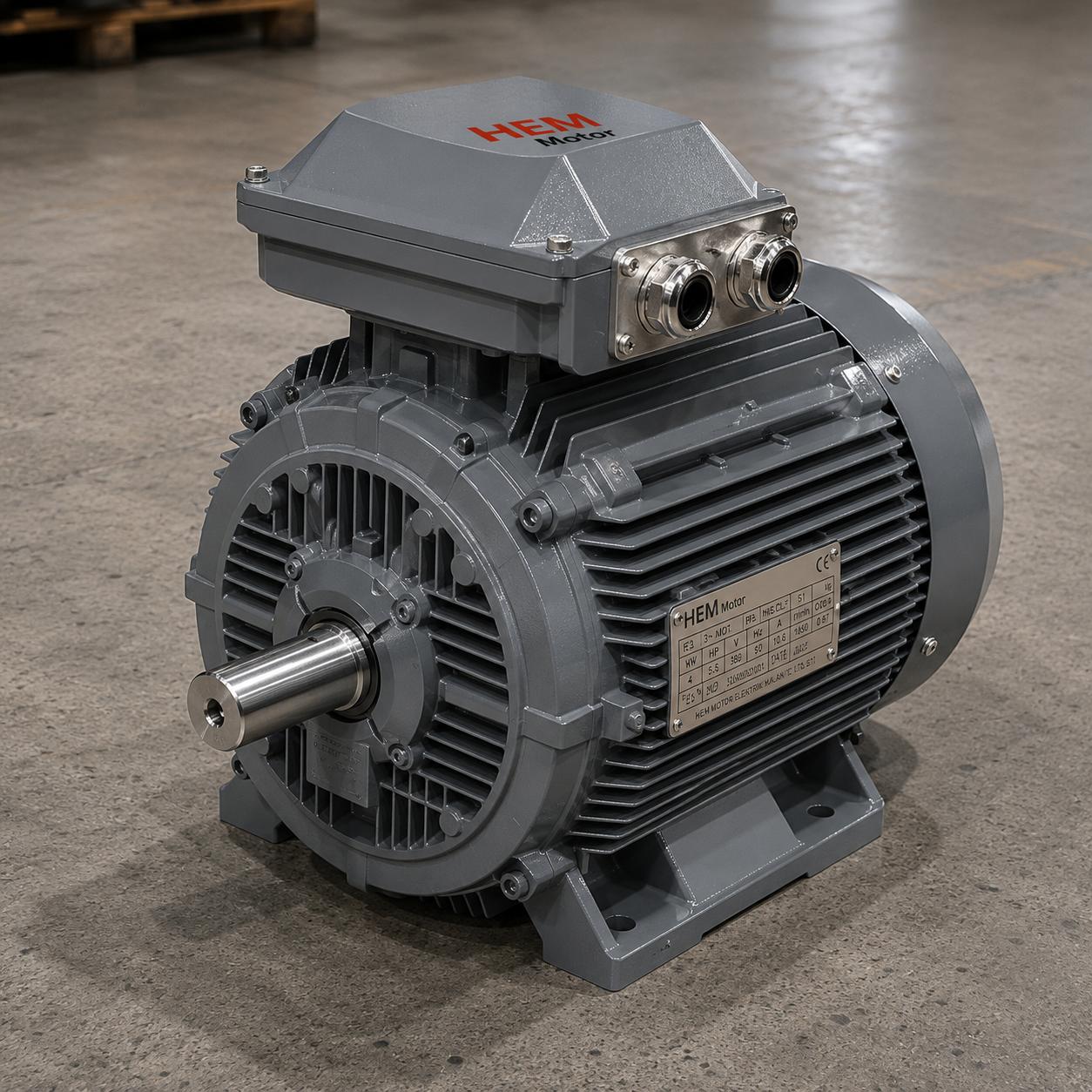

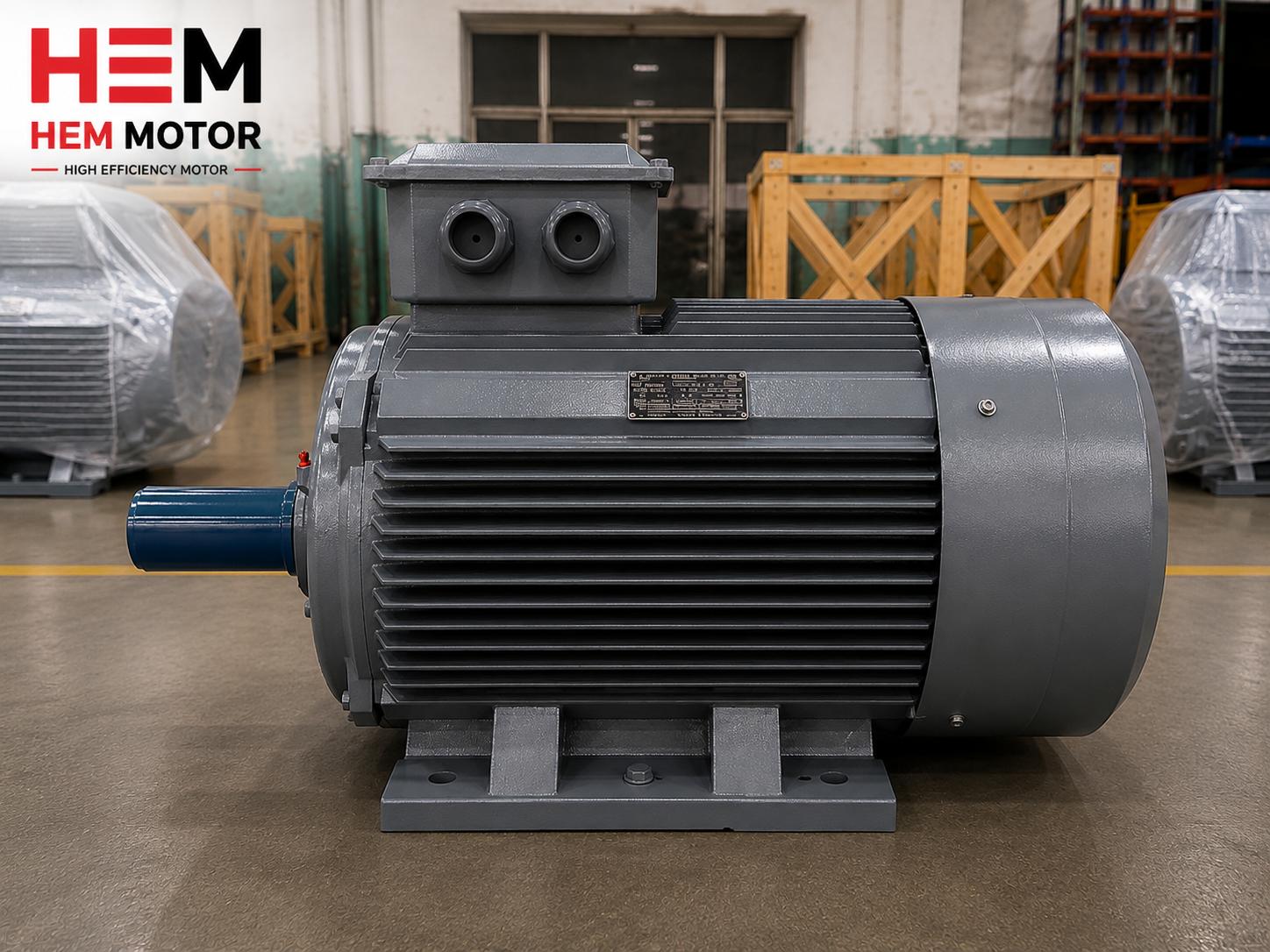
A 710 kW class electric motor sits far above the powers most industrial plants are used to, in the ultra-large-power region. A motor of this size is no longer ordered like a standard shelf product; the frame size, weight, cooling method, starting system, transport and commissioning plan all become a single engineering file. Cement and mining mills, large crushers, ID/FD fans, high-flow pumps, compressor and blower units are driven by motors of this power. On a 710 kW machine a wrong pole, frame or starting choice directly affects not only efficiency but grid compatibility, installation feasibility and delivery time. This article covers the 2/4-pole speed options of a 710 kW ultra-large-power motor, the 400/450 frame range, high-power starting methods (softstarter, VFD, reactor), cooling classes (IC81W, IC411), weight-transport-crane planning and the lead-time/supply process from a HEM Motor engineering perspective. Our aim is to show concretely which questions must be answered in advance when buying a motor of this power, which parameters affect one another, and how to prevent the typical mistakes seen in the field.
Decisions made on ultra-large-power motors are hard to reverse. A wrongly chosen frame can mean re-pouring the foundation in the field, a wrong cooling class can mean rearranging the machine room, and an inadequate starting system can bring grid voltage dips and production loss. For this reason a 710 kW selection must be made with the right data and a holistic view from the start. In the sections below we open up each heading with practical information suited to real field decision-making.
2/4-Pole Speed and Frame Selection (400/450)
On 710 kW motors the speed choice depends directly on the application's speed requirement. A 2-pole machine runs at about 2980-2985 rpm and suits high-speed compressor, blower and some large pump applications. A 4-pole machine, at about 1485-1490 rpm, is preferred for mills, crushers, large fans and geared drives. The same 710 kW means higher speed-lower torque at 2 poles and lower speed-higher torque at 4 poles; so for high-torque, heavy-starting loads 4 poles is the more correct starting point.
At this power the frame is usually in the IEC 400 to 450 range. 2-pole 710 kW machines are mostly seen in a 400 frame and 4-pole machines in a 450 frame; the exact frame, however, varies with the manufacturer's design range and cooling class. Frame selection is not only an electrical but a mechanical decision: shaft diameter, key size, foot hole spacing and flange connection must match the existing foundation and coupling. In a replacement (a new motor in place of an existing one), confirming these mechanical dimensions in advance is critical to avoid surprises in the field.
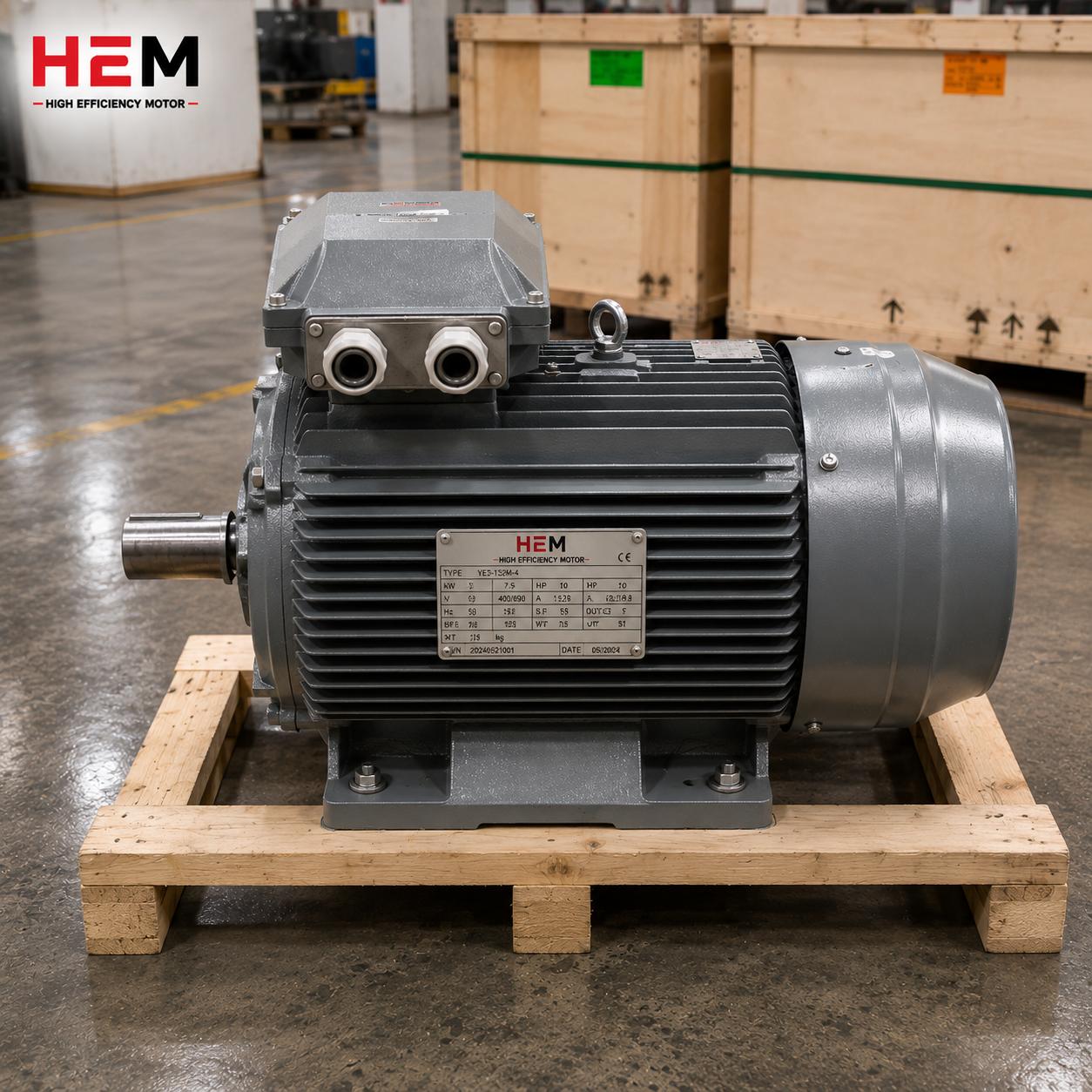
710 kW Technical Data Table
The table below summarises the typical pole-speed-frame, approximate weight and recommended starting method of a 710 kW class motor. The values are indicative; the exact figures must be based on the nameplate and the manufacturer's data sheet.
| Poles | Approx. speed (rpm) | Typical frame | Approx. weight | Recommended starting |
|---|---|---|---|---|
| 2-pole | 2980-2985 | IEC 400 | ~3.2-4.0 t | VFD / softstarter |
| 4-pole | 1485-1490 | IEC 450 | ~4.0-5.0 t | Softstarter / reactor / VFD |
| 6-pole | 985-990 | IEC 450+ | ~4.5-5.5 t | Softstarter / VFD |
High-Power Starting: Softstarter, VFD and Reactor
Direct-on-line (DOL) starting of a 710 kW motor is not feasible in most plants, because the starting current reaches 6-7 times the rated current, which both stresses the transformer and cables and causes a serious voltage dip on the grid. Controlled starting is therefore always used at this power. There are three main methods.
- Softstarter: Reduces the starting current and mechanical shock by ramping the voltage up gradually. It is economical and effective in pumps, fans and large drives needing a fixed speed in steady state. It is ideal for loads with a low torque demand at start.
- VFD (variable frequency drive): Provides both a soft start and speed control throughout operation. It gives energy savings in variable-flow fans and pumps and full torque control in heavy-starting loads. At this power a VFD is usually a medium-voltage or parallel-module low-voltage solution and is the most expensive option.
- Reactor/auto-transformer starting: Limits the current by lowering the voltage at start with a series reactor or auto-transformer. It is used as a softstarter alternative for fixed-speed, medium-to-heavy-starting large loads.
The correct method depends on the load's starting torque-speed curve, its moment of inertia (J) and the short-circuit power of the grid. A high-inertia mill or fan heats the motor because of the long starting time; in that case the starting system must be sized together with the thermal limit. The HEM Motor application team always assesses the motor as a whole with its starting system.
Cooling: IC411 vs IC81W (Water-Cooled) Comparison
At 710 kW the losses are in the hundreds of kilowatts, and this heat must be removed safely. Two main cooling approaches stand out. IC411 is the classic method that cools the surface via fins on the housing with a shaft-end fan; it is simple and easy to maintain, but at high power the housing surface grows and it is sensitive to ambient temperature. IC81W is the air-to-water heat-exchanger (water-cooled) method; the air inside the motor circulates in a closed loop and gives up heat to water in the top exchanger. IC81W keeps the frame small in tight machine rooms, high ambient temperatures and dusty/dirty environments and provides operation at a stable temperature; it does, however, require a cooling-water infrastructure.
| Property | IC411 (surface, fan) | IC81W (air-water exchanger) |
|---|---|---|
| Cooling medium | Air | Closed air + water |
| Ambient sensitivity | High | Low |
| Infrastructure need | None | Cooling-water line |
| Dusty environment fit | Medium | Very good (closed loop) |
| Typical use | Open/clean sites | Cement, mining, tight machine rooms |
Weight, Transport and Crane-Lifting Plan
A 710 kW motor weighs between 3 and 5 tonnes, and can be heavier depending on cooling and frame. This weight makes the project's mechanical logistics as important as the electrical side. The lifting eyebolts on the motor are designed for the motor's own weight only; if it is to be lifted together with accessories or a base frame, a separate lifting plan is required. The site access route, door/corridor widths, crane capacity and floor load capacity must be checked in advance.
- Confirm the motor weight and centre of gravity from the manufacturer's data sheet.
- Select crane capacity, slings and eyebolt load limit according to the weight.
- Use a shaft lock and proper securing against vibration in transport; bearings can be damaged over a long journey.
- Plan the access route into the machine room and the placement into final position in advance.
- Match the floor/foundation load capacity and bolt pattern to the motor foot dimensions.
Lead Time and Supply Plan: Buying Right
As ultra-large-power motors are mostly made to order for the project, the delivery time (lead time) is longer than for small-power motors. The purchase of a 710 kW motor therefore requires a clear data set before ordering: rated power and speed, starting method, cooling class, mounting type (B3/B5/V1, etc.), frame, shaft and flange dimensions, voltage/frequency, protection class (IP55/IP65), ambient temperature and altitude. When this information is clear, the correct motor is selected and the lead time is planned realistically. In critical plants, where the cost of an unplanned outage far exceeds the motor's price, spare-motor planning should also be considered at this stage.
Commissioning is part of supply too: insulation resistance (megger) measurement, direction-of-rotation check, setting of the starting parameters and first-load temperature-vibration monitoring must not be neglected on large-power motors. HEM Motor provides application support in technical data gathering, correct configuration and lead-time planning for motors of this power.
Protection, Monitoring and Sensor Equipment
The failure of a 710 kW motor means not only repair cost but a far greater loss due to production downtime. For this reason motors of this power are usually ordered with rich protection and monitoring equipment. PT100 or PTC thermal sensors fitted in each phase to monitor winding temperature protect the motor against overload and insufficient cooling. Bearing temperature is continuously monitored on large machines with separate PT100 sensors; a sudden rise in bearing temperature is an early sign of a lubrication problem or an alignment error. On water-cooled (IC81W) machines, a leak detector and a flow switch on the exchanger give immediate warning of a cooling loss.
Vibration monitoring is increasingly becoming standard on large-power motors too. Vibration sensors fitted to the bearing housings reveal imbalance, misalignment or bearing damage before a failure occurs. Anti-condensation heaters (standby heaters) prevent condensation inside the winding when the motor is stopped, extending insulation life; this is especially important in humid and cold environments. All these options must be specified at the ordering stage, and the terminal box and wiring must be planned to carry these sensors. Correct protection equipment greatly reduces unforeseen outages on an ultra-large-power motor and makes maintenance planning predictable.
Efficiency, Power Factor and Operating Cost
A 710 kW class motor usually runs for most of the year, often in continuous (S1) duty. At this power even a half-point difference in efficiency corresponds to a notable amount on the annual energy bill, because the motor will draw hundreds of kilowatts over thousands of hours. For this reason, on ultra-large-power motors the efficiency class (IE3/IE4) is not merely a label but a parameter that directly determines the operating cost. The purchase decision should consider not only the motor price but the lifetime energy cost (total cost of ownership), because at this power the energy expense exceeds the motor price in a short time.
Power factor (cosφ) also gains importance at high power. A low power factor increases the reactive power drawn from the grid and enlarges the compensation requirement. For a 710 kW motor, correct compensation and, where needed, harmonic-filter planning is important both to avoid penalty tariffs and to protect switchboard equipment. On large motors running on a VFD, the input-side harmonics must also be assessed; where needed, harmonic distortion is kept within limits with an active front end (AFE) or a line reactor. When these decisions are planned at the same time as the motor selection, both grid compatibility and the efficiency target are achieved together.
Application Examples and Drive Architecture
Motors of 710 kW appear with different drive architectures in different sectors. In cement and mining mills the motor is usually connected to the main shaft through a gearbox or coupling; here the magnitude of the starting torque and inertia makes a softstarter or VFD mandatory. In large ID/FD fans the motor can be coupled directly to the fan shaft, and if variable flow is required, speed control with a VFD provides energy savings. In high-pressure compressor and blower units a 2-pole high-speed motor is preferred; in these applications vibration and alignment tolerances are very critical. In high-flow vertical or horizontal pumps a softstarter is often sufficient and is an economical solution.
The common point across all architectures is that the motor is selected not by its electrical ratings alone but together with its mechanical interface and drive train. The shaft-end type, coupling balance, common-base rigidity and vibration class are the determinants of reliable operation at this power. A misaligned coupling or a weak foundation drives even the highest-quality motor to early failure. For this reason the motor selection in a 710 kW drive must be treated as a whole, compatible with the entire machine and plant.
Frequently Asked Questions
Can a 710 kW motor be started direct-on-line (DOL)?
In practice it is not recommended. At this power the starting current rises to 6-7 times the rated current and causes a serious voltage dip on the grid and excessive stress on the transformer and cables. For this reason 710 kW motors always use controlled starting with a softstarter, VFD or reactor/auto-transformer. The correct method is determined by the load's starting curve and the short-circuit power of the grid.
Should I choose 2 poles or 4 poles?
It depends on the application's speed and torque requirement. For high-speed compressors and blowers, 2 poles (about 3000 rpm) is more suitable; for high-torque, heavy-starting applications such as mills, crushers and large fans, 4 poles (about 1500 rpm) is better. At the same power 4 poles produces higher torque. In geared drives the required output speed determines the pole selection.
When should water cooling (IC81W) be preferred over IC411?
IC81W is preferred in tight machine rooms with limited ventilation, at high ambient temperature, in dusty/dirty environments and where the frame size must be kept small. If a cooling-water line is available or can be installed, the water-cooled solution provides safe operation at a stable temperature. On open, clean sites IC411 is simpler and easier to maintain.
Selecting a 710 kW ultra-large-power motor is an integrated engineering decision in which speed, frame, starting, cooling, weight-transport and the lead-time plan are addressed together. A purchase made with the correct data set ensures both trouble-free installation in the field and long, reliable operation. For more information and assessment:
- High-Power Motor Supply Above 90 kW: Lead Time, Transport and Commissioning
- Electric Motor Cooling Methods: IC411 and IC416
- Lifting Eyebolt, Weight and Safe Handling
- Starting AC Asynchronous Motors: Star-Delta or Softstarter?
- Starting Current: What Is LRA and How Is It Reduced?
For the correct configuration, a realistic lead time and fast supply of large-power motors of 710 kW and above, contact us and request a quotation tailored to your project.