English
 Türkçe

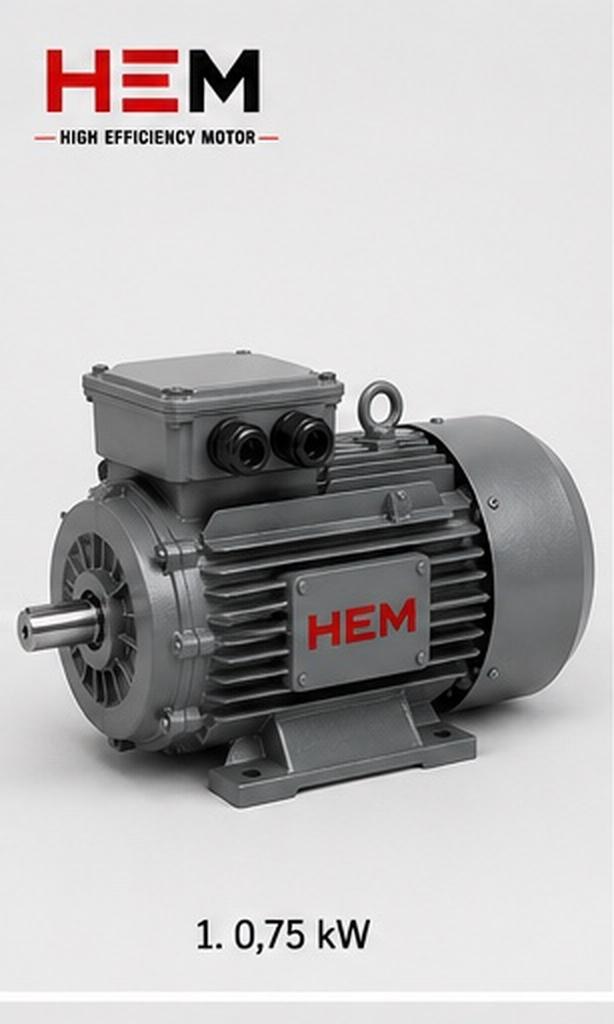

In high-power plants, an often-overlooked yet decisive topic in motor selection for cost and reliability is the supply voltage. Although the low-voltage grid standard in many countries is 400V, once you exceed a certain power level a 690V supply offers serious advantages. Supplying the same power at 690V reduces the current by roughly 1.73 times (the square root of three) compared with 400V. A lower current means thinner cable, smaller switchgear (contactors, fuses, cable lugs) and lower voltage drop. This article covers when a 690V supply-voltage motor is needed, from what power it makes sense, the winding and insulation differences, the starting methods and how to make the right selection.
In high-power applications such as crushers, large pump stations, cement mills, air-separation plants and heavy industrial presses, 690V often stands out as a deliberate choice. The goal is to optimise not just the motor but the entire power-distribution chain (cable, panel, protection), lowering both the initial investment and the losses. The right voltage choice frequently opens a bigger door to savings than the motor itself.
Why Is 690V Advantageous at High Power?
In a three-phase motor, power depends on the product of voltage and current (and of power factor and efficiency). If you supply the same power at a higher voltage, the current drawn falls proportionally. Using 690V instead of 400V brings the current down to roughly 400/690, that is around 58%. This reduction affects every component in the power chain. Since the cross-section of the transmission cable is determined by current, a lower current means thinner and cheaper cable. Because contactors, fuses and thermal protection are also selected by current class, smaller and more economical switchgear is used.
- Lower current: About 58% of the 400V current at the same power.
- Thinner cable: Lower current, smaller cable cross-section and lower cable cost.
- Smaller switchgear: Contactor, fuse and lug in a lower current class.
- Lower voltage drop: Line losses fall over long cable distances.
- Lower line loss: Cable losses that rise with the square of current (I²R) drop markedly.
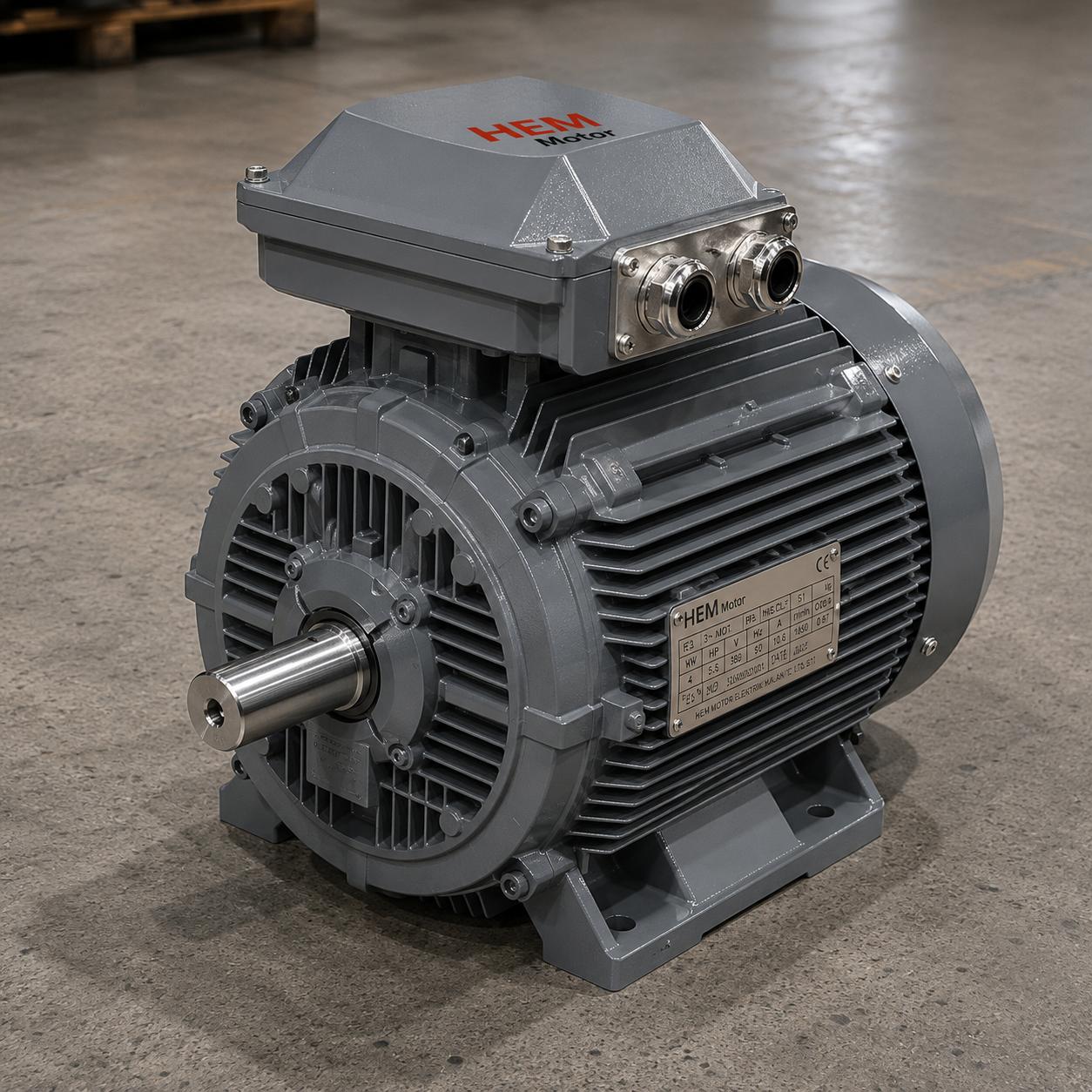
400V vs 690V Current, Cable and Loss Comparison
The table below summarises the approximate current values of a motor of the same power at 400V and 690V supply and the effect on cable and switchgear selection. The values are approximate, assuming typical efficiency and power factor; the exact current is read from the motor nameplate.
| Power (approx.) | 400V Current (~A) | 690V Current (~A) | Current Reduction |
|---|---|---|---|
| 110 kW | ~196 A | ~114 A | ~42% less |
| 160 kW | ~283 A | ~164 A | ~42% less |
| 250 kW | ~440 A | ~255 A | ~42% less |
| 400 kW | ~700 A | ~406 A | ~42% less |
| 630 kW | ~1100 A | ~638 A | ~42% less |
As the table shows, current grows with power, and at 400V very high current values emerge. For example, a 400 kW motor draws about 700 A at 400V, while at 690V this falls to roughly 406 A. The cable cross-section and busbar cost required for 700 A are far higher than for 406 A; moreover, higher current means more heat and more loss. This is exactly why 690V stands out both technically and economically at high power.
From What Power Does 690V Make Sense?
There is no exact threshold for switching to 690V; the decision depends on power, cable distance and existing plant infrastructure. Even so, there is a common practical approach. Up to roughly 100-160 kW, 400V usually remains adequate and practical. In the 160-355 kW range the 690V option starts to be considered, especially if the cable distance is long or the panel load is critical. At 355 kW and above, 690V becomes the preferred option in most large plants, because the current values at 400V make cable and busbars impractical.
- Below ~100-160 kW: 400V usually adequate; 690V generally unnecessary.
- ~160-355 kW: 690V should be considered; advantageous over long distances and heavy panel load.
- Above ~355 kW: 690V is common and often the economical choice in large plants.
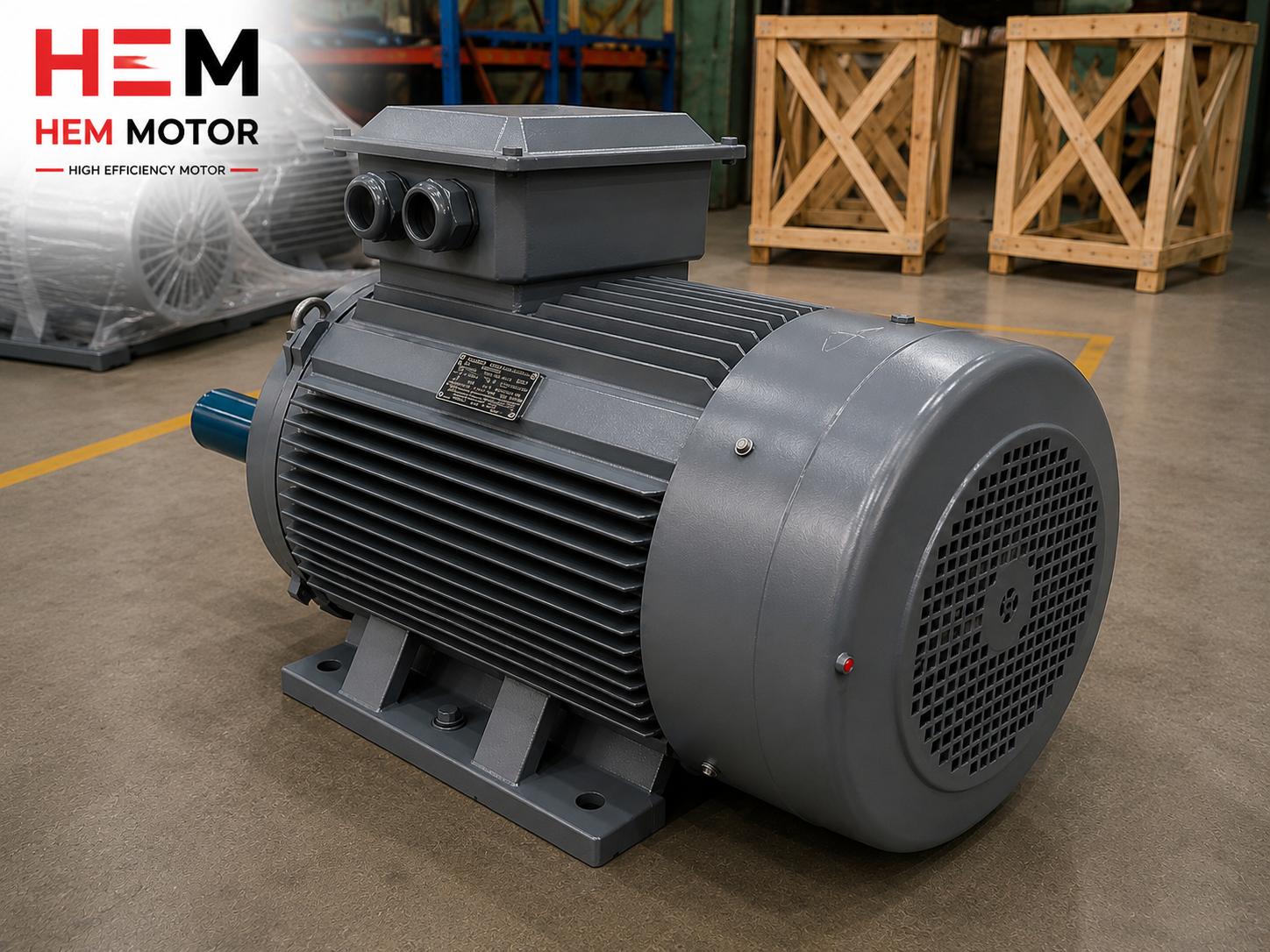
690V Winding and Insulation: The Inside of the Motor
A 690V supply requires attention to the motor's winding and insulation. A higher voltage places more stress on the winding insulation and on phase-to-phase clearances. For this reason a motor designed for 690V must have its insulation system and winding connection selected to suit this voltage. Many standard motors are designed for dual voltage: to run in delta at 400V and in star at 690V. In this case the motor nameplate shows 400/690V D/Y. However, this means the motor runs at the same power on both voltages; only the connection is chosen according to the supply voltage.
In 690V systems running on a VFD (variable frequency drive), winding insulation gains further importance. The fast voltage pulses (du/dt) at the drive output and the reflected wave that can form on a long cable add extra stress to the insulation. Therefore reinforced winding insulation and, where needed, du/dt filters are recommended on 690V inverter-duty motors. The right insulation class and drive compatibility directly affect the motor's service life.
| Topic | 400V Motor | 690V Motor |
|---|---|---|
| Typical current (same power) | High | ~58% level |
| Cable cross-section | Large | Smaller |
| Switchgear | High current class | Lower current class |
| Winding insulation | Standard | Suited to higher voltage |
| Typical use | General industry | High power, long distance |
Starting at 690V
Starting is already a critical issue on high-power motors, and the same methods apply at 690V. Direct-on-line (DOL) starting is possible at low power, but at high power the inrush current strains the grid; a soft starter, star-delta or frequency drive is therefore preferred. The point to watch in 690V systems is that the starting equipment must also be selected in the 690V class. In star-delta starting, the motor must have a winding connection suited to 690V; otherwise the bridging is done incorrectly.
- Soft starter: Reduces inrush current and mechanical shock; common on large pumps and fans.
- Frequency drive (VFD): Both soft start and speed control; 690V drives are available.
- Star-delta: Economical but voltage/connection compatibility must be set correctly.
- Liquid resistance starter (LRS): For very high-inertia loads, on slip-ring motors.
Voltage Drop and the Long-Distance Advantage
In large plants the motor is often dozens or even hundreds of metres from the main panel. A voltage drop occurs along the cable, and this drop is directly proportional to current. Because the current is lower with a 690V supply, the voltage drop on the same cable cross-section is also lower; or, accepting the same voltage drop, a thinner cable can be used. This is an important gain especially in crushers, pump stations and mines spread across a site. If the voltage drop is high, a value below the rated voltage reaches the motor terminals, which reduces torque and causes heating. 690V fundamentally eases the long-distance problem.
Cable loss (I²R) rises with the square of current. By bringing the current down to about 58%, 690V can theoretically cut cable losses to roughly one third. On a high-power motor running continuously all year, this loss difference feeds directly into the energy bill. So choosing 690V saves money not only in the initial investment but throughout the operating life. As the plant expands and new motors are added, the carrying capacity of a 690V busbar also stays more comfortable than at 400V, leaving room for future growth.
- Less voltage drop: Lower current means more stable voltage at the motor terminals over long lines.
- Lower cable loss: I²R loss drops markedly, saving energy.
- More stable torque: A value close to rated voltage at the terminals preserves torque.
- Room to grow: More power can be fed from the same busbar and transformer.
690V or 400V? What to Look at When Deciding
It would be wrong to say 690V is automatically the right choice in every plant. If an existing plant has only 400V distribution and a single medium-power motor is to be added, switching to 690V may require a separate transformer and panel, which raises cost. In a newly built plant or one housing many large motors, by contrast, planning a 690V busbar from the outset provides a clear advantage on cable, switchgear and losses. The decision should be made by reviewing the whole plant energy architecture, not a single motor.
In short, 690V stands out in plants where high power, long cable distances, many large motors and continuous operation come together. For a medium-power, single motor added to existing 400V infrastructure, 400V often remains more practical. The right decision requires evaluating power, distance, motor count and existing infrastructure together.
Common Mistakes in 690V Selection
The most common mistake when switching to 690V is selecting the motor correctly but sizing the cable and switchgear with 400V logic. Yet the real advantage of 690V lies in optimising the whole chain together. The second mistake is misreading the motor's nameplate connection; a 400/690V D/Y motor must be connected in star on a 690V grid, and if connected in delta the winding is exposed to overvoltage and burns out. The third mistake is not selecting the starting and protection equipment in the 690V class. The fourth is failing to account for the reflected wave and insulation stress in VFD-fed long-cable systems.
Done correctly, 690V is a powerful choice that lowers both the initial investment and operating losses in a high-power plant. For more on voltage and connection, you can review our 690V asynchronous motor selection and star/delta winding connection and voltage selection articles. For cable and switchgear selection, our rated current and cable-fuse-contactor selection guide and, for long-cable effects, our long cable distance and voltage drop content will be useful.
Frequently Asked Questions
Does a 690V supply change the motor's power at the same rating?
No. A 400/690V motor delivers the same shaft power on both voltages; only the current drawn and the connection change. Because the current falls to about 58% at 690V, the cable and switchgear become smaller, but the motor's rated power (kW) and speed stay the same.
From what power should I switch to 690V?
There is no exact threshold; the decision depends on power, cable distance and panel infrastructure. In practice 400V is usually adequate up to ~160 kW, 690V is considered between 160-355 kW, and above 355 kW 690V is the common choice in large plants. With a long cable distance, the threshold can be lowered.
Can I connect a 690V motor to a 400V grid?
It depends on the motor nameplate. A 400/690V D/Y motor is connected in delta at 400V and in star at 690V. Running a motor designed for 690V only directly on a 400V grid will not deliver the correct power and torque. The connection must always be made according to the voltage and winding data on the nameplate.
At HEM Motor we supply 400/690V and 690V supply-voltage asynchronous motors for high-power plants, with suitable winding insulation and starting solutions, from stock and with fast delivery. Share your power, speed, cable distance and starting method; we will identify the right motor to optimise the entire power chain, including supply voltage, and prepare a quotation for the most suitable solution.