English
 Türkçe

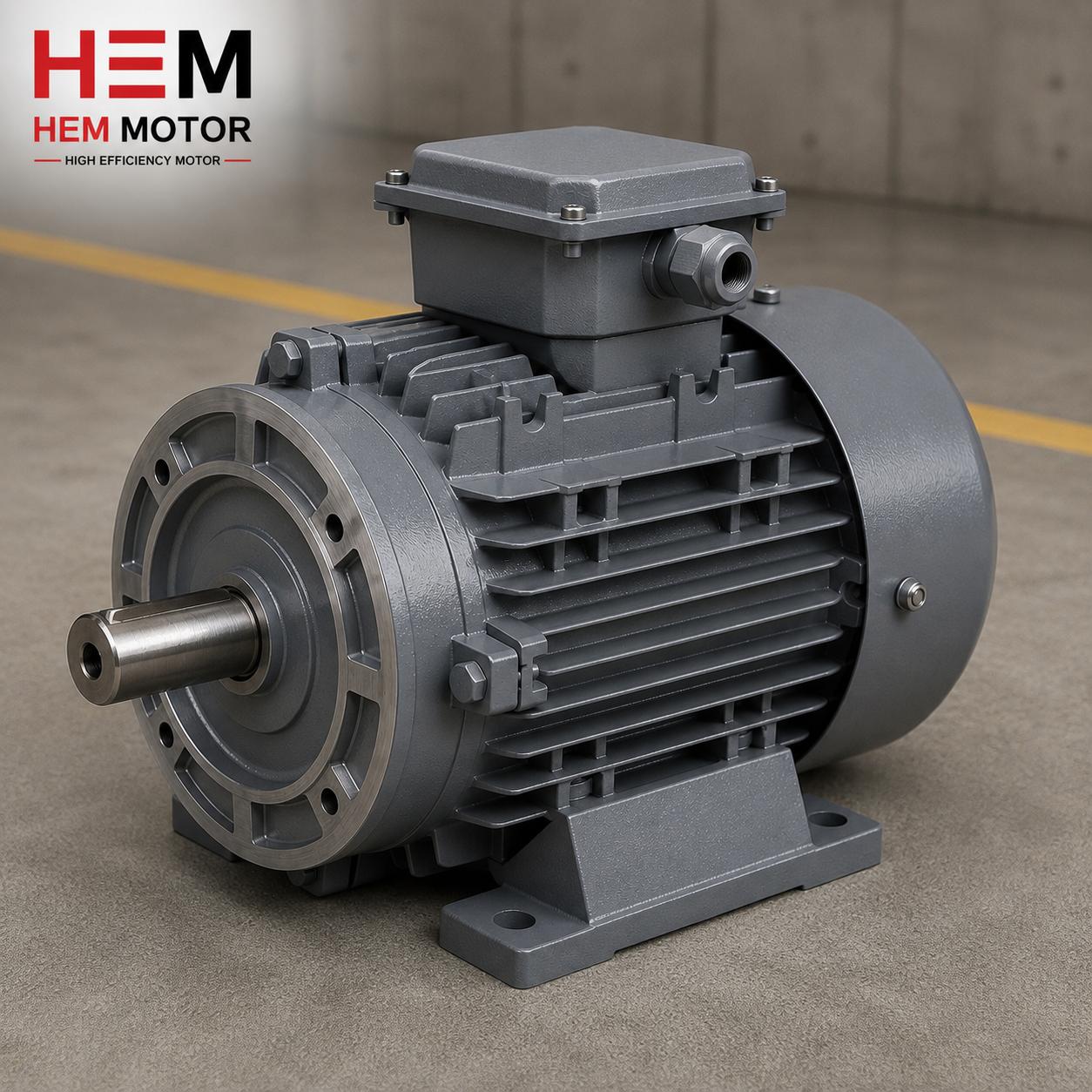

Selecting an electric motor by looking only at its power (kW) and speed (rpm) is often a half decision. Because what really determines whether the motor can carry the load, whether it will struggle at start, and whether it will stall under sudden load shocks is the motor's torque-speed curve. This curve shows how much torque the motor can produce at every speed, from starting (locked-rotor) torque, to pull-up torque, and on to breakdown torque. If you are going to drive a high-inertia fan, a conveyor that starts fully loaded, or a crusher with a high starting load, you must know how to read this curve to select the right motor. The NEMA Design B, C and D classes (and their IEC equivalents) standardize exactly the shape of this curve. In this article we cover the components of the torque curve, the NEMA design classes, and correct design and power selection under high-inertia and high-starting loads.
Components of the Torque-Speed Curve
The torque-speed curve of an induction motor contains four critical points from zero speed (standstill) to rated speed. Understanding them correctly lets you see on paper whether the motor can carry a load.
- Starting (locked-rotor) torque: The torque produced the instant voltage is applied while the shaft is not yet turning. This is the first push that frees the load from rest. It is expressed as a multiple of rated torque.
- Pull-up torque: The minimum torque in the dip of the curve, between start and breakdown. The motor must pass through this valley while accelerating; if the load torque exceeds the motor torque here, the motor cannot accelerate and gets stuck.
- Breakdown (maximum) torque: The highest torque the motor can produce. If a sudden load shock exceeds this value the motor stalls, that is, its speed falls rapidly and it stops. It is given as a multiple of rated torque and is the measure of overload capacity.
- Rated (full-load) torque: The torque the motor continuously produces at rated power and rated speed. This is the operating point.
Together these four points give the shape of the curve. To drive a load with the selected motor, the load torque curve must stay below the motor torque curve at every speed. The pull-up torque valley in particular is the most common place to get stuck under high-inertia loads. To see the relationship between rated torque and starting torque and the effect of direct-on-line starting more concretely, the starting torque and rated torque in IE3 motors article is a good start.
NEMA Design B, C, D and IEC Equivalents
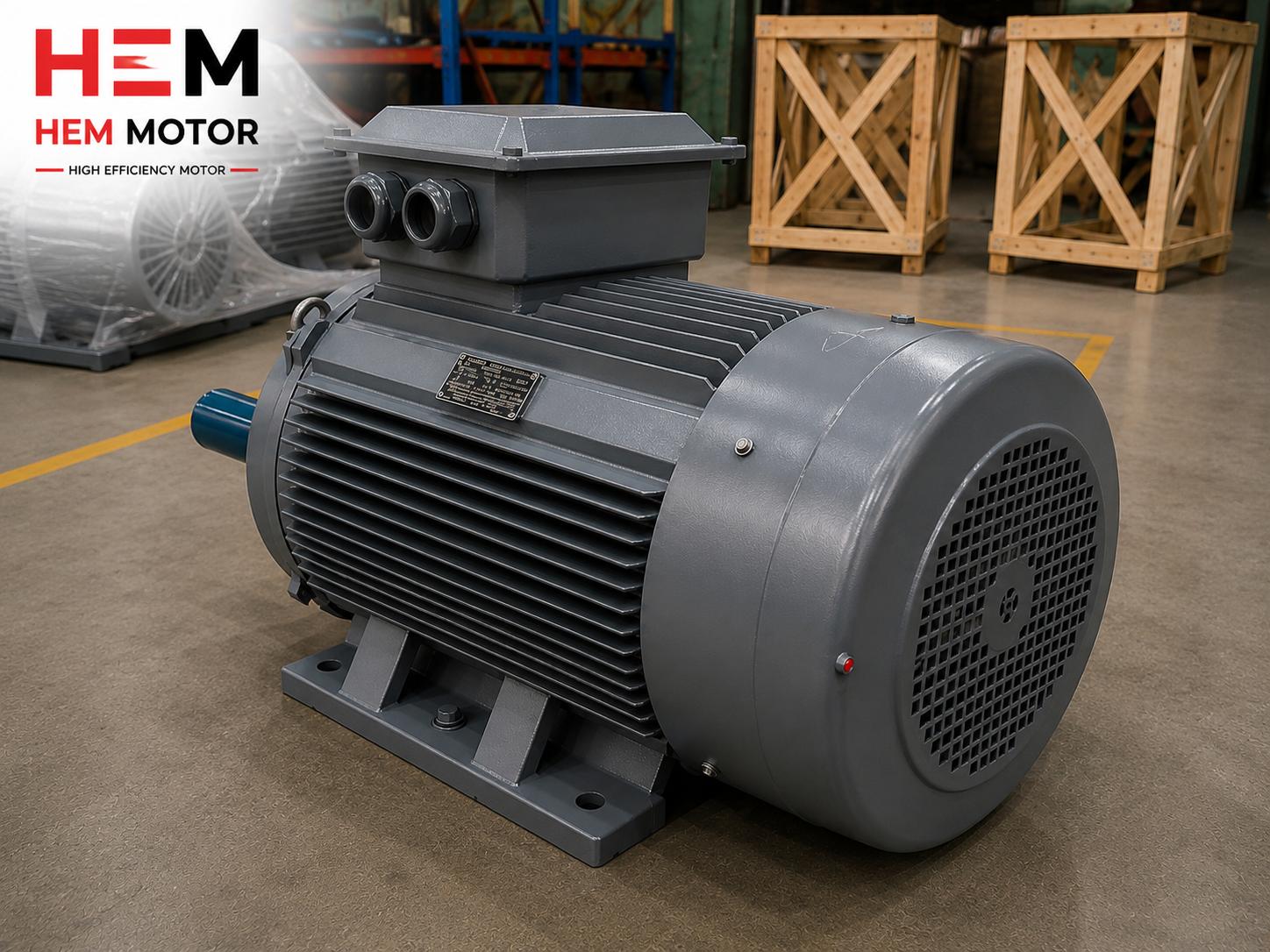
NEMA (the North American standard) divides the torque-current characteristic of induction motors into design classes. These classes determine the shape of the curve and therefore which load type the motor suits. In the IEC world, similar characteristics are expressed with the N and H design codes. Knowing which class suits which application is the foundation of selecting the right motor.
- NEMA Design B: The general-purpose standard class. It offers medium starting torque, medium starting current and low slip (operation near rated speed). The large majority of applications where the load rises slowly, such as pumps, fans and compressors, run with Design B. On the IEC side it corresponds to Design N.
- NEMA Design C: Offers high starting torque and medium starting current. It suits applications with high starting load under load, such as conveyors that start fully loaded, positive-displacement pumps, crushers and mixers.
- NEMA Design D: Offers very high starting torque and high slip. It is preferred for shock loads such as presses, shears, cranes, hoists and flywheel high-inertia applications. The high slip lets load shocks be absorbed by a change in torque rather than circuit stress. On the IEC side it corresponds to a characteristic similar to Design H.
Wrong selection of these classes is the source of the most common starting problems seen in the field. For example, if a Design B motor is fitted to a conveyor with high starting load, the motor gets stuck in the pull-up torque valley and cannot accelerate; the correct solution is Design C. When matching a NEMA motor in an imported machine with IEC, both the torque characteristic and the frame size must be considered; the NEMA and IEC motor matching article is a practical guide on this.
NEMA Design Class Comparison Table
| Design Class | Starting Torque | Breakdown Torque | Starting Current | Slip | Typical Application |
|---|---|---|---|---|---|
| Design B (IEC N) | Medium (~150% rated) | Medium-High | Medium-High | Low (<5%) | Pump, fan, compressor |
| Design C | High (~200% rated) | Medium-High | Medium | Low (<5%) | Loaded conveyor, crusher, PD pump |
| Design D | Very High (~275% rated) | High | Low-Medium | High (5-13%) | Press, shear, crane, flywheel load |
Torque and Power Selection Under High-Inertia Load
The moment of inertia (J) shows how hard it is to accelerate a load. A large-diameter fan impeller, a heavy centrifuge rotor, or a flywheeled press has a high moment of inertia. High inertia means the motor must produce torque over a long starting time to bring the load up to rated speed. During this long start the motor continuously draws high current and the winding heats; if the start time exceeds the motor's allowed locked-rotor time, the motor is thermally damaged.
For this reason, under high-inertia load you must ask not only "is the power enough" but also "is the start time within the allowed limit." The start time is determined by the motor's accelerating torque (motor torque minus load torque) and the total moment of inertia. The higher the accelerating torque, the shorter the start. Under high-inertia loads, therefore, a motor with high breakdown torque and a shallow pull-up valley (usually Design C or, when needed, D) is preferred; because if the valley is shallow the motor produces more surplus torque throughout acceleration and reaches speed faster.
Another critical point in power selection is cooling. In motors running continuously at high load, cooling fan design directly affects efficiency and temperature; the effect of cooling and fan design on efficiency in IE4 motors article gives detail on this. In motors running at low speed or with a VFD, the self-fan may not provide enough cooling; in this case an external forced cooling fan comes into play, which we covered in the external forced cooling fan in IE4 motors article.
Torque Need by Load Type: Constant, Variable and Shock
The first step in selecting the right motor is to know the load's torque-speed characteristic. Because every load type demands a different torque from the motor, and the design class is selected according to this demand. The loads encountered in the field can be grouped into three main categories.
- Quadratic (variable) torque loads: In loads such as centrifugal pumps, fans and exhausters the torque need rises with the square of the speed. At start the torque demand is very low; this is why these loads start easily with Design B. The real difficulty is in large fan impellers with high moment of inertia; there the start is easy but long, and cooling becomes critical.
- Constant torque loads: In loads such as conveyors, extruders, positive-displacement pumps and mixers the torque need is independent of speed, almost constant. When these loads start fully loaded the starting torque demand is high; Design C is tailor-made for these applications.
- Shock and variable loads: In presses, shears, crushers, grinders and flywheel systems the load arrives in sudden shocks. Here high breakdown torque and high slip are critical; Design D absorbs the load shock through a change in torque and speed rather than circuit stress, protecting both the motor and the mechanics.
This classification is the most basic analysis to be done before selecting the motor. Knowing which group the load falls into largely determines both the design class and the starting method. In applications with dual-speed or quadratic torque characteristics, to clarify the speed-torque match, the Dahlander single-winding two-speed motor article details the distinction between constant, variable and quadratic torque.
Speed, Pole Count and Torque Relationship
When evaluating the torque curve, it must not be forgotten that speed and pole count are directly related to torque. At the same power, as speed falls (as pole count rises) the rated torque the motor produces increases; because power is the product of torque and angular speed. For example, at the same kW power an 8-pole (750 rpm) motor produces much higher rated torque than a 2-pole (3000 rpm) motor. For this reason, in low-speed applications needing high torque, selecting a low-speed motor instead of, or together with, a gearbox can be sensible.
In low-speed motors the frame size is larger for the same power; this affects both cost and mounting space. In return there is the advantage of producing high torque directly, without mechanical transmission loss. To make the low-speed power-torque-frame relationship concrete, the 8-pole 750 rpm low-speed motor article is a practical reference. For power and output-speed matching with a gearbox, the monoblock geared motor selection article explains the correct choice through output torque. Speed selection is as important a decision as the design class, because it shifts the absolute values of the torque curve.
How Does the Starting Method Affect the Torque Curve?
The motor's real starting behavior depends not only on the design class but also on the starting method. In direct-on-line (DOL) starting the motor starts at full voltage; this gives the highest starting torque and the highest starting current. In star-delta starting the voltage is reduced at first; this lowers the starting current but also reduces the starting torque to about one third. A soft starter and a frequency inverter (VFD) make starting controllable.
The critical trap here is this: while trying to reduce the starting current with star-delta, you may drop the starting torque below the load torque; in this case the motor cannot accelerate at all in star position. In an application with high starting load, therefore, either a Design C/D motor or a torque-preserving starting method (especially a VFD) is required. A VFD can start the motor with a torque close to rated and a low current by ramping up the frequency; this protects both the motor and the grid under high-inertia loads. You can find the effect of running below frequency on torque and cooling in the running an electric motor below 50 Hz article. Service factor and overload capacity are also part of this equation; the service factor in IE3 motors article explains this margin.
Frequently Asked Questions
What is the difference between breakdown torque and starting torque?
Starting torque is the torque produced at the moment of freeing from rest while the motor is not yet turning; it moves the load. Breakdown torque is the maximum torque the motor can produce at any speed and shows overload capacity. If starting torque is low the load never moves; if breakdown torque is low the motor stalls under a sudden load shock. Both must be sufficient for the load type.
Which NEMA design should I choose under high-inertia load?
If the load starts fully loaded and needs high starting torque, Design C suits. For shock, flywheel or press/shear type loads, Design D is preferred because high slip softens load shocks. If the inertia is very high and the start time long, the motor's allowed locked-rotor time and cooling must also be checked; if needed, controlled starting with a VFD is the safest solution.
Does choosing a one-step larger motor solve the torque problem?
Partly. A larger motor usually produces higher absolute torque, but the shape of the torque curve (design class) still matters. If the wrong design class is chosen, even a large motor can get stuck in the pull-up valley. The correct solution is to first determine the suitable design class (B/C/D), then select power and starting method accordingly.
Power and speed are only the visible face of motor selection; the real decision is determined by the torque-speed curve and the correct design class. Starting torque lifts the load, the pull-up valley determines acceleration, and breakdown torque gives overload capacity. Under high-inertia and high-starting loads, reading this curve prevents motor problems of stalling, overheating or breaking down in the field from the start. At HEM Motor we determine the right torque class, power and starting solution together according to your application's load characteristic, and offer the suitable motor with fast delivery from stock. Contact us for your high-starting-load or high-inertia application and get a tailored technical assessment and quote.