English
 Türkçe

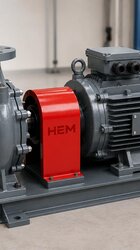
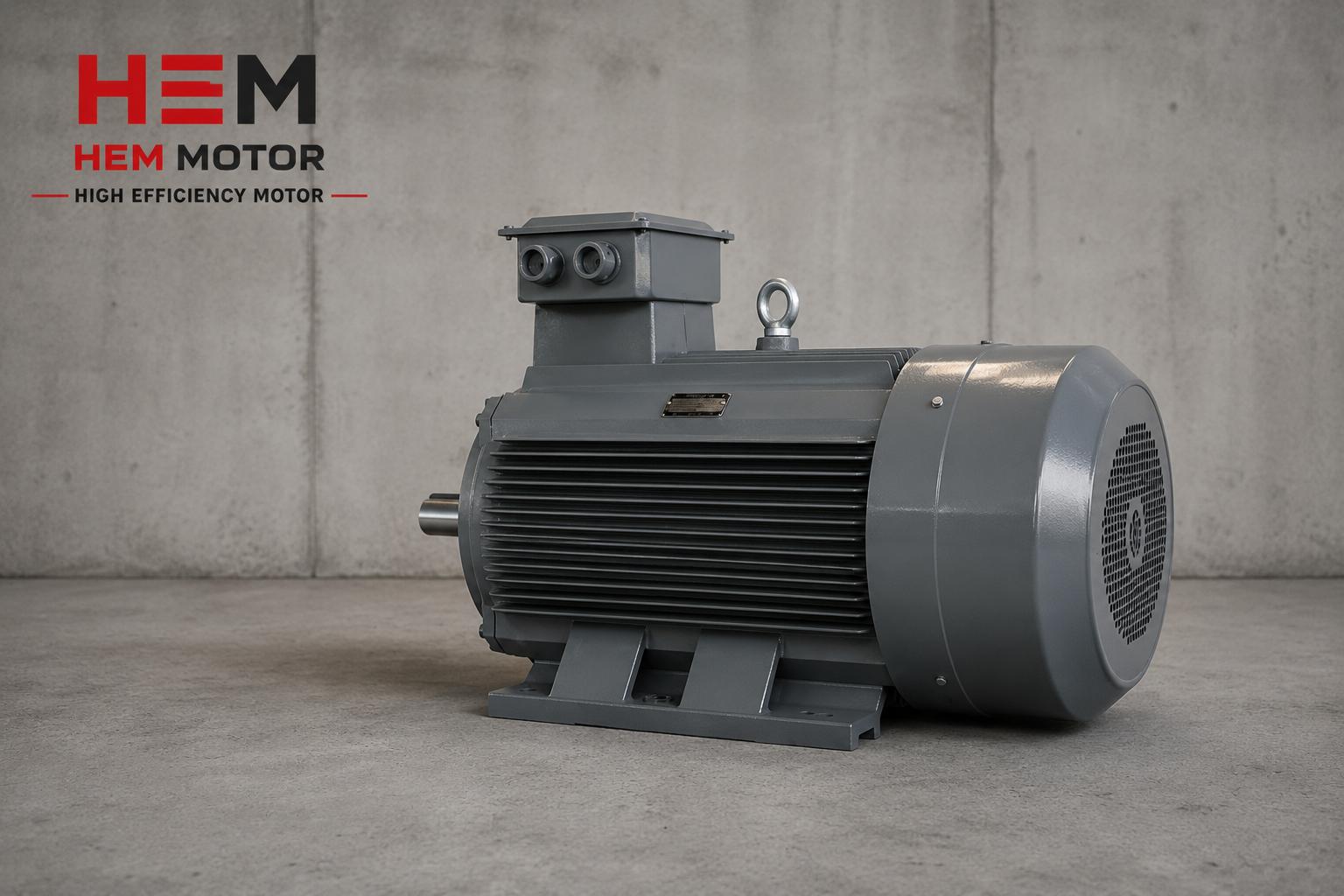

When you look for a motor for your conveyor, mixer or dosing line, what you usually need is not a stand-alone electric motor but a monoblock geared motor that delivers the right output speed and torque. In a monoblock design the electric motor and the gear unit are combined in a single housing; you get a factory-matched drive unit without the headaches of couplings, adapter flanges or alignment tolerances. This article explains, from a commercial buyer perspective, how to select a monoblock geared motor correctly by linking output speed, torque and reduction ratio, what information to provide when ordering, and what goes wrong with the wrong choice. Our goal is not to teach theory but to help you order the right product the first time.
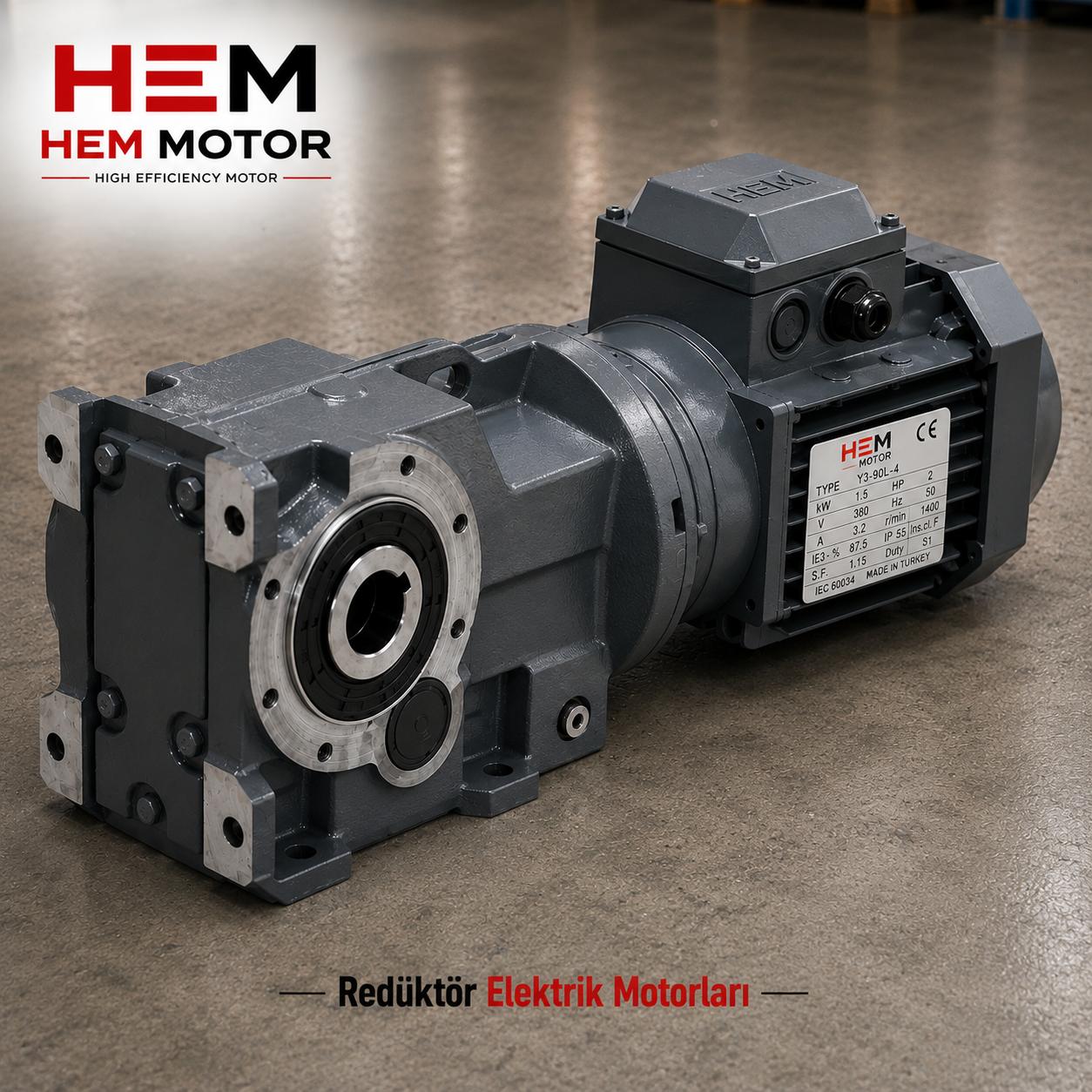
What Is a Monoblock Geared Motor and When Is It the Right Choice?
A monoblock geared motor is a single-housing drive solution in which the motor rotor shaft connects directly to the input stage of the gear unit. Instead of buying a separate motor and a separate gearbox and joining them on site, the manufacturer couples the motor to the reducer at the factory. The commercial value is clear: one part number, one delivery, one warranty and no risk of on-site assembly error. In low and medium power ranges, especially between 0.12 kW and a few kW, the monoblock design is the most common choice.
The monoblock design stands out in conveyor belt drives, mixers and agitators, dosing and feed screws, palletising and packaging machines and anywhere that needs continuous low-speed, high-torque output. In these applications you cannot use the motor's 1400-1500 rpm directly; you need an output of roughly 20-100 rpm and the corresponding high torque. That is exactly what the gear unit provides. If your application is a high-speed pump or fan, you need a direct motor rather than a monoblock reducer; in that case our IE4 2-pole 3000 rpm motor selection article points you to the right product.
Monoblock or Separate Motor + Reducer?
Both approaches are valid, and the choice depends on the application. The monoblock design is compact, contains no alignment error and has a lower total cost in most small-to-medium applications. A separate motor + reducer offers the ability to replace the motor independently, match different brands and gain flexibility at high power. Our comparison on geared motor vs separate motor + reducer from a purchasing and maintenance angle helps you choose the right architecture for your line. The general rule: monoblock for compact, standard, space-saving low-power lines; a separate combination for high power, frequent motor swaps or special reductions in heavy-duty service.
Output Speed, Reduction Ratio and Torque Relationship
The heart of monoblock geared motor selection is the relationship between three values: input speed, reduction ratio and output speed. A standard 4-pole motor turns at about 1400 rpm. To find the output speed you divide the motor speed by the reduction ratio. For example, a 1400 rpm motor with a 1/30 ratio gives about 46 rpm output; with 1/50 about 28 rpm, and with 1/10 about 140 rpm. In worm gear reducers, single-stage ratios from 1/7 to 1/100 are common.
As speed drops, output torque rises in proportion. So with the same motor power, a higher ratio gives you lower speed but higher torque. Commercially, when ordering it is enough to give us any two of the three: either the required output speed with the load torque, or the motor power with the reduction ratio; we calculate the third and recommend the right housing. If you want to go deeper into torque on the application side, our required kW for pumps, fans and conveyors content shows power sizing by load profile step by step.
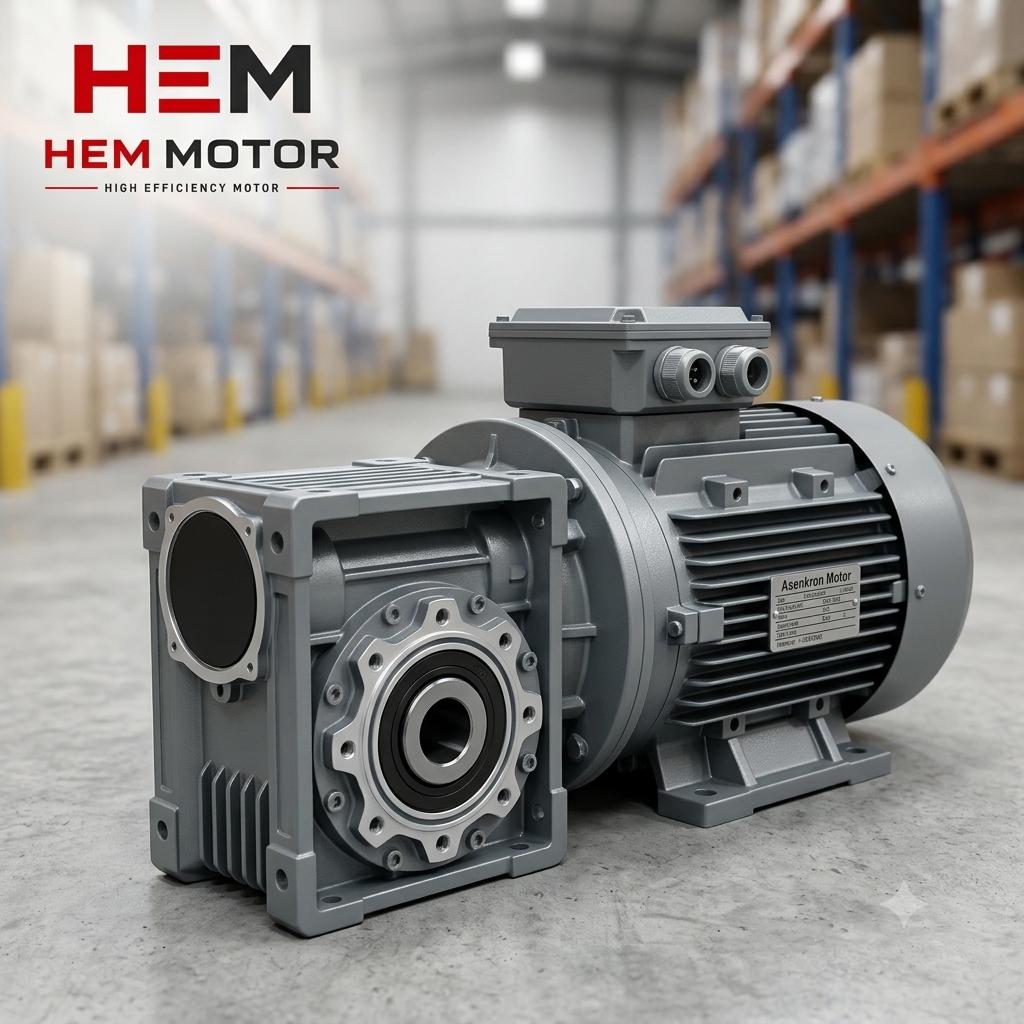
Worm and Helical-Bevel Reducer Housing Selection
After determining output speed and torque, the next step is the correct reducer housing. In worm gear reducers the housing size is chosen by motor power: HEM30 covers 0.06-0.18 kW, HEM40 0.12-0.37 kW, HEM50 0.18-0.75 kW, HEM63 0.37-1.5 kW, HEM75 0.75-3 kW, HEM110 2.2-7.5 kW and HEM130 4-11 kW. Our detailed article on factors affecting worm gear reducer prices makes it easier to pick the right housing across the HEM30-HEM130 range. To review the product family, see our worm gear reducers page.
If you need a 90-degree, high-efficiency power output, a helical-bevel reducer comes into play. K series helical-bevel reducers offer higher efficiency and higher output torque than worm gears across a wide power range from 0.75 kW to 15 kW. We compared which is more economical for which job in our K series helical-bevel vs worm gear article. For product details, see our helical-bevel reducers category.
Motor Connection: IEC Frame and Flange Compatibility
Even though the motor and reducer are factory-matched in a monoblock geared motor, you may later need to replace the motor or fit a motor to an existing reducer. That is why IEC frame and flange compatibility is critical. Worm gear reducer housings match specific IEC motor frames and B5/B14 flanges; for example the HEM50 housing works with IEC 63, 71 and 80 motors, and the HEM63 housing with IEC 71-90 motors. Our guide on which motor fits a worm and NMRV reducer clarifies the IEC frame and flange matching in table form.
Choosing the right flange type also matters: whether you need a B5 large flange or a B14 small flange, and why mismatch must be avoided, is explained in our B5 vs B14 flange article. To see all mounting types and connection styles on the product side, our electric motor mounting types page helps. You can also reach all our electric motors guides and our main HEM Motor page.
Mounting Position and Lubrication in a Monoblock Geared Motor
A topic that is often overlooked in a monoblock geared motor but causes problems on site is the mounting position. The reducer can run in different positions such as horizontal, vertical (output shaft up or down) or wall-mounted. The mounting position affects both the oil level and the oil type, because correct lubrication of the gears inside the reducer depends on which level and viscosity the oil has. A reducer ordered in the wrong position may suffer insufficient lubrication on site and the gear life shortens. That is why stating in your order which position the reducer will run in ensures you receive a product with the correct oil fill and the correct breather plug.
Our article that covers reducer mounting positions (M1-M6) and the lubrication approach suitable for each position in detail, reducer mounting positions and lubrication, is a good reference for placing the right order. In short: horizontal mounting is usually preferred in conveyor drives, vertical mounting (output shaft down) in agitators and mixers, and positions that vary by application in dosing screws. Clarifying the position from the start saves time during commissioning and preserves warranty coverage.
Self-Locking in Worm Gears: Is a Brake Needed?
One of the commercial advantages of a monoblock geared motor is the self-locking property that appears at certain reduction ratios in worm gear reducers. At high reduction ratios the worm gear prevents back-driving from the output shaft; that is, the load does not slide back when the motor stops. This property can reduce or completely eliminate the need for a separate brake mechanism in applications such as lifting, positioning and loaded conveyors. That means both cost and assembly simplicity.
However, self-locking does not replace a safe brake at every ratio and every load; an additional brake is recommended in safety-critical lifting applications. We addressed in detail in which application self-locking is sufficient and in which case an additional brake is required in our self-locking in worm gear reducers article. If you state the safety requirement of your application in your order, we will determine the right ratio and, if needed, the braked motor combination together.
Supply, Stock and Commissioning: The Commercial Process
Just as important as selecting the right monoblock geared motor is supplying it at the right time and complete. While fast delivery from stock is possible for standard housings and common reduction ratios, configurations requiring a special ratio, special shaft or special flange may require a production lead time. That is why accounting for the motor''s delivery time from the start in your project planning ensures you do not experience delays in line setup. In emergency replacement situations, it is possible to produce a temporary solution with the closest configuration in stock.
The points to watch during commissioning are the correct rotation direction, heat checking on first run under load, and verification of the oil level. In applications such as conveyors and mixers, the wrong rotation direction can reverse the material flow; that is why confirming the direction on first run is important. We shared the motor commissioning and first-run checklist step by step in our motor commissioning and first-run checklist article. For emergency replacement and direct swap of a conveyor motor, our conveyor belt motor emergency replacement guide helps.
Conveyor, Mixer and Dosing: Selection Details by Application
The correct selection of a monoblock geared motor varies by the load character of the application, and each application requires a different priority. Conveyor belt drives usually have a steady, continuous load; here what matters is the output speed that gives the desired belt speed and the torque that carries the load the belt transports. If you know the belt speed in metres per minute, we calculate the required output speed using the drum diameter and determine the suitable reduction ratio. In a conveyor, the load at the moment of starting also matters; starting on a loaded belt requires higher torque than on an empty one.
In mixer and agitator applications, the load varies depending on the viscosity and volume of the material being mixed. With dense and viscous materials the starting torque is high; that is why the motor power and reduction ratio must be selected for the toughest starting condition. Vertical mounting (output shaft down) is usually used in a mixer, which also requires the correct configuration for lubrication. In dosing and feed screws, a precise, low-speed, stable motion is important; here the reduction ratio is kept high to obtain a low but controlled output speed.
The common point in all three applications is correctly determining the output speed and torque; giving the power alone is not enough. We addressed motor supply in plants with mixers and screws such as concrete batching plants in our electric motor supply for concrete batching plants article, and the efficiency gain in geared applications in our using an IE4 motor with a reducer article. If you send us your application''s load profile (steady, variable, shock) and the required motion, we determine the right monoblock configuration together and prevent you from buying an unnecessarily large or insufficient drive unit.
Frequently Asked Questions
How do I calculate the output speed of a monoblock geared motor?
You divide the motor speed by the reduction ratio. A standard 4-pole motor turns at about 1400 rpm; with a 1/30 ratio the output is about 46 rpm, and with 1/50 about 28 rpm. If you tell us the required output speed, we determine the ratio and the suitable housing; all you need to share is the speed you need and the load torque.
For the same application, is a monoblock or a separate motor + reducer more advantageous?
For low and medium power, compact and standard lines, the monoblock design is usually the more economical and assembly-error-free solution. For high power, frequent motor changes or special reduction needs in heavy duty, a separate motor + reducer is more flexible. Our related comparison from a purchasing and maintenance perspective helps you decide.
What information do I need to provide to get a quote?
Instead of a list price, to give you the most accurate quote we just need the motor power (kW), the required output speed or reduction ratio, the load torque, the mounting position and your flange/shaft connection preference. With this we finalise the right housing and monoblock configuration and prepare a fast quote.
Get a Quote
Let us determine the right monoblock geared motor for your conveyor, mixer or dosing line together. Share your output speed and torque needs, and we will offer the suitable housing and fast delivery options. Call us now at +90 (532) 345 49 86 or leave your request on our contact page.