English
 Türkçe

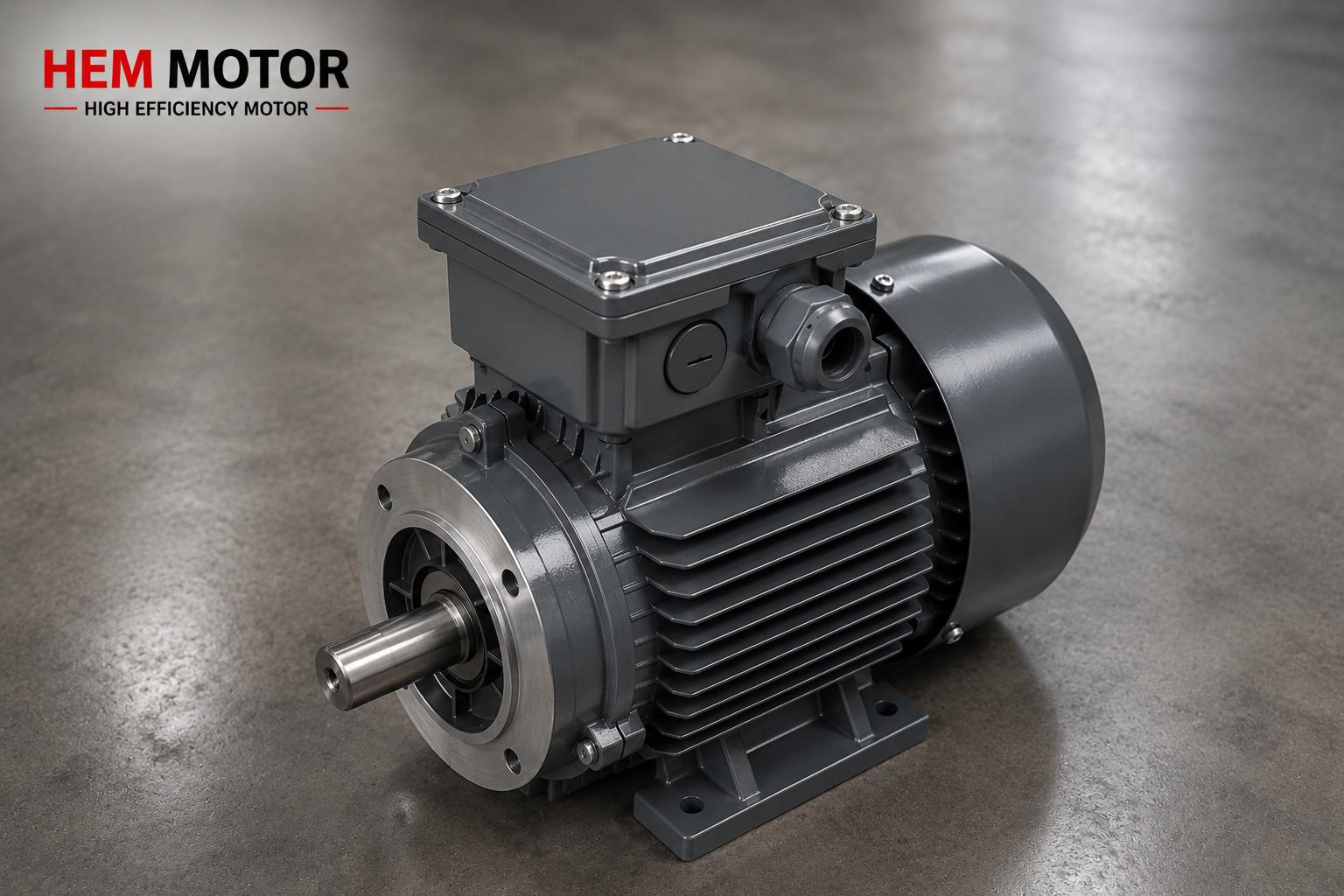

When buying an IE3 electric motor, the first question on most buyers' minds is price; yet the question that truly determines the motor's value is, "how many years, how many hours will this motor run trouble-free, and how much of that is under warranty?" IE3 premium-efficiency motors are designed to run for a long time, but the expected service life varies markedly according to operating conditions, maintenance and quality. Likewise, the warranty period and its scope determine how protected the buyer is when a problem arises. In this article we address the expected operating life of an IE3 motor (in hours and years), the warranty period and scope, bearing and insulation life, the ways to extend life through maintenance, and what all this means in terms of cost for the buyer. The aim is to enable you to evaluate a motor not only by its price at the moment of purchase, but by the value it provides over its life. As HEM Motor, because we supply IE3 premium-efficiency motors from 0.55 kW to 355 kW with 100% copper windings, a cast iron frame, IP55 protection and class F insulation, we address the subject of life and warranty in a concrete framework that guides the buyer's decision.
The Expected Service Life of an IE3 Motor
The life of IE3 motors is often wondered about with the question "how many years does it last?"; however, the correct measure is generally operating hours. A motor may last 15 years in a workshop running 8 hours a day, while it reaches the same number of hours in a much shorter time in a facility running three shifts uninterrupted.
Hours or Years? Measuring Life Correctly
The life of an IE3 motor is related to total operating hours far more than to calendar years. A quality motor running in good conditions, correctly sized and regularly maintained, can reach an operating life of tens of thousands of hours. Therefore the life two facilities give for the "same motor" can be very different: what is decisive is how long and under what load the motor runs. We covered motor life and the causes of early failure in detail in our article on electric motor life and the causes of early failure.
Factors That Determine Life
A few basic factors determine how long an IE3 motor will actually last: operating temperature, load ratio, ambient conditions (dust, moisture, vibration), starting frequency and maintenance routine. All of these touch the life of the motor's two most critical components: the bearings and the insulation. These two components are usually what determine a motor's "end of life."
Bearing and Insulation Life
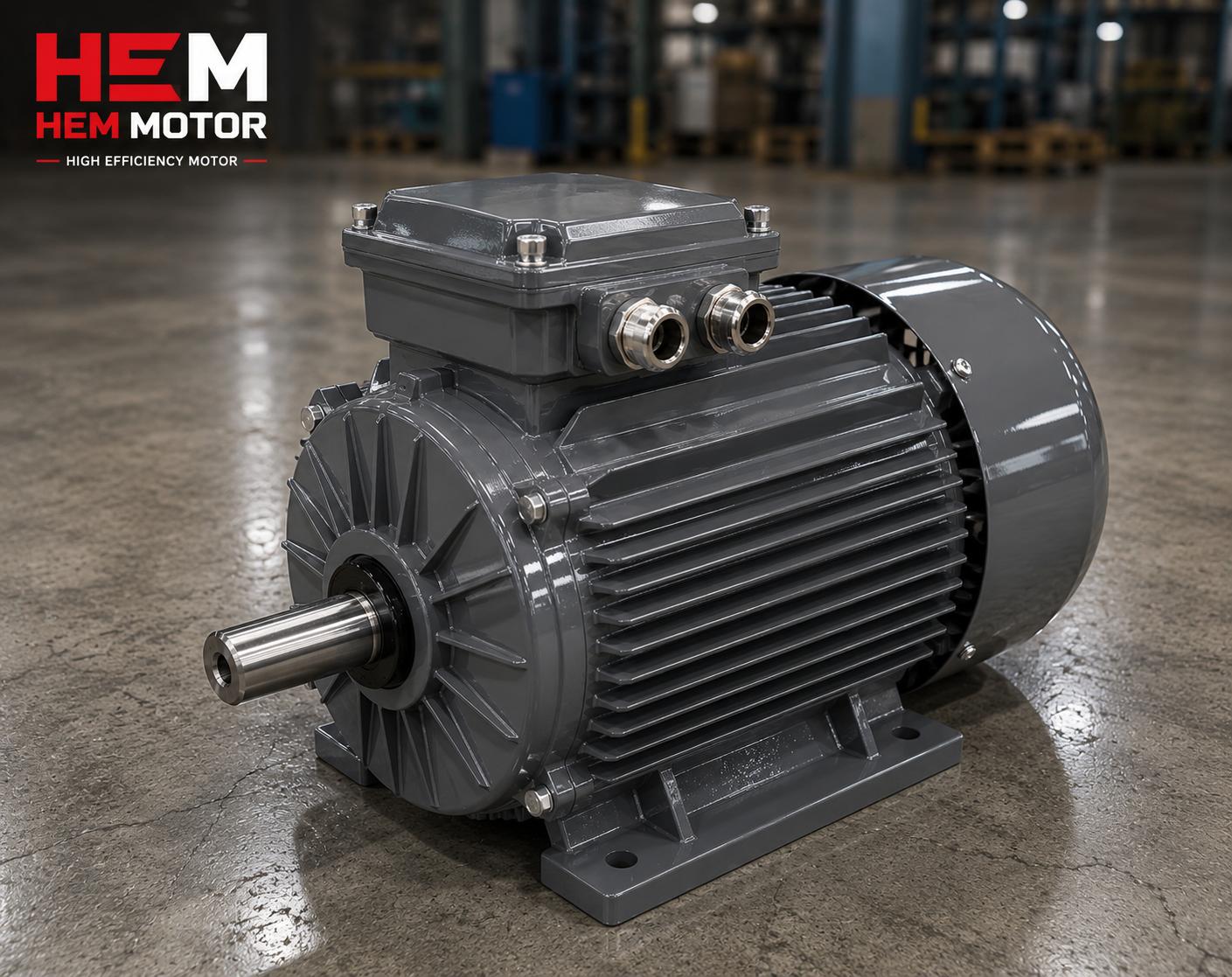
The life of a motor is often not the life of its frame, but of the bearings and winding insulation inside it. These two components in practice determine how long the motor will run.
Bearing Life
Bearings are a motor's most frequently replaced mechanical parts and generally have a shorter service period than the motor's total life. Correct greasing, suitable load and low vibration are the main factors that extend bearing life. The good news is that a bearing can be replaced at a much lower cost than the entire motor; that is, the end of bearing life does not mean the end of the motor's life. We covered the effect of bearing greasing and maintenance on life in our article on bearing greasing and lubrication in IE3 motors.
Insulation Life and Temperature
The life of the winding insulation is directly related to temperature; as a general rule, each certain rise in operating temperature shortens insulation life. The class F insulation common in IE3 motors offers a high thermal margin; especially when the motor is operated at a class B temperature rise, the insulation lasts much longer. Insulation, unlike a bearing, is not easily replaced; damage to the winding usually means rewinding or motor replacement. We detailed the effect of insulation class on life in our article on winding and insulation class (F/H) in IE3 motors. And we examined the relationship between temperature rise and life in our article on temperature rise class in asynchronous motors.
Warranty Period and Scope
The warranty is the concrete expression of confidence in a motor's quality; however, the scope of the warranty matters as much as its period. The buyer should ask not only "how many years of warranty?" but also "what does it cover?"
What Does the Warranty Period Mean?
The warranty period is the manufacturer's commitment that the motor will not show material and workmanship defects for a certain period. A production-related defect arising within this period is remedied under warranty. However, the warranty period does not mean the motor's "total life"; a good motor continues to run far beyond the warranty period. The warranty period is more an indicator of how much the manufacturer trusts its product.
What Does the Warranty Cover and Not Cover?
A typical motor warranty covers material and workmanship defects; however, failures resulting from misuse, overload, incorrect connection, unsuitable ambient conditions or lack of maintenance are generally excluded. For example, the burning out of a motor that was not correctly sized and was continuously run under overload usually does not fall within the warranty. Therefore keeping the warranty valid is directly related to correct selection and correct use. We covered exactly what a warranty covers in our article on what an electric motor warranty covers; and we compiled the questions to ask about the warranty and service network before buying in our article on electric motor warranty and service network: 7 questions.
Extending Life Through Maintenance
The expected life of an IE3 motor is not a fixed number; it can be markedly extended with correct maintenance and rapidly shortened with neglect. Maintenance is one of the buyer decisions that most affects a motor's life-cycle cost.
The Effect of Regular Maintenance
Periodic bearing greasing, cleaning of the cooling fins, vibration and temperature monitoring, checking of connections and correct alignment are the main maintenance practices that extend a motor's life. These practices provide great life gains at small costs. Catching a fault at the symptom stage prevents both unexpected downtime and greater damage. We covered the effect of maintenance on motor efficiency and life in our article on the effect of maintenance on motor efficiency: bearing, lubrication and alignment.
Correct Sizing and Operating Conditions
One of the most effective ways to extend a motor's life is to size it correctly from the very start. A motor running continuously under overload heats up and its insulation fatigues rapidly; a motor running at very low load causes efficiency and power factor loss. The right load ratio preserves both life and efficiency. We detailed correct sizing in our article on at what load should a motor run: efficiency and correct sizing.
The Cost Meaning for the Buyer
Service life and warranty ultimately turn into a cost question for the buyer: what does this motor gain me over its life, and how much does it cost me? A low purchase price, when combined with a short life and frequent failures, can actually be an expensive choice.
Total Cost of Ownership
The real cost of a motor is not only the purchase price; it is the sum of energy consumption, maintenance, possible downtime and end-of-life renewal costs. A long-lasting, efficient and reliable IE3 motor can be much more economical over its life, even if its initial investment is slightly higher. We covered this holistic view in our article on total cost of ownership (TCO) in high-efficiency motors.
Life, Efficiency and the Right Choice
The fact that an IE3 motor is premium-efficient means not only energy saving, but usually higher-quality material and cooler operation, which indirectly supports life. Evaluating the right efficiency class and life expectation together enables the buyer to make the soundest decision. We covered the investment decision between IE3 and IE4 with payback logic in our article on IE3 or IE4: the right electric motor investment for your facility.
- Evaluate motor life by total operating hours, not by calendar years.
- Do not mistake the end of bearing life for the end of the motor's life; a bearing is replaced at low cost.
- To preserve insulation life, take care to run the motor at a low temperature rise (class B).
- Learn not only the period of the warranty, but what it covers and does not cover.
- Remember that misuse and overload can void the warranty.
- Markedly extend the motor's life with regular maintenance (greasing, cleaning, monitoring).
- Make the decision not by purchase price, but by life-cycle total cost of ownership.
Frequently Asked Questions
How many years does an IE3 motor run?
There is no single numerical answer to this, because life depends on total operating hours far more than on calendar years. A motor that lasts many years in a workshop running 8 hours a day reaches the same number of hours in a much shorter time in a facility running three shifts uninterrupted. A quality IE3 motor that is correctly sized, runs in good conditions and is regularly maintained can reach an operating life of tens of thousands of hours; what is decisive is the operating conditions and maintenance.
Is the warranty period the motor's life?
No. The warranty period is the manufacturer's commitment that the motor will not show material and workmanship defects for a certain period; it is not the motor's total life. A good motor continues to run far beyond the warranty period. The warranty period is more an indicator of the manufacturer's confidence in its product and determines how protected the buyer is when a problem arises.
Which failures fall outside the warranty scope?
A warranty generally covers material and workmanship defects; however, failures resulting from misuse, continuous overload, incorrect connection, unsuitable ambient conditions or lack of maintenance are mostly excluded. For example, the burning out of a motor that was not correctly sized and was continuously strained usually does not fall within the warranty. Therefore correct selection and correct use are the basic condition for keeping the warranty valid.
Get a Quote
If you want to select a long-lasting IE3 motor with a clear warranty scope suited to your need, share the machine you will drive, the daily operating time and the ambient conditions with us. Our expert team will clarify the motor suited to your life expectation and operating conditions, together with the warranty scope. You can call us at +90 (532) 345 49 86 or send your request via our contact page. You can review our IE3 motor range in our IE3 electric motors category, and explore our products on the products page and our home page (HEM Motor).