English
 Türkçe

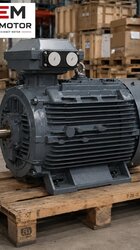
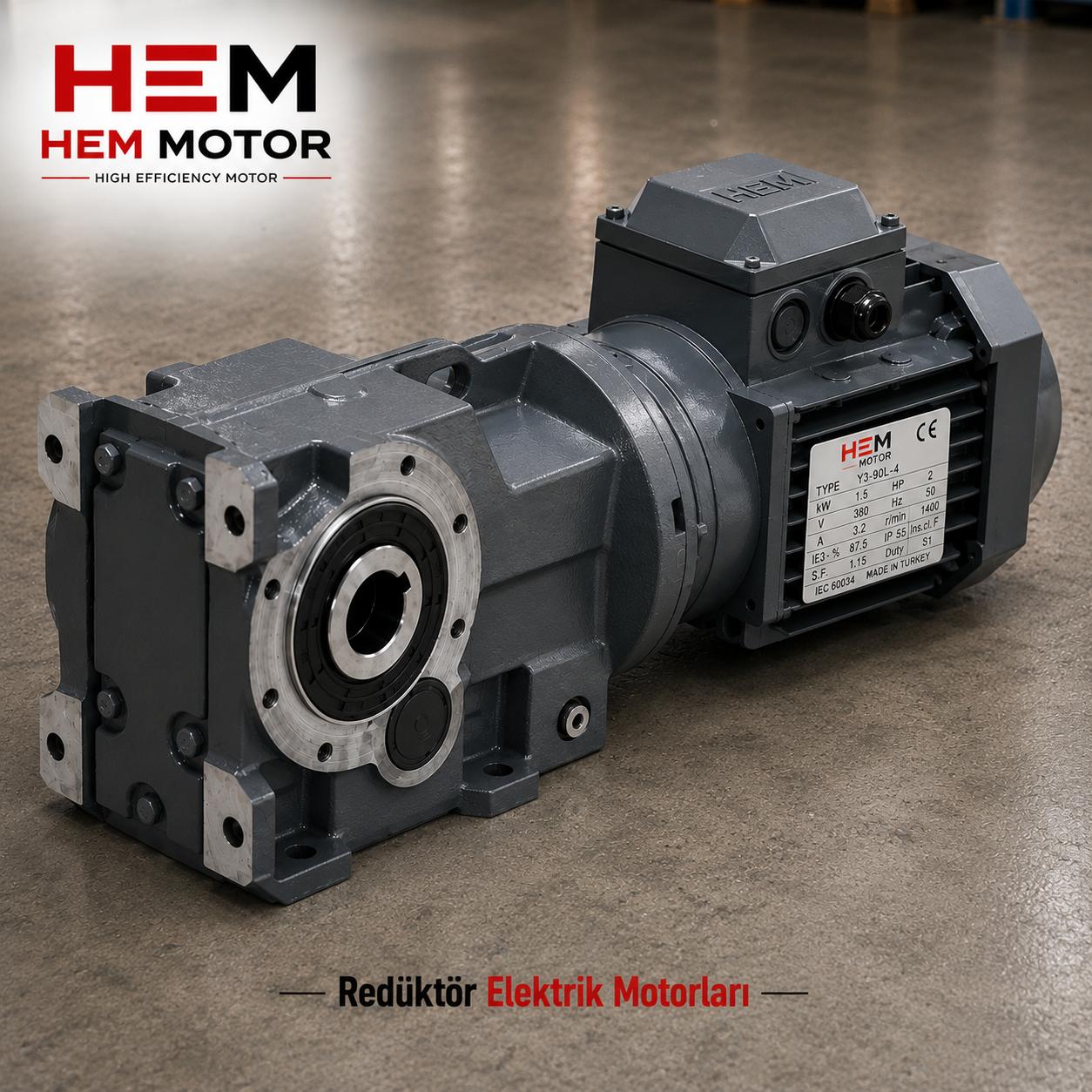

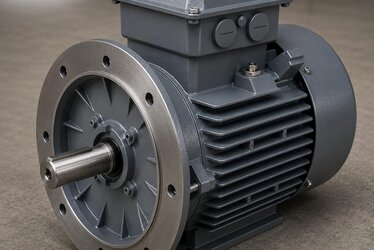
One of the most critical features determining the environment in which an electric motor can safely operate is the IP protection class of its enclosure. Using a standard motor in a dusty flour mill, in a food plant washed down with water jets, or in an outdoor environment exposed to rain leads to winding burnout and unexpected stoppages in a short time. Many businesses buy a motor with vague descriptions such as "waterproof" or "dust resistant"; yet these properties are clearly standardised with a two-digit code. In this guide we cover, step by step, what moving from the IP55 standard up to IP65 and IP66 means, which parts this upgrade physically requires, and how to order it correctly in the IE3 motor range.
Our goal is not to give you a fixed table, but to enable you to correctly analyse your environmental conditions and determine the minimum protection class your motor needs yourself. A correctly selected protection class is a fundamental engineering decision that extends the motor's life by years, prevents production stoppages and lowers maintenance cost.
What Does the IP Code Mean?
The IP (Ingress Protection) code is an international classification that standardises the protection an equipment provides against solid objects and water. The code always consists of two digits following the letters "IP". These two digits represent two independent protections, and using one in place of the other is a serious mistake.
- First digit (0-6): Solid object and dust protection. Shows the protection level against the ingress of solid matter such as fingers, wires and dust. 6 is the highest level, meaning complete dust-tightness.
- Second digit (0-8): Water protection. Shows the protection level against different water ingress, from dripping water to spraying, powerful water jets and immersion.
For example, in the IP55 code the first digit 5 means limited but adequate protection against dust (dust ingress is not completely prevented but cannot enter in harmful quantities); the second digit 5 provides protection against water spray from all directions. Reading the code correctly means knowing exactly which conditions the motor will withstand.
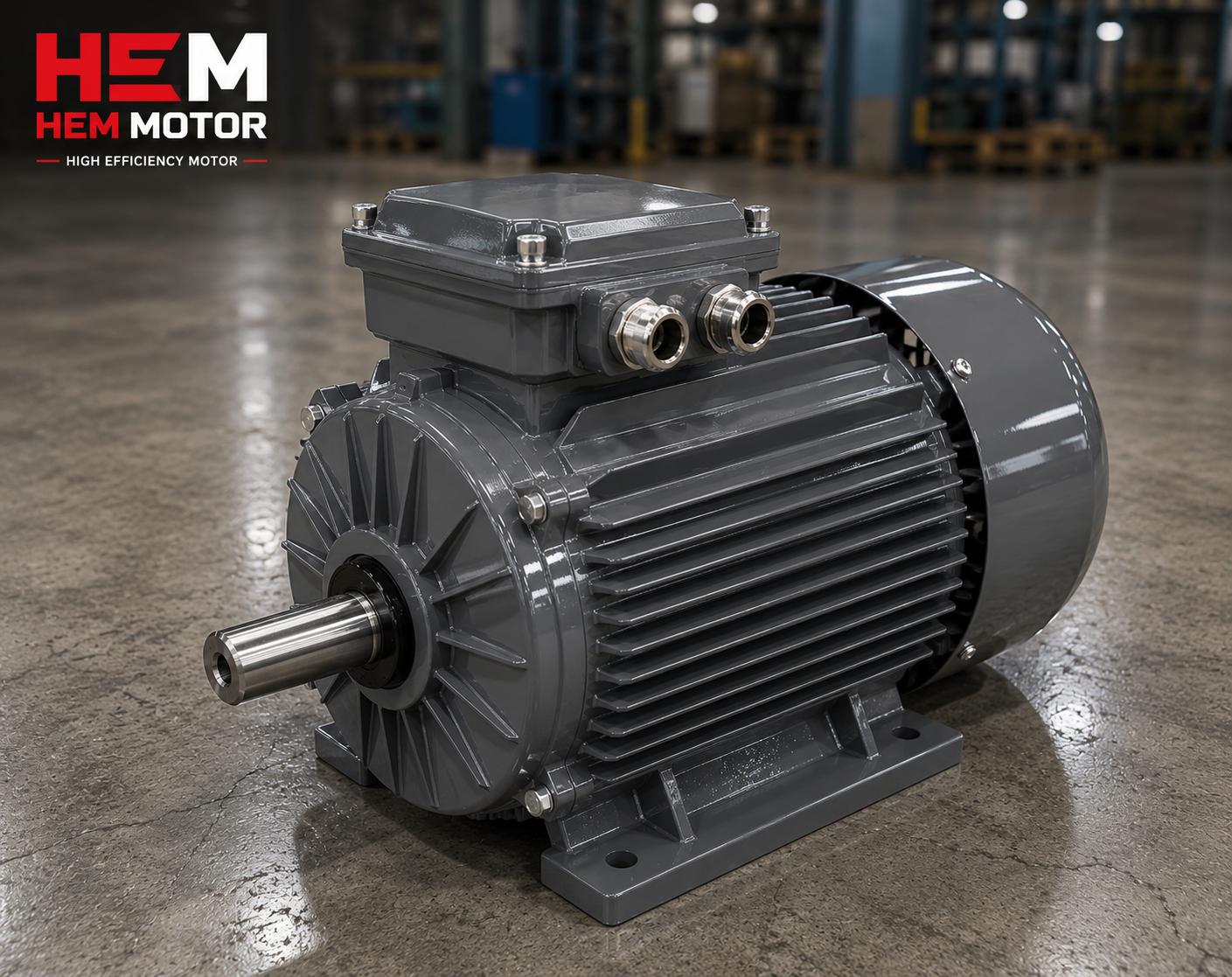
Differences Between IP55, IP65 and IP66
The three most common protection classes encountered in industrial motors are IP55, IP65 and IP66. The difference between them is decisive on both the dust and the water side.
IP55: Standard Industrial Protection
IP55 is the factory protection class of most standard industrial motors. It provides limited protection against dust (dust ingress is not fully prevented but cannot enter in quantities that disrupt the motor's operation) and resistance to low-pressure water spray from all directions. It is adequate in normal factory environments, in enclosed and clean areas. However, it falls short in places with heavy dust or direct water jets.
IP65: Fully Dust-Tight
In IP65 the first digit rises to 6; this means the motor is completely dust-tight. No dust particle can enter. The second digit 5 again maintains protection against water spray from all directions. For environments with fine and dense dust such as flour, cement, wood dust and textile lint, IP65 is the typically preferred class.
IP66: Fully Dust-Tight and Resistant to Powerful Water Jets
IP66 combines both full dust-tightness (first digit 6) and resistance to powerful water jets (second digit 6). A motor in this class is suitable for food processing plants that can be washed with pressure hoses, wash-down lines, offshore equipment and outdoor applications continuously exposed to water splashing. IP66 has become the standard for heavy industrial and hygiene-driven cleaning environments.
What Does an IP Upgrade Physically Require?
Raising the IP protection class is not achieved by replacing a single part; it is achieved by making all the transition points where the motor opens to the outside world tight together. The weakest link in the chain determines the whole system; that is, even if the motor body is IP66, if the terminal box is IP55, the total protection drops to IP55. For this reason the upgrade is a holistic engineering job.
Shaft Oil Seal
The clearance between the motor's rotating shaft and its stationary body is the point where dust and water can enter most easily. The shaft oil seal used here surrounds the rotating shaft and makes this clearance tight. While a simple seal or labyrinth gasket is sufficient in a standard IP55 motor, for IP65/IP66 a special-lipped seal of a higher sealing class is used. This seal must also be chosen from a material that withstands the shaft speed and temperature.
End-Shield Gaskets (Bearing Shield Gaskets)
The joints between the motor's front and rear end-shields (bearing shields) and the body are open to water and dust ingress unless gasketed. In an IP upgrade, special O-ring gaskets or sealing compound are applied to these mating surfaces. The machining precision of the surfaces is also critical; a poorly seated shield renders even the highest-quality gasket ineffective.
Terminal Box and Cable Gland
The terminal box where the electrical connections are made is the most frequently neglected point of IP protection. The box cover gasket, the connection surface to the body and especially the point where the cable enters the box must be tight. The cable gland used at the cable entry hole seats exactly on the cable diameter and prevents water and dust from entering at this point. A wrongly sized gland or an empty unused entry hole nullifies the total protection even if the motor body is IP66.
Which Environment Requires Which Protection Class?
To select the correct IP class, the real conditions the motor will be exposed to must be assessed honestly. The following approach is a safe guide for most applications:
- Enclosed, clean factory environment: IP55 is usually sufficient.
- Heavy dust (flour, cement, wood, textile): At least IP65; full dust-tightness is essential.
- Food and beverage lines washed with water jets: IP66 is recommended; pressure cleaning is done regularly.
- Open outdoor environment, rain and water splash: IP65 lower limit, IP66 safer.
- Both heavy dust and powerful water jet together: IP66 is the clear choice.
Selecting the protection class one step above the need provides a safety margin against unexpected conditions; however, an excessively high class can also affect cost and, in some cases, cooling. The right balance is established through environmental analysis.
The Cost of the Wrong Protection Class
The saving created by a low protection class is most often repaid many times over at the first failure. When an IP55 motor is used in a dusty environment, fine dust gradually clogs the cooling fins and accumulates on the winding surface; this build-up both blocks heat dissipation and draws moisture, degrading the winding insulation. The result is usually a gradual loss of efficiency followed by a sudden winding burnout. In a wet environment, water degrades the bearing grease structure, shortening bearing life, and leads to insulation leakage in the terminal box, even a short circuit.
An unexpected motor stoppage means not only repair cost but often a much larger production loss. For this reason, the protection class decision should be evaluated on lifetime cost of ownership (TCO) and downtime risk rather than the motor's purchase price. A small additional investment in the correct IP class pays for itself quickly by eliminating unplanned stoppages and recurring maintenance expenses.
Other Measures That Complement the IP Class
- Drain plugs: Condensation water can accumulate even in high-IP-class motors; correctly positioned drain plugs discharge this water.
- Anti-condensation heater: Prevents internal moisture while the motor is stopped, protecting the insulation; particularly recommended in outdoor and humid facilities.
- Suitable paint and surface coating: Preventing body corrosion in corrosive environments complements the IP protection.
Ordering as a Factory Option in the IE3 Range
The most reliable and most economical way to perform an IP upgrade is to order the motor in the desired protection class from the outset, as a factory option. In the IE3 motor range, IP65 and IP66 are applied in an integrated manner during production with the correct seal, gasket and end-shield machining. This gives a far more reliable result than an upgrade made later in the field.
Why is field-upgrading harder? Because the motor's body and shields are already produced with a certain tolerance and surface machining; adding a different seal or gasket afterwards carries risks such as surfaces not seating fully, assembly error and the warranty becoming void. Moreover, since testing facilities in the field are limited, it often cannot be verified that the performed upgrade truly achieves the targeted IP class. A factory motor, on the other hand, is documented with standard tests.
Information to Share at the Ordering Stage
To supply a motor with the correct protection class, the environmental conditions must be communicated clearly to your supplier. Your request should include: the type and density of dust in the environment, the manner of water exposure (splash, spray, pressure jet), the cleaning method and frequency, whether it is indoor or outdoor, the ambient temperature, the motor power and efficiency class (IE3) and the mounting arrangement. A request with this clarity both guarantees the correct protection class is selected and speeds up the supply process.
In terms of stock and supply, determining the motor with the correct IP class during the project stage eliminates waiting time during seasonal peaks. For up-to-date electric motor prices and stock availability, the healthiest approach is to clarify your environmental conditions and request a quote. For a broader evaluation, you may also review high efficiency electric motor options and three-phase electric motor models suited to different applications.
Frequently Asked Questions
What does the difference between IP65 and IP66 mean in practice?
Both classes are fully dust-tight (first digit 6). The difference is on the water side: IP65 resists water spray from all directions, while IP66 resists powerful water jets. In facilities regularly washed with pressure hoses IP66 is preferred, while IP65 is chosen in places with normal water splashing.
Can I upgrade an existing IP55 motor to IP66 in the field?
Technically some improvements can be made but it is not reliable. Because the motor's body and shield surfaces are produced to a certain tolerance at the factory, seals and gaskets added later may not provide full tightness, and moreover they cannot be tested and create a warranty risk. The healthiest approach is to order the desired IP class as a factory option from the outset.
Does a high IP class affect the motor's cooling?
A more enclosed body can make heat dissipation somewhat harder; therefore high-IP-class motors are produced with a larger body or suitable cooling solutions where needed. A correctly designed IP66 motor preserves thermal performance while providing protection. This balance is considered in the factory design.