English
 Türkçe

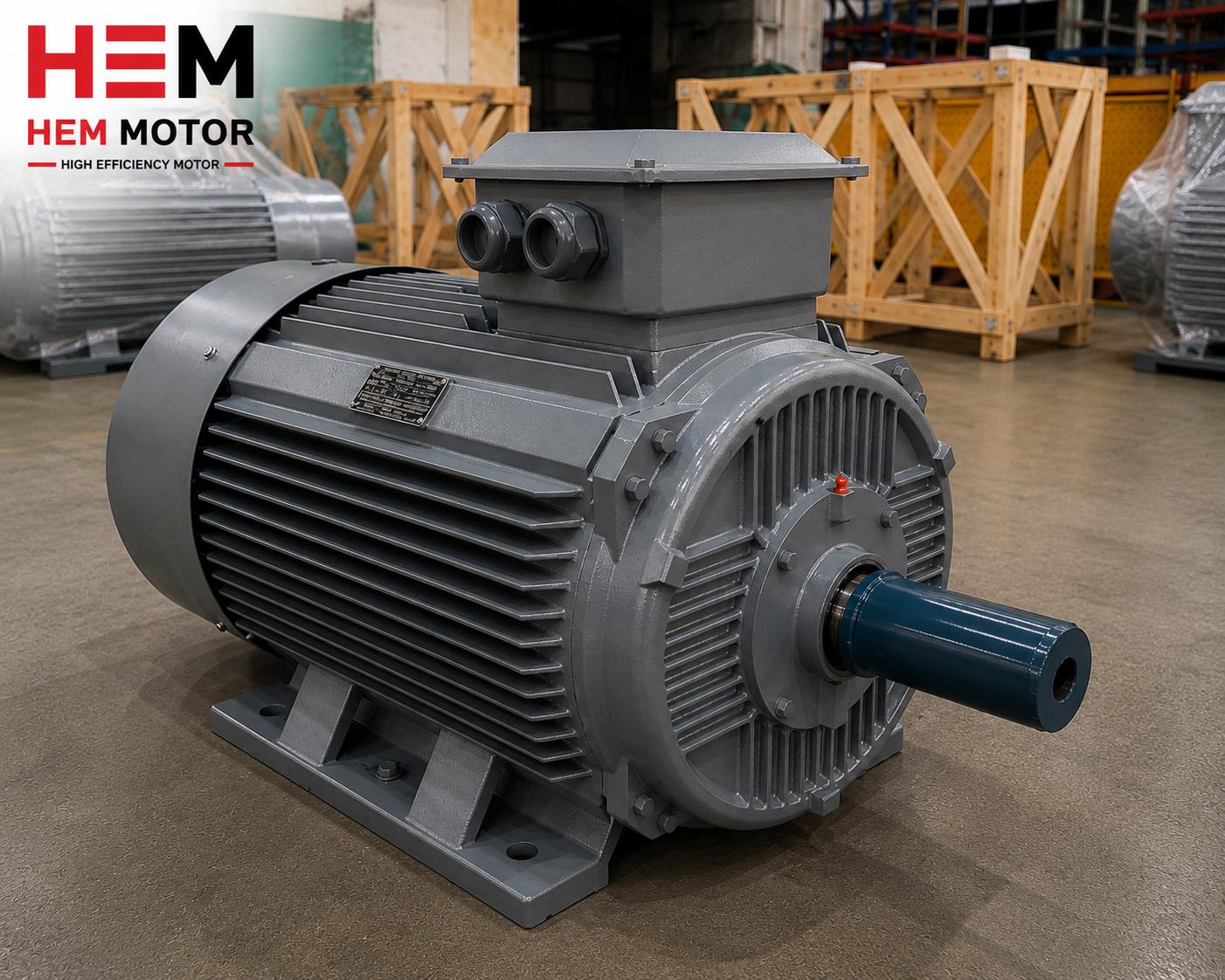

For every manufacturer exporting machinery or motors to the European Union market, the motor's efficiency class is no longer a choice but a legal requirement. The EU's Ecodesign regulation, formerly known as Lot 30, defines the minimum efficiency class (MEPS - Minimum Energy Performance Standards) of electric motors within a certain power range. Regulation EU 2019/1781 clarifies which motor must be in which IE class from which date. A motor that does not comply with these rules cannot legally enter the EU market; the CE mark and declaration of conformity (DoC) remain incomplete. In this article we cover the concepts of Ecodesign and MEPS, the scope and power range of EU 2019/1781 (0.12-1000 kW), the IE3/IE4 mandate dates, the CE and conformity requirements, and the correct efficiency class selection for export. (No price information is included in this article; correct class selection and conformity are explained.)
Regulatory compliance is often an invisible but decisive barrier for the exporter. Even a machine prepared with the right product, the right quality and competitive terms can be stopped at EU customs or kept off the market if the motor inside it is not in the required IE class. This causes both delivery delays and reputational loss. Yet knowing the rules from the start and ordering the motor with the correct efficiency class and documents completely eliminates this risk. For this reason the Ecodesign and MEPS rules should be treated not as a mere technical detail but as an inseparable part of export planning. Below we explain these rules in a practical way, from their scope to their documentation.
What Are Ecodesign and MEPS?
Ecodesign is the EU's framework regulating the environmental performance of energy-related products. Electric motors are an important part of this framework because most of the electricity consumed in industry is spent in motors. MEPS (Minimum Energy Performance Standards) determine the minimum efficiency class of motors that can be placed on the market; motors below this limit cannot legally be sold. IE (International Efficiency) classes are defined from IE1 to IE5 according to the IEC 60034-30-1 standard; the higher the number, the higher the efficiency.
- IE1: Standard efficiency (no longer used in new motors in the EU).
- IE2: High efficiency (only in certain drive-fed exceptions).
- IE3: Premium efficiency (mandatory over a wide power range).
- IE4: Super premium efficiency (became mandatory at certain powers).
- IE5: Ultra premium efficiency (not yet mandatory, voluntary top class).
You can find the basic logic of the efficiency class mandate in our article on the efficiency class mandate and power-efficiency table, and which motor is required from which date in our article on the IE3 and IE4 efficiency mandate.
EU 2019/1781 Scope and Power Range
Regulation EU 2019/1781 sets the efficiency requirements of electric motors placed on the EU market. The scope varies according to the motor's power, number of poles and type. In general, three-phase asynchronous motors between 0.12 kW and 1000 kW fall within this regulation, but different IE classes and dates apply in different power bands.
| Power Range | Required IE Class | Effective Date | Note |
|---|---|---|---|
| 0.12 - 0.75 kW | IE2 | 1 July 2023 | Small power band |
| 0.75 - 1000 kW | IE3 | 1 July 2021 | Wide main band |
| 75 - 200 kW | IE4 | 1 July 2023 | 2/4/6 pole |
| 0.12 - 1000 kW | Out-of-scope exceptions | - | Brake, Ex, submersible etc. |
The dates and classes in the table show the basic tiers of the EU regulation; in practice the motor type (poles, brake, Ex-proof, submersible) may introduce exceptions. Therefore the current requirement of the target market must always be confirmed before export. To read the IE code on the motor label correctly, our article on reading the efficiency value and IE code on the nameplate is useful.
IE3 and IE4 Mandate Dates
The EU regulation entered into force in stages. The first major step is the IE3 mandate for motors between 0.75 kW and 1000 kW; this covers a wide power band. The second tier introduces the IE4 mandate for certain motors between 75 kW and 200 kW. At small powers (0.12-0.75 kW) IE2 is defined as the minimum class.
- IE3 (0.75-1000 kW): Main band; mandatory from 1 July 2021.
- IE4 (75-200 kW): Mandatory in this band from 1 July 2023.
- IE2 (0.12-0.75 kW): Minimum class at small power, 1 July 2023.
Whether a motor should stay at IE3 or move to IE4 depends on both the legal requirement and the economic payback; we cover this decision in detail in our article on whether to move to IE4 or stay at IE3. For stock and delivery planning in premium efficient motor supply, our article on IE4 premium motor supply provides guidance.
CE Mark and Declaration of Conformity (DoC)
It is not enough for a motor entering the EU market to be merely in the right IE class; it must also carry the CE mark and be documented with a declaration of conformity (DoC). The CE mark declares that the product complies with the relevant EU directives (Ecodesign, Low Voltage, EMC etc.). The DoC is the document in which the manufacturer officially commits to this conformity and may be requested at customs.
- CE mark: Must be visible on the motor label and body.
- Declaration of conformity (DoC): Lists which directives and standards are met.
- Technical file: Efficiency test results and technical data are retained.
- Label information: The IE class, efficiency value and standard reference appear on the nameplate.
You can find in depth what to look for in the DoC and MEPS documentation in import and purchasing in our article on the CE and declaration of conformity (DoC). How efficiency is measured and documented is also of critical importance here.
Multi-Market and 50/60 Hz Compatibility
In export, not only the EU but the target country's frequency and its own MEPS regulation matter. Many countries have their own energy efficiency mandates, and the 50 Hz / 60 Hz difference affects motor selection. In multi-country projects or machines that will run on both 50 and 60 Hz, multi-voltage and frequency-compatible motors should be preferred. Our article on multi-voltage and 50/60 Hz frequency compatibility offers comprehensive information on this.
In motor replacement for an imported machine or in NEMA/IEC matching, the efficiency class and connection dimensions should also be evaluated together; our article on NEMA and IEC motor matching helps with this.
Why Is High Efficiency Not Just Regulation but Economics?
Although the Ecodesign mandate is a legal requirement, the real logic of choosing a high-efficiency motor is economic. The vast majority of the total cost an electric motor incurs over its life is not the purchase price but the energy it consumes. In a continuously running motor the electricity cost far exceeds the initial investment; therefore moving up one efficiency class significantly reduces the lifetime cost.
- Energy share dominates: In a continuously running motor, most of the total cost of ownership comes from energy consumption.
- The efficiency difference accumulates: Each transition from IE2 to IE3, and IE3 to IE4, reduces losses and lowers annual consumption.
- Operating hours are decisive: The more hours the motor runs, the faster the payback of high efficiency.
- Carbon footprint decreases: Low consumption provides an advantage in both cost and environmental compliance.
Therefore, while the regulation sets the minimum class, a smart buyer often chooses one tier higher, both safely complying with the regulation and benefiting from energy savings. Especially for manufacturers exporting to the EU market, high efficiency is the key not only to clearing customs but also to offering a competitive and sustainable product.
Correct Class Selection in Export
The steps to take when selecting the right efficiency class for export are clear:
- Determine the target market: EU 2019/1781 for the EU, their own MEPS rules for other countries.
- Clarify the motor's power and pole band: which IE class is mandatory in this band?
- Check the type: exceptions such as brake, Ex-proof, submersible may be subject to a different rule.
- Verify the frequency: 50 Hz or 60 Hz, or both?
- Prepare the documents: CE, DoC and technical file must be ready for customs.
As a general rule, IE3 is the safe minimum choice for standard motors in the wide power band going to the EU; IE4 may be required in the 75-200 kW band. In future-oriented investments and energy-intensive applications, choosing IE4 or even IE5 both guarantees regulatory compliance and provides long-term energy savings. Choosing the right class from the start prevents customs and conformity problems in export.
IE5 and Preparing for the Future
Today IE5 is not yet mandatory in the EU; however efficiency regulations have historically always moved upward. IE1 was once standard, then IE2, then IE3 became mandatory, and IE4 came into play at certain powers. This trend signals that in the future IE4 over wider power bands and subsequently IE5 will come onto the agenda. Therefore it is sensible to think about the future in investments made today.
- Long-life facilities: In a plant that will run for 10-20 years, choosing IE4/IE5 today protects against the cost of replacing the motor when the regulation tightens later.
- Energy-intensive applications: In continuously running loads such as pumps, fans and compressors, the savings of IE5 quickly pay back the additional investment.
- Drive-fed systems: IE5 synchronous reluctance motors always run with a drive; if the drive already exists, switching to IE5 is easier.
- Sustainability targets: For manufacturers with carbon reduction commitments, high efficiency is a reportable advantage.
Therefore the exporter should consider not only today's minimum class but also the target market's possible future requirements. The direction of the regulation is clear: efficiency classes rise over time, they never fall. Choosing one tier higher today both secures regulatory compliance and makes the product resilient against future regulations.
Frequently Asked Questions
Can I export an IE2 motor to the EU?
Generally no; for standard motors between 0.75 kW and 1000 kW the EU market requires IE3 as the minimum class. IE2 may be accepted only at very small powers (0.12-0.75 kW) or in certain drive-fed/exceptional configurations. Before export it is essential to confirm the target market's current MEPS requirement by checking the motor's power band and type.
Are Ecodesign and Lot 30 the same thing?
Lot 30 is the former name of the preparatory study on motors within the Ecodesign work; the regulation in force today is the Ecodesign Regulation EU 2019/1781. So Lot 30 refers to the historical/preparatory stage, while EU 2019/1781 expresses today's binding rule. In practice the current reference for the exporter is EU 2019/1781 and the target market's MEPS rules.
Are brake motors or Ex-proof motors also in scope?
Some special type motors (for example brake motors, explosion-protected Ex motors, submersible motors) may be exempt or subject to a different rule in the regulation. Therefore for types other than standard asynchronous motors, the current exception list of the relevant regulation must be checked. In case of doubt, conformity should be verified through the motor's technical file and DoC.
Smooth Export with the Right Efficiency Class
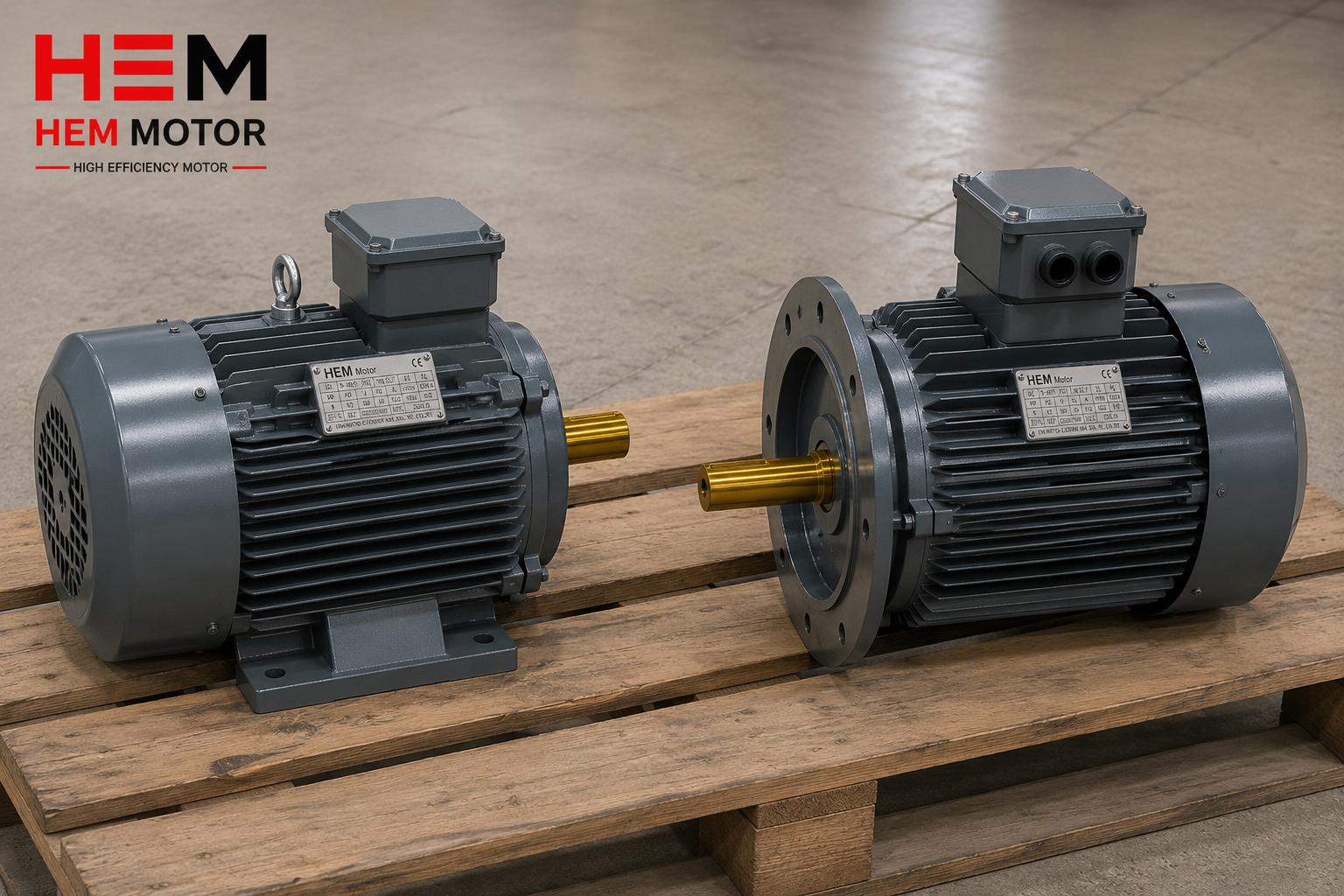
Ecodesign and MEPS regulations have made high-efficiency motors a requirement in the EU and many country markets. Choosing the right IE class under EU 2019/1781, matching the correct power-pole band, preparing the CE mark and declaration of conformity and confirming the target market's frequency/MEPS rules prevent customs and conformity problems from the start in export. While IE3 is the safe minimum choice in the wide band, IE4 has become mandatory at certain powers, and IE5 stands out as a future-oriented voluntary top class. As HEM Motor we supply IE3, IE4 and IE5 high-efficiency motors suitable for the EU and export markets, together with CE and conformity documents, from stock with fast delivery; contact us for the most suitable efficiency class and configuration for your target market to request a quote.