English
 Türkçe


The story of an electric motor does not end the day it is taken out of service. A high-efficiency motor, at the end of its life, leaves in your hands a valuable pile of raw materials: high-purity copper, quality electrical steel (silicon sheet), cast iron frame and aluminium parts. Managed correctly, these materials either give the motor a second life through rewinding, or are returned to industry through recycling. In this article we cover end-of-life recycling and second life in high-efficiency motors; copper and steel recovery, the dismantling and separation process, scrap value, the circular economy, the rewind-or-recycle decision and the sustainability dimension. The aim is to show that a motor that has completed its life is not waste but value.
Sustainability discussions usually focus on the motor's energy consumption during the use phase; rightly so, because most of a motor's environmental impact comes from the electricity it consumes in use. However, the recovery of the materials used in manufacturing the motor and its end-of-life management are also an important part of the circular economy. High-efficiency motors, because they contain more copper, also carry higher material value at end of life; this is a frequently overlooked aspect of the sustainability equation.
What Is Inside a Motor? Material Breakdown
The material breakdown by weight of a typical asynchronous electric motor is a good starting point for understanding recovery potential. The table below summarises typical material ratios and recovery status for a medium-power motor (values vary with power and design).
| Material | Typical Weight Ratio | Location | Recovery |
|---|---|---|---|
| Cast iron / steel (frame, shaft) | ~45-55% | Frame, end shields, shaft | High (magnetic separation) |
| Electrical steel (silicon sheet) | ~20-30% | Stator and rotor core | High |
| Copper (winding) | ~8-15% | Stator winding | Very high value |
| Aluminium | ~2-6% | Rotor cage, fan, some frames | High |
| Insulation, plastic, other | ~2-5% | Winding insulation, terminal, fan cover | Limited / energy recovery |
What the table shows is this: the largest part of the motor by weight is iron-steel, and its recovery is easy; but in terms of value the most precious component is copper. The high scrap value of copper is the main factor that makes the economic recycling of an end-of-life motor attractive.
Copper and Steel Recovery
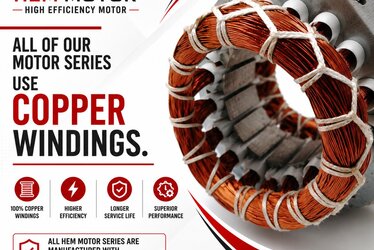
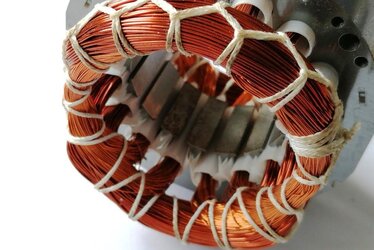
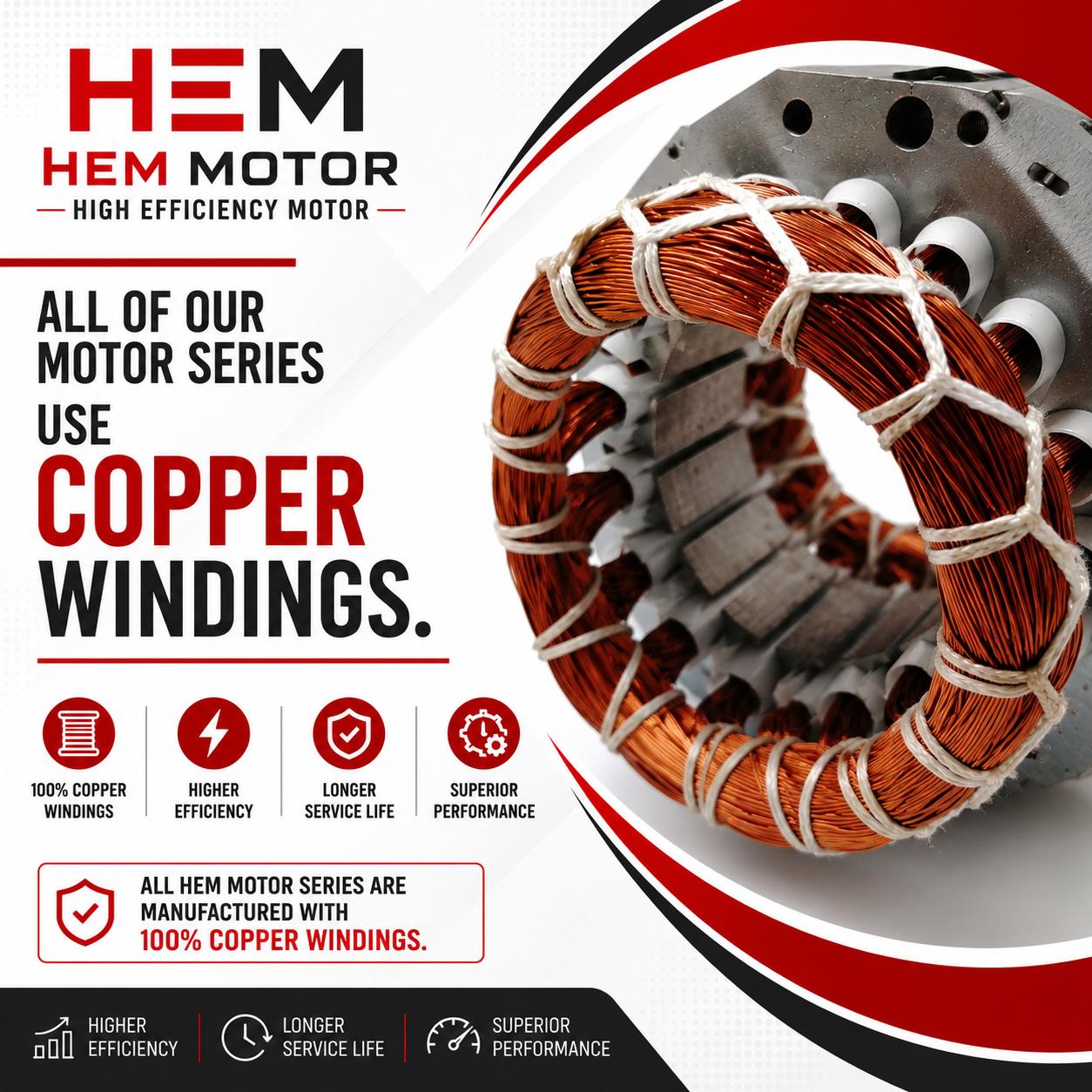
Copper is the most valuable recovery material in an electric motor. The copper used in windings is of high purity; when separated correctly it can be recycled almost endlessly without losing its properties. This makes copper one of the model materials of the circular economy. A motor's copper content increases with its power and efficiency class; because high-efficiency motors use more copper to reduce losses, they also carry higher copper value at end of life. We covered the importance of the copper winding and its effect on quality in our article on copper vs aluminium winding difference.
Electrical steel (silicon sheet) forms the motor's stator and rotor core. This sheet is produced specially for its magnetic properties; in recycling it joins the steel stream and is used in producing new steel. The cast iron frame and steel shaft are easily collected by magnetic separation and returned to the casting/steel industry. Thus 70-80% of the motor by weight (the iron-steel family) can be recovered at a high rate.
The Dismantling and Separation Process
Unlocking the value of an end-of-life motor goes through correct dismantling and separation. The typical steps are:
- Disassembly: End shields, bearings, fan and fan cover are removed; mechanical parts are separated.
- Removal of the copper winding: Copper windings are separated from the stator by mechanical or thermal methods; this step unlocks the highest value.
- Core separation: The silicon sheet pack is separated from the frame and prepared for steel recycling.
- Metal separation: Ferrous metals, aluminium and copper are separated from one another by magnetic separation.
- Insulation and plastic: Combustible insulation and plastics are separated and directed to energy recovery or suitable disposal.
The efficiency of this process also depends on how the motor was made; a cleanly designed, easily dismantled motor enables a higher recovery rate. The circular economy approach requires thinking about the product's end of life at the design stage.
Rewind or Recycle?
There are two main paths for a motor that has completed its life: giving it a second life through rewinding, or converting it to material through recycling. The decision depends on several factors:
- Efficiency loss: Rewinding often causes a small efficiency loss; especially with low-quality rewinding this loss becomes permanent. Rewinding a high-efficiency motor can drop it to a lower efficiency level.
- Cost: On large-power motors, rewinding may be economical compared with a new motor; at small powers buying new is usually more sensible.
- Regulation and efficiency target: If the efficiency class matters, it may be better to move to a new high-efficiency motor rather than rewind an old one and keep it at low efficiency.
To make this decision concrete, our articles on rewind or buy new and rewinding, efficiency loss and the new-purchase decision offer a detailed framework. On the IE4 side, we covered the post-rewind efficiency loss in our article on rewinding an IE4 motor. The general rule: if the motor is repairable and your efficiency target is met, rewind; if the efficiency loss is unacceptable or the motor has reached the end of its economic life, recycling is the right path.
An Extra Dimension in Magnet Motors: Rare Earth
Motor technology also makes a difference in recycling. Classic asynchronous and synchronous reluctance motors contain only copper, steel and aluminium; the recovery chain for these materials is mature and economical. Permanent magnet (PM) motors, on the other hand, contain rare-earth magnets (such as neodymium and dysprosium) in their rotors. These magnets are valuable; but their recovery requires a more complex, less mature process and needs special separation. A magnet-free synchronous reluctance motor is advantageous here too: it has no rare-earth dependence in production and is also simpler to recycle at end of life. This is an extra plus of synchronous reluctance technology from a sustainability perspective. We covered the supply and environmental advantage of the magnet-free rotor in our article on magnet-free rotor supply advantage.
Scrap Value and the Circular Economy
An end-of-life motor also carries an economic value as scrap; most of this value comes from copper, then from iron-steel. Therefore motors are not waste to be thrown away but a resource to be recovered. The circular economy logic comes into play precisely here: a motor's copper can be melted into the winding of a new motor; its steel into a new frame. This cycle reduces the need for primary raw-material mining and saves energy and carbon. Our article comparing the manufacturing (embodied energy) carbon and the use carbon of a high-efficiency motor, lifecycle CO2 and embodied energy, explains where recovery sits in this big picture. We covered the role of motor selection in lowering a facility's carbon footprint in our article on the carbon footprint.
Second Life: Reuse and Refurbishment
Between recycling and rewinding there is a third option: the motor gaining a second life as a whole. A sound, efficient motor no longer needed at one facility can be used directly in another application, or refurbished (bearing replacement, cleaning, testing) and recommissioned. This approach turns the motor back into a value-producing asset with minimal energy, without melting the material, and represents the "reuse" step of the circular economy. But here too the efficiency target must be observed: reusing an old, low-efficiency motor may look economical in the short term but can give that advantage back through energy cost in a high-operating-hour application. So the second-life decision should be evaluated together with the motor's efficiency class and the load profile it will run.
Another dimension of second life is stock and spare planning. Keeping sound motors as spares with regular checks and correct storage enables fast commissioning in case of failure. Correct storage and long-term holding of a motor is a discipline in itself; we covered the moisture, bearing and commissioning topics in our article on motor storage and long-term holding. A well-managed motor fleet provides the facility an advantage both in end-of-life value and in spare flexibility.
Extending Life Through Maintenance
The best form of end-of-life management is to extend the motor's life as much as possible and delay the end of life. Regular maintenance prevents the motor from failing early through bearing lubrication, vibration and temperature monitoring, insulation (megger) measurement and cleaning. A well-maintained high-efficiency motor serves for decades while largely retaining its efficiency; this is both the most sustainable and the most economical scenario, because it produces the least waste. For a periodic check schedule, our article on maintenance and periodic check schedule offers a practical guide. We examined the causes of early failure and how to prevent it in our article on motor life and early failure causes. Extending a motor's life is the most direct way to defer end-of-life recycling and reduce the total environmental impact.
Sustainability and the Right Motor Choice
A sustainable motor strategy stands on three legs: high efficiency in use, long life, and high recovery at end of life. High-efficiency motors strengthen all three legs at once: they consume little energy in use, are long-lived thanks to their quality construction, and carry high material value at end of life thanks to their high copper content. We covered the recycling advantage of magnet-free synchronous reluctance motors in our article on IE5 motor recycling and sustainability. Viewed from the perspective of total cost of ownership and lifetime value, a high-efficiency motor offers an advantage not only in the energy bill but also in end-of-life value. We covered this topic in depth in our article on total cost of ownership (TCO).
Frequently Asked Questions
Should I throw away a motor that has completed its life?
No. An end-of-life motor is a valuable resource thanks to the copper, steel and aluminium it contains. With correct dismantling and separation these materials are recovered at a high rate; copper in particular can be recycled again and again with almost no loss of properties. It is correct to see the motor not as waste but as value to be recovered.
Why is the recycling value of a high-efficiency motor higher?
High-efficiency motors use more copper and higher-quality electrical steel to reduce losses. Since copper is the component with the highest scrap value, a motor containing more copper also carries higher material value at end of life. This is a frequently overlooked extra benefit of high efficiency.
Is rewinding or recycling more sustainable?
It depends. If the motor is in repairable condition and meets your post-rewind efficiency target, rewinding gives a second life while preserving the material and is sustainable. But if rewinding causes a permanent efficiency loss or the motor has reached the end of its economic life, recovering the material through recycling and moving to a new high-efficiency motor is the better choice.
At HEM Motor, while offering high-efficiency, long-lived motors from wide stock with fast delivery, we also value the motor's lifetime value and end-of-life recovery. To choose motors suited to your facility's sustainability goals, efficient in use and valuable at end of life, request a quote; we are at your side with manufacturer stock advantage and fast supply.