English
 Türkçe

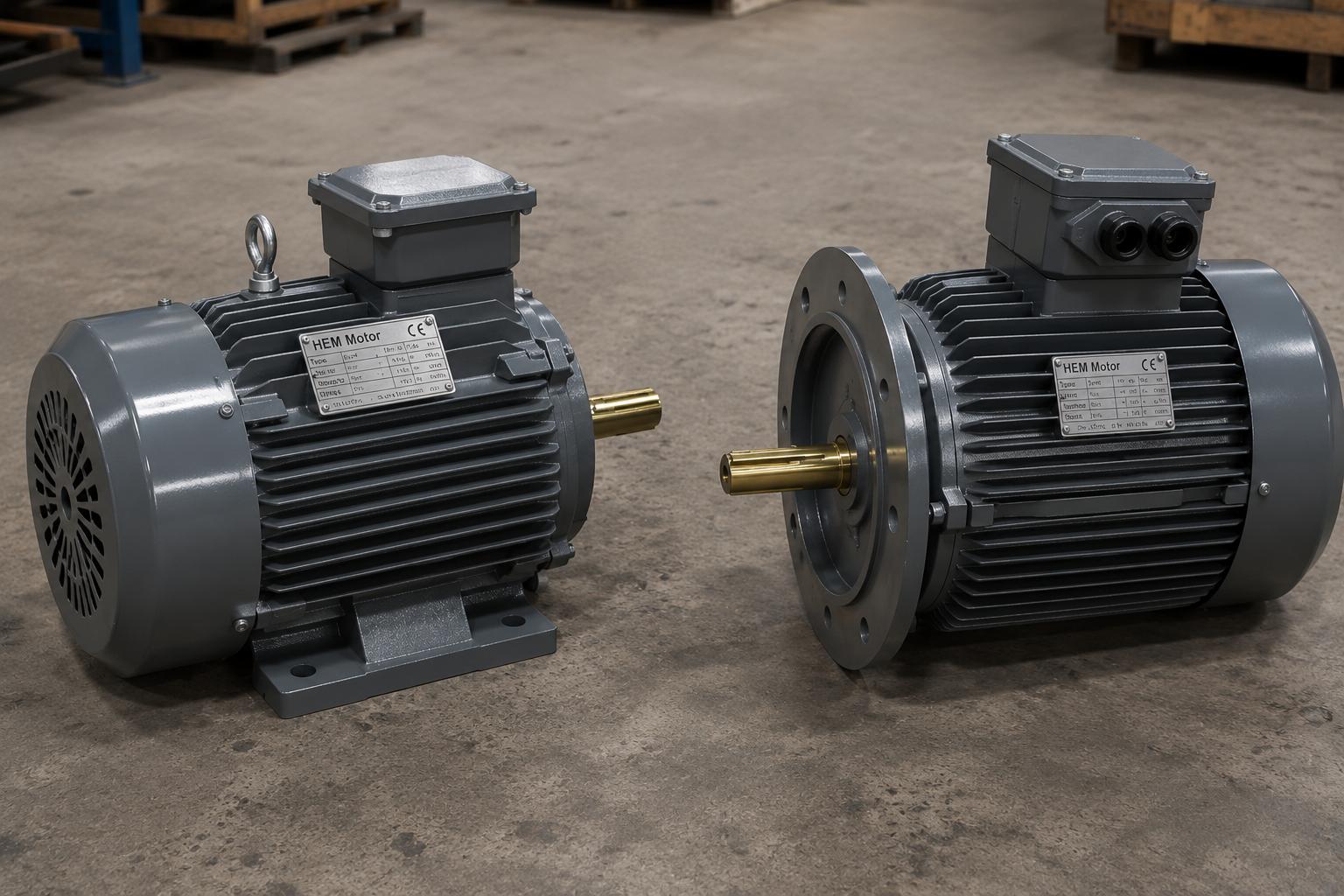

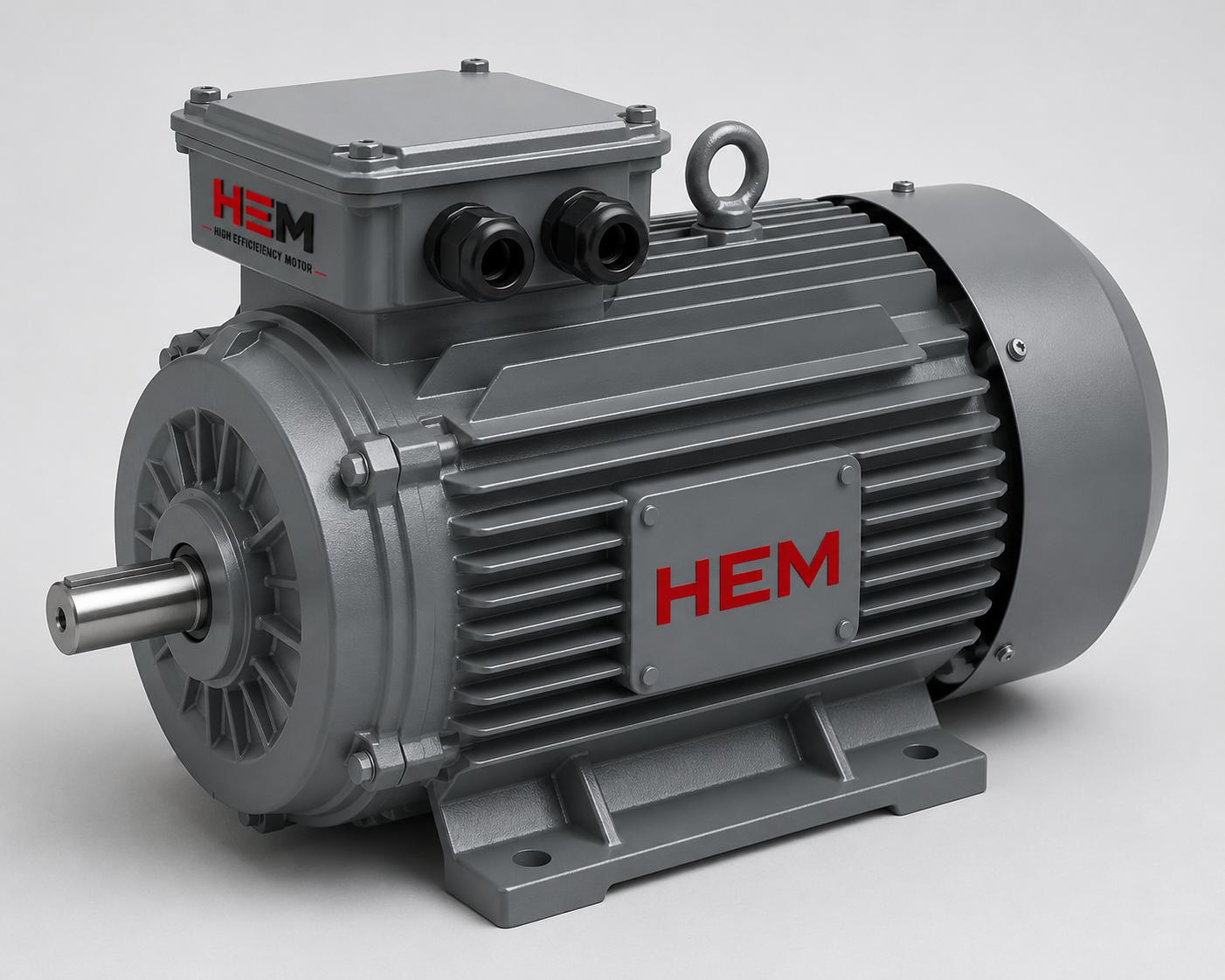
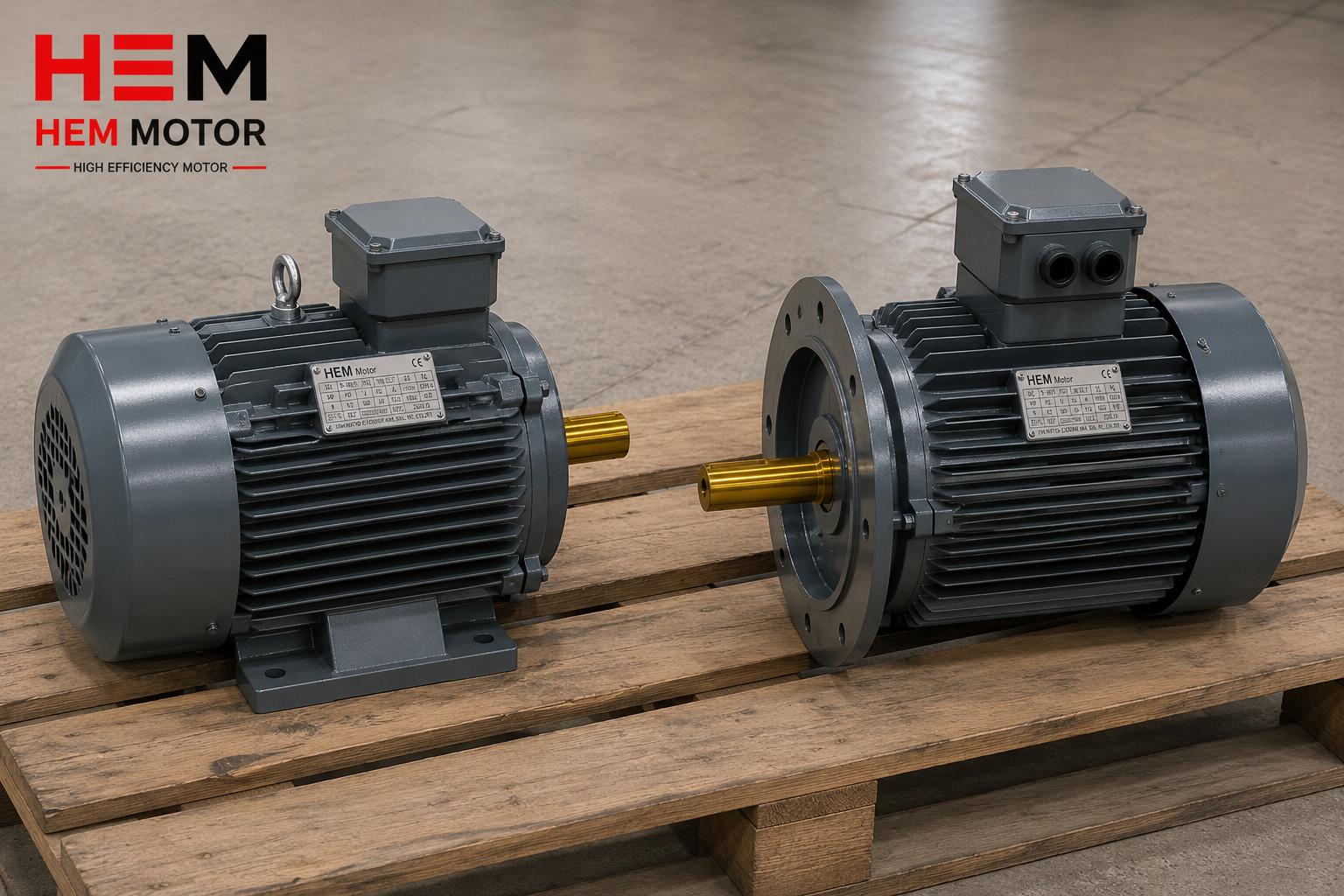
When you bring an IE4 super premium efficient motor into a plant, there is a detail as critical as efficiency yet often overlooked: how you connect the cable to the terminal box. When the cable gland selection is made incorrectly, even the world's most efficient motor will fail due to moisture, dust and vibration entering through the terminal box. The terminal box entry hole is manufactured in a specific thread type: metric (M), NPT or the older PG. A field gland that does not match this thread is one of the most common installation mistakes and usually breaks the seal, effectively lowering the motor's IP protection class. In this article we cover the IE4 motor's terminal box entry thread type, correct gland selection, gland size by cable diameter, sealing and IP compatibility, and explosive (Ex) area requirements, supported by technical tables.
Because IE4 motors are usually driven by a variable frequency drive (VFD), the terminal entry is not just a mechanical connection point; it is also a critical interface for EMC (electromagnetic compatibility), grounding continuity and shield termination. An EMC-type gland that correctly terminates the shield of a screened cable reduces bearing currents and noise emission. Therefore gland selection is an inseparable part of preserving the IE4 motor's efficiency and life advantage, in terms of both mechanical sealing and electrical performance.
Terminal Box Entry Thread Types: Metric, NPT and PG
A motor's terminal box entry holes are cut in a standard thread profile. There are three main types and they cannot be fitted directly to one another:
- Metric (M): The standard thread of the European and IEC world. It comes in sizes such as M20, M25, M32, M40, M50, M63; the number gives the outer diameter of the thread in millimetres. The pitch is usually the fine (1.5 mm) standard. Today the vast majority of IEC motors have metric entries.
- NPT (National Pipe Taper): North America's tapered pipe thread. It comes in inch sizes such as 1/2", 3/4", 1", 1-1/4". Thanks to its taper, sealing increases as it is tightened; however the tapered thread is never compatible with the straight metric thread.
- PG (Panzer-Gewinde): The old German standard straight thread. It comes as PG11, PG16, PG21, PG29. In new projects it has given way to metric, but it still appears in existing plants.
The fundamental difference between these three types is not only the diameter; it is the thread profile, the pitch and whether it is tapered or straight. If an NPT gland is forced into a metric hole, the thread strips, the seal breaks and IP protection is lost. Therefore when ordering the motor the terminal box entry thread type must be specified and must match the existing cable and gland infrastructure of the plant.
When Is Each Thread Type Chosen?
The preference usually depends on the geographic standard of the plant and the existing infrastructure. In a European/IEC-standard plant metric is preferred; this is the most common and most easily sourced choice. If compatibility with an export machine or a North American line is required, NPT may be requested. If you are replacing the spare motor of an old plant, choosing the same type as the existing terminal box thread makes installation trouble-free. When a transition between thread types is needed, certified thread adapters (M to NPT, PG to M) are used; however each extra connection point is a sealing risk, so where possible ordering the motor with the correct thread from the start is the healthiest approach.
| Thread Type | Typical Sizes | Profile | Common Region / Use |
|---|---|---|---|
| Metric (M) | M20 / M25 / M32 / M40 / M50 / M63 | Straight, fine pitch | Europe / IEC standard, most common |
| NPT | 1/2" / 3/4" / 1" / 1-1/4" / 1-1/2" | Tapered | North America, export machines |
| PG | PG11 / PG16 / PG21 / PG29 / PG36 | Straight | Old plants, spare replacement |
Gland Size Selection by Cable Diameter
Once the thread type is chosen correctly, the second critical decision is the gland's cable clamping range. Each gland provides sealing for a specific cable outer-diameter range. If the cable is thinner than the gland's lower limit, the seal cannot grip the cable enough and it leaks; if it is thicker than the upper limit, the gland does not close and again leaks. The correct gland places the outer diameter of the cable used at the middle of its clamping range. The table below shows common metric gland sizes and roughly suitable cable diameter ranges.
| Metric Gland | Typical Cable Outer Dia. | Example Application |
|---|---|---|
| M20 | ~6-12 mm | Small power motor, control cable |
| M25 | ~9-17 mm | Medium power IE4 motor power cable |
| M32 | ~15-21 mm | High power motor supply cable |
| M40 | ~19-28 mm | Large power, thick cross-section cable |
| M50 / M63 | ~27-42 mm | Very large power, parallel conductors |
As the cable cross-section grows (higher power and current), the outer diameter increases too; therefore on large IE4 motors the terminal entry may be M40, M50 or even M63. Clarifying the cable cross-section and outer diameter before ordering correctly determines both the gland size and the terminal box entry hole size. Unused entry holes must be closed with a certified blanking plug of the same thread; an open hole zeroes the IP protection.
Sealing and IP Compatibility: How the Gland Determines IP
The motor's IP protection class is provided not only by the frame and seals; it is achieved together with the terminal box and the glands there. Even if the terminal box is IP66, if you fit an IP54 gland into it, the gland becomes the weakest link in the chain and the protection of the whole connection drops. Therefore the gland's IP class must be equal to or higher than the motor's target IP class. The factors that determine sealing are:
- Thread seal: An o-ring or seal washer provides sealing at the thread region where the gland enters the terminal box.
- Cable clamping seal: The inner seal of the gland that wraps around the cable; when matched to the correct cable diameter, it prevents water and dust ingress.
- Material: Brass (nickel-plated), stainless steel or polyamide; chosen according to the corrosion and UV conditions of the environment. In open field and coastal areas, stainless or nickel-plated brass is preferred.
In places requiring high IP, such as washdown food plants or open field, IP66/IP68-certified glands are used. In vibrating applications, locknuts or anti-loosening seals that prevent the gland from self-loosening are preferred; otherwise a gland that loosens over time starts to leak.
Gland Selection in Explosive (Ex) Areas
If the IE4 motor will work in an ATEX/Ex zone, gland selection ceases to be a standard mechanical connection and becomes an element requiring a safety certificate. In an Ex environment only certified Ex glands suitable for the relevant protection type (Ex d flameproof, Ex e increased safety) may be used. These glands are designed to prevent a spark that may form inside from spreading outside. On Ex d flameproof motors, different certified gland types are required depending on the cable type (armoured/unarmoured, filled/unfilled), and in some cases a barrier (compound) type gland is mandatory. Using a standard industrial gland in an Ex area is both contrary to regulation and creates a serious safety risk.
- Ex d (flameproof): Usually a barrier (compound-filled) gland; physically prevents flame transmission.
- Ex e (increased safety): High-IP, certified standard Ex gland.
- Armoured cable: A special Ex gland that earths the armour and provides mechanical grip.
EMC and Grounding: The Gland's Role on a Driven IE4 Motor
IE4 motors mostly run with a frequency drive. The drive applies voltage to the motor with high-frequency switching; this requires the use of a screened (shielded) power cable. When the cable shield is terminated 360 degrees (all around) at the motor side, the noise current flows cleanly to earth and bearing currents and EMC problems are reduced. This is where the EMC-type gland comes in: the spring contact element inside the gland grips the cable shield all around and conducts it to the terminal box metal. A standard gland cannot perform this function; it connects the shield only at a single point or not at all. Using an EMC gland on driven IE4 motors is important for both regulatory compliance and bearing life. For grounding continuity, the grounding screws in the terminal box and on the frame must also be tightened correctly.
Pre-Order Checklist
- Terminal box entry thread type: metric (M), NPT or PG.
- Cable outer diameter and cross-section — determines gland size.
- Number of entry holes (power + grounding + control/PTC) and blanking plugs for unused ones.
- Target IP class and environment (humidity, dust, chemical, UV).
- Is it driven? Are a screened cable and EMC gland required?
- Is it an Ex/ATEX zone? Protection type and certified gland type.
Frequently Asked Questions
Can I fit an NPT gland into a metric terminal box?
No, not directly. The straight metric thread and the tapered NPT thread have incompatible profiles and pitches; forcing strips the thread and breaks the seal. If a transition between the two systems is needed, use a certified thread adapter; but the healthiest approach is to order the motor with your plant's standard thread type from the start.
How do I select the gland size?
Choose it so that the cable's outer diameter falls at the middle of the gland's clamping range. If the cable is too thin the seal does not grip, if too thick the gland does not close; in both cases it leaks. Clarify the cable outer diameter and cross-section before ordering; on high-power IE4 motors the entry may go up to the M40-M63 range.
Which gland is required on a drive-fed IE4 motor?
An EMC-type gland that terminates the screened power cable shield 360 degrees is required. This gland conducts the noise current cleanly to earth, reducing bearing currents and EMC problems. A standard gland cannot do this. In an Ex zone, a certified Ex gland suitable for the protection type is also mandatory.
Conclusion and Supply
On an IE4 motor, cable gland selection is the invisible but decisive part of preserving the motor's efficiency and life advantage in the field. The correct thread type (metric/NPT/PG), the correct gland size (by cable diameter), sealing suited to the target IP class and, where required, an EMC or Ex-certified gland; all four of these factors must be evaluated together. HEM Motor supplies its IE4 super premium motors with the desired terminal box thread type, gland range and EMC/Ex options from stock with fast delivery. Share your plant's thread standard, cable cross-section and environmental conditions and request a quote for a terminal entry configuration suited to your application.
Related content: terminal box and correct gland selection, terminal box orientation and cable entry side, cable lug and tightening torque, grounding and EMC connection and inverter duty IE4 and du/dt.