English
 Türkçe


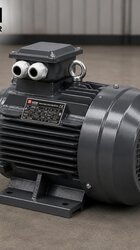
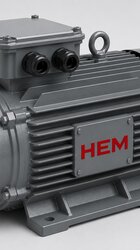
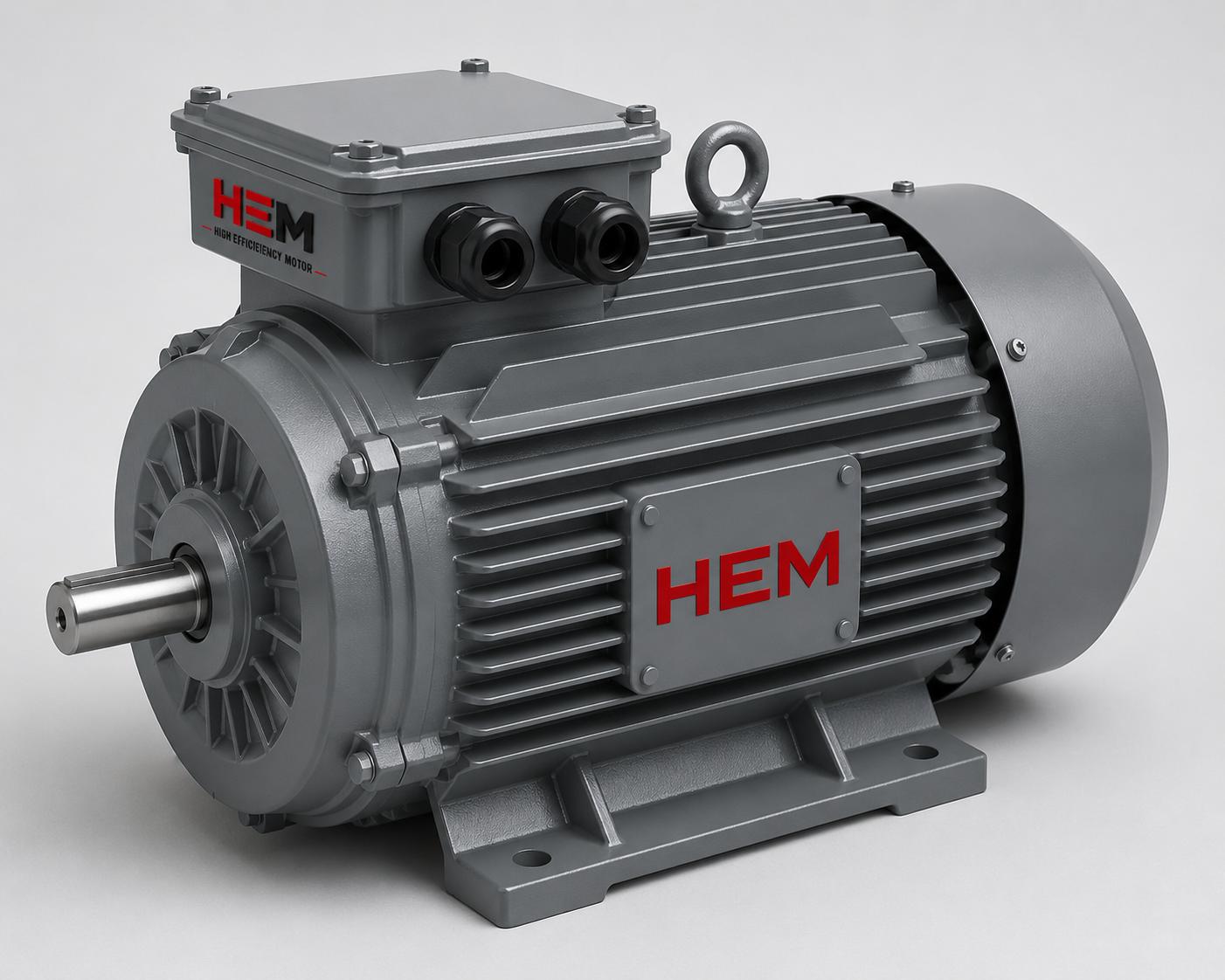

In high-power IE4 motors, the inrush current drawn during direct-on-line (DOL) starting can reach 6 to 8 times the rated current. This high momentary current causes voltage dips on the grid, stresses fuses and contactors, and produces mechanical shock. Part-winding starting is a classic, robust solution that, on the principle of energising the winding in two stages, reduces this inrush to roughly 65 percent. Working with a 12-terminal box and a simple time relay, this method is preferred as an alternative to star-delta, especially in frequently starting applications such as fans and compressors. This article covers how the part-winding method works, its effect on inrush current, how it differs from star-delta, the 12-terminal connection, the time-relay setting and which application it suits, all from a purchasing-decision perspective.
What Is Part-Winding Starting?
In the part-winding method the motor winding is designed split into two parallel branches per phase. During starting, only the first winding branch is connected to the grid first; the motor begins to move on this half winding. After a short time, usually within 1 to 3 seconds, the second winding branch is energised as well, and the two branches form the full winding in parallel. Because only the half winding is in circuit in the first stage, the impedance is high and the drawn current is limited. When the full winding comes in at the second stage, the motor reaches its rated performance.
The key condition for this method is that the motor is designed for part-winding and that the terminal box has 12 leads. Part-winding cannot be applied on a standard 6-terminal motor; the winding must be split into parallel branches with its leads brought out separately to the terminal box. For this reason a part-winding requirement is a feature that must be specified to the factory when the motor is ordered.
Effect on Inrush Current and Torque
In part-winding starting, since only the half winding is in circuit in the first stage, the inrush current drops to roughly 65 percent of the direct-on-line value. The starting torque also falls in the same way; typically a starting torque of about half the DOL torque is obtained. So part-winding suits loads that do not need high torque at start and that have low to moderate inertia. The table below compares the methods.
| Property | Direct (DOL) | Star-Delta | Part-Winding |
|---|---|---|---|
| Inrush current (of rated) | 600–800% | 200–260% | 400–500% (≈65% reduction) |
| Starting torque (of DOL) | 100% | 33% | ≈45–50% |
| Terminal leads | 3 or 6 | 6 | 12 |
| Transition current surge | None | Yes (open transition) | Low (closed transition) |
| Number of contactors | 1 | 3 | 2 |
| Application | Small power | Pump, compressor | Fan, pump, compressor (frequent start) |
Comparison with Star-Delta
Star-delta starting reduces the inrush to about one third of DOL; in that respect it gives stronger current limiting than part-winding. However, at the instant of transition from star to delta the winding is briefly disconnected from the grid; this open transition can cause a high current surge and mechanical shock at the moment of reconnection. In part-winding, the second winding is added while the first stays in circuit; the transition is closed and the surge is far lower. So part-winding is a mechanically gentler solution where frequent, smooth starts are required.
The advantage of star-delta is that it is more widespread and gives lower inrush; the disadvantage is the transition surge and lower starting torque. On terminal connection and voltage selection, our article on 230/400V star and delta bridging is a good starting point for understanding winding connection logic. For the soft-starter alternative, see soft-starter compatibility and correct sizing.
The 12-Terminal Box and Time Relay
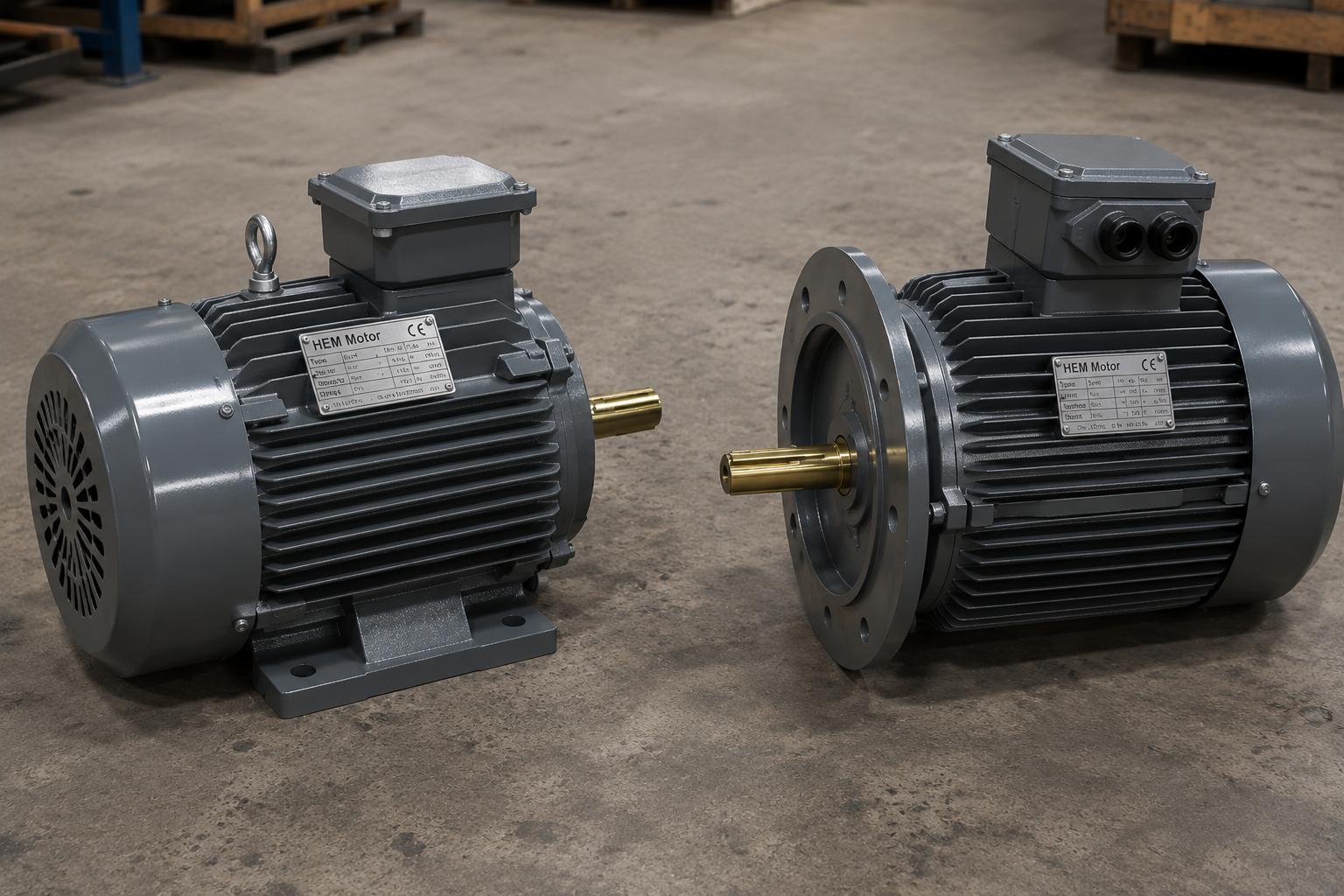
A part-winding motor has 12 leads in its terminal box: the start and end of two winding branches per phase. For the first stage, the first winding branch is connected to the main contactor. For the second stage, a second contactor brings the second winding branch in with a delay. This delay is set by a time relay. The time relay is typically set to 1 to 3 seconds; the period is chosen long enough for the motor to reach sufficient speed in the first stage, but short enough not to cause unnecessary heating.
- If the first-stage time is too short: The full winding comes in before the motor has reached enough speed, and the current limiting loses its effect.
- If the first-stage time is too long: The half winding stays under load too long, increasing heating and stress.
- Correct setting: The second winding is added the moment the motor nears rated speed; the transition is smooth.
During connection, the phase order and polarity of the winding branches must be correct; a wrongly connected second winding causes the magnetic fields to oppose and draws excess current. For this reason the 12-terminal connection must follow the terminal diagram exactly. For terminal box and cable entry orientation on IE4 motors, our article on IE4 terminal box and cable entry orientation helps with the correct order according to the panel side.
Which Application Suits Part-Winding?
Part-winding suits applications where a low starting torque is enough and where smooth, frequent starts are wanted. Fans, centrifugal pumps and especially screw compressors are the classic uses of this method. These loads do not need high torque at start; the load rises gradually with speed. By contrast, for conveyors, crushers or high-inertia loads that start under full load, the low starting torque of part-winding may be insufficient; in that case a soft starter or a drive is more suitable.
- Fans and induced-draught fans: low starting torque is enough, frequent starts possible.
- Centrifugal pumps: load rises with speed, part-winding suits.
- Screw compressors: part-winding is a classic choice, often recommended by makers.
- High inertia/loaded start: a soft starter or VFD is recommended instead of part-winding.
What to Watch During Commissioning and Testing
When commissioning a motor wired for part-winding, several checks are vital before the first run. First, the direction of rotation of the winding branches must be the same; if the first winding branch turns the motor one way while the second branch produces a magnetic field in the opposite direction, a severe current surge and vibration occur at the second stage. So at first run both stages are tried briefly and separately and the direction of rotation is confirmed. Second, the sequential operation order of the first and second contactor and the time-relay delay must be observed under real load, and fine-tuned if necessary.
Measuring current during commissioning is the most reliable way to confirm the method works correctly. The current measured in the first stage should be at the expected limited value; when the second stage comes in, the motor should settle to its rated current. If the first-stage current is higher than expected, there may be an error in the connection or in the winding-branch selection. On the subject of phase current imbalance, our article on phase current imbalance and winding heating offers complementary information on measurement and protection. All connection and protection components must be sized to the motor's rated values.
Operating Advantages and Limits of Part-Winding
One of the most practical advantages of part-winding is that the amount of panel equipment is lower than with star-delta. Whereas a star-delta starter needs three contactors (main, delta and star), part-winding works with two contactors. This reduces both panel volume and connection complexity. In addition, because the closed transition removes the transition surge of star-delta, the life of the contactor contacts is extended and no stress builds up in the mechanical system. In plants that start frequently, this is an important factor that lowers both electrical and mechanical maintenance cost.
That said, it is necessary to know the limits of part-winding too. Because only the half winding is in circuit in the first stage, that winding branch runs briefly at high current density. So the first-stage time must not be kept longer than necessary, and the motor must be run within the number and duration of starts permitted by the manufacturer. Excessively long or very frequent repeated starts can cause heating in the half winding. The correct time-relay setting and a suitable load profile remove this risk. The effect of inrush on cable, fuse and contactor selection should also be considered when sizing the panel components.
The Relationship Between IE4 Efficiency and Starting Method
IE4 super-premium motors stand out with their low losses and high efficiency; but this high efficiency usually means lower rotor resistance and higher magnetic saturation. This means the inrush current of IE4 motors can sometimes be higher than that of older low-efficiency motors. Therefore limiting the inrush on high-power IE4 motors becomes even more important for the grid and the panel. A method such as part-winding is an economical way to control the inrush while preserving the IE4 efficiency advantage.
When selecting the starting method, the motor's efficiency class, power, pole number and the inertia of the driven load are evaluated together. To understand the relationship between starting torque and rated torque in direct starting, the article on starting torque and rated torque (DOL) provides a good basis. Knowing where the efficiency losses in an IE4 motor are reduced on the iron, copper and friction side also clarifies the investment decision. Correct starting protects both the motor and the grid and ensures the efficiency investment pays off.
Frequently Asked Questions
Can part-winding be applied to any IE4 motor?
No. Part-winding can only be applied on motors whose winding is split into parallel branches and which have 12 leads. It cannot be used on a standard 6-terminal IE4 motor. For this reason a part-winding requirement must be specified to the factory when the motor is ordered; adding it to an existing motor later is impractical.
Should part-winding or star-delta be preferred?
Star-delta gives lower inrush but has a current surge at transition. Part-winding stands out for its closed transition and smoother start. In frequently starting fan/compressor applications sensitive to mechanical shock, part-winding is preferred if its lesser current limiting is sufficient. The decision is made according to the load profile of the application.
Is using a drive (VFD) better than part-winding?
A drive reduces the inrush to the lowest level, provides speed control and energy saving; but it is costly and needs extra installation. If the aim is only to limit the inrush and speed control is not required, part-winding is a more economical and simpler solution. If speed control is also needed, a drive is more appropriate.
For fan, pump and compressor applications on your IE4 efficient motors, we can define the right configuration of a 12-terminal motor suitable for part-winding starting according to your load profile. As HEM Motor, with broad stock and fast delivery, contact us to guide you to a motor suited to the right starting method; sharing your application details to get a quote is enough.