English
 Türkçe

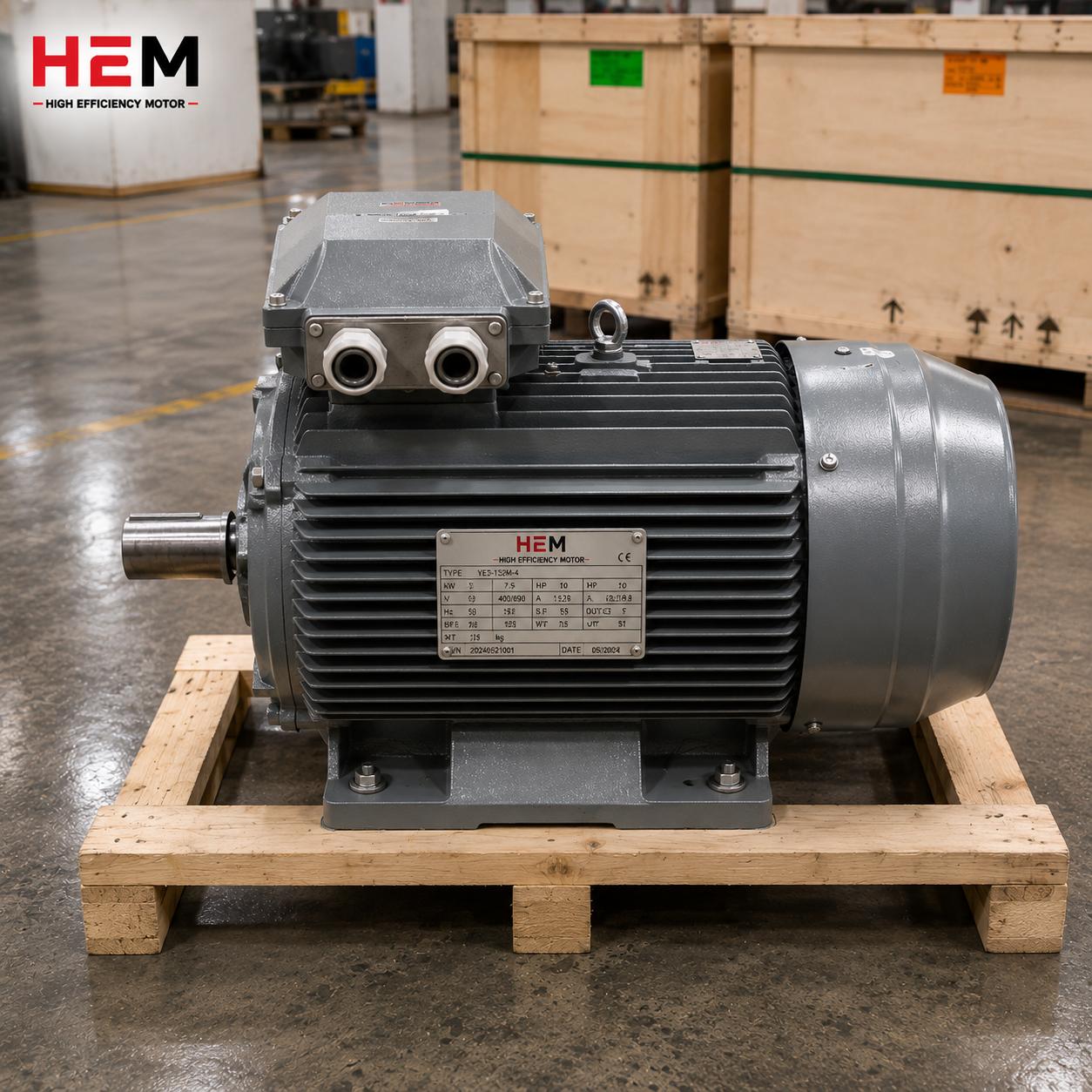

Large IE4 super premium motors running in continuous processes, pump-fan-compressor lines and critical production plants face the risk that a stator winding fault can destroy the entire motor within seconds. Thermal and overcurrent protection cannot catch this type of fault fast enough, because in a phase-to-phase or phase-to-earth internal fault the current distributes differently than expected relative to the motor's rated current. This is where differential protection (87M, motor differential protection) comes in. 87M compares the currents at the motor's incoming and outgoing terminals, detecting the leakage/fault current inside the winding within milliseconds and protecting the motor.
In this article we cover, in engineering but applicable terms, how differential protection is set up on a 6-lead (3 windings, 6 terminals) large IE4 motor, current transformer (CT) selection and matching, sensitivity setting, from which power 87M makes sense, and coordination with other protections. The goal is to help you order your large IE4 motor with the correct protection options and stop winding faults before they turn into a fire.
What Is Differential Protection (87M)?
Differential protection is a simple but powerful application of Kirchhoff's current law: in a healthy winding, the current entering must equal the current leaving. One current transformer is placed at each end of every phase winding (the line side and the neutral/star-point side). If the winding is healthy, the difference between the two CTs' measured currents is near zero; the relay sees "balance." If a turn-to-turn short, phase-to-phase or phase-to-earth fault occurs inside the winding, the entering and leaving currents no longer match, and the resulting differential current trips the relay. Tripping happens in milliseconds, preventing the iron core and winding of a large motor from burning.
87M is insensitive to external faults (short circuits outside the motor) because in an external fault the current passes through the winding and entering still equals leaving. This selectivity makes 87M an ideal internal-fault protection for large motors. In a 6-lead motor the star point is formed externally at the terminal block rather than inside the motor, so both ends are accessible for CTs, which makes the 87M setup possible.
Why Is a 6-Lead Motor Needed?
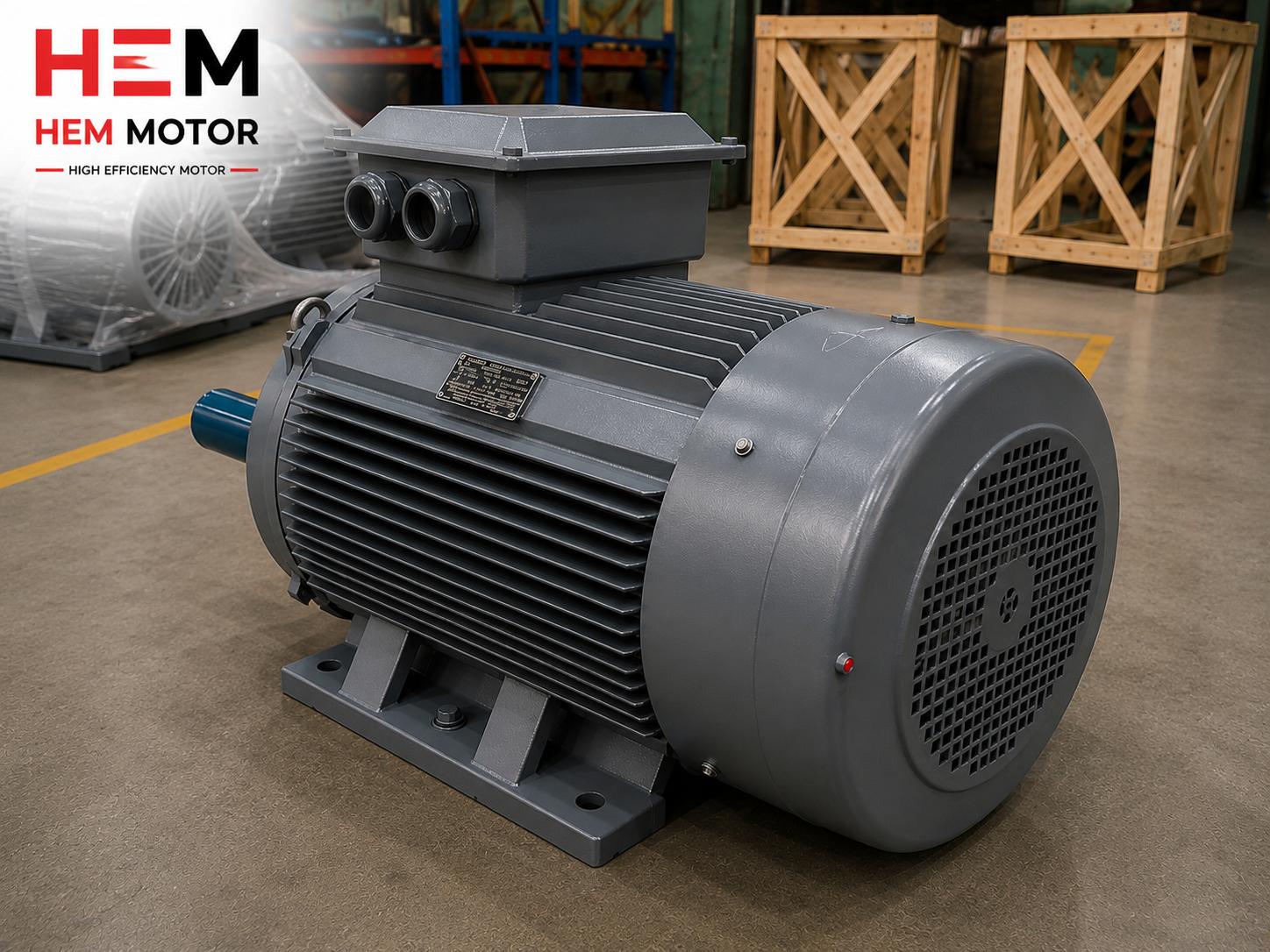
In a standard three-phase motor the star point of the 3 windings is joined internally at the factory and 3 leads come out. In this case you cannot place a CT at both ends of each winding; only phase-to-earth differential (restricted earth fault, 64REF) is possible. For full-phase (biased) differential protection the motor must be manufactured with 6 leads (both ends of each winding brought to the terminal block). This is a critical option that must be specified at the ordering stage on large motors; it is hard to change afterwards.
If you want to review star-delta connection and terminal bridging logic, our article on terminal connection and star/delta bridging provides the foundation.
Current Transformer (CT) Selection and Matching
Correct operation of 87M depends on the matching of the CTs on both sides. The line-side and neutral-side CTs must have the same ratio, the same class and, if possible, come from the same production batch. Otherwise the magnetisation difference between the CTs during an external fault or starting produces a false differential current and the relay may mis-operate. Modern numerical 87M relays tolerate this difference with a bias/restraint curve; nevertheless CT matching is the basic rule.
The table below is a general reference for typical 87M CT ratio and class selection by rated current on large IE4 motors. Exact values are determined by short-circuit current and the relay manufacturer.
| Motor Power (400V, approx.) | Rated Current (~A) | Suggested CT Ratio | CT Class (for 87M) |
|---|---|---|---|
| 110 kW | ~195 | 200/1 or 200/5 | 5P20 / PX (Class X) |
| 160 kW | ~280 | 300/1 | 5P20 / PX |
| 250 kW | ~430 | 500/1 | 5P20 / PX |
| 355 kW | ~610 | 600/1 or 750/1 | PX (Class X) preferred |
| 500 kW | ~860 | 1000/1 | PX (Class X) |
Points to watch in CT selection: non-saturation at starting current with adequate ALF (accuracy limit factor), burden compatibility, and that the line/neutral CTs have the same ratio and class. In a high-impedance differential scheme Class X (PX) CTs are preferred.
Sensitivity Setting
The pickup threshold of the 87M relay is set as a small percentage of the motor's rated current; typically between 5-20%. A lower threshold gives more sensitive internal-fault detection but increases sensitivity to CT mismatch and starting transients. For this reason numerical relays use a biased (percentage) characteristic: as load current rises, the trip threshold rises proportionally, preserving stability on external faults while keeping sensitivity on internal faults.
- Minimum pickup: typically 5-10% In.
- Bias slope (slope 1/slope 2): 20-30% and above, for starting and external-fault stability.
- Harmonic restraint: for magnetising inrush (2nd harmonic), used in some applications.
From Which Power Does 87M Make Sense?
Differential protection adds the cost of CTs, wiring and a 6-lead motor; it is therefore not used on every motor. General engineering practice treats 87M as standard on motors above roughly 1-2 MW; but where criticality is high it is also applied from the 110-200 kW band. The decision is made on the motor's value, its criticality in the process, downtime cost and rewind lead time. On a critical pump or compressor motor, if the motor value is high and downtime halts production, the 87M investment quickly pays back.
To review the basics of thermal and overcurrent protection, our article on thermal, relay and fuse selection is a good start.
Coordination with Other Protections
87M alone is not enough; it is part of a protection package. A typical protection set on a large IE4 motor is as follows:
- 87M: internal winding fault (phase-to-phase, turn-to-turn, phase-to-earth).
- 49 / thermal model: overload and thermal-model based protection.
- 50/51: instantaneous and time-delayed overcurrent (external short-circuit backup).
- 46: negative-sequence / phase-unbalance protection.
- PT100/PTC: winding and bearing temperature monitoring.
87M trips instantaneously; 50/51 and 49 take on the backup and overload role. For winding temperature monitoring, our article on temperature monitoring with PT100 and PTC, and for bearing-current related faults our article on bearing current and shaft grounding ring are complementary.
How to Order the Correct Protection Option?
If you want to protect a large IE4 motor with 87M, specify the following at order time: 6-lead winding (double-ended terminals), space/accessory for CT mounting in the terminal box, number of winding PT100s, bearing PT100, rated current and short-circuit data. This information ensures the motor integrates correctly with the protection relays.
Commissioning and Stability Test
The most critical step when commissioning 87M is the stability test. With the motor running on load, you verify that the differential current of each phase reads near zero, that the CT polarities (P1/P2, S1/S2) are connected correctly and that the secondary circuits are correctly phased. Wrong polarity shows differential current even on a healthy motor and the relay trips at starting. During commissioning, the trip threshold and bias slope are also verified with primary or secondary injection testing.
- Verify CT polarities and secondary phasing.
- Read each phase's differential current on load; it should be near zero.
- Confirm pickup and bias slope with an injection test.
- Demonstrate that the relay does not trip (stability) on an external-fault simulation.
87M with a Drive (VFD)
If a large IE4 motor is driven by a variable frequency drive (VFD), the differential protection covers the winding between the motor terminals and the star point and is not directly affected by VFD harmonics, because the entering and leaving currents must still be equal. However, CT selection must account for harmonic content and possible DC component. Voltage spikes reaching the winding insulation under drive operation are a separate risk; our article on inverter duty motors and du/dt filter selection gives complementary information.
High-Impedance and Low-Impedance (Biased) Differential
Differential protection is implemented with two basic schemes, and the choice on a large IE4 motor depends on the CT characteristic and the plant infrastructure:
- High-impedance differential: the CT secondaries are connected in parallel and the relay is a high-impedance voltage element. It is stable against CT saturation on external faults, simple and fast; but it requires Class X (PX) CTs and a stabilising resistor. It generally works with identical CTs.
- Low-impedance (biased/percentage) differential: common in modern numerical relays. It measures each CT current separately and tolerates external faults and CT mismatch with a bias curve. It can make CTs of different ratios compatible with software scaling and is more flexible.
In new plants numerical low-impedance relays are preferred, because they combine additional protection functions (49, 50/51, 46, temperature) in a single device and offer communication/recording. In old or simple installations the high-impedance scheme is still a reliable option.
Comparison with Restricted Earth Fault (64REF)
In some applications restricted earth fault protection (64REF) is used instead of, or together with, full-phase 87M. 64REF focuses only on earth faults: the CT at the motor's neutral (star) point is compared with the sum of the phase CTs. If there is current leaking to earth a difference appears and the relay trips. 64REF does not see phase-to-phase internal faults; it is only sensitive to phase-to-earth faults but can do so at a very low threshold.
In practice full-phase 87M is preferred on large motors because it covers both phase-to-phase and phase-to-earth internal faults. But if 6 leads are not possible or extra earth sensitivity is wanted, 64REF is added as a complement. Which scheme is chosen is determined by motor size, the earthing arrangement (solid/resistance) and the existing CT infrastructure.
The Effect of the Earthing Arrangement
The plant's neutral earthing arrangement determines the magnitude of the earth fault current and therefore the sensitivity of the protection. In a solidly earthed system the earth fault current is high and easily detected; in a resistance or high-impedance earthed system the earth fault current is limited and more sensitive protection (64REF, low threshold) is needed. When designing the protection of a large IE4 motor, the plant's earthing arrangement must be known; it affects both the 87M/64REF choice and the threshold settings. For motor earthing and EMC rules, our article on grounding and EMC gives complementary information.
Frequently Asked Questions
Can I set up 87M on a standard motor?
For full-phase (biased) 87M the motor must be manufactured with 6 leads, i.e. both ends of each winding brought to the terminal block. On a standard 3-lead motor the star point is joined internally, so only restricted earth fault (64REF) protection is possible. For this reason the 6-lead option must be specified at the ordering stage on large motors.
Can the CTs have different ratios?
The line and neutral CTs must have the same ratio, class and, if possible, come from the same batch. Different CTs can produce a false differential current during an external fault or starting and trip the relay incorrectly. Although numerical relays tolerate some of this with a bias curve, matched CTs are the basic rule.
From which power is 87M required?
General practice treats 87M as standard above roughly 1-2 MW; but on critical, high-value motors with costly downtime it is also applied from the 110-200 kW band. The decision is based on the motor's value, criticality and downtime cost. On a critical compressor or pump the investment pays back quickly.
At HEM Motor we supply large IE4 super premium motors with 6-lead winding, CT mounting option in the terminal box, winding/bearing PT100 and full protection compatibility — from stock and with fast delivery. Send us your motor power, short-circuit data and protection relay infrastructure; request a quote for the right 87M configuration and let us protect your critical motor together.