English
 Türkçe

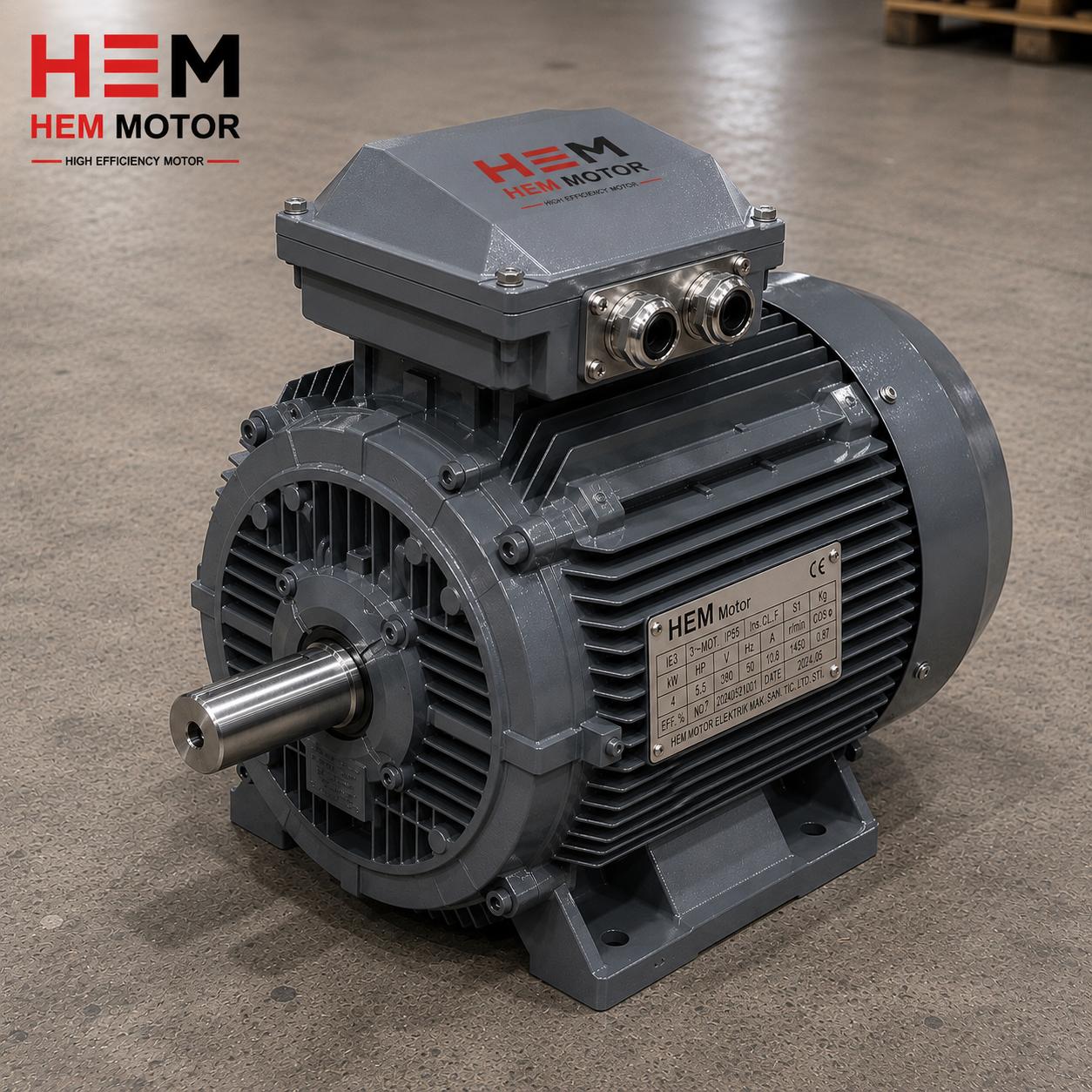

When selecting a motor in the IE3 efficiency class, only the standard enclosed (TEFC, IP55) frame usually comes to mind. Yet in high-power and special applications, the motor's cooling and protection type is at least as important as the efficiency class. For large IE3 motors operating outdoors, special cooling/protection types such as WPII (Weather Protected Type II) come into play, and for motors driving fans, TEAO (Totally Enclosed Air Over) does. WPII is a structure designed so that an open-type motor can be used outdoors at high power, keeping rain, snow and dust largely away with multi-directional air inlet labyrinths. TEAO is a type with no external cooling fan, in which the motor is cooled by the air stream it itself drives (for example the air of the fan it powers). In this article we cover the WPII and TEAO cooling/protection types in IE3 motors, their relationship with IC (cooling) codes, which suits which application, and the correct cooling-protection selection step by step.
Motor Cooling and Protection Types: From Enclosed to Open
In electric motors, cooling and protection are two interconnected concepts. The most common type is the totally enclosed fan-cooled (TEFC) motor: the body is sealed and a rear fan passes air over the outer surface to cool it (IC411). But at high power and in special environments, this structure is not always sufficient or the most efficient. This is where open types (such as WPII) and special enclosed types (such as TEAO) come in.
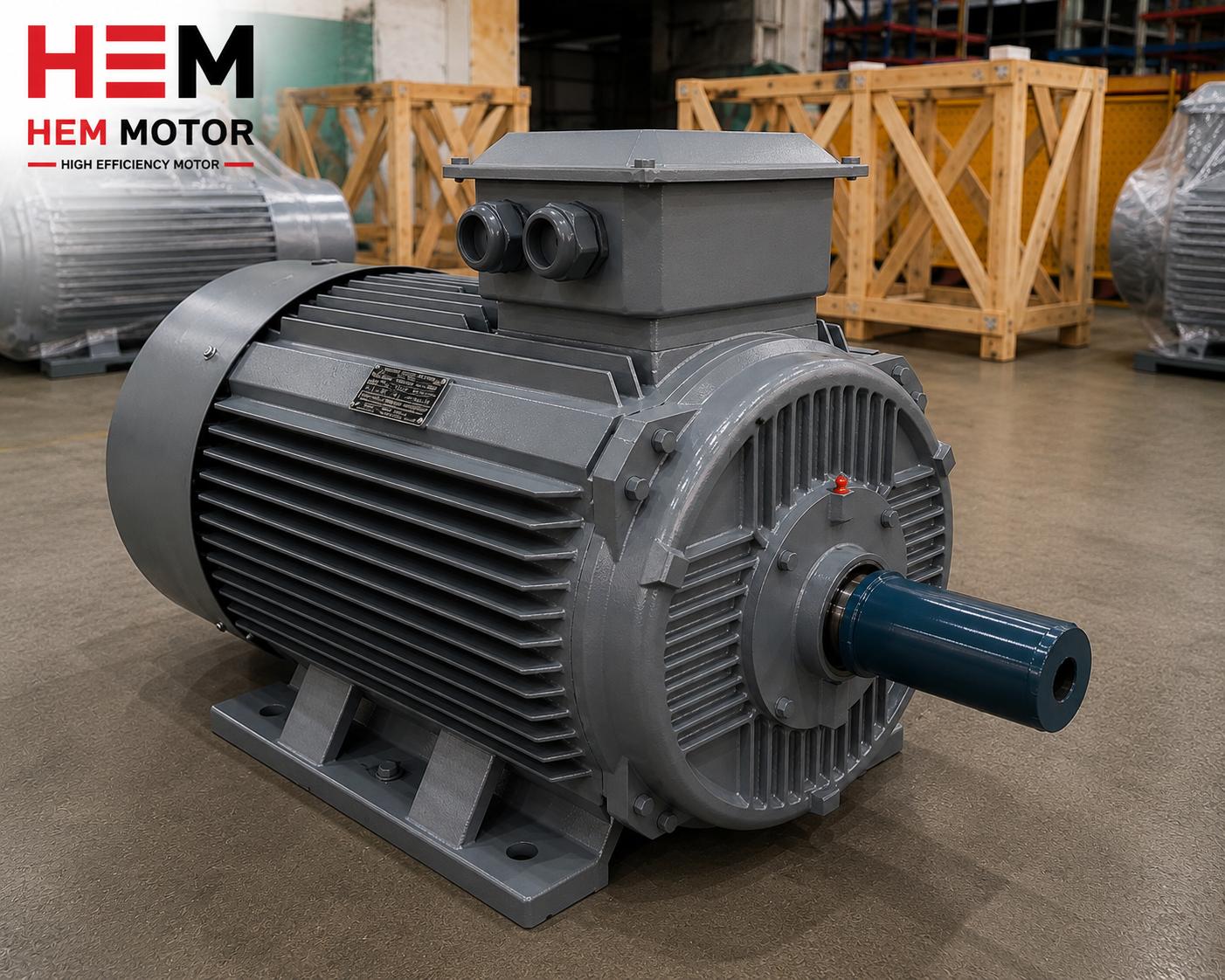
WPII is a solution that carries the logic of the open type (for example IP23) to high power and outdoor environments. Air passes through the inside of the motor providing direct cooling; however, this air is passed through multi-directional labyrinth channels (at least two sharp 90° turns). This labyrinth leaves most of the water droplets, snow and dust in the air outside. Thus the thermal advantage of open cooling is obtained more safely outdoors.
What Is WPII (Weather Protected Type II)?
WPII was developed especially for high-power motors (hundreds of kW and above) in applications where open cooling is needed but the environment is outdoors. Its basic logic is to pass the cooling air through two or more sharp direction changes before taking it into the motor. Because the air cannot fully follow the sharp turns due to inertia, the heavy water droplets, snow and dust particles in it hit the walls and separate; only largely cleaned air reaches the motor.
Main features of WPII:
- Multi-directional air labyrinth: Water/dust separation with at least two 90° direction changes.
- Low air-velocity zones: Designed for heavy particles to settle.
- Outdoor compatibility: Protected open cooling against rain, snow and wind-blown dust.
- High-power advantage: Better heat rejection than enclosed cooling at the hundreds-of-kW level.
WPII is preferred in high-power outdoor applications such as large power plants, water/wastewater plants, mining and large fan/pump stations. It combines the thermal advantage of open cooling with outdoor protection.
A type often confused with WPII is the WPI (Weather Protected Type I) structure. WPI is a simpler protection that only blocks large foreign objects and direct rain; it is not as safe as WPII against fine water droplets and wind-blown dust. WPII's multi-directional labyrinth and low-velocity settling zones make it distinctly superior for real outdoor conditions. Therefore, on sites with serious rain, snow or dust, when open cooling is desired the choice is usually made in favor of WPII. The plant's climate, seasonal dust load and air quality are decisive in the selection.
Another important point in WPII motors is optional additional protections. On very dusty sites an extra filter can be added to the air inlet, in very humid environments an anti-condensation heater (space heater), and measures to prevent condensation after stopping. This way, while the thermal advantage of open cooling is maintained, the motor's life is secured even against the harshest outdoor conditions. Which of these options are needed should be determined by engineering assessment according to the site's real conditions.
What Is TEAO (Totally Enclosed Air Over)?
TEAO is a totally enclosed motor but has no cooling fan of its own. Instead, the air stream produced by the machine the motor drives (usually a fan) passes over the outer surface of the motor and cools it. That is why TEAO motors are almost always used in applications that directly drive a fan.
The logic of TEAO is this: since the motor is already driving a fan that produces a large air stream, part of that air stream can be used to cool the motor. This way no separate cooling fan is needed; the motor is more compact, quieter and in some cases more efficient. But the critical condition is this: the cooling of a TEAO motor depends on the air flow of the fan it drives. If the fan runs at low flow or the motor keeps turning while the fan is stopped, cooling becomes insufficient.
- No external cooling fan: Cooling is provided by the driven air stream.
- Specific to fan applications: Ideal in direct fan drive.
- Flow dependency: Cooling is directly proportional to the fan's air flow.
- Compact and quiet: No additional fan noise or loss.
TEAO motors have a hidden advantage in terms of efficiency: in a standard TEFC motor, the rear cooling fan consumes part of the motor's own power and creates a noticeable windage loss especially at high speeds. In TEAO this loss disappears because the cooling air is already produced by the driven fan. This can provide a small but valuable gain in high-efficiency classes such as IE3. Moreover, without a rear fan and cowl, the motor is shorter and, in some applications, more convenient for installation.
However, the limit of TEAO must be clearly known. Because cooling depends entirely on the driven air flow, the motor's thermal load increases in any situation where the fan's flow drops. A fan throttled by a damper, slowed by a frequency drive, or with reduced air flow due to a fault directly endangers the cooling of the TEAO motor. That is why in TEAO applications, guaranteeing sufficient air flow at every operating point of the motor is the basic condition of the design. Otherwise, protection with winding temperature monitoring must definitely be added.
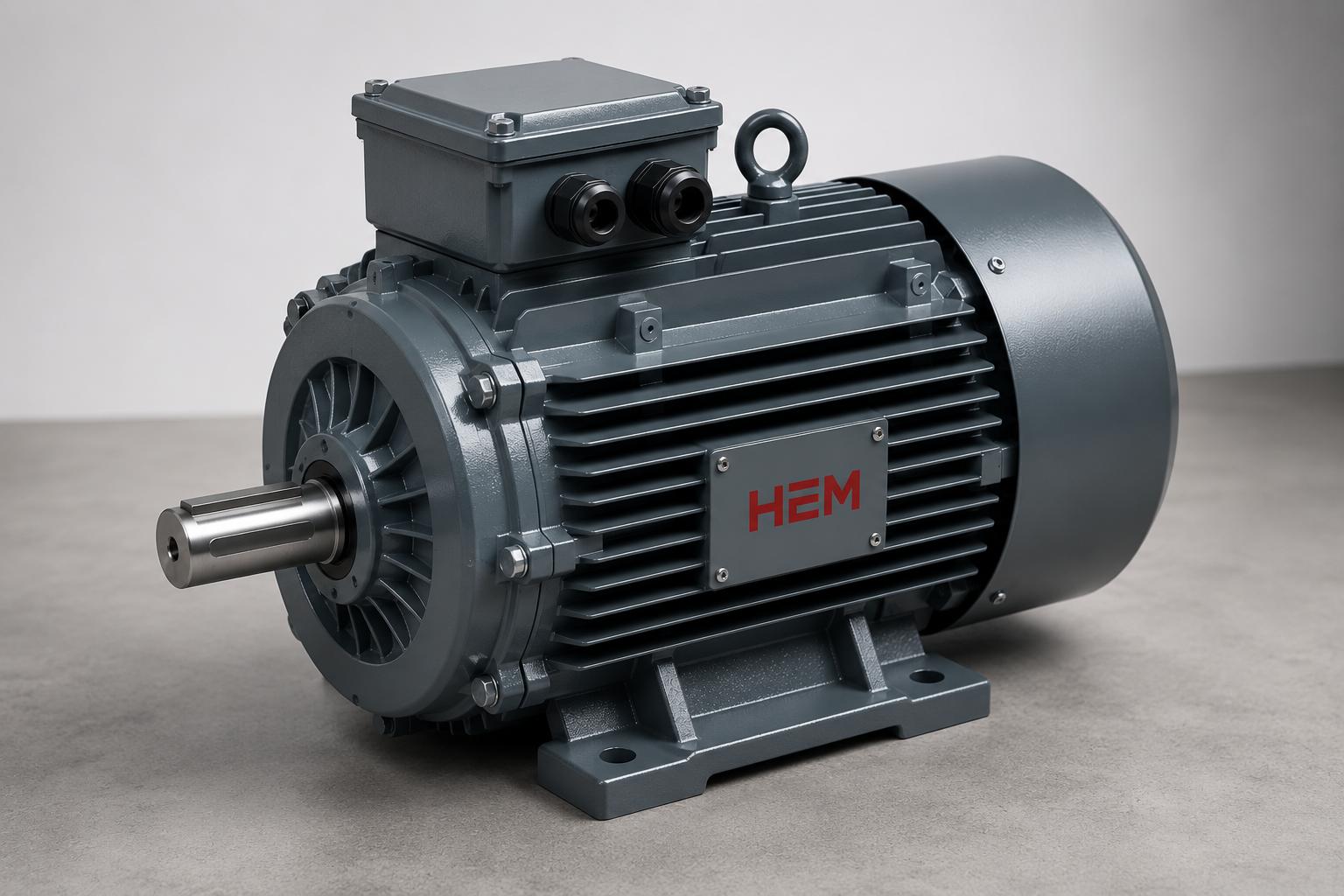
Relationship with IC Codes
Cooling methods are defined by international IC (International Cooling) codes. The WPII and TEAO types also correspond to specific IC codes. The table below summarizes common cooling types and their features.
| Type | Structure | Cooling Source | Typical IC | Application |
|---|---|---|---|---|
| TEFC (IP55) | Enclosed | Rear fan + body surface | IC411 | General industry |
| TEAO | Enclosed, no fan | Driven air stream | IC418-like | Fan drive |
| WPII | Open (labyrinth) | Internal air (protected) | IC01 derivative (protected) | High power, outdoor |
| Forced cooling | Enclosed, separate fan | Independently driven fan | IC416 | VFD, low speed |
The first digits of the IC code indicate the cooling circuit, and the following digits indicate the method that moves the coolant. Reading these codes correctly is the key to understanding whether the motor will cool sufficiently under continuous load. For the basics of cooling methods, our IC411 and IC416 cooling methods article is a good start. For the need for forced cooling at low speed, see our external forced cooling fan article.
Which Application Needs WPII, Which Needs TEAO?
The two types meet completely different needs:
- Choose WPII: The motor is high-power and outdoors; the thermal advantage of open cooling is needed but it must also be protected from rain/snow/dust. Typical: large pump/fan stations, water-wastewater plants, mining, power plants.
- Choose TEAO: The motor directly drives a fan and that fan's air stream can cool the motor. Typical: axial/centrifugal fan drive, air handling units, cooling towers.
Both types require a different design from standard TEFC; therefore the application must be defined exactly. For example, if a TEAO motor is run while the fan is stopped it overheats; a WPII motor remains unnecessarily large and expensive in an enclosed, clean space. Choosing the correct cooling type while maintaining the IE3 efficiency class determines both safety and operating cost. For outdoor protection and accessory options, our IE3 accessory options article is useful. For protection upgrade in dusty and wet environments, see our IP65/IP66 protection upgrade article.
Steps for the Correct Cooling-Protection Selection
- Define the environment: Indoor or outdoor, dusty or clean, humid or dry?
- Determine the power level: At high power, open (WPII) cooling can provide a thermal advantage.
- Examine the driven load: If there is direct fan drive, TEAO is evaluated.
- Consider the speed range: If continuous torque at low speed with VFD is needed, forced (IC416) cooling may be required.
- Maintain the efficiency class: All these choices must be made while maintaining the IE3 efficiency class.
The order of these steps matters. Selecting a cooling type before the environment and application are defined usually results in either an unnecessarily expensive or an insufficient solution. For example, while standard TEFC is more than enough in an enclosed, clean machine room, the same motor may be thermally stressed in a large pump station in the open field. Conversely, in an application directly driving a large fan, TEAO is both more compact and more efficient, while in a scenario where the motor also turns while the fan is stopped, TEAO becomes dangerous. That is why the selection must cover not only the nominal but all operating scenarios of the motor.
Deciding Between WPII, TEAO and Standard TEFC
The basic choice among the three types is made according to the combination of environment and driven load. The table below offers a practical decision guide.
| Condition | Recommended Type | Reason |
|---|---|---|
| Indoor, clean, medium power | TEFC (IP55) | Simple, economical, sufficient |
| Outdoor, high power, open cooling needed | WPII | Protected open cooling, good heat rejection |
| Direct fan drive, sufficient flow | TEAO | Compact, fanless, efficient |
| Continuous torque at low speed with VFD | TEFC + forced (IC416) | Speed-independent cooling |
| Very dusty/wet outdoor | WPII + option or IP65/66 | Additional protection requirement |
This decision table is a starting point for most high-power and special applications. In borderline cases, the motor's thermal balance at all operating points must be verified by engineering calculation. When the correct type is chosen, both IE3 efficiency is maintained and the motor runs safely under the site's real conditions.
Frequently Asked Questions
Why is the WPII motor preferred at high power?
In high-power motors (hundreds of kW), heat rejection is a critical problem. Enclosed surface cooling can be insufficient or require a very large frame at these powers. WPII combines the high heat-rejection capacity of open cooling with outdoor protection through its multi-directional air labyrinth. Thus high power can be cooled more compactly and efficiently outdoors. At low power, enclosed TEFC is usually more practical and economical.
Can a TEAO motor be run when the fan is stopped?
No, that is dangerous. The only cooling source of a TEAO motor is the air stream produced by the fan it drives. If the fan is stopped or running at very low flow, the motor cannot cool and overheats. That is why TEAO motors should only be run under conditions where the fan provides sufficient air flow. If continuous operation at very low speed with VFD is needed, a separate (forced) cooling solution should be considered.
Does the IE3 efficiency class also apply in WPII and TEAO types?
Yes. WPII and TEAO define the motor's cooling and protection structure; the efficiency class (IE3) concerns the electrical design. A correctly designed WPII or TEAO motor can maintain the IE3 efficiency class. So in your high-power outdoor or fan drive application you can obtain both high efficiency (IE3) and the correct cooling type together; the two do not exclude each other.
To be sure whether you need WPII for your high-power outdoor motor or TEAO for your fan drive application, tell us your environment, power and driven load. Let the HEM Motor engineering team determine the correct cooling-protection type together while maintaining IE3 efficiency; with our wide stock range and fast delivery advantage, contact us for a correctly optioned order and request a quote.